Daily insights for city builders, delivered every morning at 6 AM ET. I’m Brandon Donnelly — a Toronto-based real estate developer and founder of Globizen. I’ve been writing here since 2013.

Tag: identity

  • How much does it matter what message a city sends you?

    In keeping with the recent theme about cities, their brands, and the messages they send, I thought I would revisit an old essay (2008) written by Paul Graham (of Y-Combinator) called “Cities and Ambition.” In it, he talks about the various messages that cities send us, such as:

    • You should make more money (New York)
    • You should be better looking (Miami?)
    • You should be smarter (Cambridge)
    • You should be more powerful (Silicon Valley)

    But the most interesting part of his argument is the belief that we are largely products of our environment. No matter how strong or formidable our personalities might be, the message a city sends us is hugely important. In fact, it might be impossible to escape it. Here’s how Paul puts it:

    How much does it matter what message a city sends? Empirically, the answer seems to be: a lot. You might think that if you had enough strength of mind to do great things, you’d be able to transcend your environment. Where you live should make at most a couple percent difference.

    But if you look at the historical evidence, it seems to matter more than that. Most people who did great things were clumped together in a few places where that sort of thing was done at the time.

    You can see how powerful cities are from something I wrote about earlier: the case of the Milanese Leonardo. Practically every fifteenth century Italian painter you’ve heard of was from Florence, even though Milan was just as big. People in Florence weren’t genetically different, so you have to assume there was someone born in Milan with as much natural ability as Leonardo. What happened to him?

    If even someone with the same natural ability as Leonardo couldn’t beat the force of environment, do you suppose you can?

    I don’t. I’m fairly stubborn, but I wouldn’t try to fight this force. I’d rather use it. So I’ve thought a lot about where to live.

    To some, this thought may depress you. I mean, if you happen to live in a city or place with the “wrong” message, you might feel as if you’re missing out. I know that thought certainly crossed my mind when I read his essay. But different messages resonate with different people, and so maybe the message your city is telling you is exactly the one you need to accomplish great things.

    In Toronto, I’d say that the message is similar to that of New York: You should make more money. Oh, and also that you should buy more condos 😉

    What message does your city tell you?
  • The branding of places

    image

    Most people would agree that branding is a powerful and important exercise in the world of business. We recognize that brand equity is something that pays dividends in the future.

    When you walk around a city with a Starbucks, Tim Hortons, or some other coffee cup in hand, you are sending signals about who you are as a person and consumer. So, you could argue that you’re consuming the cup, as much as you are consuming the coffee.

    But one area that still feels like it’s in its infancy is place branding. That is, the branding of nations, regions, cities, and places. I’ve talked a lot about the business of cities and how impressions are created around cities, but I’ve never explicitly talked about place branding.

    However, it is an area on the rise. Monocle has written extensively about the importance of nation branding and there are firms, such as Vancouver-based Resonance, that now specialize in the strategy and branding of places.

    Here’s a short 5 minute video that they prepared talking about place branding and their approach to it. If you can’t see the video below, click here.

    //player.vimeo.com/video/66920801

    But at the same time, there are more grassroot ways in which a place brand can emerge. Think about the number of times Jay-Z has referred to himself as the Brooklyn boy or Drake has promoted Toronto in one of his videos. It’s hard to measure the impact of these sorts of things, but I am sure there is one.

    Here’s another example – a 4 minute video of Drake talking about why he loves Toronto. Click here if you can’t see it below.

    [youtube https://www.youtube.com/watch?v=M3TrbGEJbio?rel=0]

    Recently, you may have heard that Drake is about to give Toronto a new moniker: The 6. Some think it is in honor of our two main area codes 416 and 647, and I think that’s probably a good guess.

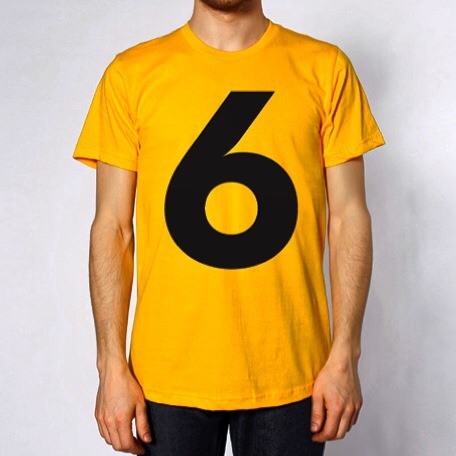
    But whatever the reason, I thought it was an interesting exercise in place branding. So I decided to partner with Toronto-based design firm Badd Press and make a “The 6” t-shirt (shown at the top of this post). You can get yours for $30 by visiting shopATC.

  • The story of a symbol of belonging

    image

    I’ve been following Airbnb pretty much since the beginning. The company has always fascinated me because I saw it as being less about technology and more about travel, hospitality, community and, in my view, real estate.

    An office building is just a set of spaces that get rented out on long term leases. A hotel building is just a set of spaces that get rented out on short term leases (one night at a time). And Airbnb spaces are simply extra or “found spaces” – such as an extra bedroom – that could never really be rented out at any sort of scale before. But then Airbnb came along, built a community around it, and empowered everybody to make money off that found, extra space. I think that’s pretty neat.

    Well today, Airbnb unveiled an entirely new logo, brand, and expression. It’s all about belonging, and their new logo is called the Bélo. Here’s a quick video that they call “the story of the symbol of belonging”. If you can’t see it below, click here.

    [youtube https://www.youtube.com/watch?v=7Hs0C2UvVBY?rel=0]

    What’s interesting about this new expression is that it’s a perfect example of Simon Sinek’s belief that people don’t buy what you do, they buy why you do it. And in this case, Airbnb’s why is community, trust, belonging, and a sense of place. Talk about emotive.

    In both the above video and in CEO Brian Chesky’s blog post today, reference is made to our cities and towns, and the fact that as they continue to get larger, we’re also becoming increasingly more disconnected. Things have gotten impersonal. But Airbnb is bringing back that sense of belonging.

    On a less emotive level, what it also does is set Airbnb up for expansion.

    Chesky has said before that the company wants to own the entire travel experience – from the moment you leave your home to the moment you return. So presumably a big impetus behind the rebrand was to develop something that could become ubiquitous across a number of different products and services. Which is why it makes perfect sense that they would encourage people to design their own versions of the logo.

    So while the rebrand has received a lot of criticism today – some people say it looks like a vagina – I wouldn’t discount it just yet. There are bigger plans in store.

  • Telling Toronto’s story

    If you’re a regular reader of ATC, you’ll know that I often talk about cities in the same way that many people talk about products and services. (See: The business of cities.) And I do that because cities are our new economic unit and so I find it helpful to think of them as businesses fighting to attract and retain the best talent and win over customers (i.e. residents and businesses).

    Which is why I’m intrigued by Jason Logan’s pitch to invent the position of Creative Director at the City of Toronto. Here’s his pitch:

    “This is an open challenge to the all the mayoral candidates. In the past 10 years, Toronto has undergone a cultural, artistic, and technological renaissance: The ROM, the AGO, and OCAD U all underwent architectural makeovers; TIFF rose to prominence as one of the most prestigious film festivals in the world; Nuit Blanche was unleashed in 2006, and Luminato in 2007, both to huge acclaim; the high-tech industry has created 30,000 new jobs; and The New York Times admitted that Toronto’s culinary scene is more ethnically diverse than the five boroughs. But here’s the thing: The story we tell ourselves and the world about our remarkable city needs an overhaul. Toronto Needs a Creative Director is a campaign committed to building a better story by better mobilizing the arts, culture, and technology sectors to enhance civic engagement. The CDTO (the office of Creative Direction for the City of Toronto) would function as a lab for incubating ideas where art, culture, politics, science, and technology intersect.”

    Truthfully, I’m not yet sure if a Creative Director is the ideal approach. I haven’t had a chance to give it enough thought. But I am certain that Toronto would benefit from a bunch of smart people who were focused on telling our story to the world, crafting our brand and identity, and honing the experience of living or visiting this great city.

  • The story behind the name “Architect This City”

    I was having drinks with an old friend a couple of weeks ago and I told her about my blog. She immediately asked me what it was called. At the time, it was just called “Cities.” And truthfully, I hadn’t given the title much thought. I just knew that I wanted to take a multi-disciplinary approach to examining cities.

    After that night I started thinking more about the idea of a proper title for my blog and I came to the conclusion that I did need something more creative. I should have a stronger brand and identity. So I experimented with a few names and, as you’ve probably noticed, I settled on “Architect This City.”

    Now that I’ve been using the name for a few weeks, I thought I would share my thinking behind it.

    I wanted the name to convey 3 things. (1) I wanted it to be clear that this blog was about cities. (2) I wanted it to be something personal to me. (3) And I wanted to somehow demonstrate that this blog isn’t a siloed look at any one particular discipline, such as architecture, planning or real estate. It’s more than that.

    Given my background in architecture and the fact that “city” is in the name, I think that objectives 1 and 2 made it through. But what I hope is also clear from the name is that the term “architect” is supposed to refer to something much broader than just building design. It’s about the underlying systems, processes and structures of our cities—which could tie into the real estate market, our governance structures or some new technological innovation. Cities are complex and there are many “architects.”

    Finally, I wanted the name to be a directive—a call to action. I wanted it to be a reminder that cities don’t just build themselves. They require careful thought, planning and deliberation. And that’s fundamentally what this blog is all about: city building.

    What do you think about the new name? I’d love to hear your thoughts in the comment section below.