Daily insights for city builders, delivered every morning at 6 AM ET. I’m Brandon Donnelly — a Toronto-based real estate developer and founder of Globizen. I’ve been writing here since 2013.

Tag: identity

  • Money, identity, and ownership

    For those of you who are interested in crypto (and for those of you who aren’t but are open-minded), Vitalik has just published this post talking about what in the Ethereum application ecosystem currently excites him. A lot of it is pretty technical, but the 5 overarching categories he talks about are: (1) money, (2) decentralized finance, (3) identity, (4) decentralized autonomous organizations, and (5) hybrid applications.

    Money has always been considered the first and most important application of crypto. But there is no shortage of people who will tell you that it’ll never work and that fiat currencies backed by a government will always be superior. Today I already think the answer is: it depends. So lately, I have been responding to this comment by asking: Would you rather own the Argentine Peso or would you rather own someting like ETH?

    Here’s how Vitalik talks about this same point:

    When I first visited Argentina in December last year, one of the experiences I remember well was walking around on Christmas Day, when almost everything is closed, looking for a coffee shop. After passing by about five closed ones, we finally found one that was open. When we walked in, the owner recognized me, and immediately showed me that he has ETH and other crypto-assets on his Binance account. We ordered tea and snacks, and we asked if we could pay in ETH. The coffee shop owner obliged, and showed me the QR code for his Binance deposit address, to which I sent about $20 of ETH from my Status wallet on my phone.

    This was far from the most meaningful use of cryptocurrency that is taking place in the country. Others are using it to save money, transfer money internationally, make payments for large and important transactions, and much more. But even still, the fact that I randomly found a coffee shop and it happened to accept cryptocurrency showed the sheer reach of adoption. Unlike wealthy countries like the United States, where financial transactions are easy to make and 8% inflation is considered extreme, in Argentina and many other countries around the world, links to global financial systems are more limited and extreme inflation is a reality every day. Cryptocurrency often steps in as a lifeline.

    The other category that I find very interesting is that of identity. And it relates to a post that Fred Wilson also happened to share today where he talks about the importance of identity and the coming need for us to start cryptographically signing everything. In my mind, what this comes down to is proving things like who is who, who is doing what, and who owns what.

    This may sound counterintuitive since crypto is often held up by the media as a way to obfuscate identity and conceal nefarious activities. But the thing is, as soon as you link a real human to a blockchain, you can now have identity and ownership records that are institution-independent and fully interoperable. One use case that immediately comes to mind is property deeds, which is of course already being done in some places.

    For Vitalik’s full post, click here.

  • What’s in a name?

    Picking a name for someone or something can be a daunting task. I have never had to name a newborn baby (though I’ve witnessed lots of people go through that process). But I am often involved in the naming of new buildings. Sometimes that process involves sitting in a room with a list of possible names in front of you, and having to decide which one is optimal. I don’t love this approach. Nowadays, I find it’s better to have the name naturally emerge early on in the development process, well before there’s an actual brand and identity for the project. You want it to accurately embody the vision for the project, the site’s history and context, and you want to know that it has some durability over time. Or at least, that’s the goal.

    On a related note, the New Yorker recently published an interesting piece on why your name matters. In the middle of the 20th century, research suggested that our chosen names were hugely impactful to life outcomes, and that more typical names were better than unusual ones. The theory was something known as the implicit-egotism effect, which basically states that we like things, including names, that most resemble ourselves. We want familiar. Which to me, immediately suggests that this effect must depend on cultural context. What is considered “typical” obviously changes depending on where you are in the world.

    Our thinking has advanced since then. More recently we have found that it’s not the name itself that creates the better life outcomes. Because if you control for a child’s background and upbringing, any sort of name effect seems to disappear. However, names do in fact signal who we are. They imply certain things. Many of us have heard about the studies that use resumes with different names to test how people respond. Names just aren’t inherently deterministic. You probably aren’t more likely to become a doctor simply because of your name.

    Although, I’m not sure that takes much of the pressure off of picking the right one.

  • The [Next] Pepsi Generation

    The product matters. How big is the screen on this smartphone? How many horses does this all-wheel drive car have? And how high are the ceilings in this condo? (Some architects get grumpy with me when I call buildings a “product.” It’s so much more than that, right?)

    But here is a good reminder from Zander Nethercutt via a post he did on Medium earlier this year: People Don’t Buy Products, They Buy Better Versions of Themselves.

    The example he gives is that of Pepsi. While damn near identical to Coke in terms of its chemical composition, Pepsi was struggling until it decided to try something new. They stopped focusing on the product itself and instead starting selling the type of person you would become, if you drank Pepsi.

    These people, and this campaign, became known as the Pepsi Generation.

    We have talked about this idea before on the blog and this approach to selling is now quite commonplace. But I like how Nethercutt distills it down: Desire translates into consumption. And I want to buy a better version of myself.

    I also buy his add-on argument that social media has amplified our awareness and desires around self, because today we are so often externalizing it to the world and being instantaneously judged on it. Like. No like.

    Am I the kind of person who eats here, stays there, and consumes this?

    Photo by Christina Boemio on Unsplash

  • The world’s best brands — 2018 edition

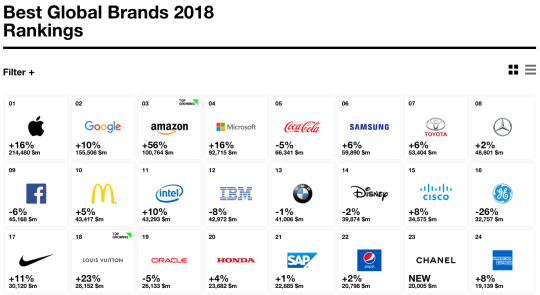
    At the beginning of this month, Interbrand released its annual ranking of the world’s best global brands. This year’s 2018 report marks the 19th year of the study. If you’d like to download a free copy of the report, you can do that here. But below is a snapshot of the first 24 brands:

    Apple and Google are in top position for the 6th year in a row. And Amazon is on a hockey stick trajectory with its brand value jumping by 56%. More than half of the list is comprised of the following five sectors: Automotive (16), Technology (13), Financial Services (12), Luxury (9), and Fast-Moving Consumer Goods (9). Luxury is currently the fastest growing sector.

    In their report, they outline five themes that have emerged and that are helping these brands outperform. They are:

    1. Positive utility – not enough to just make people feel good through storytelling; you need to create real value and a positive impact in the world
    2. Subscription mindset – there’s an increasing amount of brand value in subscription-based businesses (29% in 2018 compared to 18% in 2009); you need to offer your products and services with the least amount of friction as possible
    3. Customer-centricity – bring the voice of your customer into every aspect of your business; be nimble enough to respond quickly
    4. Learning from luxury – the top performing category in this year’s ranking; about exclusivity and authenticity
    5. Role of brand – make your brand part of the decision-making process; build brand equity and trust

    I’ll stop there and let you all dig into the rest of the report if you’re interested. 

    But one thing I found particularly interesting about the study is that they used – insert buzzwords here – “AI-powered social listening” to try and measure the emotion and sentiment floating around on the internet around specific brands. The goal was to pin down the perceived trustworthiness of specific brands.

    Not surprisingly, they found a pretty strong correlation between customer trust and purchasing intent. Makes sense to me.

  • rain gravity heat cold

    image

    Today I got a copy of rain gravity heat cold. It’s a book by the Toronto-based architecture firm superkül and it’s meant to celebrate their first 10 years of practice. 

    The book itself was put together by Blok Design. Blok has also done a new – yet to be rolled out – identity for superkül. (Definitely worth a click through.)

    One thing I wanted to highlight from the foreword of the book (written by Kiel Moe) is this line: “Great design does not respond to a static sense of context but rather perhaps transforms its flaws into assets and certainly amplifies the potential of site.”

    We often talk about contextual architecture. That is, architecture which responds to and is sensitive to its surroundings. But here’s the idea that responding is, in fact, not enough. The ambition should be “amplification of site through design.” 

    I like that a lot.

    If you’d like a copy of the book, it can be found on Amazon, at the University of Toronto bookstore, as well as, I’m sure, other places.

  • Flynn in the city

    I very much enjoy the branding and marketing side of the development business. It’s probably an architect / designer thing. So I’m always looking out for interesting case studies.

    Recently I came across The Flynn in Chelsea, New York. The developer is IGI and the agency is Winkreative.

    What they did was create a namesake character named Flynn. Everything then became about a day in the life of. 

    The Instagram account is flynninthecity. They made colorful animations. And they even partnered with the Spring Street Social Society to host in-person performance art pieces. The Being Flynn series was a bunch of vignettes that combined “dance and physical comedy” and highlighted a cast of fictional characters who all, of course, reside at The Flynn.

    As you all know, selling condos is typically about selling a lifestyle. A dream. In this case, they created a character to show you exactly what that dream should be.

    Real estate marketing can sometimes often be cheesy. But I thought this was a clever and overall creative approach. Winkreative does great work.

    What do you think of the approach?

    Image: Winkreative

  • That emotional connection

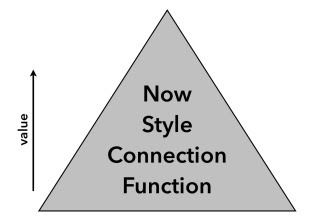
    Marketing guru Seth Godin recently published this value
    triangle on his blog
    :

    image

    No matter what business you’re in, it’s worth giving some thought to this. What do you offer?

    At the bottom of the triangle is function. A hotel room functions as a place
    to sleep. A smartphone functions as a device to make calls, send text messages,
    and download some apps. A condominium functions as a place to live, eat, sleep, have sex, and so on. But all functions being equal, most of us will buy whatever product is the cheapest.

    That is until there’s an emotional connection. I love the
    way Seth frames it: “Where do people like me do things like this?” It is about defining
    who you are. Am I the kind of person who buys A or am I the kind of person who buys
    B? If I care deeply about the environment and B promises to respect that, I am
    likely to buy B.

    But then, moving even further up the triangle, if two items offer the same function and the
    same emotional connection, many of us will go for the one that appears sexier, shinier (the new iPhone 7 is very shiny), and more
    stylish. It just deepens the connection.

    Finally, at the very top of the triangle is now. This is
    about scarcity. What’s hot right now?
    Think of that new restaurant that just opened downtown that you haven’t been
    able to get a table at. It’s now and you want to Instagram the food so badly so
    that you can show everyone you were there. You want to be now.

    The point of all of this is that we consume things for
    reasons that go well beyond simple function. That’s just the start of it all.
    One could argue that all of this is simply smoke and mirrors, but that’s a
    topic for another blog post. This is our reality.

    To relate this topic back to architecture and real estate, I
    am curious how many of you have made a housing decision that you believe went
    beyond function. How much of it was based on connection and style?

    Not surprisingly, for me, architecture and design matter a
    great deal.

    Earlier this summer I was driving around the city with my
    father and he was pointing out to me all of the new build single family homes
    that were sprouting up. He then asked me what I thought of them. I responded: “They’re
    shit.”

    What I was really saying with that glib remark was that
    those homes – no matter how expensive – didn’t reflect my own belief system
    about the world. Sure they served their function, but they didn’t offer the
    connection and style that “people like me” like to praise. To borrow once again
    from Seth: we are all part of a certain tribe.

    What tribe do you belong to? And does your housing choice
    reflect that?

  • Ethnic self-identification

    How do you self-identify in terms of ethnicity?

    I was having a discussion last night with a few friends about ethnic self-identification. In a multicultural city like Toronto where more than half of the population was born elsewhere, it’s an interesting topic.

    For new immigrants, I can understand that there often remains a strong connection to the home country and culture. 

    However, for subsequent generations, the attachment seems to manifest itself and wane (which I think is a natural tendency) in a variety of different ways. I am sure it partially depends on how determined the parents are to preserve the lineage vs. fully assimilate. In any event, it’s a somewhat subjective phenomenon.

    The best data I could find on this is from the 2006 Canadian census (I couldn’t find anything similar from the 2011 census). However, the question on the census was not about ethnic self-identification, per se, but rather how each respondent would classify the ancestry of their parents.

    There were a total of 31,241,030 responses. Some people gave a single response and some people selected multiple ethnic origins, which was allowed.

    In total, 10,066,290 people selected “Canadian.” Roughly 1/3 of the country. However, only 5,748,725 selected it as a single response. So only about 18.4% of respondents identified their parents as being only Canadian. The remaining group of people who selected Canadian also selected some other ethnic origin.

    The reason I pick out this stat is because – to answer my own question at the beginning of this post – I would self-identify as being only Canadian. I feel no emotional attachment to any other country.

    I would never support any other country at the Olympics and I would never fight for any other country.

    In terms of my background, my father wasn’t born here and so I am 1st/2nd generation on that side, depending on how you define 1st generation. However, on my mother’s side, I would be 3rd/4th generation Canadian.

    How do you self-identify? There’s no right or wrong answer here.

  • How cities get branded

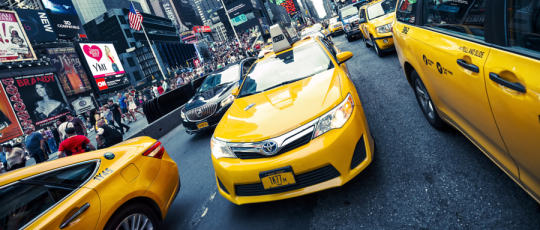
    Taxi on Times Square by frederic prochasson on 500px.com

    https://500px.com/embed.js

    I have been thinking a lot about city branding lately. It’s a topic I’m interested in to begin with, and all of the Blue Jays mania going on in Toronto right now has got thinking about our own brand.

    Because at the end of the day, yes, it’s baseball. But it’s also something much larger. It’s about civic and national pride, and it’s about who we are as a city. That’s why city branding has become a global industry and why it’s so closely connected to tourism, media, sports, and entertainment.

    Still, great city branding is incredibly difficult to do. Lots of cities have tried and lots of cities – from Adelaide to Toronto – have failed. Anyone remember the “Toronto Unlimited” brand of the mid-2000′s? It had absolutely zero stickiness.

    But in reality, cities are brand building all the time whether they realize it or not. Here in Toronto, our biggest brand builder right now is probably Drake. That might sound silly to some, but I believe it to be true. And next to that, you have people like Jose Bautista with his bat flips and his support of local brands like Peace Collective. In addition to their day jobs, these people are helping to shape the identity of the city.

    What, then, is professional city branding supposed to do?

    Well, in my opinion, it is their job to mine a city for the things that already exist. A city brand, no matter how great it may be, cannot be expected to create something from nothing. There has to be something there to begin with.

    But once you identify that something, a great city brand can tie it all together; create a cohesive and collective identity; and serve as a guide for future decision making. And when that’s done effectively, you actually begin to enhance the things that you initially started out with. The associations become even more powerful.

    So today I thought we could have a discussion in the comments about city brands. How would you describe the brand of your city in one sentence?

    For me, I would describe Toronto along the lines of being the most livable and multicultural 24/7 global city. And when you think of it this way, you can probably see why I think a 2AM last call at the bar is laughable.

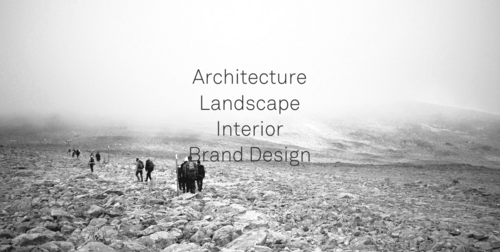
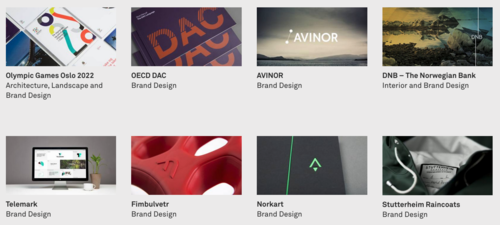
  • Snøhetta — an integrated architecture, landscape, interior, and brand design firm

    Last month I wrote a post talking about YOO Architecture. And in the body of that post I mentioned my interest in branding and marketing and how I wondered why it was something we never really talked about in architecture school.

    After publishing that post, a close friend of mine from architecture school quickly pointed out to me that there are firms today that are integrating brand design into their practices. Specifically, he mentioned two firms: Gensler and Snøhetta.

    Here’s some of Snøhetta’s work (click here for more it):

    I wasn’t aware that this was the case with these firms, but I’m delighted to see it happening. At the same time, I’m not surprised to see it happening. Architecture and branding have the potential to go hand-in-hand.

    A good brand and identity isn’t just about logos and tag lines. It should speak to and reinforce an organization’s belief system. 

    And one of the most powerful ways to do that is through its architecture and environments. I mean, just look at how important the design of Apple’s stores are to the Apple brand.

    Images: Snøhetta