Daily insights for city builders, delivered every morning at 6 AM ET. I’m Brandon Donnelly — a Toronto-based real estate developer and founder of Globizen. I’ve been writing here since 2013.

Tag: housing market

  • Redfin is rolling out an online purchase option for homes

    There’s a lot of money at work right now trying to reinvent the way that homes are bought and sold. Perhaps the most popular trend is “instant buying” or algorithmic home buying. I have been writing about this for years, mostly because of Opendoor. But now there are lots of companies competing in this space. With this model, home sellers get the benefit of an almost immediate sale, though usually it’s at a slightly lower price.

    Redfin, on the other hand, is returning to something that it first tried out back in 2006: a buy now button on its online listings. It failed back then. But maybe it was simply too early. The feature allows unrepresented buyers — that is, buyers without an agent — to make online offers. Naturally, it’s far from a single click process. But when accepted, the seller ends up paying about half the amount of commission.

    According to the New York Times, the company started testing the feature in late March in the Boston area. Of the 120 homes listed on Redfin with a “start an offer” button, 5 ended up being purchased via an online bid. That’s more than I would have expected. But Redfin positions these offers as being the stronger option because they save sellers money. There’s also an option to tour the home on your own.

    Given this initial response, the company is now working to roll out this feature nationally, market by market. Is this the future of home buying?

  • IPOs and home prices

    Fred Wilson made an interesting remark in his recent post about the current “IPO bonanza” that is taking place in the tech space. He is, of course, talking about the recent IPO of Lyft, the recent S-1 filings from Pinterest and others, and the expected filings from Uber, Airbnb, and so on.

    After listing the benefits of going public, he went on to say that this bonanza will surely also mean that it is going to become even more unaffordable in the Bay Area. Part of this is perhaps self-serving, since he operates a VC firm out of NYC. (Take your money and move to NYC.)

    But the data suggests that there is truth to this.

    When Twitter when public in 2013, it was estimated that it created some 1,600 millionaires. This is great for the local startup ecosystem as many of these beneficiaries could go on to found their own companies and create a whole new batch of jobs. The money gets recycled.

    But what does it do to the local housing market — especially a supply-constrained one like that of the Bay Area where it is difficult to build?

    In 2018, Barney Hartman-Glaser, Mark Thibodeau, and Jiro Yoshida penned a paper called, Cash to Spend: IPO Wealth and House Prices. In it, they looked at the impact of IPOs on local home prices in California from 1993 through to 2017.

    What they found, among other things, was a “positive and significant association between local house price changes and firms going public.” The price increases were also found to be the greatest the closer you get to the headquarters of the firm that just went public.

    If you’d like to download a copy of the paper, you can do that here.

  • The new American condo

    Every year since 1984, the National Association of Home Builders (in the United States) has commissioned a home with the goal of showcasing new trends and technologies in the industry. At the same time, it also serves as a kind of dream home. This is what one should aspire to achieve. The initiative is called the New American Home (TNAH).

    The first home was built in Houston by Village Builders. The architect was Booth/Hansen & Associates and the home was about 1,500 square feet. It cost $80,000. Last year the home was in Montverde, Florida and was about 10,690 square feet (6,676 square feet of air-conditioned space). Not surprisingly, these homes have grown over the decades.

    According to a recent New York Times opinion piece by Allison Arieff — called, The New ‘Dream Home’ Should be a Condo — the square footage of this New American Home has been steadily rising:

    This is, of course, reflective of what has been happening in the market as a whole. According to Arieff, the average size of a new U.S. home today is about 1,000 square feet larger than it was in 1973. The average space per human has increased from 507 to about 971 square feet. As our wealth has grown we have naturally become more consumptive.

    But as Arieff asks in her article:

    What if the next New American Home was a condo? And what if there was a new American dream, not of auto-dependent suburbia, but walkable urbanism?

    She then contrasts last year’s 10,000 square foot “Tuscan style” New American Home against this 6 unit urban infill condo project in Los Angeles, where the average home is about 1,800 square feet and the building in its entirety is around 11,000 square feet.

    Which one would you prefer?

    Charts: New York Times

  • Price of a new condominium in Toronto increased 12.5% over the last year

    This morning BILD and Altus Group released their January 2019 new home sales figures for the Greater Toronto Area.

    Here are the highlights:

    • 1,362 new homes sold in January 2019 across the GTA. This is up 14% compared to last January.
    • Of these, 942 (~69%) were condominiums (includes low, mid, and high-rise, as well as townhouses). And 420 (~31%) were single-family homes (includes detached, semi-detached, and freehold townhouses).
    • Condominium sales volume is sitting only about 5% below the 10-year average and the benchmark price increased this month to $803,638, which represents a 12.5% year-over-year increase.
    • On the other hand, single-family home sales are down about 53% from the 10-year average and the benchmark price decreased by about 8.1% compared to last year. It is sitting at $1,130,046.

    While there continues to be a bifurcation in the new home market, we are seeing improvements across the board and the data is consistent with Altus’ prediction that 2019 will see an increase in overall sales.

    It is also important to consider how geography might factor into the above numbers. Here are the January sales numbers for the last three years broken down by region within the GTA:

    Just under 80% of the new condominiums sold last month took place in Toronto, whereas only about 1.2% of the single-family homes sold last month took place in the city. You can count them on one hand. There were only 5.

    So rather than just look at this in terms of housing type, I think the other way to interpret the data is that it could suggest strong and continued demand for centrally located and transit-oriented communities.

    And that just so happens to translate into a condominium.

    Photo by Eugene Aikimov on Unsplash

  • How to manipulate attention

    This Toronto Life article about a 32-year-old who has managed to buy 10 homes in the city is very Toronto Life. At a time where many young people are struggling to afford housing, here is a millennial who has bought 10 of them (albeit with some partners). The underlying message: You’re not working hard enough.

    I am fairly certain Toronto Life writes these sorts of articles because they know they’ll enrage people. As Facebook has taught us over the last few years, getting people pissed off is good for engagement. And engagement is what drives advertising-based businesses.

    Here is an excerpt from a recent Time article by Roger McNamee (a former Facebook advisor):

    One of the best ways to manipulate attention is to appeal to outrage and fear, emotions that increase engagement. Facebook’s algorithms give users what they want, so each person’s News Feed becomes a unique reality, a filter bubble that creates the illusion that most people the user knows believe the same things. Showing users only posts they agree with was good for Facebook’s bottom line, but some research showed it also increased polarization and, as we learned, harmed democracy.

    If you take a look at the Twitter conversations surrounding the above Toronto Life article, you’ll see the reactions you would expect: Troll article. Yeah, but how much debt has he taken on? He had help from wealthy friends. Here’s how a 32-year-old is eroding housing affordability in Toronto.

    I appreciate all of this, but I will never understand the need to shit on other people because of their successes, regardless of whether they are self-made or were born with a competitive advantage. Billionaire isn’t a bad word in my books. I am a first generation real estate developer, but I wouldn’t be at all upset if my great-grandparents had decided that buying land in Toronto was a good idea.

    Here is a guy that moved to Canada for University. Lived in a basement with cockroaches after leaving his first job after school. Took some risks. And saved his money instead of doing bottle service at the club on the weekends. I can respect that.

    But again, these sorts of articles are bound to make a lot of people cranky. And Toronto Life knows that.

    Photo by Tiago Rodrigues on Unsplash

  • Toronto to market 11 city-owned sites for new affordable rental housing

    At the end of last month, Toronto City Council adopted the “Housing Now” action plan. The first phase of the plan involves the public marketing of 11 city-owned sites for the purpose of finding non-profit and private sector partners to help redevelop the lands with new mixed-income housing. It is expected that these lands could accommodate about 10,000 homes.

    Here is the list of sites:

    As part of the offering, around 2/3 of the built units will need to be rental (the above chart shows more), and of these rental units, 50% will need to be affordable with rents set to 80% of Toronto’s average market rents. All of this should translate into approximately 3,700 new affordable homes. (Mayor Tory’s plan is to build 40,000 affordable rental homes by 2030.)

    The City wants to ultimately retain ownership of these lands, and so the sites will be offered up through long-term land leases. It looks like they’ll be for 99 years. The City will also be forgiving a number of fees and levies for the 3,700 affordable homes. They are pegging the PV (present value) of these development incentives at just over $280 million:

    Making use of surplus public land to increase the supply of affordable housing certainly makes a lot of sense. But there’s a cost burden associated with these affordable units, which is why discussions around inclusionary zoning often come back to offsetting measures. Who is going to pay for these subsidies?

    The above “financial incentives” — which in this case are simply foregone revenue — speak to this cost burden.

    Tables: City of Toronto

  • Laneway house on the market for $2,845,000

    I was looking at this laneway house for sale in Toronto today. It’s located near Queen and Bathurst. It has 3 bedrooms and 3 bathrooms and is about 2,331 square feet (that looks to include a basement). The lot appears to be just over 13′ wide. And the asking price is $2,845,000.

    Single family homes aren’t typically considered on a per square foot basis, but if you do the math here, it works out to be around $1,220 psf. The property previously sold in 2017 for $805,000, which was prior to it being redeveloped. So it likely traded based on land value.

    When Toronto first started considering modern laneway houses, some people thought that only individuals of questionable moral fiber would want to live in one. But today, there are countless examples of some pretty remarkable laneway houses. 

    And in some cases you might need about $3 million or so.

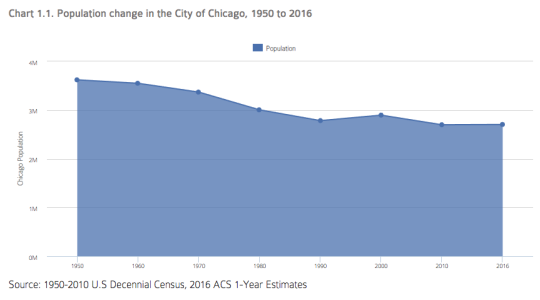
  • Decline of children in some, but not all, parts of Chicago

    The Institute for Housing Studies at DePaul University recently published this overview of the “socioeconomic factors affecting demand for housing in Chicago.”

    Here is the change in population in the City of Chicago from 1950 to 2016:

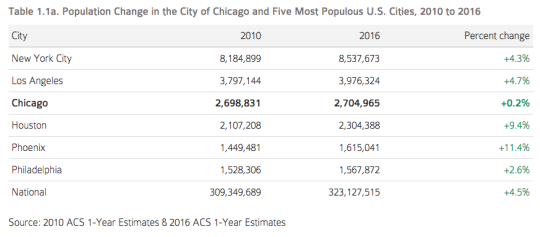
    And here is a comparison between Chicago and the five biggest cities in the US. Note the “sun and sprawl” phenomenon. Also note that the list below is for city proper boundaries.

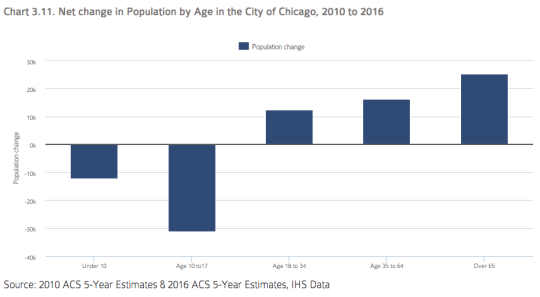
    One particularly interesting set of stats is the decline of children (population under the age of 18) in the city:

    Since 2010, the city has lost over 40,000 children and teenagers. 

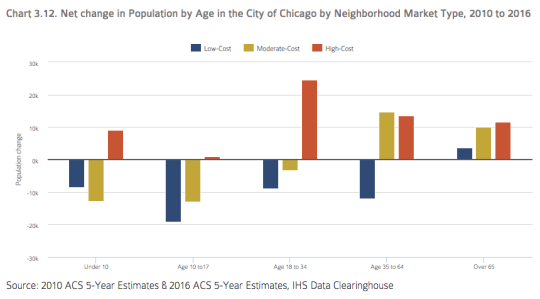
    But, if you break it down by neighborhood market type, it is the low-cost and moderate-cost neighborhoods that lost the population. The high-cost neighborhoods were up.

    The study posits that the old trend of moving to the suburbs after you have kids may not be for everyone – provided, of course, that you have the means. And it goes beyond Chicago. DC is predicting a 25% increase in K-12 students within the District.

    For the rest of the charts, click here.

  • Supreme Court dismisses TREB appeal

    Last Thursday the Supreme Court of Canada announced it would not hear an appeal from the Toronto Real Estate Board regarding a 2016 Competition Bureau decision aimed at giving consumers greater online access to information, such as historical (home) sale prices.

    I am not at all surprised by the Supreme Court’s decision and I have said pretty much all I want to say on this topic – over here. But since I believe this is a positive outcome for real estate consumers, I wanted to mention it on the blog because it appears to be a final decision.

    Some sites, such as Zoocasa, have already started publishing sold prices. Good.

  • Firm Profile: APOLLO Architects & Associates

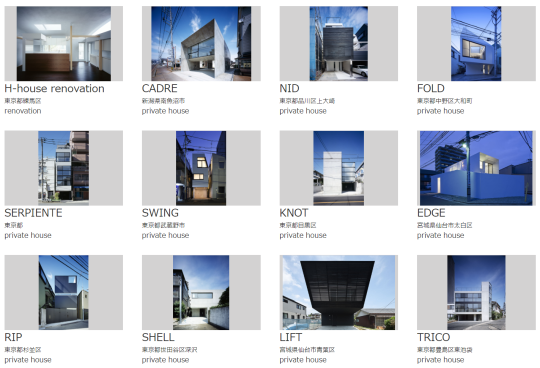
    This afternoon my friend Gabriel, of Gabriel Fain Architects, sent me the work of APOLLO Architects & Associates. They are based in Japan and South Korea. Here is a preview of some of their “private houses”:

    There is a lot that I love about these homes. 

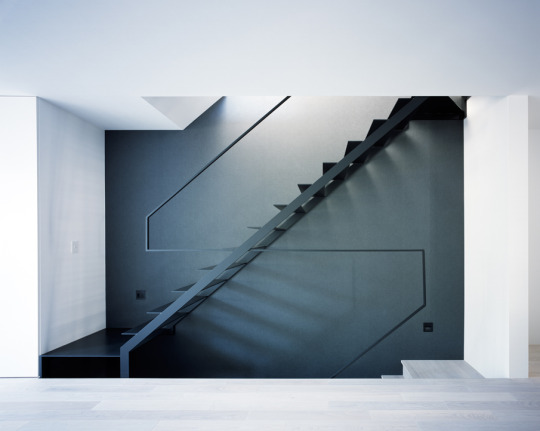
    I love their simplicity. Look at this handrail detail. Nothing more than what is absolutely necessary.

    I love their modesty. Many of the above homes hover around 150 square meters and many of them are much much smaller. 

    I love that each project’s description starts by talking about the owners and the site conditions, signaling that each home represents an individual response tailored to both the occupants and the context.

    And I love that many of these homes have been built on unthinkably small parcels of land in dense urban settings; parcels that would be dismissed as entirely useless in other parts of the world. 

    The site area for this home is 46.53 square meters and the building’s footprint is 36.93 square meters.

    Of course the Japanese housing market is a unique place. It’s worth pointing that out

    But as I browsed through what are effectively custom single family homes, I couldn’t help but be reminded that there’s a fine line between need and want.

    Small can be very beautiful. But small is also subjective.