Daily insights for city builders, delivered every morning at 6 AM ET. I’m Brandon Donnelly — a Toronto-based real estate developer and founder of Globizen. I’ve been writing here since 2013.

Tag: house

  • What are the most important condo and rental building amenities?

    Last night I casually asked the

    Twittersphere

    what the most important condo amenity is, besides a gym. 

    That tweet got quite a few responses – everything from rock climbing to a proper facility for realtor lock boxes.

    Given the response, I thought it would be worthwhile to be a bit more rigorous in this analysis. So I have created an online survey that you can very quickly fill out by clicking here

    Here’s how this is going to work:

    – You have to enter your email address. Sorry, some friction. I figured that would make the data a bit more reliable. Don’t worry your email is safe.

    – You can select a maximum of 3 amenities. One of them can be “Other”, in which case you would then enter in an amenity not already found on the list.

    – The order of the amenities in the survey is being randomized so as to avoid any possible it’s-near-the-top-and-I’m-too-lazy-to-scroll bias.

    – You’ll be able to see the results of the survey after you’ve responded. I’ll also post the results to this blog so that it’s public and people learn things. Individual emails will, of course, never be published.

    Developers should be building what people actually want and will use. Now is your chance to tell us what that is. Click here for the survey.
  • Don’t touch the walls

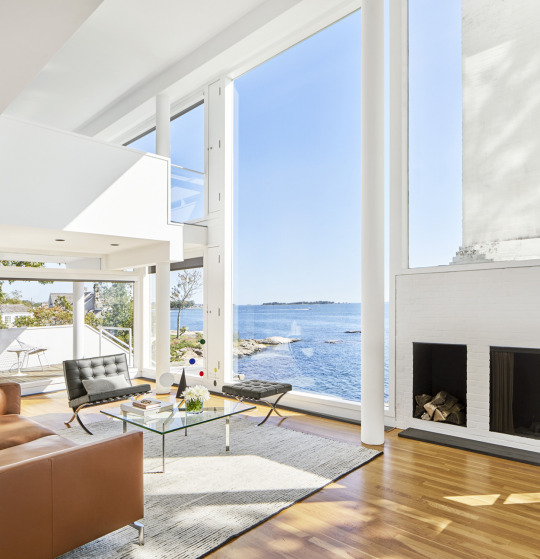
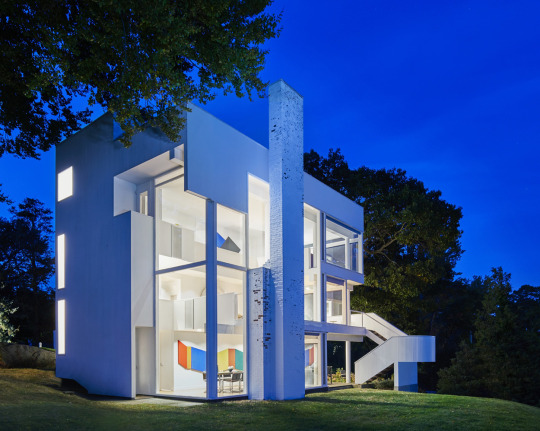
    The Smith House by Richard Meier turned 50 years old last year. In celebration of that, photographer Mike Schwartz took these photographs. And just recently they were published in Surface Magazine along with an interview of both Meier and Chuck Smith. Smith’s mother commissioned the house (completed in 1967) and he was 8 years old when the family moved in.

    My favorite comment in the article is this one by Smith:

    “Don’t throw balls in the house, and don’t touch the walls.” I must have heard “don’t touch the walls” three or four times a day. That said, there’s a crack in one of the windows where I shot it with a BB gun. We got away with some things.

    Modern architecture was supposed to be a perfectly engineered machine for living. But I guess living didn’t include touching the walls or shooting BB guns in the house.

    My favorite photos – both from Mike Schwartz – are these two:

    imageimage

    They feel like inversions of each other. The first one (day shot) is all about the views outward. Meier also talks about how the white on white helps to enhance this experience. The second one (night shot) turns the house inward on itself. Smith talks about how at night the view disappears and all you’re left with is your own reflection.

    I also like how the paint is flaking on the fireplace, which by the way, is perfectly on axis with the home’s entry. It makes you work a little bit for the view. Apparently keeping the paint on was a problem since day one. But it gives the house – which is otherwise seemingly perfect – a bit of a patina. 

    However, I’m guessing that Meier would prefer the paint stay on.

  • Peach skin

    I am fascinated by the way the Japanese think about housing. It is very different than the way we think about housing here in North America. Below is a small house tour that reinforces that. If you can’t see it below, click here.

    [youtube https://www.youtube.com/watch?v=4fEeh-8OFT8?rel=0&w=560&h=315]

  • What’s in a word? A lot.

    image

    One of the things I try to be aware of is the language that I use to describe things. Because the words and conventions we use can impact how we perceive things and they can also reinforce certain inherent biases. (I have a good friend who is an expert on this topic, so he has heightened my awareness.)

    For instance, I find that we tend to equate home and house. In other words, we’ll use the descriptors detached house and detached home interchangeably. And when we say that someone is a homeowner, it can sometimes, or often, mean that they have purchased a house.

    The same does not seem to be true for apartments and condominiums. Rarely do I hear people say that they live in an apartment home or a condominium home. It’s just an apartment or condo.

    This is meaningful because the emotionally charged word is home. It signifies a subjective (and usually comforting) experience, whereas the word house, I would argue, represents a building typology. And so by conflating the two, I often feel that we’re promoting a cultural bias that privileges houses as the ideal building typology. A true home is a house.

    The other word that I often think about in my business is unit. When we talk about multi-family buildings we often – and I’m definitely guilty of this – refer to each suite as a unit. We’ll say things like: “This is a 200 unit building and the unit mix is as follows…”

    Again, I am absolutely guilty of this. But at the same time, I often think about how this word, unit, is probably the furthest thing away from a home. Who wants to live in a unit? That doesn’t sound very pleasant. In fact, it sounds clinical. People want to live in a home. Now that’s a word with positive psychological associations.

    And so by reducing each home to a unit, I think it could be making us lose sight of the fact that each suite will eventually be lived in by someone who will then make it their home. Yes they can be considered a customer who are paying for a product (a great place to live), but I don’t think that should take anything away from its homeyness. 

    I live in a condominium and it is my home. What about you?

    Image: Flickr

  • British stock brick

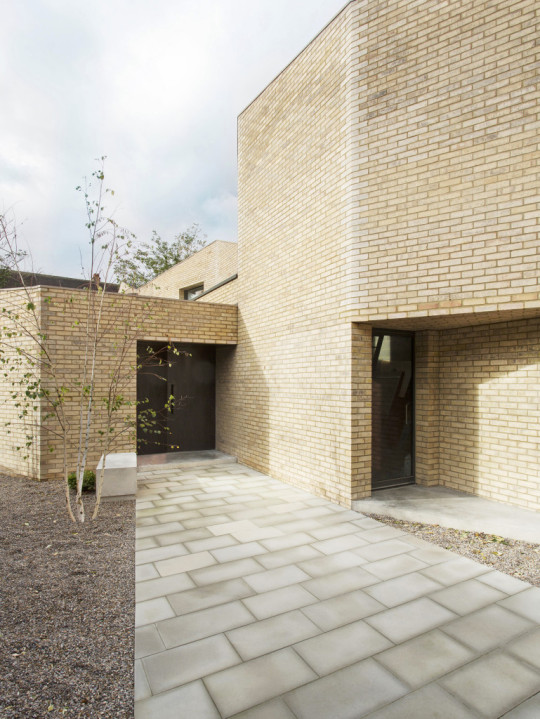
    On Tuesday night architect Jamie Fobert spoke at the Daniels Faculty at the University of Toronto. Fobert’s practice is based in London, but he is a graduate of the Daniels Faculty well before it was called that.

    I unfortunately wasn’t able to attend, but I did get on to looking at his work. And I want to share two of his projects that stood out for me. Both are in London.

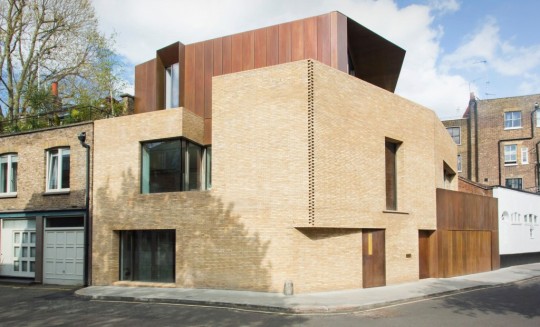
    The first is the Luker House:

    imageimage

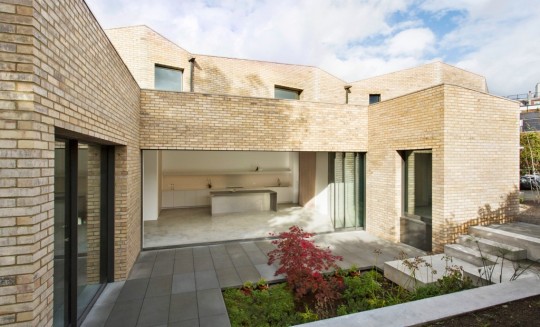
    And the second is the Levring House:

    imageimage

    What I love is how subtle the detailing is in both projects. The Luker House uses a “British stock brick” to mimic its context. But at the same time, it is applied in such a minimal way that the project feels entirely contemporary.

    You can see that same philosophy in the Levring House, which was built to complete an historic mews house.

    Finding the right balance between old and new is not always easy. But I like how Jamie Fobert has done it with these two London homes.

  • Living minimally

    “The wisdom of life consists in the elimination of non-essentials.”
    – Lin Yutang

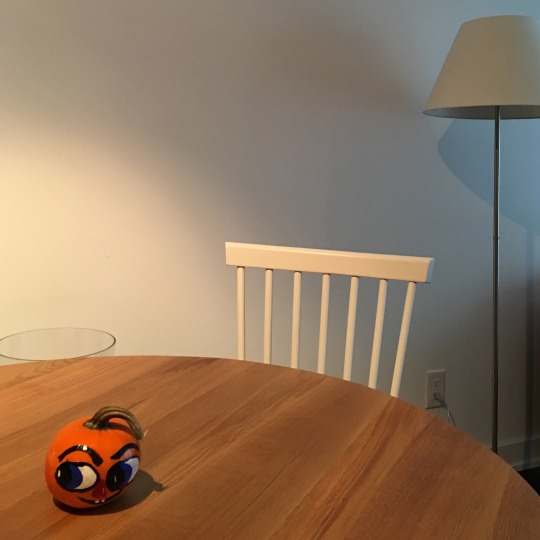
    Yesterday I posted the above photo on social media with the caption: 

    “This year I decided to go ALL OUT for Halloween.” 

    A friend then responded and said: 

    “A minimalist does Halloween. Love it.”

    I’ve been called a minimalist many times before. And it is certainly something that I think about. Oftentimes I feel like life is a constant battle against physical and mental clutter. But that the more you can rid yourself of that clutter, the happier and freer you will feel.

    It’s why I scan most of my paperwork into Evernote and then throw out the hard copies. It’s why I tend to wear a lot of white dress shirts and black t-shirts – it keeps life simple and reduces decision making. And it’s one of the reasons I’m so attracted to laneway houses and small spaces. I don’t think most of us need as much home as we think we do.

    If this is something that also interests you, I recommend checking out a blog called The Minimalists. I just recently subscribed to them.

  • Most people still want to raise kids in a house (not an apartment)

    https://500px.com/embed.js

    Yesterday I ran a quick 3-4 question survey on ATC called homes for families. The objective was to get a sense of people’s preferences for apartment vs. ground-related housing (house or townhouse) when it comes time to raise a family.

    The results are public so anybody can take a look at the data. At the time of writing this post there were already 70 responses. That’s not a huge data set, but the data is more or less what I expected to see. 

    Here’s what I found (if the data set was larger, I would have made charts):

    The vast majority of respondents were from Toronto. No surprise there. That reflects the readership of this blog, which itself can be quite Toronto-centric at times. (I’ve been trying to branch out more, I swear.) That said, I was thrilled to also see respondents from cities like Seattle, Denver, Chicago, Porto, and Sydney.

    Of the people who specified that they have kids, 11% live in an apartment. 17% live in a townhouse. And 72% live in a house. If you add houses and townhouses together, you get 89% of people with kids living in some kind of ground-related dwelling.

    Of the people who specified that they don’t have kids, 61% live in an apartment. 6% live in a townhouse. And 33% live in a house. This is the kind of split that I generally expected to see for Toronto.

    For the people who specified that they don’t have kids, they were then asked where they plan to move if/when they do have kids. 13% plan to move to another apartment. 8% plan to move to a townhouse. 33% plan to move to a house. 23% don’t plan to move (i.e. they are planning to stay put). And 23% don’t plan to have a family.

    Interestingly enough, 100% of the people who said that they were not planning to move, were already living in a ground-related housing unit (a house in almost all of the cases). So in reality – and if you exclude the people who don’t plan to have kids – about 83% of respondents expect to raise their kids in a house or townhouse.

    Again, this isn’t a big sample size, but the trend appears more or less flat. 89% of respondents who already have kids are already living in a ground-related unit. And when people were asked to project where they would like to be living once they have kids, 83% said they want a house or townhouse.

    Do you think these numbers accurately reflect consumer preferences in your city?

  • Survey: Homes for families

    I was looking through real estate listings this morning (which I do quite often out of sheer interest), and I started noticing a number of 3 bedroom condos (here in Toronto) that were priced under $1 million.

    Now, this is a lot of money now matter how you slice it. But given that the average price of a detached home in the city is now well over $1 million, I can’t help but wonder if condos will become more accepted as the family home.

    I’ve written about this topic a lot, because it’s something I’m interested in and I like living in a condo. But I’m seeing far more of my network looking for a low-rise house upon marriage/kids than for a bigger apartment/condo.

    So today I thought I would run a very quick survey. There are only 3-4 questions depending on how you answer and it basically revolves around housing type and whether or not you have or plan to have a family. I also ask what city you live in because I think this will have an impact on preferences.

    If you have 30 seconds, I would love to get your input and I’m sure the ATC community would be interested as well. The responses are anonymous, but I’ve made them public. Click here if you can’t see the survey below.

    [googleapps domain=”docs” dir=”a/brandondonnelly.com/forms/d/1wyMguhSlNv6pe6DS3duyJUqpzjImHI_KiYer1CKTVxo/viewform” query=”embedded=true” width=”640″ height=”600″ /]

  • Real estate and house music in Johannesburg

    I’ve written about the Ponte Tower in Johannesburg before. At 54 storeys, it is the tallest building in Africa. It’s located in Hillbrow, which is an inner city neighborhood known for its crime and poverty. 

    In the 1970s when the tower was built, Hillbrow was an Apartheid-designated white-only neighborhood and the tower was filled with affluent residents. But that didn’t last long and eventually the wealth fled for the suburbs.

    Here’s a brief 6 minute video talking the Ponte Tower. Let’s call it the real estate perspective. Click here if you can’t see it below.

    [youtube https://www.youtube.com/watch?v=3EIKmmSifqw?rel=0&w=560&h=315]

    Now, here’s a Real Scenes documentary talking about the thriving electronic music scene in Johannesburg. I think it’s fascinating to look at a city from a particular subculture and, compared to the first video, I get a very different feel for the city. Click here if you can’t see it below.

    [youtube https://www.youtube.com/watch?v=Ykt2f6o7-e8?rel=0&w=560&h=315]

  • Building environmentally integrated homes

    image

    There are a lot of great architecture firms in Toronto, but one that I’ve been following for years is Solares Architecture. Founded by a husband and wife – Tom Knezic and Christine Lolley – the firm focuses on “environmentally integrated homes”, which is simply their title for incredibly sustainable and efficient homes.

    I discovered the firm a few years ago when I was trying to get my laneway house off the ground, and they were unbelievably helpful. That laneway house is still a work in progress (more on that in the coming week), but I’ve followed the firm ever since. They have an awesome blog where they have meticulously profiled the renovation of their own environmentally integrated home. Their new home was also recently featured in the Globe and Mail.

    As more and more people wake up to the importance of sustainability, I think that firms such as Solares Architecture are going to become even more important. This is not just about a LEED rating, it’s about a mission. And I think that’s also great for the profession of architecture because it expresses a clear value proposition: this is not just about stye (though that’s important); this is about measurable performance.