Daily insights for city builders, delivered every morning at 6 AM ET. I’m Brandon Donnelly — a Toronto-based real estate developer and founder of Globizen. I’ve been writing here since 2013.

Tag: hotel

  • How to make money with low-risk licensing deals

    image

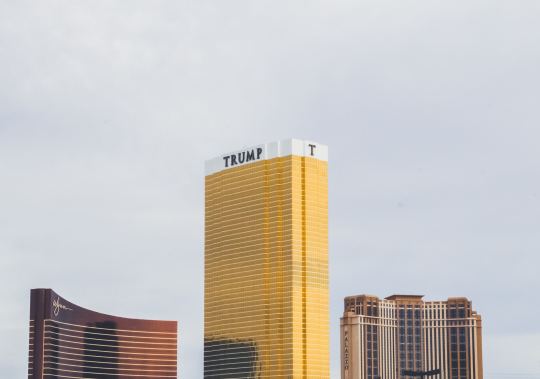
    This morning the Toronto Star published a detailed autopsy of the failed Trump International Hotel and Tower Toronto. It outlines the players, the investors, and what supposedly went wrong. Of course, the headline is all about how Trump managed to make money from the deal – through his well-publicized licensing business – even though the project went bankrupt.

    At the beginning of this year, the Washington Post reported that Trump’s name had been licensed and linked to over 50 properties and that these contracts have earned him at least USD$59 million in revenue. Outside of the US and Canada, the Trump Organization has (or had) deals in Brazil, Turkey, Azerbaijan, India, Indonesia, the UAE, and so on.

    There would have been more money to be made in the actual development of these properties, but the beauty of these licensing deals – for Trump – is that they are “low-effort, low-risk, high-reward.” In fact, this past summer it was reported that the breakup fee at Trump Toronto – the fee to exit all contracts with the Trump Organization – was at least $6 million (guessing that’s in USD).

    This story is not unique to Toronto. And so I have got to believe that there’s major brand dilution happening here. Does the Trump name really bring credibility to projects in some markets? How sustainable is this licensing business? 

    The only other thing that I would add to the Toronto Star article is that the hybrid condo-hotel model has proven to be difficult in this city. It’s perfectly fine to have residential condos and a hotel in one tower. There are lots of successful examples of those. But when the condo units can be put into a hotel pool (and there’s an IRR expectation on the part of individual owners), many seem to have been disappointed.

    Part of the challenge with this model here in Toronto is that the condo-hotel units typically end up with a commercial property tax rate, which, in this city, is much higher than the residential rate. This can suppress values.
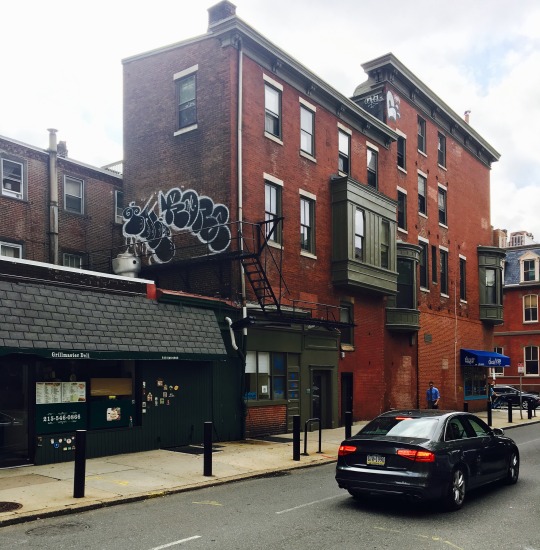
    Photo by NeONBRAND on Unsplash

  • My old Philly apartment

    I’m in Philly right now for a good friend’s wedding. 

    I always feel nostalgic when I come back to this city. Some of my most memorable years were spent here. I grew a lot in those 3 years. I also think that Philly is a highly underrated city – such an intimate urban scale.

    I’m staying at the newly renovated Warwick Hotel in Rittenhouse Square. The lobby is beautiful, as are the corridors, but the rooms already feel a bit a dated to me. However the Barcelona Chair in my room is a welcome addition. That thing will never go out of style.

    My hotel happens to be two blocks away from my old apartment at 17th and Spruce. So I decided to do a walk-by while I waited for my room to be ready. My roommate and I had the entire second floor of this building:

    It was palatial, especially given the bargain price and its location in Rittenhouse Square

    The graffiti you see above is located on the north wall of the kitchen. I think that’s a recent addition. The fire stair you see provided access to the roof of the building (as well as the street, I hope). I’m not sure we were supposed to go up there, but we obviously used it for parties.

    Grillmaster Deli is still next door. They kept me fed when I was studying at home and too busy to cook. That was often. And across the street is the Italian restaurant with its sidewalk patio that I used to look out onto from my bedroom.

    This walk-up apartment was by no means fancy. Though it did have ensuite laundry, which was a nice improvement from my previous place. But it was unabashedly urban. My kind of place.

  • Editions of Edition

    A few weeks ago Surface Magazine interviewed Ian Schrager. If you don’t know who Ian Schrager is, you should look him up. He started Studio 54 in New York (along with Steve Rubell) and is largely credited with inventing the boutique hotel genre. His latest project is Edition Hotels, which launched in London in 2013 and in Miami in 2014.

    What I found particularly interesting about the interview are the “serious snafus” that Edition experienced at the outset. There was a project in Waikiki and a project in Istanbul. Both failed. Here’s a guy who invented the genre and had partnered up with Marriott to pioneer a new brand. And it wasn’t until Edition London that they were able hit their stride.

    I say all of this not to poke fun at their failures. Nobody should do that. Poke fun at not trying instead. My point is the exact opposite. To create something new and amazing, such as Edition, you often have to subject yourself to a few scrapes and bruises along the way.

  • Sixth facade

    A new treehouse at the Treehotel in northern Sweden just opened up this week. (Their website wasn’t working at the time of writing this post.) 

    It was designed by the Oslo and New York-based Snøhetta. All 6 of the cabins at the Treehotel were designed by Scandinavian architects.

    The treehouse is clad in charred-timber (on trend right now) and is raised 10m (~3 storeys) up into the air to provide views out to the landscape. The underside of the treehouse, which is visible as you walk up its stairs, is finished with a black and white image of a forest. According to Dezeen, the architect calls it the sixth facade.

    Below is what that looks like. (Photo by Johan Jansson via designboom.)

    The net you (hopefully) see in the middle of the treehouse is so that you can sleep outside and stare up at the aurora borealis. The treehouse itself is 55 square meters (almost 600 square feet) and is designed to accommodate 5 guests. It has 2 bedrooms. I guess the 5th person has to sleep outside on the net terrace.

    Seeing this project has me excited to be back in the mountains next month.

  • WeWork launches first co-living space in New York

    I’ve written about co-living spaces before – here and probably elsewhere on this blog.

    Well this morning, WeWork (the co-working startup currently valued at a cool $16 billion) unveiled its inaugural co-living space on New York’s Wall Street. It’s called WeLive and Vanity Fair describes it as “Soho House meets Airbnb meets a tricked-out Restoration Hardware storeroom, but for the Slack Set.” 

    Got it?

    Ultimately, this location at 110 Wall Street will have 600 fully furnished WeLive apartments, but they’re coming online in tranches. This first release includes 200 units. Here’s a bit of information on pricing from Fast Company:

    “There are 200 units available—ranging from $1,375 per person in shared apartments to $2,000 for an individual studio—all with the option of either a month-by-month or yearly lease (a $125 monthly fee covers amenities). The apartments are about 450 square feet on average, with the largest units topping out at 1,000 square feet (one-bedroom apartments in the area, by comparison, range in prices from about $2,850 for 451 square feet to $3,500 for 700 square feet). Each apartment comes fully furnished, minimally decorated, and set up with cable and Internet at move-in.”

    But this is not just about price. The WeLive concept is about creating a strong sense of community within the building. Every floor, for instance, has some sort of common area to foster interaction – a space for yoga classes, a laundry room with a big pool table, and so on.

    I am interested in seeing how this concept pans out because I’ve had discussions before with people in the industry about how condos/apartments might be programmed to feel a bit more like hotels. Years ago, I even spoke to a major European company about trying to pioneer a model like this.

    Because there’s something very social about being in a hotel – something that I really like. You can walk down to the lobby bar by yourself and you never know who you might meet. That’s not really the case in many multi-family buildings.

    Now, part of that might have to do with the fact that people tend to be more open when they travel. But maybe WeLive can help create that kind of social interaction within the apartment building. I think that would be a positive thing.

  • Ace Hotel coming to Toronto’s Fashion District

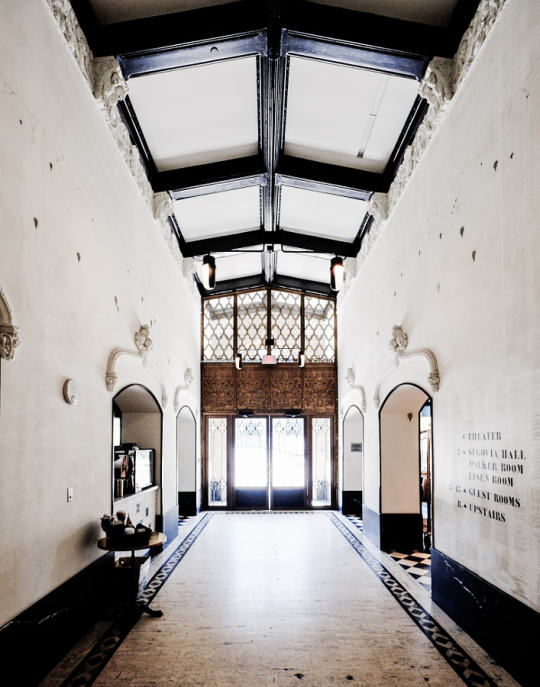
    https://500px.com/embed.js

    The word on the street right now is that Ace Hotel will be opening up a location in Toronto’s Fashion District at 51 Camden Street

    Unlike its other outposts around the world, which entailed the renovation of a historic building, this one will be a new build. And according to HotelChatter, Shim-Sutcliffe Architects have been retained for the project.

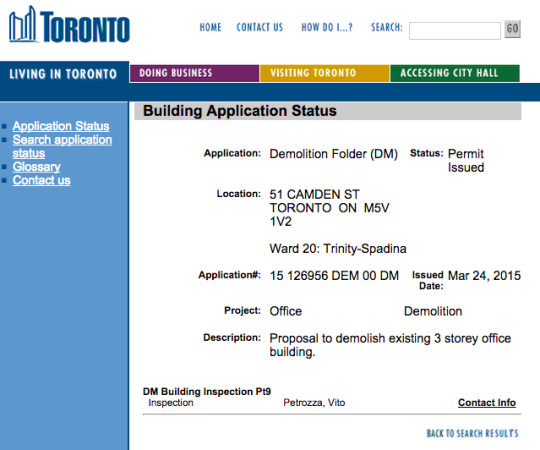
    Already a demolition permit has been issued for the existing 3 storey office building:

    image

    For those of you who may not be familiar with the Ace Hotel brand, the first hotel opened in Portland in 1999 when 3 friends transformed a halfway house into an affordable hotel for creative types. 

    Since then, the hotel has expanded to New York, Los Angeles, Seattle, Palm Springs, as well as many other cities, and has become a kind of cultural institution for the creative class.

    I’m excited that they have (allegedly) picked Toronto for their next property and I’m excited that Shim-Sutcliffe will be (supposedly) designing it.