Daily insights for city builders, delivered every morning at 6 AM ET. I’m Brandon Donnelly — a Toronto-based real estate developer and founder of Globizen. I’ve been writing here since 2013.

Tag: hotel

  • Happy new year

    We checked into a hotel in Montréal last night and I discovered this room service robot sitting next to the elevators. I have been told that if you ask it nicely, it will deliver champagne to your room. But I have yet to confirm this invaluable service.

    Montréal is one of my all-time favorite cities. I have been coming here regularly since I was a teenager and I have always felt uniquely drawn to it. It is the history, the urban grandeur, and the way that it feels effortlessly sexy. Not many cities are like this.

    So I’m happy to be ringing in the new year with family in this great city. Happy new year, everyone.

  • This is not a hotel

    I am not the target market for Restoration Hardware, I mean RH. But I do think it is interesting the way they are evolving their brand. At the beginning of 2021, the company announced a $105 million equity investment in a development project in Aspen, where it is planning a new guesthouse and, more broadly, a new “RH ecosystem” that will include residences, restaurants, a spa, etc. It hasn’t opened yet, but RH does now have a guesthouse in New York. To be clear, it is not a hotel:

    So what is RH trying to do with all this?

    Surface Magazine recently argued that they are trying to become the “public” version of Soho House. That is, a lifestyle omni-brand that isn’t membership-based, but that will still make you feel rich and special while you eat, sleep, play, and shop for various things for your home. Now, I do think that their target customers aren’t exactly the same person. But of course, I see the parallels. And it’s certainly interesting from an experiential retail, brand ecosystem, and real estate development standpoint. It gets the brand everywhere.

  • Culture, architecture, and hospitality in the Algarve

    The Addresses is a new hospitality brand that offers up beautifully designed custom houses for rent in the Algarve region of Portugal. Designed by Lisbon-based architects, atelier RUA, the company’s initial houses include a former fish warehouse that was renovated with both modern and traditional Portuguese touches.

    Alongside these retreats, the company (by way of a partnership with Studio Stories) also offers its guests curated “experiences.” This is all part of the company’s focus on culture, architecture, and hospitality.

    I am a big fan of these design-forward hospitality companies, which offer experiences that you could probably describe as existing somewhere between a traditional hotel and an Airbnb. Similar to the latter, they are decentralized and they are focused on authentic and local experiences.

    But they also come with a particular set of sensibilities — and perhaps some consistency — that you could argue starts to reflect your favorite hotel. Another more local example is Canadian-based Hinter, which I discovered and blogged about last fall.

    When I checked this past winter, Hinter’s houses were booked up several months in advance. This tells me that there’s more than a few people who are hungry for these sorts of travel experiences. At the same time, I think it speaks to the tremendous value that you can create with beautiful architecture and design.

  • What are your thoughts on Airbnb?

    Surface Magazine just republished this 2016 interview with Arne Sorenson. Sorenson was CEO of Marriott, but sadly passed away this week after a battle with pancreatic cancer.

    One of the questions he was asked in the interview was about the rise of Airbnb. This is how he responded:

    It’s fascinating. I hope we’re not as exposed to this as the taxi industry is right now.  Taxis in many cities are awful and hard to find. So here comes Uber with a better product. In the hotel business, I still think we can deliver better service, so we don’t have quite the same risk. Airbnb is fascinating. Increasingly, it’s less personal, and there are more dedicated units. The more they get into that space, they become a competitor. The story isn’t over, but we’re set up to compete well.

    Taxis were awful and that business model is done for good. But how do Sorenson’s comments about Airbnb hold up today?

    Marriott ended up launching its own home sharing platform in 2019, but it’s comparatively small as I understand it. There are also no shortage of bull cases for Airbnb (and just look at its market cap).

    But there are also headwinds. Barcelona, for example, is looking to permanently ban people from renting out private rooms on a short-term basis (< 30 days). This is even if the rest of the home remains owner occupied.

    So what use cases remain? Only extended stays?

    If I look at my own pre-pandemic travel record, I am largely in the hotel camp. I like the consistency and I like certain brands. But maybe that’s just me getting older. What do you all think? Leave a comment below.

  • Project Profile: Hotel Emiliano, Rio de Janeiro

    image

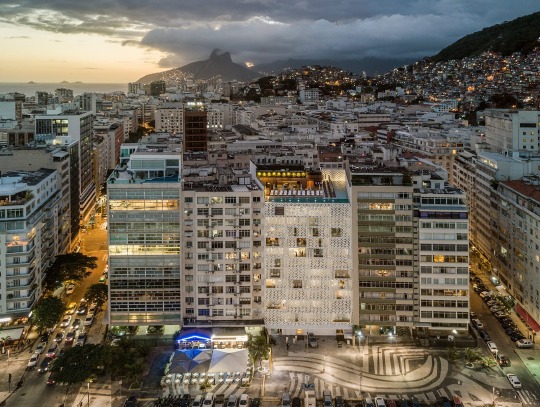
    This is not exactly a new project. The hotel, pictured above, opened in 2016 and was the brand’s second location (their first opened in São Paulo in 2001). But I like the story and how it was executed.

    Hotel Emiliano is the work of husband and wife team Gustavo Filgueiras and Andrea Colli Filgueiras. He is a hotelier. And she is a jewelry designer. Both wanted to pay homage to the glory days of Rio’s Copacabana Beach.

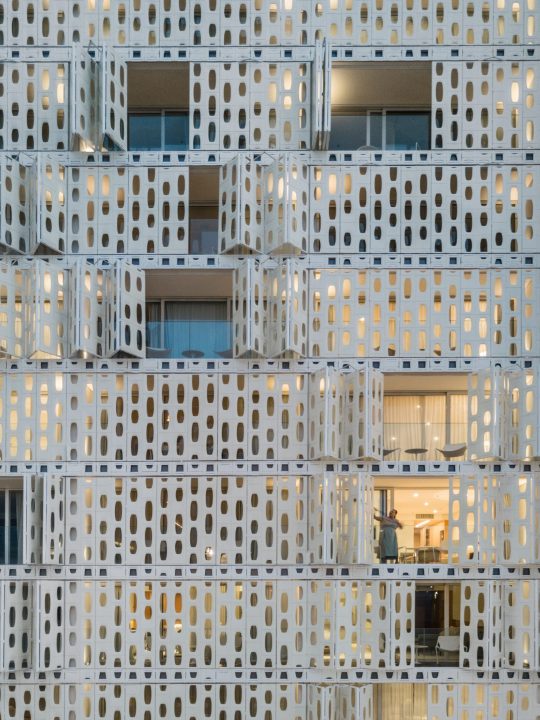
    Designed by Arthus Casas and Chad Oppenheim – who, by the way, recently built himself a stunning home in the Bahamas – the 90-room hotel is clad in white shutters that can be used to modulate the Brazilian sun. 

    image

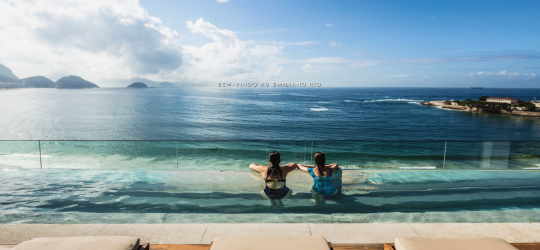
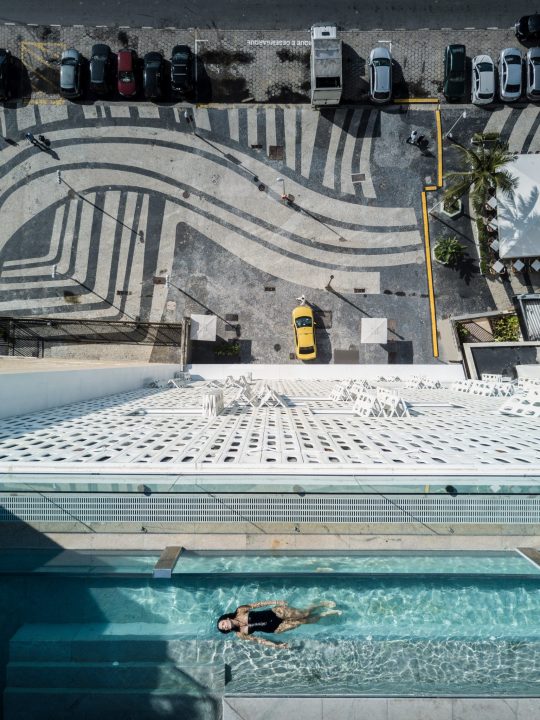
    On the roof is an infinity pool with a glazed side. Here is a screen grab from the hotel’s website:

    image

    And here is an aerial view of the pool taken from Dezeen:

    image

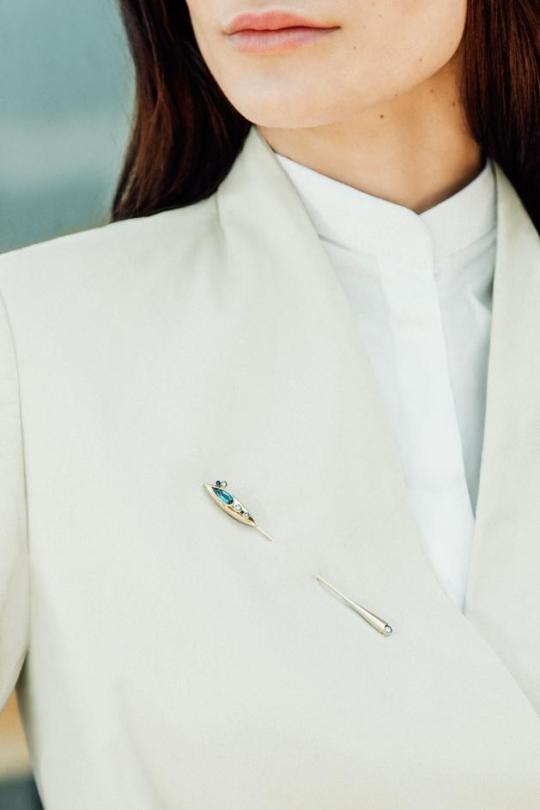
    The uniforms for the hotel were designed by Barbara Casasola and a custom jewelry collection was created by Andrea Colli. 

    image

    For more photos, check out Dezeen and Wallpaper.

    Architectural photography: Fernando Guerra

  • Battle of the Bungehuis

    image

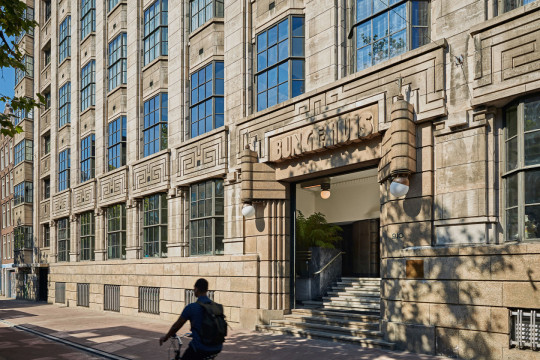
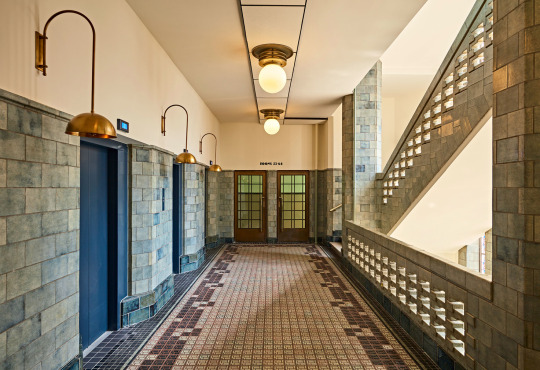
    This past July, Soho House Amsterdam opened up in the storied Bungehuis building. Not really news, other than the fact that FT just published this article talking about the building’s history and some of the project’s hurdles, which I of course found interesting.

    Completed in 1934, the Bungehuis originally served as the offices for a prominent trading company. The architect was ADN van Gendt. When he died during the building’s construction, Willem Jacob Klok took over.

    Also noteworthy about the building’s construction is that, according to Wikipedia, twenty houses had to be demolished in order for it to be constructed.

    This underscores a point that I have made before on the blog. Cities are not static. Most of us probably look at the Bungehuis and consider it to be quite a handsome piece of architecture. Some of us may even go so far as to say that we don’t make buildings like they used to.

    Soho House is on record saying that they were “not very budget-conscious” during the renovation because of the sense of responsibility that they felt around the building and its history.

    image

    But I think it’s important to note that this building was initially built for a for-profit company and things had to be demolished in order for it to come to fruition. 

    I can’t say for sure whether this development was opposed in the 1930s, but it may have been. Cities and buildings have a way of ingratiating themselves over time.

    In any event, starting in the 1970s, the building became home to the arts faculty at the University of Amsterdam. And as recent as 2015, it became home to the Bungehuis occupations – a protest occupation started by students and staff of the University who were opposed to a slew of academic cuts.

    image

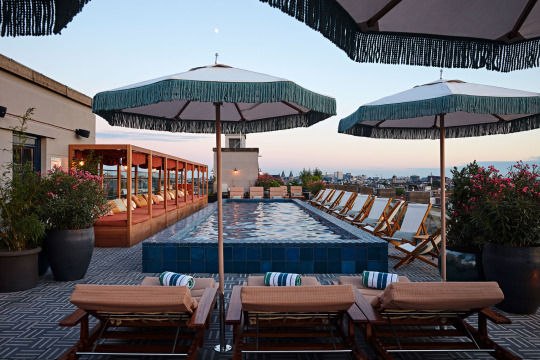
    Then in a state of poor repair, the building was ultimately sold to Aedes Real Estate, who now leases it to the Soho House Group for their private club and 79 room hotel. Above is a picture of the club’s rooftop pool and lounge.

    The big hurdle, or at least one of them, was the fact that Amsterdam currently has a moratorium on new hotels – as a way to try and mitigate “overtourism” – unless it can be demonstrated that it will represent “an extraordinary addition to the existing stock.”

    Since Soho House Amsterdam opened in July, I guess we know the answer to that test. But it sounds like it may have been a battle. That wouldn’t be a first for this building.

    Images: Soho House Group

  • The un-hotel

    According to Condé Nast, the coolest hotel trend for 2018 is the “un-hotel.” Here’s what they mean by that: “Instead of many rooms under one roof, these new un-hotels have different rooms in various locations, united only in character and concept.”

    I wrote about one of these un-hotels, the Vipp Shelter, back in the spring. I was interested both in how the company was using their hotel as a kind of shop and how they had adopted this decentralized approach to hospitality.

    Different rooms in different locations has got to create some diseconomies. But the appeal is clear. We are all craving new experiences.

    To me, it feels like a hybrid between an Airbnb and a boutique hotel. You get to “travel like a local”, but you’re still staying with a brand and there’s likely some sort of unifying concept across the portfolio.

    Check out the SWEETS hotel in Amsterdam.

    Image: SWEETS hotel

  • Before & After — Miami Beach

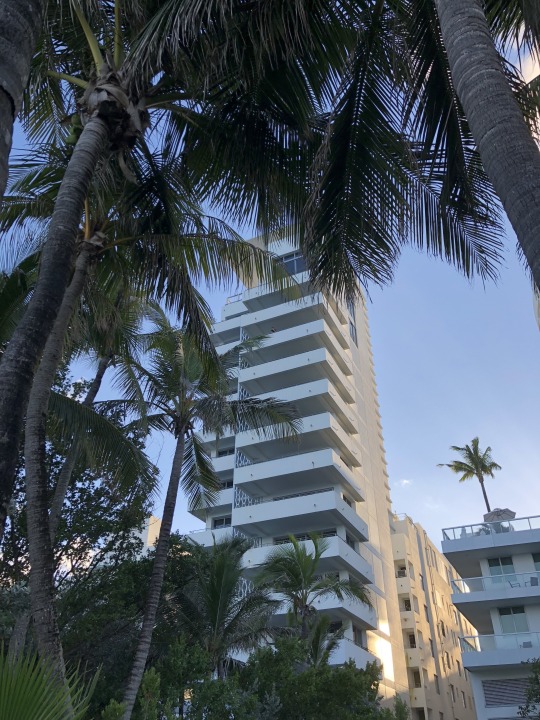
    We switched coasts today. Here is a photo of our Miami Beach hotel taken from the boardwalk with my iPhone:

    image

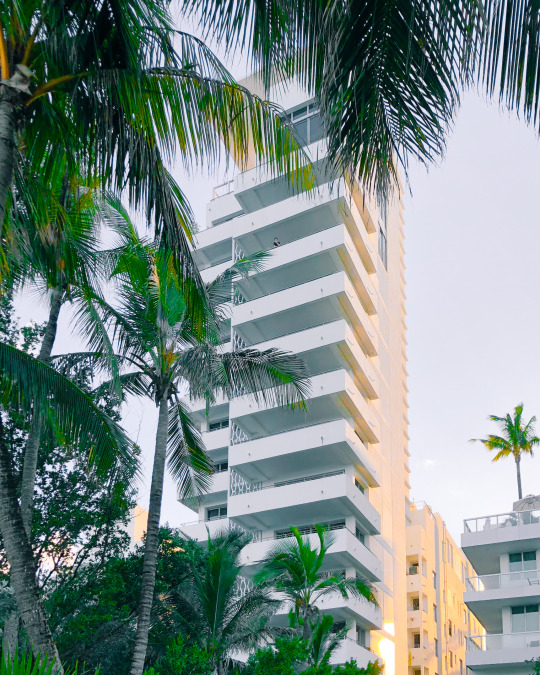
    And here is the after:

    image

    I took it into Lightroom. Fixed the alignment of the building. Whitened it, but brought out the beautiful warm sunset light on the north elevation. And I took the greenery in the foreground out of the shadows.

    The balconies remind me of one of Donald Judd’s “Untitled” pieces. He was one of my favorite artists. I also like the one dude leaning over that upper balcony. It gives the photo a tranquil feel, which is not usually how one would describe Miami Beach.

  • Hotel room as shop

    Vipp is a 3rd generation family-owned Danish company that makes everything from kitchens and lighting to prefab homes. But it all started with a pedal-controlled waste bin that Holger Nielsen – a metalworker – crafted for his wife Marie’s salon in 1939.

    I love their design philosophy. It is centered around “fewer but better products” and around lasting function over ephemeral trends.

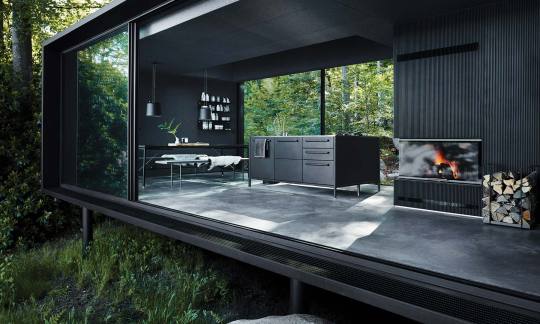
    But equally interesting is what they are doing with their Vipp Hotels. Instead of large hotels, they offer individual rooms in unique locations, such as this 55 square meter design object in the Swedish wilderness (pictured above).

    The rooms they have crafted are, not surprisingly, stunning. And that’s because they are deliberately designed as a tool to showcase their kitchens, bathrooms, bins, and other products. 

    Here is a quote from their CEO taken from a recent Surface article:

    “Traditional retail seems to be losing its power, but what is not losing power is our desire to see or do something interesting. I see our hotels as the experience economy coming alive,” says Kasper Egelund, CEO of Denmark-based Vipp.

    Clever.

    Image: Vipp

  • How to make money with low-risk licensing deals

    image

    This morning the Toronto Star published a detailed autopsy of the failed Trump International Hotel and Tower Toronto. It outlines the players, the investors, and what supposedly went wrong. Of course, the headline is all about how Trump managed to make money from the deal – through his well-publicized licensing business – even though the project went bankrupt.

    At the beginning of this year, the Washington Post reported that Trump’s name had been licensed and linked to over 50 properties and that these contracts have earned him at least USD$59 million in revenue. Outside of the US and Canada, the Trump Organization has (or had) deals in Brazil, Turkey, Azerbaijan, India, Indonesia, the UAE, and so on.

    There would have been more money to be made in the actual development of these properties, but the beauty of these licensing deals – for Trump – is that they are “low-effort, low-risk, high-reward.” In fact, this past summer it was reported that the breakup fee at Trump Toronto – the fee to exit all contracts with the Trump Organization – was at least $6 million (guessing that’s in USD).

    This story is not unique to Toronto. And so I have got to believe that there’s major brand dilution happening here. Does the Trump name really bring credibility to projects in some markets? How sustainable is this licensing business? 

    The only other thing that I would add to the Toronto Star article is that the hybrid condo-hotel model has proven to be difficult in this city. It’s perfectly fine to have residential condos and a hotel in one tower. There are lots of successful examples of those. But when the condo units can be put into a hotel pool (and there’s an IRR expectation on the part of individual owners), many seem to have been disappointed.

    Part of the challenge with this model here in Toronto is that the condo-hotel units typically end up with a commercial property tax rate, which, in this city, is much higher than the residential rate. This can suppress values.

    Photo by NeONBRAND on Unsplash