
Daily insights for city builders, delivered every morning at 6 AM ET. I’m Brandon Donnelly — a Toronto-based real estate developer and founder of Globizen. I’ve been writing here since 2013.

Tag: home buying

  • Why do more people in Quebec sell their home without an agent?

    If you ask most people, they’ll tell you that real estate agents will never ever disappear. 

    Despite the internet, mobile phones, social networks, and companies (here in Canada) such as comFree and PropertyGuys, the bulk of the market still employs an agent when it comes time to buy and/or sell a home. This is true both in Canada and the United States. And it may always be true.

    But there are lots of entrepreneurs and people in the real estate community experimenting with different models. OpenDoor and Open Listings are two new startups out of the US that I’ve been following closely.

    At the same time, there is a certain fraction of the market that is willing to go at it alone. By some estimates this number could be as high as 25% in Canada. Of course, this is a hard number to measure accurately since there isn’t just one method of selling a home privately and many transactions likely go untracked.

    But one thing that I’ve been wondering for awhile now is why the percentage of private home sales is seemingly so much higher in the province of Quebec. According to Wikipedia, this number might be greater than 50%. And a quick search on comFree (duProprio in Quebec) seems to suggest that this may indeed be the case.

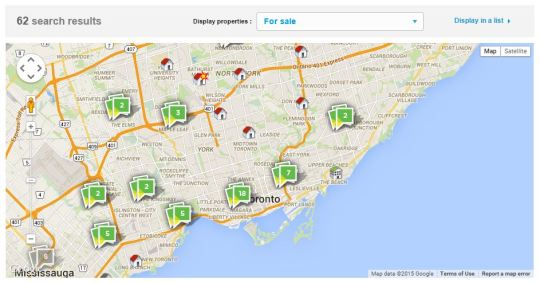
    Here are the comFree search results for downtown Toronto. There are 62 properties.
    image

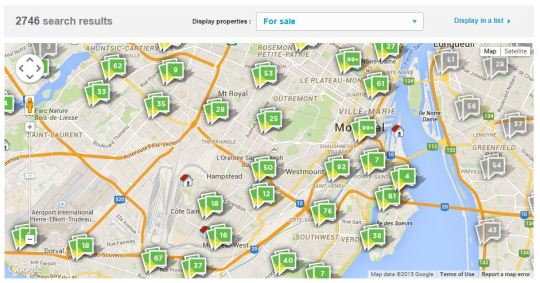
    And here are the duProprio search results for downtown Montreal (notice I tried to maintain the same zoom level). There are 2,746 properties.
    image

    If anyone has any insights on this phenomenon, I would love to hear from you in the comment section below. I don’t know why this is the way it is.
  • Should you own or rent your home?

    image

    I was at a good friend’s wedding last night (congratulations again to Adrien + Rachel!), and one of the topics that came up at our table was whether it is better to own or rent your home. Now, in North America, conventional wisdom would suggest – almost mandate – that you have to own your place. If you’re still a renter, well then you’re “throwing away your money” my friend.

    But are you really? 

    A big part of the value of owning your home is that it’s forced savings. Every month when you make those principal and interest payments, you’re paying down your mortgage and socking away money for the future. And this can be a great thing for a lot of people, particularly if you’re not disciplined enough to save otherwise.

    But when you own a home, you’re also spending time and money on maintaining that home, and you’re also tying up capital that could be used elsewhere. So consider this: what if, instead of putting your savings towards a downpayment, you simply continued to rent and created an investment portfolio that you then contributed to on a regular basis just as you would a home?

    Depending on your assumptions, renting could turn out to put you further ahead financially. Here’s an example of that scenario from the Globe and Mail.

    Similarly, I remember being told in business school that companies that own their own real estate tend to under perform those that do not. And the rationale is that owning lots of real estate ties up capital that could otherwise be reinvested in the core business. In other words, if your core business is making widgets, then invest your money in making better widgets, not in real estate.

    But this is not to say that everybody should rent. Obviously I’m a big believer in real estate. And for a lot of people, owning may make sense. This post was really just to say that the owning vs. renting decision may not be as black and white as you might think.

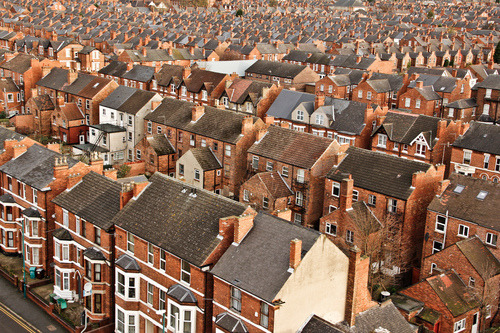
    Image: Flickr

  • Thoughts on real estate marketplaces

    The responses are still coming in from yesterday’s real estate marketplace survey, but I wanted to thank everyone who took the time to complete it. I really appreciate it. I was reviewing the responses this morning and I thought there were a couple of interesting takeaways.

    First, most people who own a home have at one point or another thought about selling that home. And even the people who haven’t thought about it, said they would be willing to sell under the right circumstances. That is, they would sell for the right price, for a better place, and so on. At the time of writing this, nobody said they would never ever sell.

    I think this is interesting because, even though the real estate market is a highly illiquid market, my hunch is that it could be made a lot more liquid with the right frameworks in place and if the barriers to selling could be reduced.

    And sure enough, many of the folks who said they have thought about selling (but haven’t yet), said it’s partially because it’s too expensive and too much work to sell. But in addition to these barriers, two other points emerged that I hadn’t given a lot of thought to before – but make total sense. 

    Homeowners also said that they haven’t sold because they’re too emotionally attached to their home and because they’re afraid they won’t be able to find another place to move into. 

    Because of how illiquid the real estate market is and because home transactions are typically asymmetric (that is, buying and selling are independent actions), there appears to be a real concern that you could sell your home and never find anything better.

    And since a home is such an emotion filled asset (as opposed to, say, a stock), people are naturally afraid of making the wrong choice. But then that begs the question: Are we, as real estate consumers, being left with suboptimal outcomes because we’re simply too afraid of the making the wrong choice?

  • Your thoughts on the real estate marketplace, please

    If you know me at all, then you’ll know that I’m a big proponent of introducing more technology into the real estate space. I think the industry is one that has been incredibly slow to embrace technology, but that it’s only a matter of time before it does.

    Two months ago I wrote a post talking about how entrepreneur and venture capitalist Keith Rabois is working on a home buying startup codenamed Homerun — now called Opendoor. Here’s how he recently described the state of affairs:

    “My friend [PayPal and Palantir cofounder] Peter Thiel suggested that I come up with an idea to innovate in residential real estate,” Rabois told VentureBeat in April. “It’s the largest part of the economy unaffected by the Internet. And that was definitely true then, and even with things like Trulia and Zillow, it’s fundamentally true today. But the process of [selling a home] hasn’t been transformed by technology.”

    What Opendoor is trying to do is really interesting, but I have a different idea. It’s called Unlyst. And today I’d like to ask the ATC community for a small favor. I’ve created a short home buying and selling survey (embedded below) that will take you at most 2 minutes to complete.

    If you could please take the time to do that, I would greatly appreciate it. I’ve made the results public as well, so you’ll be able to see how buyers and sellers currently feel about the real estate marketplace. If you can’t see the survey below, please click here. Thanks for your help!

    [googleapps domain=”docs” dir=”forms/d/1bKvHYdSUfYH3AGX7LcLIK0_-i7nt7WIdTmHeaJ8P7pY/viewform” query=”embedded=true” width=”760″ height=”500″ /]

  • What will selling your home look like in 5 years?

    Earlier today it was announced that Keith Rabois–a venture capitalist with Khosla Ventures and the former COO of Square–is working on a startup that hopes to make selling your home as easy as a few clicks. The codename for the project is Homerun.

    “For most people, homes are their biggest asset and it’s completely illiquid,” Rabois said. “This is a really expensive transaction for many people. What we’re going to provide is instant certainty, liquidity and convenience for normal people to sell their homes.”

    Rabois hasn’t shared many details, other than a pretty basic flow:

    “I’m not going to describe the exact flow, but the general point is you’ll tell us what your address is and confirm your identity, then we’ll allow you to sell your home,” he said. “Obviously there’s a variety of ways you could verify your identity that we didn’t have in 2003, when I originally thought of this idea. Like Facebook Connect.”

    This, of course, isn’t a new idea. Many companies have tried to improve the process of buying and selling homes by going online. But it’s a space that hasn’t seen a lot of innovation. I’m particularly interested because I work in real estate and it’s always struck me as a lumbering archaic industry.

    So when a name like Keith Rabois announces that they’re working on solving a problem in this space, I get excited about what might come about.