https://500px.com/embed.js
With the recent talk around downtown Cleveland’s resurgence, I am reminded that for those of us living near the Great Lakes, we are living in one of the most important urban agglomerations in the world: The Great Lakes Megalopolis.
In 1962, French geographer Jean Gottmann wrote a seminal book called, Megalopolis: The Urbanized Northeastern Seaboard of the United States. And in it, he described the remarkable clustering of cities in the northeast, running from Boston in the north to Washington D.C. in the south. He called this the Northeast Megalopolis.
The term megalopolis simply refers to a clustering or chain of generally adjacent metropolitan areas.
Then in the 1960s and 1970s, architect and planner Constantinos Doxiadis started writing about the emergence of what he called the Great Lakes Megalopolis. In his mind, a contiguous urban region was forming that stretched all the way from Chicago in the west to Quebec City in the north east. And at its economic center was the city of Detroit.
More recently, Richard Florida, as well as others, have been referring to these urban clusters as mega-regions. And in the case of the Great Lakes, Florida broke the area down into two distinct regions: Chi-Pitts in the west and Tor-Buff-Chester in the east. (I think you can guess how the names were derived.)
According to his research, these two mega-regions have a combined population of almost 60 million people and an economic output equivalent to almost $3 trillion. That places it in line with the Northeast Megalopolis. But according to the Brookings Institution, the output coming from the Great Lakes could be closer to $4.5 trillion.
Whatever the case may be and whatever you want to call it, the Great Lakes Megalopolis is unquestionably an economic and cultural powerhouse. But this has me wondering whether or not we’re doing enough to unleash its full potential.
When I attended Joe Berridge’s talk last week on Toronto as a global city, I asked him how he thought we should be organizing our cities and regions. Do city-states make sense? Should we be rethinking the relationship between provinces/states and cities?
His response was that we should be creating agencies and entities with regional authority (as opposed to fighting to make any constitutional changes). For example, the Toronto region should not have an array of competing transit agencies (as it does today). It should have one regional transit authority that blankets the region. People, ideas, and capital don’t follow borders.
So with that in mind, what opportunities are there for us to unite the metropolitan areas within the Great Lakes Megalopolis?
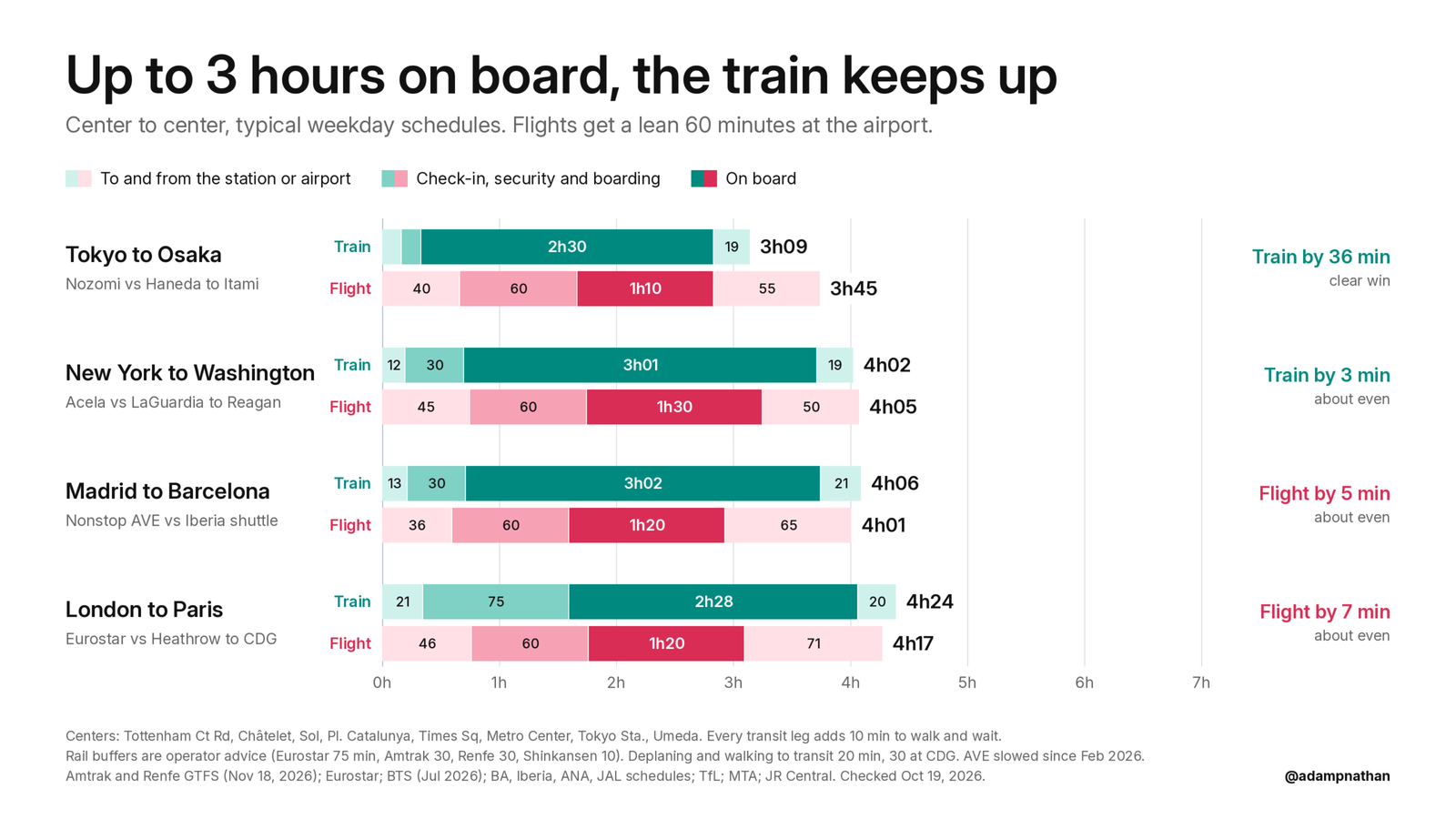
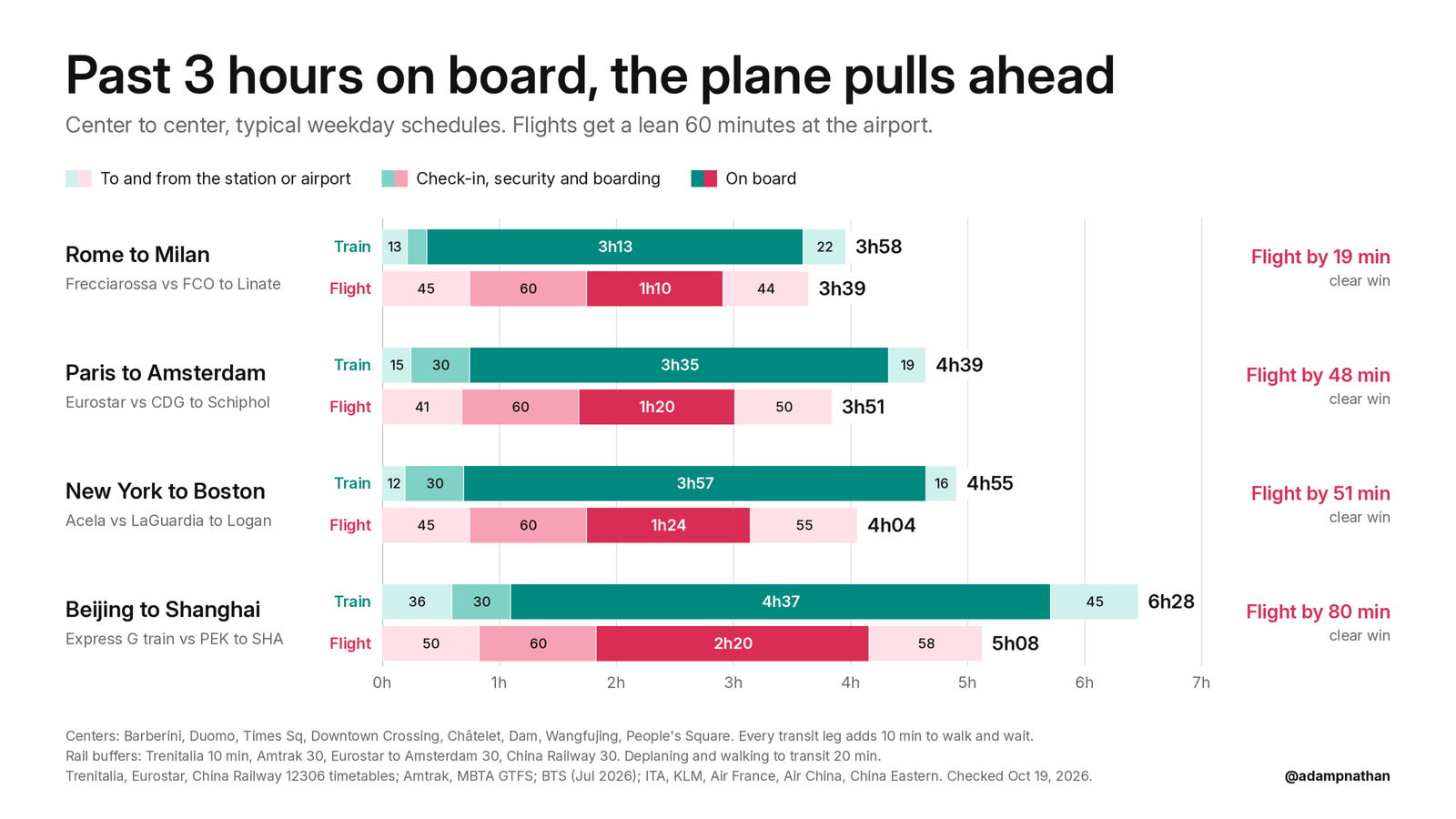
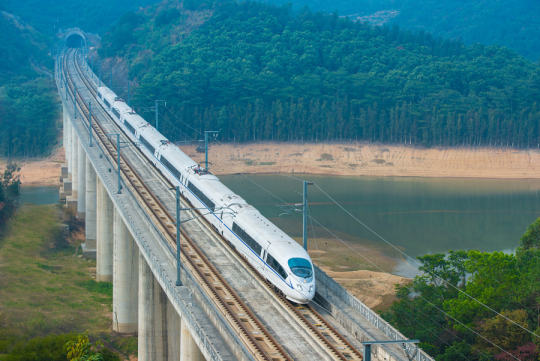
The first idea that comes to my mind is a high speed rail network that seamlessly connects to each city’s local transit network. Imagine a Great Lakes bullet train that could zip you across the region. It would completely reorganize the spatial landscape.
Here’s an excerpt from a recent report by the Independent Transport Commission called, Ambitions & Opportunities – Understanding the Spatial Effects of High Speed Rail:
There has been a global shift of economic power and influence from nation states to cities and city-regions. Today’s successful cities collaborate across existing boundaries to form polycentric metropolitan regions. As a result cities function in a much less self-contained manner than they did fifty years ago. Longterm trends in the pattern of urban settlement reflect the interplay between opportunities for dispersal afforded by greater mobility, and economic and social forces promoting concentration.
But what else could we be doing to empower the Great Lakes Megalopolis?
I would love to hear your thoughts in the comment section below. I think there’s a strong case to be made for thinking at the scale of the megalopolis and not just at the scale of our own backyard.