Daily insights for city builders, delivered every morning at 6 AM ET. I’m Brandon Donnelly — a Toronto-based real estate developer and founder of Globizen. I’ve been writing here since 2013.

Tag: greater toronto area

  • The year of the condo

    Over the past 5 years or so, real estate headlines in the Greater Toronto Area have often focused on the rapid appreciation of low-rise housing. High-rise housing simply wasn’t appreciating at the same rate – at least in aggregate terms.

    But 2017 has brought a different story. 

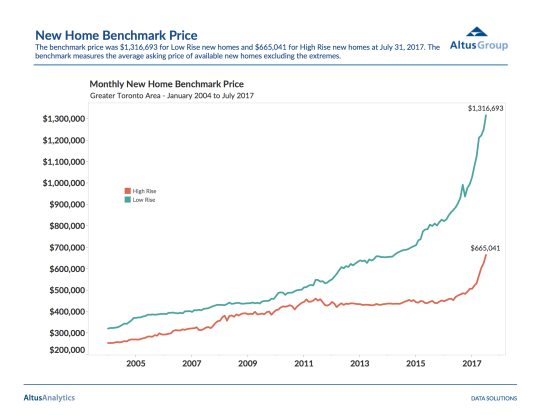
    If you look at BILD’s “New Homes Monthly Market Report” (data provided by Altus Group as of July 2017), you can see that high-rise pricing is now on a similar trajectory to low-rise pricing.

    Here is that graph:
    image

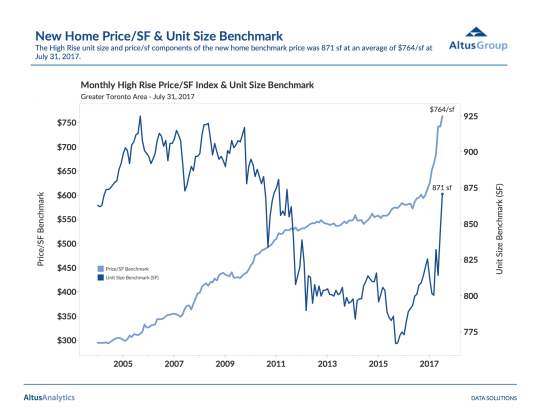
    This sharp uptick in pricing is also apparent when you look at the average price per square foot of new high-rise inventory. As of July, it was $764 psf across the GTA. See below.

    At the same time, average unit sizes have also jumped up to 871 square feet. So not only are new high-rise homes becoming more expensive on a normalized basis, they are also getting bigger, which further increases prices.
    image

    I recognize that we’re only seeing data up to the end of July, but, from the looks of it, 2017 is shaping up to be an extraordinary year for the condo.

    Of course, part of the reason this is happening is because remaining inventory for both low-rise and high-rise product is hitting 10-year lows. We’re back to the topic of supply.

    If you’re curious how some of these numbers have changed from the month prior (June 2017), check out this post.

  • Only 9% of new homes sold last month were low-rise single-family

    BILD (the Building Industry and Land Development Association) just released its June 2017 data for the Greater Toronto Area’s new housing market. You can read the full release here. But I would like to point out a couple of things:

    About 91 percent of the 6,046 new homes sold last month were multi-family condo apartments in high-rise and mid-rise buildings and stacked townhomes, while only nine percent were low-rise single-family homes.

    The average price of available new condo apartments continued to rise with an increase of more than $22,000 from May. June’s $627,000 average price marked a 34 percent increase from a year ago. The average available unit was 845 square feet with an average price per square foot of $742. A year ago, the average price per square foot was $587.

    From this, it’s once again clear that Toronto is in the midst of an incredible transformation from a low-rise city to a more vertical city. New supply on the low-rise side of the market is heavily constrained.

    I get the sense sometimes that many people in this city, and others, believe that access to a low-rise detached house should be a right. Go to school. Get a good job. And then buy that house with a backyard. 

    The data speaks to a very different reality.

    Photo by Victoria Heath on Unsplash

  • A bureaucratic boondoggle

    Below is a brief interview with Peter Gilgan from Bloomberg North. Peter is the CEO of Mattamy Homes, which is the largest home builder in the Greater Toronto Area.

    In this video he talks about his concerns around a housing bubble and how the government is choking off housing supply in this region – leaving his sales offices mostly closed.

    He’s absolutely right in that everything does seem to take longer, and longer. But I suspect that some of you will debate his comment that homeownership should be considered a right.

    Is renting a bad thing?

    If you can’t see the video below, click here.

    //cdn.playwire.com/bolt/js/zeus/embed.js

  • 5 decades of condo development in Toronto

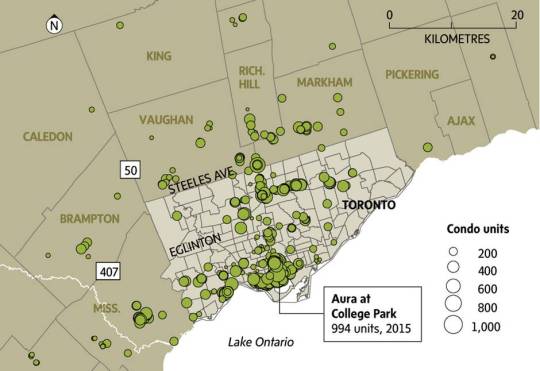
    Jeff Gray and John Sopinski just published a terrific set of maps in the Globe and Mail outlining 5 decades of condo growth in Toronto.

    Ontario first introduced the Condominium Act in 1968. The first condo project was supposedly built by Bert Winberg – founder of Rockport Group – between 1968-1969. He saw what developers were doing in California and Florida and he brought it to Toronto.

    Since then, here is what condo supply has looked like across the Greater Toronto Area:

    • 1970s – 11,697 units
    • 1980s – 30,881 units
    • 1990s – 49,503 units
    • 2000s – 103,683 units
    • 2010s – 109,497 units (up to September 2016)

    And here’s the map for the 2010s:

    We are now a condo city. For the full set of maps, click through here.

  • February housing numbers

    The Building Industry and Land Development Association (BILD) announced its February (2017) numbers today for the Greater Toronto Area. Here are some of the highlights:

    – At the end of February, there were 324 detached homes available in developer inventories. Ten years ago, this number was was 12,064 (detached only). 

    – If you consider all low-rise homes (detached, semi-detached, and towns) the above numbers are 1,001 (2017) and 17,304 (2007), respectively.

    – Average price of a new detached house is now $1,469,449. For all ground-related housing – again, including semis and towns – it’s $1,081,013.

    – There were more than twice as many condo apartments sold than low-rise homes in February.

    – Condo inventory is also dropping and reached a low of 10,342 units.

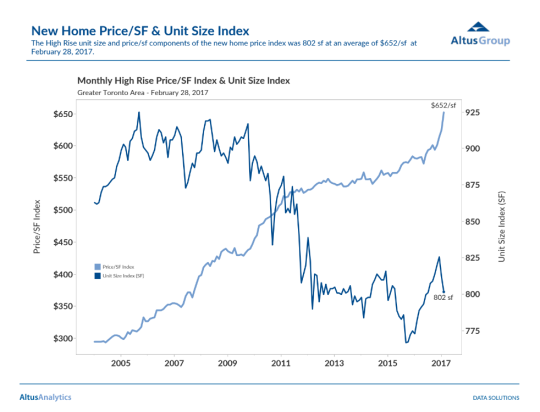
    – Average price of a new condo increased to $652 per square foot and the average unit size decreased to 802 square feet.

    Here’s that information in a chart from Altus Group:

    image

    The overall story here continues to be about decreasing inventory and increasing prices. There’s also the ongoing shift from low-rise to higher density housing, which I don’t view as a bad thing.

  • Supply down. Prices up. Unit sizes up.

    This morning BILD released its November new home data for the Greater Toronto Area. 

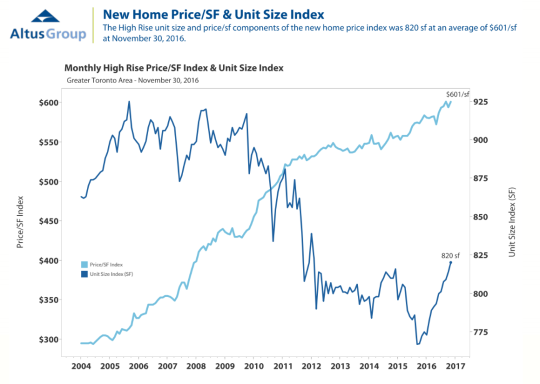
    The story is one we’ve been hearing for a while. Supply is trending downward. It’s becoming harder to build. And prices are up. The average new detached house in this region is now C$1,230,961 and the average new condo is now C$493,137 (~$601 psf). Overall, average pricing is up 20% for low-rise houses and up 10% for condos, compared to this time last year.

    One of the things that I find interesting about the data is how unit sizes have recently started trending upward on the high-rise (condo) side. Below is a chart from Altus Group that shows what I’m talking about. Look at the increase from the middle of 2015 to today. The average is now 820 sf, compared to what looks to be around 770 sf at its lowest point.

    image

    Now, there are a number of possible explanations for this. One is that boomers are starting to sell their houses and move into condos in larger numbers, and 500 sf just don’t do. The market is starting to cater to them. Another possible explanation is that low-rise pricing has become so out of reach for many people and families, that they are now looking to condos to fill that need.

    I see both scenarios playing out in new projects today. But this second scenario, in particular, is one that I’ve been thinking about for a few years now. It’s less obvious than the boomer play. But I think of it as the market maturing. I like seeing families living right in the city and I am sure we will see more of that in the future.

  • Low-rise vs. high-rise

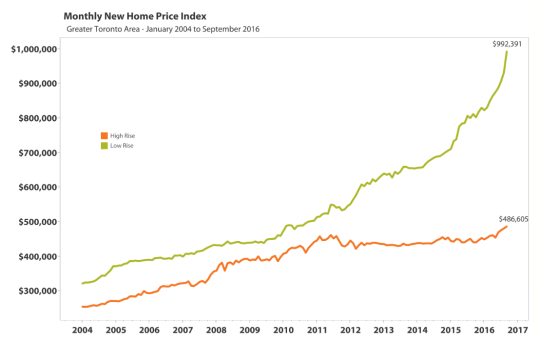
    Yesterday I sent out this tweet, which included this graph:

    The chart is from Altus Group and it is a monthly price index of new low-rise vs. high-rise housing in the Greater Toronto Area (GTA). I have posted similar charts in the past, but every time this chart gets updated the spread widens and the market looks even crazier.

    Some people responded on Twitter by saying that this is clearly an indication of a bubble. I don’t know if that is the case. 

    But, as I have said many times before, I do believe that it tells a vivid story around supply. Low-rise housing is severely supply constrained in the GTA and high-rise housing is less so. That has helped to stabilize pricing in the latter case.

    Now, you could look at this chart and say that the pace of low-rise price increases is simply unsustainable. The market must correct. 

    But you could also look at it and say that the market is going through a fundamental shift whereby more and more families will start living up, as opposed to out – which should then translate into high-rise pricing trending upwards as unit sizes increase. This is where I think we are headed. 

    What do you reckon is happening?

  • Home prices and negative interest rates

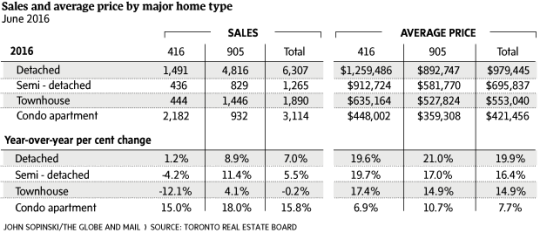
    This morning, I am looking at the following chart of average home prices in the Greater Toronto Area:

    It’s from this Globe and Mail article.

    These are staggering numbers. The average price of a detached home in the suburbs (905 area code) increased 21% year-over-year. In the city (416 area code), the increase was 19.6% YOY. These numbers are almost unbelievable.

    The article focuses on low supply (decrease in listings) and high demand. And that is certainly a big part of what’s going on here in this city, as well as in many others.

    But of course, the backdrop to all of this is our low / zero / negative interest rate environment.

    Larry Summers has a great post on his blog (which I discovered this morning via Fred Wilson) that talks about this “remarkable financial moment.” In some instances, real interest rates are actually negative! (You should read his post.)

    There are always people threatening that interests rates just have to go up. But Larry, as well as others, continue to argue that natural real interest rates are likely to remain close to zero going forward.

    Fred mentions Albert Wenger on his blog this morning and I have written about him before as well, here. In his book World After Capital, Albert argues that capital is no longer the scarce resource of our time. Instead, it has become attention.

    If you believe all of this to be true, then perhaps the numbers at the top of this post aren’t so unbelievable after all.

  • In support of a super-metro

    I just got home from a couple of coffee meetings, an afternoon bike ride and an impromptu basketball shootaround. Toronto is a different place in the summer. And it feels great to be biking everywhere.

    But Toronto is more than just Toronto. Toronto is at the center of a much larger urban agglomeration. And our continued success is going to partially hinge on our ability to work together in a coordinated way.

    Greg Spencer of the Martin Prosperity Institute recently published an interesting article called: Is it time to create a super-Metro? Here’s what it’s about:

    Our research at the Martin Prosperity Institute shows that economic competition is now primarily between cities rather than countries. To be successful in this environment, Toronto and its neighbours need to find a way to erase local divisions and solve their problems together. 

    Toronto is a wildly successful city, world-class in many respects. When our current institutional arrangements were forged, no one predicted the level of growth the region is experiencing. Status quo local government arrangements cannot adequately deliver the level of co-operation and collaboration needed to cope and plan for the future.

    Greg believes that the answer is a new regional authority that could give “democratic legitimacy to the very important decisions being made for the benefit of the wider region.” 

    I’m not going to comment on how all of this should be executed, but I fully agree that we need to think and act as one consolidated urban entity.

    Cities are the economic driver of the new global economy, but many (most?) of our governance structures do not properly reflect that reality. And the risk is that we are allowing arbitrary municipal boundaries and lack of coordination to hinder our ability to compete globally.

    This goes for Toronto and it goes for every other city region around the world.

  • Art is the new steel — a photo essay of Hamilton, Ontario

    Today, myself and a few others spent the afternoon urban exploring Hamilton, Ontario with Thomas Allen of the blog, Rebuild Hamilton. If you don’t read his blog, you should. Since he started writing about 3 years ago, he has really emerged as the online voice of Hamilton’s urban resurgence.

    If you’re from Toronto, you’ve probably been hearing rumblings about good things happening west of the city. Rumblings about people leaving overpriced Toronto for greener and more affordable pastures in Hamilton, and even that it was destined to become the Brooklyn of Toronto. That basically means Millennials, trendy coffee shops, and beards. (For the record, Thomas’s beard is very nice.)

    With all this talk of affordable housing and beards, I decided that it was time to make a pilgrimage. Below is a short photo essay of what we saw.

    We started the day east of Hamilton where we found this beauty along the waterfront. I don’t know who designed it, but it’s called the Cube House and it was construction managed by Toms + McNally Design. You’re going to want to click through to their website to see the interior photos. 

    image

    We then made our way downtown to Jackson Square. Jackson Square is one of two downtown malls (the other is the post-modern City Centre Mall). It has seen a lot of investment in recent years and I was impressed to find a thriving grocery store. 

    image

    Then came a taco and craft beer pit stop at The Mule. I would definitely recommend this spot if you happen to find yourself in the area.

    imageimage

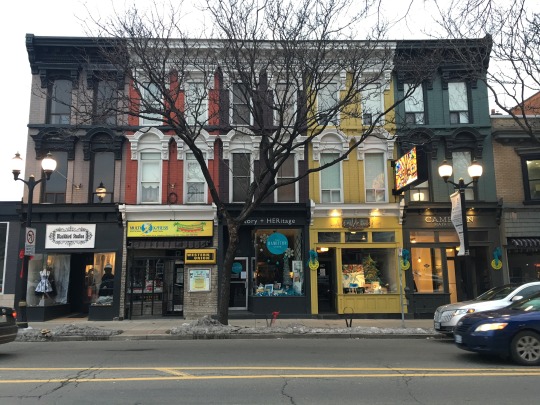
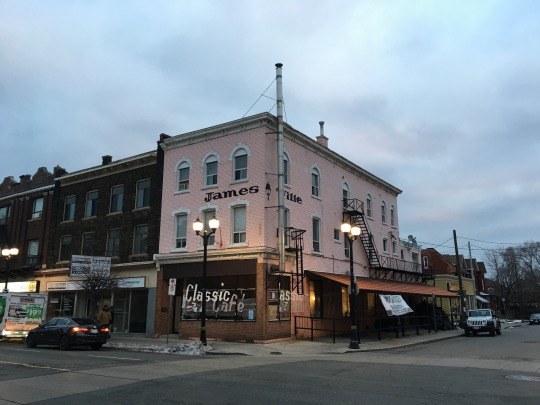
    Following this, we walked James Street North, which we were told has only really come up in the past 5 years or so. And alongside with this resurgence has come the slogan: Art is the new steel. This, of course, is responding to the fact that Hamilton is the steel capital of Canada, but that the industry is facing many challenges. I think it’s a neat slogan.

    imageimage

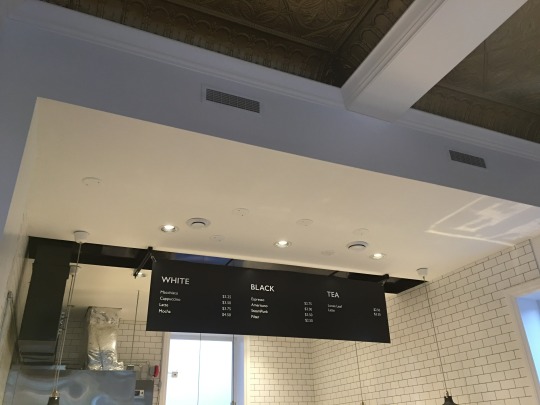
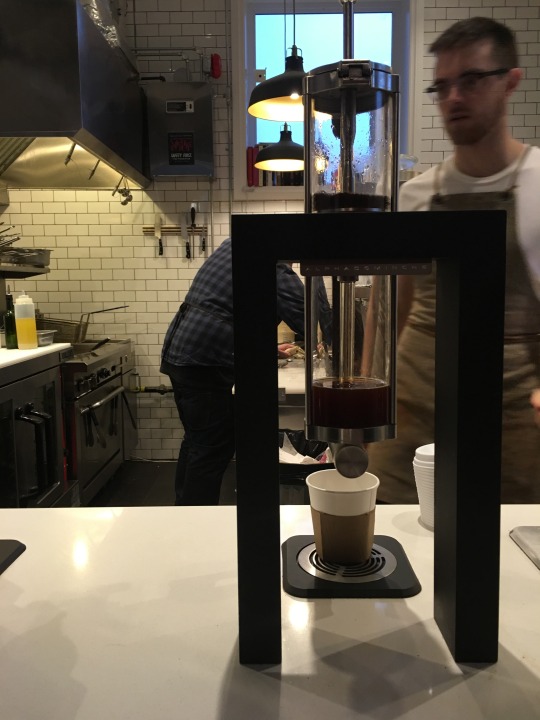
    On James Street we stopped in at Saint James Espresso Bar & Eatery, and it was everything we had hoped for and more. It was more because not only was it a cool space with great coffee, but they had some fancy thing called steam punk coffee.

    imageimage

    After James Street, we then drove around checking out some of the other areas in the city such as Kirkendall and neighboring Dundas.

    All in all, this afternoon was a great reminder that we are truly living in an urban century. It’s not just the Toronto’s, Berlin’s and Shanghai’s of the of the world that are laying down bike lanes, investing in art and culture, and generally reimagining their city centers. It’s also happening in smaller and mid-sized cities such as Hamilton. And that’s really exciting.