Daily insights for city builders, delivered every morning at 6 AM ET. I’m Brandon Donnelly — a Toronto-based real estate developer and founder of Globizen. I’ve been writing here since 2013.

Tag: germany

  • Lisbon is the new Berlin

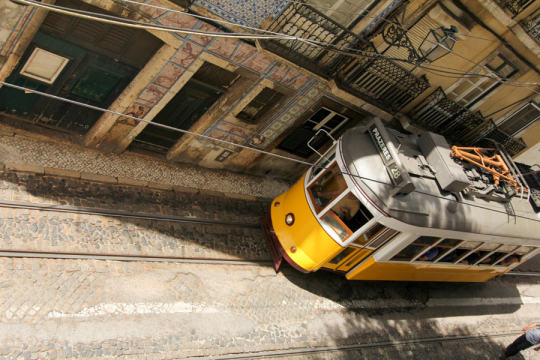
    Photograph Tramway à Lisbonne by yannick le goff on 500px

    Tramway à Lisbonne by yannick le goff on 500px

    This morning I stumbled upon a blog post by a Berlin-based venture capitalist (Ciarán O’Leary) talking about how Lisbon feels like the next Berlin. In other words, it feels like the next great European startup hub.

    Here’s his reasoning:

    • The tech scene is organic – it happened on its own, came out of nowhere. That is much more fun and sustainable than any kind of political or targeted economic strategy.
    • There are a ton of constraints (funding, local talent base, etc.) so entrepreneurs need to hustle to make things happen. Hustle is good.
    • Berlin was an economic void, Portugal had a massive economic crisis and Lisbon sure isn’t letting that crisis go to waste.
    • Entrepreneurship has the real chance to be a center stage act, not a side gig. It’s everywhere.
    • The city is very, very cool. You just want to be here.
    • You can have a great life on a startup salary.
    • Everyone speaks english; everyone is welcoming and open. That matters a lot when you want to attract international talent and funding.

    Of course, he’s not the only one calling Lisbon the next Berlin. The EU also named Lisbon “the most entrepreneurial region in Europe in 2015.” Isn’t it interesting what can grow out of economic crisis? See PIGS.

    I also don’t think it’s a coincidence that Monocle held its first ever Quality of Life Conference in Lisbon. It’s a testament to O’Leary’s point above that, “You just want to be here.”

    And while being “very, very cool” may not seem immediately relevant to creating a robust startup environment, it really is. It may be the most important point. It makes the city a magnet for talent. 

    Just the other day I was trying to explain Berlin to someone and I used a similar lexicon. I said: “It’s an unbelievably cool city. It bleeds hipness. You will love it.”

    If you’re a city, that’s a great thing to be.

  • Community building on the east side of downtown

    Yesterday evening I went to the Toronto Christmas Market in the Distillery District. I had actually never been before, but it was something that I had been meaning to check out for a few years now. And it was wonderful. If you’ve never been, I would highly recommend you go. This past weekend was the opening weekend and it runs all throughout Advent until Sunday, December 21st.

    For those of who might not be aware, the Christmas Market festivity is a longstanding tradition that originated primarily in German-speaking Europe. Accounts of a “December market” were found as early as the end of the 13th century. The Toronto Christmas Market is a slightly more recent tradition (it’s only about 5 years old), but it was already selected as one of the world’s best.

    But Christmas carollers and hot toddies aside, the Market is also a fantastic opportunity to see the Distillery District in all its glory. Every time I visit the Distillery, I can’t help but feel how lucky we are to have a district like this in the city. The architecture and scale of the place is incredible and – alongside the Toronto Islands and Kensington Market, sometimes – it’s pretty much the only car free zone we have.

    However as someone who lived near the Distillery District in its early days, I remember how much of an “island” it was when it first opened. It felt disconnected from the rest of the city and the only way to get people there was to hold a special event. The retailers and galleries struggled and many didn’t last.

    With all the condos that have been built, literally on top of the neighborhood, that has changed dramatically. Today the area has become much more balanced as a mixed-use community. But the real tipping point, I think, will come next year when Toronto hosts the Pan Am Games and the West Don Lands neighborhood starts to come online just to the east of Cherry Street.

    Now all of a sudden the Distillery District won’t feel like the edge of downtown anymore, it will feel more like the middle of it. As my friend Alex Bozikovic of the Globe and Mail pointed out to me this weekend, the Pan Am Games are going to put the east side of downtown on people’s radars. And I would completely agree. Once that happens, the Distillery District will finally start to reach its maximum potential.

  • 8,000 glowing balloons are recreating the Berlin Wall

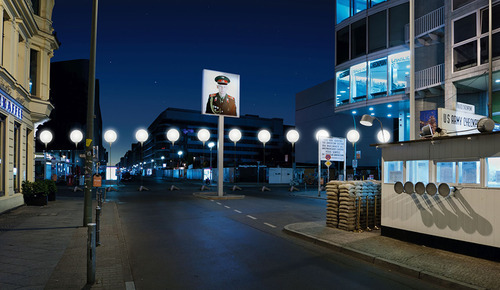
    Starting today and running until the end of the weekend, 8,000 glowing balloons will recreate a 15 km long section of the former Berlin Wall. It’s to commemorate 25 years since the fall of the wall

    Here’s an aerial view of what it’ll look like:

    I think this is a fascinating art installation. And I wish I could be there to see it first hand. My friend Nick Iozzo is there right now with his wife, so hopefully they’ll respond to this blog post with some highlights.

    Lots of cities today feel divided in some way.

    Here in Toronto, we talk about the divide between the core and the inner suburbs – the latter of which has become known as Ford Nation. We also talk about an east vs. west divide, though it’s not really a legitimate concern. Developer Urban Capital actually has an event next week on this very topic that I’ll be attending. They’re calling it: “an intelligent discussion on a not so important topic.”

    But none of these divides are anything like the divide faced in Berlin. The Berlin Wall was arguably the most visible physical manifestation of the entire Cold War. Once a major point of entry for Eastern Bloc emigrants, East Berlin was basically bleeding people before the wall went up in 1961. It was designed to keep East Berliners in place.

    I can’t even imagine what it would be like to live in a place like that.

    Images: Daniel Buche

  • Looking at Berlin from the back of a napkin

    image

    Depending on who you ask, the current condo boom in Toronto might be viewed as either a good thing or a bad thing (most will have an opinion). Some people think we’re simply building too many condos. And that too many of them are small, crappy, and geared towards investors – as opposed to end-users.

    While I do agree that we could be doing more to create complete communities – that is communities which serve everyone from young singles to families with 3 kids – I think there are also a lot of positives associated with Toronto’s condo obsession (full disclosure: I’m a real estate developer). It has made us more sustainable, more reliant on alternate forms of (non-car) transport, and it has made us a generally more exciting place to live.

    But that doesn’t mean we can’t do better.

    Lately I’ve been wondering about how other cities do it. Specifically, those European cities that somehow seem to always be able to build awesome housing projects. So today I thought I would pick one and profile it. What I really wish I had was a financial pro forma to share with you all, but in the absence of that, I’ll try and back into some of the numbers on my own.

    image

    Shown above is the 9-storey Charlotte Apartments in Berlin. It was developed by WI Concept and designed by Michels Architecture Office. I chose this building because I think it’s an attractive one and because it’s of the (mid-rise) scale that Toronto is trying to promote along its many avenues. Here are the stats I was able to find online:

    • Site area: 347 square meters / 3,735 square feet
    • Building area: 3,000 square meters / 32,291 square feet (says gross floor area, but I don’t know if that means the same thing as it does here)
    • Construction costs: €3.6 million / C$5,065,691 (as of today’s rate)
    • Units: 28 (sold within 1 week of launch)
    • Market: ~70% of buyers in Berlin are believed to be foreign investors

    Now, if we were actually building a development pro forma, we’d want to get a lot more granular in our calculations than what I’m about to do. We’d want to know gross construction area, net saleable areas, and so on. But for the purposes of this post (and because I have very little information), I’m going to simplify and do a back of the napkin set of calculations.

    Based on above, the FSI (or density) is about 8.65 (32,291 sf / 3,735 sf). That’s roughly in line with many of the residential developments we’re seeing in downtown Toronto. The average unit size works out to be about 1,153 sf (32,291 sf / 28 units), but in reality it would be less if that 32,291 number is truly the gross floor area. You would need to subtract the corridors and other non-saleable areas from it before doing this calc. Either way, that is big compared to most downtown Toronto condos, but small for Berlin standards according to this ArchDaily article. Finally, if we look at construction costs, we get $157 per square foot in Canadian dollars ($5.065M / 32,291 sf). That’s low. I wonder what the land costs were.

    Again, these numbers are rough rough. But I wanted to try and dissect a European development project and compare it to Toronto. The most surprising figure seems to be the low construction costs. If you have any additional insights, I would love to hear from you in the comment section below.

    Images: Werner Huthmacher

  • I got 88 buildings

    The NH Deutscher Kaiser Hotel building in Munich looks like this:

    It’s a fairly conventional tower on top of a podium.

    However, photographer Victor Enrich decided to reimagine what this tower and podium could look like. In fact, he did it 88 times. Here’s the video. And here’s one example:

    The realism of each is incredible. It’s also a fascinating—albeit outlandish—study of what could be.

  • Who is worried about Canada’s housing market?

    Atlantic Cities just posted an article on the world’s 5 largest housing bubbles. In descending order of real growth, they are:

    1. Israel
    2. Norway
    3. Switzerland
    4. Canada
    5. Germany

    Not surprisingly, Canada is on the list. There is, of course, lots of talk both locally and abroad about the stability and sustainability of our housing market. Here’s what the article had to say about Canada:

    “With real home price appreciation near 20 percent, Canada’s home price growth has been raising eyebrows. Bank of Canada governor Stephen Poloz doesn’t see a bubble, but others aren’t so sure. Climbing alongside housing prices have been levels of household debt, which surmounted 165 percent of income in the second quarter of 2013. (That’s not too far from where they were in the U.S. before it suffered its housing crisis.) And the Bank of Canada itself has even warned about risks posed by frothy condo sectors in big cities like Toronto. A few hedge funds, such as San Francisco-based Hyphen Partners, have even made high-profile bets on a Canadian housing bust. They haven’t paid off, yet.”

    And here’s the full list of countries:

    image

    Overall, it’s not surprising to see that Canadian home prices have risen so dramatically since Q1-2009. As the US sank into deep recession (2008-2009), Canadian credit became cheap in order to stave off a recession of our own. This fuelled the housing market, which is an asset class that’s inextricably linked to financing costs.

    The same thing happened in Ireland, which today sits at the bottom of the above list. It has seen real prices drop roughly 40% since Q1-2009. By adopting the euro currency, Ireland no longer had control over its own monetary policy (this is one of the downfalls of a centralized currency). So when the economies of the larger continental countries stuttered, interest rates were dropped. For the strong Irish economy, it ended up creating a housing bubble.

    I worked in Ireland in the summer of 2007 and I remember people telling me about this. Already at this point there was concern that the market had become overheated. There are obvious parallels to what has happened in Canada, even though we don’t share a common currency. The Canadian and US economies are inextricably linked.

    So will the same thing that happened to Ireland happen here in Canada? Nobody knows for sure, but I think we can take comfort in the actions taken by the feds to tighten up lending. They’re acutely aware of what easy credit has done to the housing market and they’re trying to temper it. And it’s certainly had an impact.

    Early this week when I was on the panel about investing in condominiums, I asked a lot of the realtors about what they were seeing in the residential marketplace. A great number of them told me that their clients were struggling to obtain financing. A lot of deals were falling through because of it.

    If you’re worried about our housing market, this should be taken as great news. Choke off credit and you choke off real estate.