Daily insights for city builders, delivered every morning at 6 AM ET. I’m Brandon Donnelly — a Toronto-based real estate developer and founder of Globizen. I’ve been writing here since 2013.

Tag: gentrification

  • The Starbucks Effect

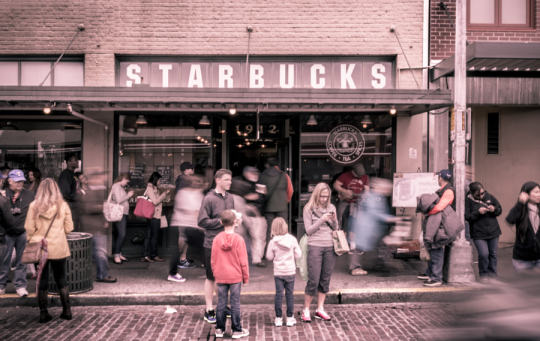
    The Original Starbucks in Motion by Brad Telker on 500px.com

    https://500px.com/embed.js

    This afternoon I was chatting with some friends about Toronto real estate (which is something that happens a lot in this city), and we started talking about “The Starbucks Effect.”

    Basically, we were talking about how this neighborhood just got a Starbucks and how that neighborhood already has one. We were, like a lot of people, using Starbucks as a proxy for neighborhoods that are emerging and neighborhoods that have already arrived.

    There’s been a lot of discussion about the correlation between home prices and the presence of a Starbucks. But the big question is what comes first: the home prices or the Starbucks?

    Earlier this year, the CEO, Spencer Rascoff, and Chief Economist, Stan Humphries, of Zillow.com argued that the mere presence of a Starbucks can cause gentrification. 

    They argued that Starbucks knows the next hot neighborhood before anyone else does and that they are “the fuel, not the follower.” And through their data they demonstrated that homes (in the US) near a Starbucks appreciated significantly faster than homes not near a Starbucks, or even homes near other coffee shops such as Dunkin’ Donuts.

    But I – as well as others – wonder if this isn’t an oversimplification.

    I certainly believe that Starbucks could help fuel home prices in a neighborhood. I think it gives people a comfort level that the neighborhood has arrived and that there are people in the area who are willing and able to spend money on discretionary items.

    But I suspect that for Starbucks it’s a balancing act. They would never want to be late to an emerging neighborhood (and miss that prime corner property), but they also don’t want to be in the business of placing bets on neighborhoods with very few vital signs.

    So I think it’s both. I think Starbucks is analyzing the data and watching home prices like a hawk (the follow) and when it reaches a certain point, they move. And that likely causes a further acceleration of neighborhood change (the fuel).

    What do you think? I would love to learn more about their site selection process.
  • A culture of beer gardens

    It’s great to be back in Philly. I have a real sense of nostalgia around this city.

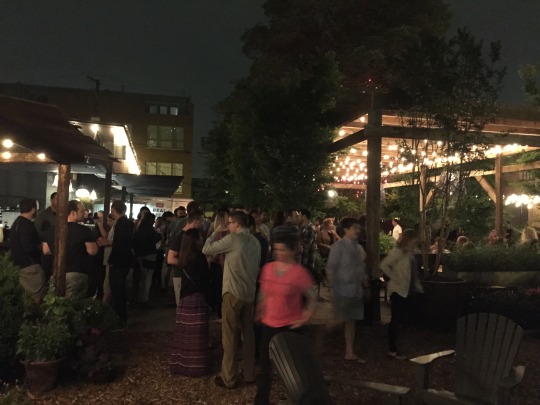
    Last night my friends took me to a popup beer garden on South Street put on by the Pennsylvania Horticultural Society. Before the popup garden, it was just an abandoned lot.

    There seems to be a real culture of beer gardens in Philly, which is something I don’t think we have in Toronto. Why is that?

    Part of the reason, I think, is that there’s a greater spread between desirable and undesirable neighborhoods in Philly than in Toronto. And in the undesirable ones, urbanists have to work really hard to figure out ways to activate them.

    So really these popup beer gardens are a lean urbanist intervention. It’s a way to draw people to an area and create awareness. And I’m told that often these popup gardens end up becoming development sites.

    Because of this, these popup gardens are sometimes controversial within communities. They’re seen as a catalyst and precursor to gentrification. But that’s a whole other debate.

    What I find interesting is this grassroots approach to city building. Great spaces don’t have to be expensive. Sometimes seating, lighting, and beer are all you need to bring people together.

  • Thoughts on urban renewal and Geary Avenue

    Photograph dupont survivor by Josemaria de Churtichaga on 500px

    dupont survivor by Josemaria de Churtichaga on 500px

    I was on CBC radio this morning talking about the revitalization of Dovercourt Village and Geary Avenue in Toronto. 

    The funny thing about this topic is that it’s one I actually held off writing about. I’ve been thinking about this street and area for probably about 5 years now. However, I do have to keep some secrets to myself 🙂

    But then I started feeling like the cat was already out of the bag. Everyone in my circle was talking about it. So I wrote a post calling Dovercourt Village the next Ossington. I had no idea it would get the traction that it has gotten, but in hindsight it makes total sense. It makes a great headline: “Toronto’s ugliest street to become the next Ossington.” Boom.

    The tough question that Matt Galloway asked me this morning was: What happens to all the blue collar businesses when/if Geary Avenue and the area really takes off? My response – given that it was only a 5 minute radio piece – was that it comes down to preservation vs. progress. 

    This is a topic that I’ve written about with respect to heritage buildings, but the same concept applies to communities as well. How do you allow neighborhoods to receive new investment while at the same time not erasing its past and the things that made it interesting in the first place?

    It’s not easy, that’s for sure.

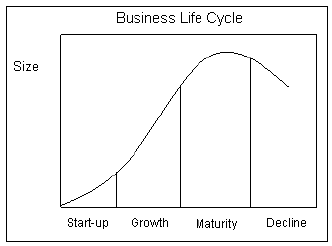
    I absolutely believe that there are things that developers can do to respect the neighborhoods in which they build in. But at the same time there are economics at play. In business school, they teach you this:

    It’s the lifecycle of businesses and industries. 

    The key takeaway here is that the rise and decline of businesses is actually quite healthy for markets. History is littered with examples. The word processor replaced the typewriter. The mobile phone replaced the landline. Air travel replaced rail travel. And the list goes on.

    Today, I think we’re at a moment in time where our relationship to cars is changing dramatically. How we get around and how we own and operate them is being called into question. 

    So just because there’s auto shops on Geary Avenue today, doesn’t mean they’ll be there tomorrow regardless of whether the area takes off or not.

  • Why Dovercourt Village is the next Ossington

    image

    Back in 2011, blogTO ran an article calling Geary Avenue one of the ugliest streets in Toronto. And it’s certainly up there. It’s an industrial street with a mixture of different building types (lots of autoshops), giant power lines running along the south side of it, and a railway disconnecting it from the city to the south.

    But as somebody who used to live around the corner from this street, I’ve had my eye on it for a number of years. Despite the fact that it was never very pretty, it always felt like an area with lots of potential. And sometimes it’s the areas that seem most unlikely to gentrify, that end up doing exactly that.

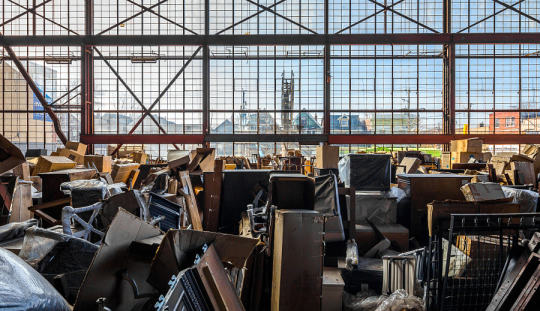
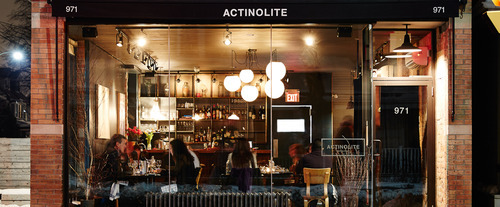
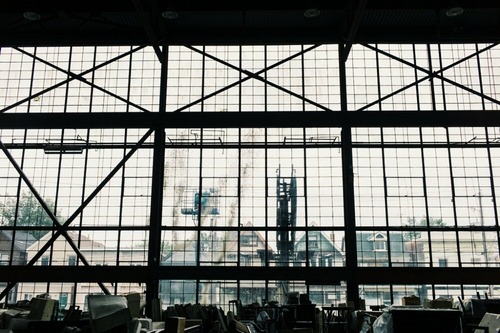
    Probably the first signs of hipness came with the opening of places like Kitch Bar on Geary Avenue and Actinolite on Ossington Avenue. More recently though, it was announced that Dark Horse Espresso will be opening on Geary and that Bellwoods Brewery will be opening their second location on Dupont Street in this incredible building:

    image

    So whether you call it Dovercourt Park, Dovercourt Village, or some other name, I think it’s only a matter of time before Ossington cool moves north and the area in and around Dovercourt Road and Dupont Street becomes one of the hippest areas in the city. Get ready.

    Full disclosure: I own a house very close to this neighborhood.

    Images: Actinolite and Bellwoods Brewery

  • Hidden gems in the Tenderloin

    I’ve written about the Tenderloin neighborhood in San Francisco before. It’s an infamous neighborhood in the center of the city that has for decades resisted gentrification (which was the topic of my post).

    But as the technology sector continues to urbanize, many fear that it’s only a matter of time before it does eventually gentrify. A new nickname has even emerged for the neighborhood: the Twitterloin.

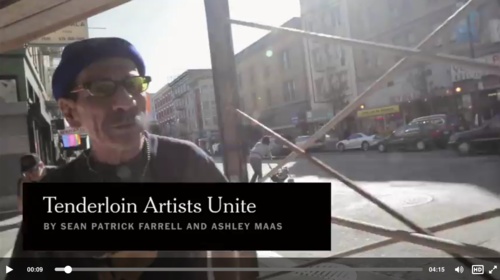
    However, a local nonprofit called the Wildflowers Institute is trying to ensure that gentrification doesn’t erase the cultural assets currently housed in the neighborhood. Through a project called “Hidden Gems”, the group is literally knocking on doors to find active artists within the community (many of whom live in single rooms) and then supporting them through fellowship programs and other investments.

    What’s fascinating about their approach is that they are actively seeking out the informal activities taking place within the community – activities that would otherwise be hidden and then potentially lost. Once discovered, they then do a number of mapping exercises to keep track of this data.

    As somebody who believes city building will become a lot more data driven in the future, I think this is a really interesting initiative. And as gentrification pressures continue to increase in San Francisco, I’m sure this information will help guide the discussions. You can’t account for something you don’t know exists.

    If you’d like to learn more about this initiative, check out this short 4 minute video from the New York Times. I would then love to hear from you in the comment section below.

  • Does urban authenticity matter?

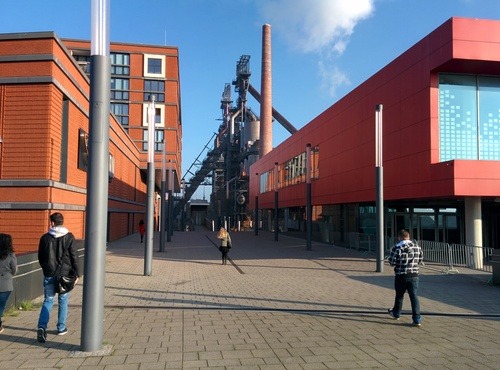
    After yesterday’s post on Belval in Luxembourg, I started thinking more about authenticity. I ended the post by talking about some of the industrial elements – blast furnaces and so on – that will be preserved in the neighborhood and argued that those types of things are great for creating a sense of place. But I also said that it’s always better when those things are authentic.

    But what does it mean to be authentic? What if some savvy developer created new blast furnaces and inserted them into their new neighborhood in order to simulate the feel of an old industrial steelworks? Would that change how you felt about the space and area?

    Another example is Intrawest’s ski resorts. Intrawest is quite famous for creating attractive ski villages that give you the impression of being in some old European mountain village. They include a mix of uses and many people visit them even if they don’t intend to ski. But does it matter that it’s not really an old European ski town or that many of them look the same?

    Clearly, in both of these examples, one is more “authentic” than the other. But all that really changes is the story. In one case, you get to tell yourself, and others, about an old steel mill that used to be where you now have your Scandinavian desk and Retina display MacBook. And in the other case, all you get is a simulacra or imitation of some blast furnace thing.

    While this may seem immaterial to some, I don’t think it is. I’m not saying that customers always demand 100% authenticity. We don’t. But let’s not forget how much we all love a great story.

    Image: Belval (Fräntz Miccoli)

  • What’s in a neighborhood?

    image

    When I was working on my startup Dirt last year, one of the things we spent a bit of time figuring out was how to classify buildings according to neighborhood. Now, at first blush, this may seem like a fairly easy thing to do. You simply locate the building, figure out which neighborhood it’s in, and then tag it accordingly. But neighborhood boundaries and definitions aren’t as clear cut as you might think.

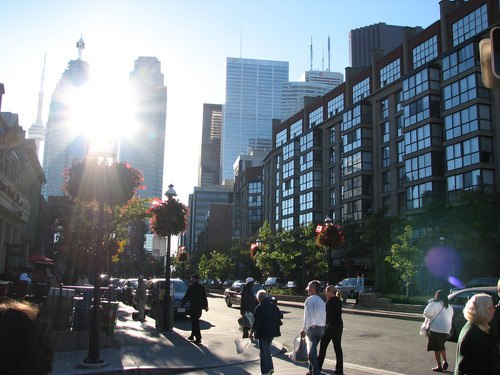
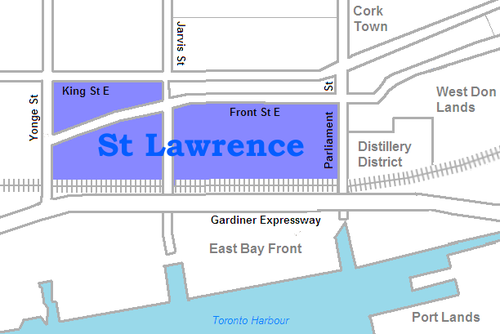
    For example, a lot of you probably know that I live in the St. Lawrence Market neighborhood of Toronto. And indeed, if you look at this Wikipedia definition, I live in that area. But if you look at what they call it, it’s just: “St. Lawrence.” They also specify that it used to be called “St. Lawrence Ward”, but that today most people actually call it “the St. Lawrence Market.” So here you have an example of an evolving and changing name.

    image

    But then there’s the question of boundaries. According to Wikipedia’s definition, the north boundary is Front Street. This means that the North Market Building would be technically outside of the area and so would the Market Square condos. But I suspect that almost everyone would consider these two buildings to be part of the neighborhood. So where exactly is the north boundary? Is it King Street? Or maybe by Front Street they mean that all buildings on the north side of the street are included.

    If you look at the city’s official neighborhood list (which is built from Statistics Canada Census Tracts) you’ll find a completely different boundary and name. According to this list, I live in the “Waterfront Communities–The Island” neighborhood. Obviously nobody, other than maybe somebody who deals with census data, would have any idea what this area is. But it’s how the city tracks its demographic data.

    What this begins to show you is that neighborhood definitions and boundaries aren’t as black and white as they might initially seem. And it’s partially because cities themselves are always in flux. New neighborhoods emerge and old ones reinvent themselves. And as that happens, people start introducing new names and new terminologies.

    image

    When I was about 19 years old, people in Toronto used to say they were going out “on Richmond and Adelaide.” Since then, gentrification has pushed many of the bars and clubs out of that area. So people instead go out “on King West” or “on Ossington.” And as people begin to use those terms and identify with an area, new brands are created. Ask anybody who lives downtown and I bet they’ll tell you that King West has its own unique personality and even a type of person who typically lives there. This is an on the ground type of awareness though, which doesn’t get captured in census tracts.

    The other reason neighborhood boundaries can be so fuzzy is because we – the real estate community – are constantly trying to manipulate them for our own benefit. I’m indifferent to the fact that this happens, but it is a reality. Think about how much the neighborhood of Yorkville has been stretched from its original roots north of Bloor Street. If a neighborhood has a good brand, agents and developers will naturally try and leverage it. Homeowners do it all the time too. Would you prefer to say that you live in Seaton Village or the Annex?

    Ultimately, we (my Dirt cofounder and I) decided that neighborhood definitions and boundaries needed to be fluid. They needed to dynamically adjust with the market and come from as many people as possible on the ground. Because at the end of the day if the official documents say one thing, but the majority of city residents believe another, then that official boundary and definition are probably out of date. The crowd wins here.

    We liked this approach because it was organic – just like cities.

    Images: Flickr, Wikipedia, Flickr

  • New ideas need old buildings

    In reading a recent Financial Times article called, Are creative people the key to city regeneration?, I was reminded of a famous line from the late urbanist Jane Jacobs: “New ideas need old buildings.” What she meant by that is the following:

    Cities need old buildings so badly it is probably impossible for vigorous streets and districts to grow without them…. for really new ideas of any kind—no matter how ultimately profitable or otherwise successful some of them might prove to be—there is no leeway for such chancy trial, error and experimentation in the high-overhead economy of new construction. Old ideas can sometimes use new buildings. New ideas must use old buildings.

    And what she was effectively getting at is that we live in a world obsessed with historical data and precedence. To use the words of business thinker Roger Martin: “The enemy of innovation is the phrase ‘prove it.’” Because, if it’s never been done before, how can you prove it? You can certainly imagine it. But you can’t prove it.

    If you’re in the business of building buildings, convincing your lender to give you the money to build something that’s never been done before, is an almost impossible sell. That’s not the way it works. Which is why Jane Jacobs famously said that “new ideas need old buildings.”

    We’ve seen this story play out in countless cities around the world. The creatives move into an scuzzy neighborhood, make it cool and then investment follows. The neighborhood has been proven. But for this cycle to continue, we need a continuous stock of derelict buildings and undesirable neighborhoods, or at least areas that offer the same kind of affordability and flexibility to creative entrepreneurs.

    Often these circumstances have been the result of failure. The proven ideas that got the buildings built in the first place became no longer relevant. And so the buildings were left to expire. But in many global cities, these kinds of areas are an endangered specifies. However, it’s in our best interest to make sure that we don’t lose our creativity alongside them.

  • Civic leaders, here’s why people need to love your city

    I was planning to write about something else today, but then I saw Fred Wilson’s post on revitalizing urban cores and I had to switch topics, because I think he makes a great point about turning around declining cities:

    I’ve been asked by civic leaders from places like Newark, Cleveland, Buffalo, and a number of other upstate NYC cities that have suffered a similar fate how they can do the same thing. They all talk about tax incentives, connecting with local research universities, and providing startup capital. And I tell them that they are focusing on the wrong thing.

    You have to lead with lifestyle. If you can’t make your city a place where the young mobile talent leaving college or grad school wants to go to start their career, meet someone, and build a life, all that other stuff doesn’t matter.

    It’s exactly the same point I made in my post entrepreneurship as economic development strategy. You can throw as much money as you’d like at startups, but if young people don’t want to live in your city then you have a serious problem.

    Fred goes on to talk about Tony Hsieh’s (founder of Zappos) initiatives in downtown Las Vegas:

    When Tony moved Zappos from the suburbs to the former City Hall in downtown Vegas a few years ago, he decided to invest $350mm in a massive urban revitalization project. He set aside $200mm to purchase land at bargain prices and the other $150mm to invest in three areas, arts and culture, small businesses (restaurants, cafes, bars, markets, boutiques, etc), and tech startups. $50mm is going into each area.

    It’s an example of leading with lifestyle, urbanism and city building, rather than purely economics. And I think it’s the way to go. But to be clear, I’m not suggesting that the focus should be on large capital projects, such as stadiums and infrastructure. I’m not convinced those are the most effective catalysts. There’s no silver bullet here.

    Instead, I think the answer is in building, from the ground up, a real sense of community and place. People need to love your city. That’s easier said than done though.

  • Risk-oblivious, risk-aware and risk-adverse

    image

    Yesterday when I was researching for this post on Lean Urbanism, I came across a really interesting way of describing and classifying the groups typically involved in the emergence of a new neighborhood.

    It came from New Urbanist Andres Duany, who explained the process, here, using 3 groups of people: those that are risk-oblivious; those that are risk-aware; and those that are risk-adverse

    Risk-oblivious are people like the artist, who go into a crappy neighborhood and magically make it hip. They’re the ones that give the neighborhood its character. They’re the first catalyst.

    Risk-aware are people like real estate developers. They know risks exist, but they believe they can manage it, as well as profit from taking it on. They take the neighborhood to the next level.

    And finally, risk-adverse are the boring people who only come to a neighborhood once it’s absolutely clear that it’s a safe investment. Duany typecasts this group as the “dentist from New Jersey.” There’s much less value creation at this stage.

    Most of you have probably heard of this cycle of urban renewal, but I thought it was really interesting to frame it in terms of risk tolerance.