Daily insights for city builders, delivered every morning at 6 AM ET. I’m Brandon Donnelly — a Toronto-based real estate developer and founder of Globizen. I’ve been writing here since 2013.

Tag: foursquare

  • Audio is the poor person’s augmented reality

    I have long been interested in the work of entrepreneur Dennis Crowley. He is perhaps best known as the co-founder of Foursquare, which popularized location “check-ins.” But he’s created a bunch of other stuff too. The common theme is that his products exist at the intersection of tech and cities (the physical world), which is probably why I’ve been so interested over the years.

    Check-ins, for example, allowed you to say to all your friends, “hey everyone, I’m at this bar.” It was a way of checking if anyone you knew was there too, or close by, and also a way of inviting your friends to come join you if they were so inclined.

    This was extremely popular for a period of time, but then kind of fizzled out, and Foursquare was forced to pivot and try a bunch of other things. And in the end, this “problem” of augmenting the physical world with our social graph (and other information) never really got solved. I mean, this is broadly the promise of augmented reality.

    Thankfully, Dennis has a new company (Hopscotch Labs) and a new tech/city product called Beebop (which is currently in private beta). Here’s how it works (excerpt from this Crazy Stupid Tech interview):

    It’s an iPhone app. There’s not much to do in the app, there aren’t a lot of buttons to press. Once it’s installed and you set the permissions, every time you put on your headphones — your AirPods or any other headphones, it doesn’t matter—it chimes and says, “Beebop’s been activated.” (Beebop is the first project from the company, Hopscotch Labs.)

    Then as you walk around the city, it will tell you things about certain places. Eventually, if I walk by a place where my friend was, it tells me that Alex was here two days ago. If I walk by a place and someone’s inside, it tells me that Max is inside that place. A lot of it is still under development. Eventually, people leave a comment at a place. Imagine Twitter. It is as if you leave a tweet and you stick it in the ground. When you walk over it, you hear it.

    So like before, it’s about experiencing cities:

    It’s been a long time since I built something. What’s different now? AI is what’s different. You know what’s different? Everyone’s on their phones all the time. Back in my day, we made stuff for the streets. You would use your phone, you’d put it away, and stuff would happen. Where are the people making that stuff anymore? All we make is stuff that makes you look at the screen. Let’s make stuff that gets you out in the world, where you’re not glued to the devices. You’re out there doing stuff. Big companies out there aren’t going to make stuff like this.

    The key idea here is that augmented reality doesn’t have to just be visual. Visual also requires somebody to figure out a cool set of glasses that people will actually wear out in public. Who knows when this happens, though I do think it will eventually.

    So what Dennis is doing is making something that works today — with audio. This has been called the poor person’s augmented reality, but I think that’s selling it short. This is really clever. And once again, it’s fundamentally connected to how people live in and interact with our cities.

  • Location data companies Foursquare and Factual announce merger

    This week it was announced that Foursquare and Factual are planning to merge. Both use location data to improve advertising and overall business intelligence. But unlike Foursquare, Factual doesn’t have a consumer-facing app. So most of us probably haven’t heard of them before. But they are some of the data and tech behind many of the companies that we do all know, including Starbucks.

    I have long been fascinated by location-based startups — like Foursquare — because they are inherently spatial. And how we move about our cities and spaces is rich with information. Companies want this data because, among other things, it is a register of intent. Me going somewhere signals certain things, including where else my kind might want to go.

    But location data can also be used for many other things beyond advertising and retail analytics. Foursquare has started sharing aggregated and anonymized foot traffic data with local governments and public health officials in the fight against COVID-19. That data is currently powering http://www.visitdata.org. Foursquare is also publishing a regular insights report.

    Here is a chart from them showing casino visits in Clark County since March 1:

    In many ways this chart is fairly obvious. In fact, it actually mirrors my own journey into isolation. After the NBA shutdown on Wednesday, March 11, things started to feel pretty real and on Friday I was working from home. But there’s a lot more that can be done with location data and there’s a lot more that will be done going forward. I am confident that will help not only business, but also society more broadly.

  • Rules for location data

    The CEO of Foursquare — Jeff Glueck — published an interesting op-ed in the New York Times today, calling on Congress to regulate the location data industry. Currently, there are no formal rules in place.

    In case you’re not aware, Foursquare is one of the largest independent companies operating in this space. I have written about them many times before on the blog.

    Here’s an excerpt from Jeff’s op-ed explaining why this matters:

    But location data can also be abused. Bounty hunters were able to buy the current location of a cellphone for $300, Vice reported, because telecom companies sold the real-time location of phones to shady companies. And apps that track location data may turn around and sell that data, revealing someone’s every movement — whether it is to a retail store, an abortion clinic or a gay bar. Bloomberg Businessweek recently reported on a company with thousands of cameras selling car locations to debt collectors and others; there is no “opt-in” involved, and it’s illegal in all states to cover your license plate.

    I am writing about this today because I think it’s relevant to city building. Location data is inherently spatial. It is how we exist in cities. So it shouldn’t come as a surprise to any of you that this is valuable information — hence why it is being abused.

    Here we have a company advocating for more, not less, regulation. They, of course, want it to be sensible. But I still think it says things about the current location data environment. To learn about the specifics of what Jeff is proposing, click here.

  • Lifelogging

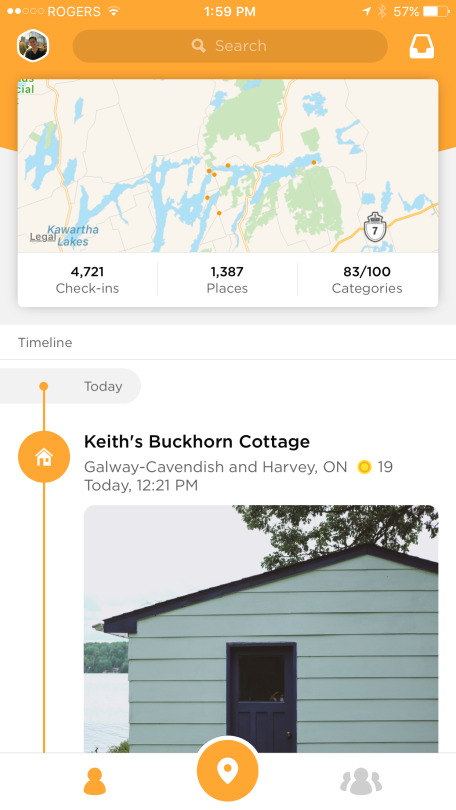
    Swarm recently released version 5.0 of its mobile app. Blog post here. Instead of gamification (leaderboards and so on), the emphasis is now on lifelogging – a more personal collection of all the places you’ve been.

    Here’s what that looks like:

    The most notable change is a front and center map that shows you all of your check-ins. You can also zoom in and really explore where you’ve been, geographically. Swarm refers to it as a “virtual memory book.”

    Lifelogging is absolutely the main reason why I use Swarm and why it still finds itself on my home screen. One of the reasons I enjoy blogging is that it’s a public diary. Swarm is a modified version of that for me. So this change feels right.

    My other Swarm use cases are being able to share check-ins to Twitter and serendipitous encounters with friends.

    But the more I use Swarm the more I think that divorcing this use case from Foursquare (this happened in 2014) was a mistake. If Swarm is now about lifelogging (instead of just playful check-ins) and if Foursquare is about finding the perfect place to go out, then why not merge these experiences? 

    Tell me where I should be going, let me make lists of places I want to go, and then let me log it to my diary along with tips for other people.

    At the time of the divorce, the data seemed to suggest that very few people did both of these things within the consolidated app. People either checked-in or they looked for a place to go. Rarely did they do both.

    Perhaps that would be different with lifelogging.

  • Turning data exhaust into gold

    Last year, social media company Foursquare predicted that Chipotle would see a ~30% drop in its Q1 2016 sales. It knew this because the geo-location data from people using its app (check-ins and passive visits) was also down. They had figured out the relationship between foot traffic and sales. I think I wrote about this in the first half of last of year.

    Not surprisingly, lots of companies – including those on Wall Street – are now starting to pay attention to data sets such as these. Matt Turck wrote a great blog post about it this morning, called: The New Gold Rush? Wall Street Wants your Data. Here’s an excerpt:

    That a social media company could be building a data asset of immense value to Wall Street is part of an accelerating trend known as “alternative data”. As just about everything in our lives is getting sensed and captured by technology, financial services firms have been turning their attention to startups, with the hope of mining their data to extract the type of gold nuggets that will enable them to beat the market.

    The opportunity is open to a wide range of startups.  Many tech companies these days generate an interesting “data exhaust” as a by-product of their core activity.  If your company offers a payment solution, you may have interesting data on what people buy. A mobile app may accumulate geo-location data on where people shop or how often they go to the movies.  A connected health device may know who gets sick when and where.  A commerce company may have data on trends and consumer preferences. A SaaS provider may know what corporations purchase, or how many employees they hire, in which region. And so on and so forth.

    We may be calling this alternative data right now, but it is almost certainly just a matter of time before it simply becomes: the data. 

    I like the term “data exhaust” that Matt uses, because it feels like it accurately captures what is going on right now. The new economy is producing a lot of byproduct. If you clean it up and package it in the right way, then you might be creating additional value. But if you don’t, then it’s probably just exhaust.

  • A location intelligence company

    I have written about Foursquare a number of times over the years (here and here) and I continue to be a regular user. I am intrigued by all of the location-based data that they collect through their apps. 

    Below is a recent Recode Decode (podcast) with Dennis Crowley (co-founder) and Jeff Glueck (CEO) of Foursquare. They are talking about what’s next for the company. If you can’t see it below, click here.

    https://art19.com/shows/recode-decode/episodes/aa400a60-ebc1-49bb-96b1-0d7aac7ca9e8/embed?theme=black

    Here’s a content sample from Recode:

    Today, Foursquare makes most of its money from selling that data to big companies, calling itself a “location intelligence company.” But as co-founder Dennis Crowley and CEO Jeff Glueck explained on the latest episode of Recode Decode, hosted by Kara Swisher, they haven’t stopped thinking about everyday users.

    “Imagine a friend is walking alongside you,” Crowley said. “Can we make a personality like that, that talks to you in that sense? It’s not 30 years out. We’re going to be playing with this stuff a year from now.”

    “I want to make that Scarlett Johansson that whispers in your ear, but it’s all about local places and local discovery,” he added. “I want to replicate the experience of walking through the city with a friend that knows the city inside and out, and I want to make that for millions of people.”

    I thought some of you might find this interesting.

  • Foursquare uses their global foot traffic data to accurately predict iPhone sales

    I am a fan and long time user of Foursquare – now known as both Foursquare and Swarm.

    Foursquare has struggled against competitors such as Yelp.com when it comes to local business recommendations. And I have less than 100 friends on my Swarm. It doesn’t seem to be that popular here in Toronto.

    But I’ve always loved the data collection aspect of Foursquare / Swarm. Even though most people don’t seem to care about that. When I check-in somewhere, such as the gym, it’ll tell me how many weeks in a row I’ve been there, whether it’s a new personal record, who else is nearby, and a host of other things.

    I’ve always felt like there was so much potential in all of the data it was collecting.

    Well the company is starting to make better use of that data. Recently they used their foot traffic data at Apple stores (I am assuming this goes beyond just check-in data) to predict the number of iPhones that Apple was going to sell globally following the launch of the 6s and 6s Plus.

    They predicted between 13 to 15 million handsets and it turns out they were right:

    This validates the accuracy of our prediction and while we’re proud of the result, we certainly aren’t surprised. Foursquare’s data is essentially the world’s biggest panel of foot traffic data — we have the best sense of the trends and patterns of the movement of people and their phones around the world.

    This is powerful stuff. If there were a way for me to be bullish on Foursquare beyond just writing this post, I would be.

  • Pushing and pulling

    image

    Venture capitalist Chris Dixon recently published an interesting post called, Two eras of the internet: pull and push. In it, he describes two patterns that have emerged within the internet over the past decade and a half.

    Pull (2000s):

    Pull is when you are seeking information, usually an answer to a question. You want to know the closing time of a restaurant, the description of a hotel where you are thinking about staying, the details of an historical event you heard about, etc. You go to your computer and pull the information. The killer app for pulling information was Google.

    Push (2010s):

    Push is when you are using the internet in a more passive way and content comes to you. The killer app for push is social networks, the most popular being Facebook. Information is pushed from user to user via likes, shares, tweets, etc. People tend to push things they find funny, interesting, moving, outrageous, etc.

    Now let’s think about this for a second, because it’s a pretty significant change.

    Google’s mission is to organize the world’s information. And they have certainly made it easier for us to get the information we want. Instead of physically searching for something, you just type in a few keywords and it pops up. But, it still involves us deciding we want something and then pulling the information.

    What’s fascinating to me about push is the idea that content and information comes to you. And it’s one of the reasons that I’ve always found Foursquare more interesting than Yelp – even though Yelp is far more popular as a tool to help you find somewhere to eat, drink and so on.

    When I walk into a restaurant or bar now, oftentimes I’ll see a Foursquare notification popup on my phone showing me a tip that somebody has left: “Try the meatballs – they’re to die for”. I didn’t search for that. I didn’t ask for a recommendation. But Foursquare knew where I was and presented me with that information.

    Now, there are obviously potential downsides to constant interruption, but let’s focus here on the opportunities. How could these same principles to be applied to other industries such as, say, real estate?

    I think there’s a pull and push parallel.

    Today MLS operates in a way like a search engine for homes. You decide you might be interested in buying a home and so you go online and start pulling listings.

    Of course, the vast majority of people also work with a real estate agent. And in a way they’re kind of like your push. They get to know you, they figure out what you’re looking for, and then they push relevant listings and information to you.

    And maybe that’s why nobody has killed off real estate agents – despite the numerous attempts. Everybody has been focusing on new pull platforms (listing platforms) as opposed to a new push platform.

    Who knows.

    But I think it would be naive to think that these emerging push platforms won’t reach far beyond social media.

  • How smartwatches will augment location

    image

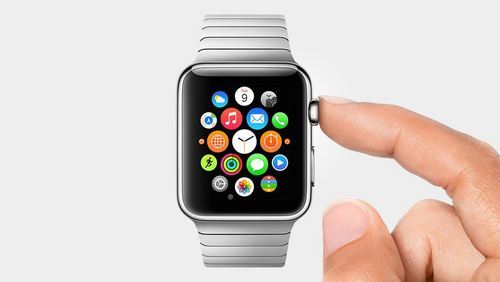
    So the rumors were right. Apple released a watch today. There will be 3 different “collections”, but lots of flexibility in terms of how each can be customized. There’s a big emphasis on health and fitness monitoring. Prices start at $350. And you’ll need an iPhone. Though you won’t be able to get one on your wrist until next year.

    Who knows whether or not it’ll catch on in the same way that iPod and iPhone did, but I think it has a damn good shot (more on this below). They’ve clearly put a lot of thought into both usability and the whole fashion side of the equation, which obviously needed to be done. Given that most people today use their phone for the time, the watch market strikes me as being heavily about style.

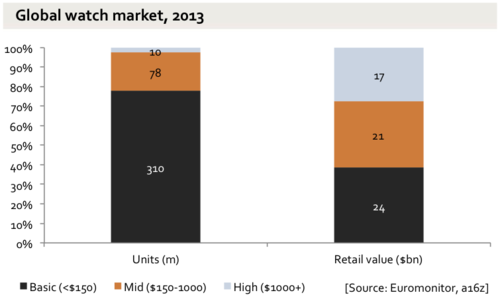
    In case you were wondering, here’s the watch market size as of 2013 (courtesy of Benedict Evans):

    image

    A lot of you might be skeptical about the need for a computer on your wrist (remember those watch calculators from the 80s?). But I think this time is different. Consider the number of people that now walk around with their phone in their hand and/or immediately pull it out whenever they have a free moment. We’ve become reliant (okay, addicted), to notifications and information.

    But in many of those cases, the smartphone isn’t the most efficient medium to be delivering those messages. Just like it’s not ideal to have to reach into your pocket to figure out what time it is, I think the watch could emerge as a new and better medium for a bunch of other pieces of information. And the big one could be location-aware or contextually-aware notifications.

    Here’s a tweet from Dennis Crowley – founder of Foursquare (Swarm) – talking about that exact thing:

    So what does this even mean?

    It means walking into a restaurant and having a tip pop up on your watch telling you what the best dish is (as shown in the tweet above). It’s driving down the street and having your watch notify you that there’s an open house 3 blocks away (and then giving you directions). It’s walking into a condo building and having your watch tell you that one of your friends is having a party on the 23rd floor. And so on.

    All of these notifications are currently already possible on your phone, but it’s not the ideal place for many of them. Which is why we’re all walking through life looking down at our phones. So while a computer strapped to your wrist may feel like we’re going further down that rabbit hole, it may actually free up more of our hands and our attention.

    And I’m sure there are many other possibilities that nobody has even thought of yet. Location just feels like a big one to me.

    //platform.twitter.com/widgets.js

  • Location-based social network Foursquare is unbundling

    I’ve been a Foursquare user for a number of years now. I like seeing which friends are nearby and where I’ve been. I love the data aspect of it. It’s a kind of urban “spidey sense.”

    Sometimes when you “check-in”, the app will tell you the last time you were there (if it’s been awhile), how many consecutive weeks you’ve been there (which I like seeing when I check-in at the gym), and also give you any tips that others may have left about the place you’re at–such as, try the sea urchin ceviche.

    But Foursquare has been struggling. Check-ins proved to be a bit of a fad and Yelp solved the what-do-you-want-to-do-tonight problem better. However I’ve always felt that, on a fundamental level, Foursquare had the potential to be so much more powerful than Yelp. 

    Well, today the big news in the tech world is that Foursquare is unbundling its app. There will be Foursquare and there will be Swarm. Foursquare will be a recommendation engine that helps people find places to eat, drink, shop and so on (just like Yelp), and Swarm will be all about social–seeing where your friends are and which ones are nearby. And along with this unbundling, there will be no more check-ins:

    But how can Foursquare personalize its users’ results if they are no longer collecting check-ins, the foundation of Foursquare’s recommendation engine? Crowley smiles and says something a bit shocking. He no longer needs check-ins, the meat and potatoes of Foursquare’s entire business and data collection engine for the last five years.

    Not only has Foursquare collected 6 billion check-ins, he says, but it has collected five billion signals to help it map out over 60 million places around the world. Each place is a shape that looks like a hot zone of check-ins — of times when people have said “I’m here.” Foursquare’s “Pilgrim” location-guessing engine factors in everything from your GPS signal, to cell tower triangulation, to the number of bars you have, to the Wi-Fi networks, in order to create these virtual shapes.

    Now that it has this data, Foursquare can make a very accurate guess at where you are when you stop moving, even without a check-in, it’s a technology it hopes will allow it to keep its database of places fresh and accurate. Foursquare calls these implicit check-ins “p-check-ins,” or Neighborhood Sharing. Take your phone into four or five different Japanese restaurants over the course of six months and without a single check-in Foursquare will learn that you like Japanese food and start making recommendations for you based on that data.

    There will obviously be a number of people who have anxiety about an app that’s passively tracking everywhere they go and then trying to feed them recommendations (come eat here!), but I do think they’re on to something.

    The opportunity with Foursquare (and its data) is that the recommendations can be tailored. If I’m looking for a place to eat, Foursquare will already know that I love Mexican and that I just worked out (meaning I’m probably extra hungry). Personally, I’m okay with that.

    But then I start to wonder how this might impact cities. If the process of discovery becomes this automated and this tailored, how might it change the way we organize and design our cities?