Daily insights for city builders, delivered every morning at 6 AM ET. I’m Brandon Donnelly — a Toronto-based real estate developer and founder of Globizen. I’ve been writing here since 2013.

Tag: food

  • First day of summer

    Today was the first day of the year that truly felt like summer here in Toronto. It also happens to be my birthday. 

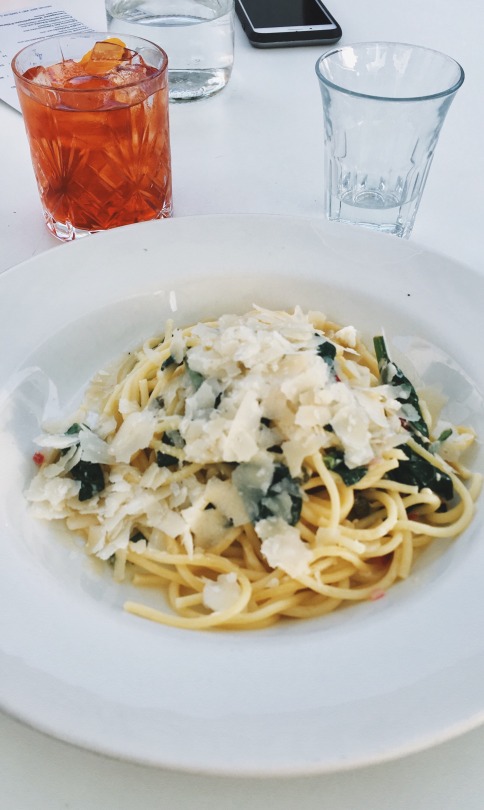
    So I did the only sensible thing one should do on a day like this. I went to a rooftop patio after work, with my family, for two of my favorites: a bowl of spaghetti al limone and a negroni. Simple.

    image

    In other news, Fred Wilson wrote a great post on his blog today about why he loves Canada and why it is an increasingly important place for the tech sector. 

    For those of us who already know that Canada is the greatest country on earth, it’s a noteworthy post not because it is likely to tell you a lot of new things, but because it was written by Fred fucking Wilson.

  • Frenetic dim sum

    image

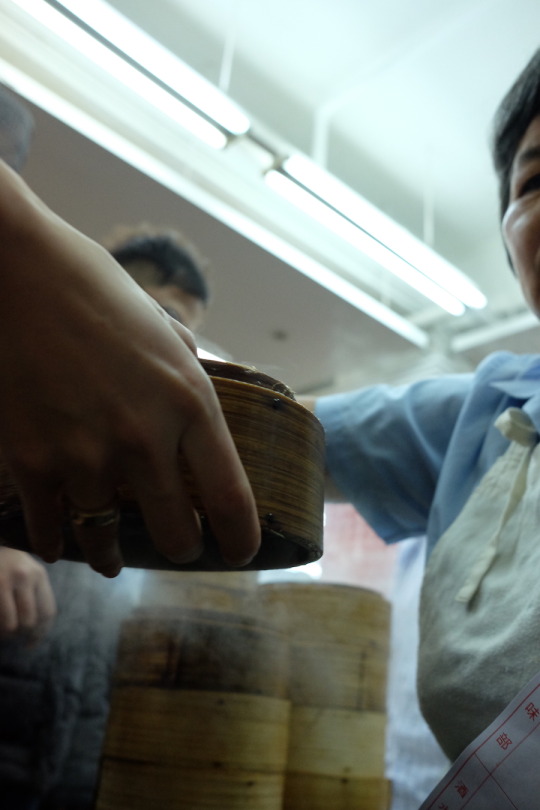
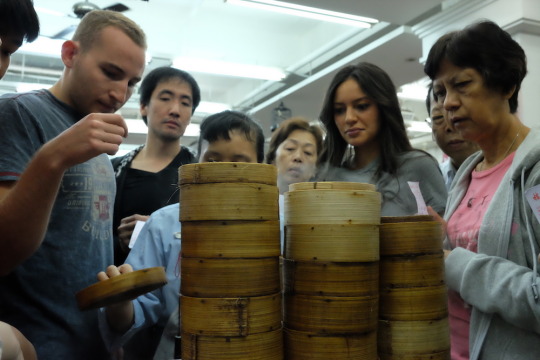
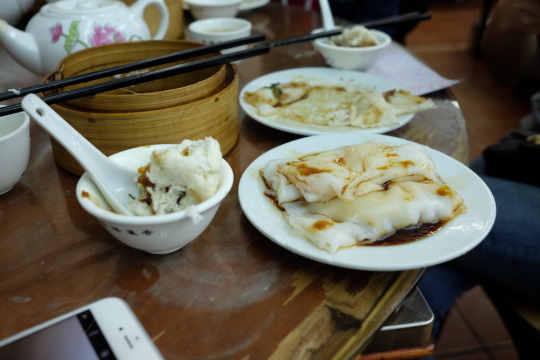
    We went for dim sum (breakfast) yesterday morning. We wanted an authentic experience and found a place in Monocle’s Hong Kong travel guide called Lin Heung Lau. It’s an “institution” in Central that has been around since 1926. Locals would later tell us that the place is good but they probably would have sent us elsewhere.

    image

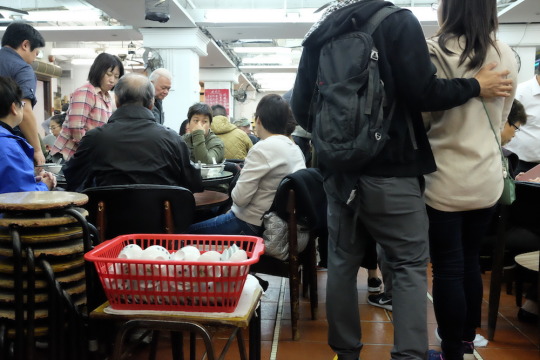
    It was of course packed when we arrived and we quickly learned that you need to be aggressive in this place if you hope to get any food. There’s no line at the front and nobody is going to seat you. Instead, you circulate around the room and find your own spots. If nothing is available, you simply hover over a communal table until something opens up.

    image

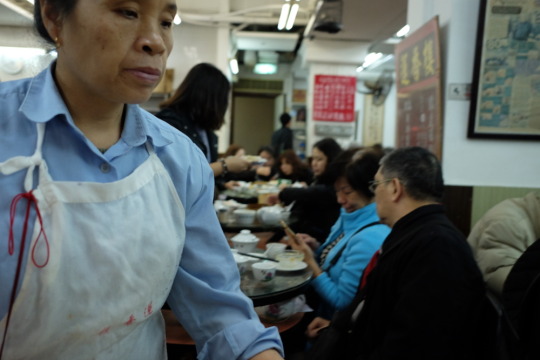
    This also means not waiting for the dim sum carts to come around to your table. If you do that, none of the good stuff will be left. Pull out your sharp elbows and go to work as soon as you see one come out of the kitchen. This is how most of Hong Kong seems to work. There’s too many people in too little of a space to be a polite Canadian.

    image

    I thought the whole experience was great. Although, I could have probably done without the laundry (underwear included) hanging up in the bathroom.

    image

  • Empowering food truck entrepreneurs

    When I lived in Philadelphia I survived on food truck food. My go-tos were an egg and cheese breakfast sandwich for $2.50, a bowl of spaghetti for $4.50, and a pretty substantial chicken burrito for somewhere around $5 or $6. The food was good. It was filling. And it was all priced perfectly for a poor student, which I was at the time.

    I still remember when Renzo Piano came to the University to talk about potentially renovating the design school. Somebody stood up and asked if he had considered the placement of food trucks in his plans. Piano responded by saying: “I am Italian. Don’t worry. I will provide for the food.” This is how ingrained food trucks were and are in the culture of the city.

    The other great thing about these food trucks is that they are a low-cost way of starting your own culinary business. Many were run by immigrants. And some of these “trucks” were so small that I used to have to duck in order to make my way to the concession window. There was nothing fancy about them. But they worked.

    These days I don’t really eat at food trucks anymore. They are not as widespread here in Toronto as they are in Philly. I also find them expensive and the portions are usually so small that you have to order 2 or 3 things. They feel like the anti-food truck.

    I appreciate that there’s a growing market for trendy and “gourmet.” But there’s value in low-cost options and in lowering the barriers to entry for aspiring food entrepreneurs. There are numerous examples of humble food trucks growing into full fledged restaurants. Let’s encourage more of that.

  • Why you should sometimes ignore your customers

    In business we are told to listen to our customers. Be customer-centric. In city building we are told to listen to the community. Be community-focused. And there’s no question that these mantras exist for a reason. They are paramount.

    But when should you not listen?

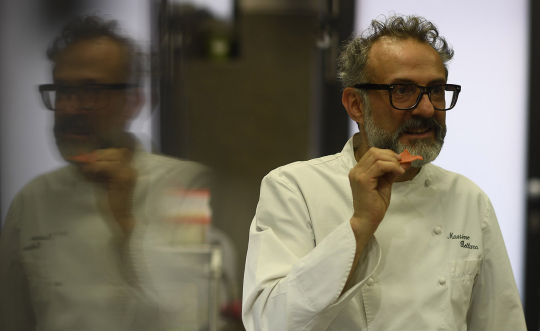
    I watched a Chef’s Table documentary last night on Massimo Bottura (pictured above), who is the owner and operator of Osteria Francescana in Modena, Italy. Osteria Francescana is a 3 star Michelin restaurant and widely ranked as one of the best restaurants in the world.

    But it wasn’t easy for Massimo at the beginning. His goal was to bring the Italian kitchen into the 21st century and so his plates are often creative takes on classic Italian dishes. His restaurant blends the old and new; food and contemporary art.

    This approach upset a lot of people at the outset. Massimo was seen almost as a traitor who was turning his back on traditional Italian cooking within provincial Modena. Don’t mess with centuries of tradition they would say. Grandma knew best, son.

    Because of this, his restaurant sat empty in the early years, to that point that he was ready to close its doors. The only reason he kept it open was because his wife encouraged him to give it one more year. She said: This is the kind of food you want to make. If you don’t try, you’ll regret it.

    So he gave it another year and luckily he got a few breaks, including a glowing review by a well known food critic from out of town. Once this hit, the Modenese started to quickly rethink their distaste for Massimo’s idiosyncratic dishes. Before long, his restaurant was full.

    So what changed? It wasn’t the dishes. It was perception. The out of town critics and positive reviews gave people permission to like the dishes. This is critical because nobody needs permission to like tradition. It’s tradition, after all. There’s little risk in that.

    But there’s risk in liking something new that hasn’t been done before. Change creates uncertainty. And if Massimo’s wife hadn’t encouraged him to stick with it just a bit longer and ignore the naysayers, the world may not have one of its top restaurants.

    Sometimes we don’t know what we like and want until we are shown.

    Image: Osteria Francescana 

  • What food is your city famous for?

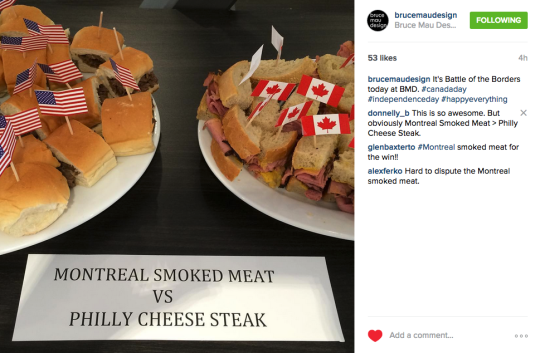
    Yesterday I came across the above Instagram post by Bruce Mau Design, which pitted the Philadelphia Cheese Steak sandwich against the Montreal Smoked Meat sandwich in a “battle of borders.” It was to celebrate both Canada Day and American Independence Day.

    I thought this was an awesome idea, so I tweeted out the photo. Then Daniel Kay Hertz – who is a Senior Fellow at City Observatory and from Chicago – asked me: “Is there a Toronto equivalent?

    And that got me thinking. 

    Montreal has smoked meat, bagels, and poutine. Philly has the cheese steak. Chicago has deep dish pizza. Quebec City has maple sugar and tourtiere (a kind of meat pie). New Orleans has po’boy sandwiches. Boston has clam chowder. Austin has tacos. Seattle has crab. And the list goes on.

    But what is the quintessentially Toronto dish? Asian fusion food? Peameal bacon sandwiches from the St. Lawrence Market? I really don’t know. So I think we should decide on one right now. Think of it as an exercise in city branding.

    Leave your suggestion in the comments below and we’ll have a vote.

  • A cold ski town is building one of the first vertical farms in the world

    image

    I have a soft spot for Jackson Hole, Wyoming. It’s a beautiful town and, out of all the places I’ve snowboarded, it’s easily my favorite.

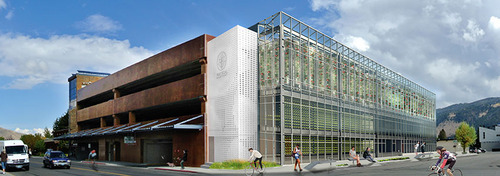
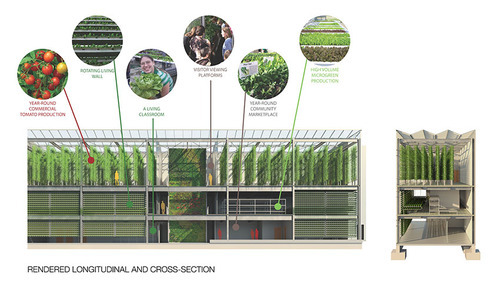
    That’s why I was excited to learn that Jackson is currently building one of the first vertical farms in the world (and in a cold ski town at that). Using a vacant site in the middle of town, a new venture called Vertical Harvest is building a three storey, 13,500 square foot hydroponic greenhouse. It’s being done as a public/private partnership.

    image

    The business will operate year round and supply fresh produce to the local community – replacing food that was previously being shipped in from Mexico and California. 

    The site itself is 1/10 of an acre, but it’s expected to have the same output as a 5 acre piece of land using conventional agriculture methods. 95% of their product is already committed through pre-purchase agreements. 

    Here are some of the businesses that have jumped onboard:

    • Rendezvous Bistro
    • Il Villaggio Osteria
    • Q Roadhouse
    • The Kitchen
    • Jackson Hole Mountain Resort’s five restaurants
    • Snake River Brewery
    • St. John’s Medical Center’s Refuge Grill

    What makes this project even more exciting is their commitment to employing members of the local community with disabilities. This is apparently a growing concern in Jackson, and so Vertical Harvest will be doing their part to address that.

    If you’d like to learn about the design of the facility, check out this article by Fast Company. The team was was very methodical in ensuring that this facility would consume less energy than the status quo of shipping in food from out of state.

    The go-live date is this fall (2015). I should probably plan another trip to Jackson.

    Images from Vertical Harvest

  • Growing food in the urban environment

    image

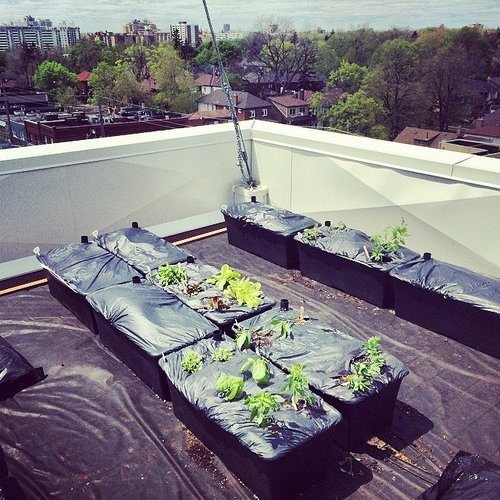
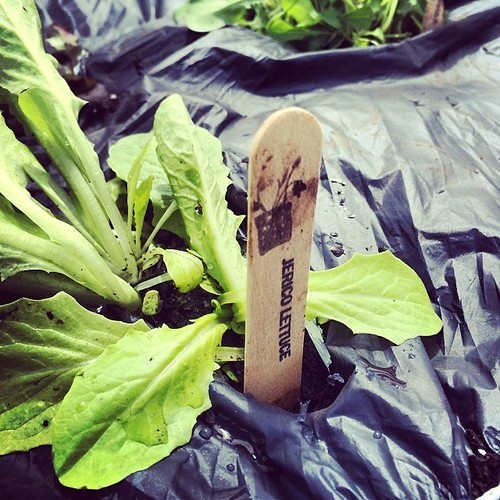
    Today at the office we took a time out during lunch to plant vegetables on the rooftop of our building. Using 100 EarthBoxes, we planted everything from lettuce to hot peppers. It was a lot of fun and I’m looking forward to fresh salads throughout the summer.

    I only recently learned about EarthBoxes through a colleague at work, who has a significant amount of experience in the world of urban agriculture. The way the boxes work is that they have an aeration screen at the bottom that serves to create a reservoir for water. You then fill it with water regularly and, through capillary action, the soil is kept properly watered with minimal maintenance. They’re explicitly designed for growing on balconies, terraces and rooftops.

    image

    I was so impressed by the boxes today that I came home and bought 3 margarita lime green EarthBoxes for my own terrace. They’re only $30 if you buy 3 at a time. I think urban farming is something that we’re going to need to do more of in the future and so I wanted to give it a try myself. It’s healthy and environmentally sustainable, and I’m sure everything will taste great.

    I plan to start with lettuces, kale, cucumbers and hot peppers in my terrace garden.