Daily insights for city builders, delivered every morning at 6 AM ET. I’m Brandon Donnelly — a Toronto-based real estate developer and founder of Globizen. I’ve been writing here since 2013.
On Saturday, I went on a bike ride all around Toronto. We cut across midtown (checking in on One Delisle), stopped at the Chester Hill Lookout (which if you grew up in the east end is where you probably went as a teenager to make out), shot down the Don Valley, and then turned west along the waterfront. The weather was perfect.
As we were going along the waterfront, we passed the new Aqualuna building that is under construction on Queens Quay East, near Parliament Street. Being the architecture nerd that I am, I immediately noticed that as you pass by — at the speed of a bike — the balconies create this really nice cinematic effect.
So I stopped to take these photos (I probably should have taken a video now that I think of it):
I then tweeted a tweet calling it one of the most beautiful buildings going up in Toronto today. Judging from the responses, most people seem to be in agreement, but a few people questioned the practicality of balconies like this. Namely how private and usable they will be. I don’t disagree, but I still think it’s fine looking building.
For the last few weeks, a small corner store/cafe at 42 Dewson Street has been in the news here in Toronto. It has been in the news because, despite the fact that Toronto is actively working to allow more uses like these in residential neighborhoods, it is my understanding that it currently remains a legal non-conforming use. Meaning, it’s allowed to operate only because it’s been there for a long time.
The specific fight right now, though, is around whether this corner store is allowed to serve people coffee. It can sell groceries and stuff, but can it serve coffee? (Also, self-serve coffee is apparently an entirely different thing and acceptable behavior.) The store owner thinks the answer is yes. But then somebody called in an anonymous tip and the city came knocking:
CityNews reached out to the City of Toronto for a response. They said “the building at 42 Dewson St. is in a Residential Zone, and a non-residential/commercial use is not permitted. Any change of use from a Retail Grocery/Variety Store is not permitted; and that includes store staff preparing food or drinks (or coffees) for sale to patrons. A change of use, requires zoning relief from the Committee of Adjustment.”
Okay, so serving coffee to people is potentially problematic. But why? Here are three possible reasons that immediately come to mind:
Somebody else in the neighborhood is serving coffee and they’re ruthlessly trying to eliminate all competition.
Serving coffee encourages people to linger and lingering people make more noise relative to people who don’t linger.
The neighborhood is filled with pedants who like to read zoning by-laws in their spare time and they just can’t stand seeing such a blatant disregard for refreshment rules.
There are, of course, other possible reasons. And according to Twitter/Reddit, the real reason is that the property is owned by a rich developer and the neighborhood is, for a variety of reasons, pissed off at said rich developer. I don’t know that this is true, but maybe it is. Because fighting over served versus self-served coffee seems like an insane thing to argue about.
If you happen to agree, Dan Seljak has a petition you can sign, here.
Grocery shopping is one of those things that — despite a lot of people really trying — has remained a stubbornly in-person activity. However, the pandemic did give online grocery shopping a significant boost, and lot of that has stuck, even if it has been trending slightly downward from its peak. Here are a few slides from Dan Frommer’s Consumer Trends: 2024 Food & Wellness Special report:
Part of the challenge may be that the majority of people say they actually like grocery shopping, and doing so in a physical store:
So it is very possible that, for the foreseeable future, there will always be a large segment of buyers who prefer to shop in-store. But then again, if you asked me these same questions, I would also tell you that I like grocery shopping and that I prefer buying in-store. However, that doesn’t mean I wouldn’t be open to alternatives. I just haven’t explored and found a suitable online option.
At the same time, and according to the same Consumer Trends Survey, about 10% of Americans say they currently dislike grocery shopping. Maybe this is the same 10% who are right now shopping online. Either way, this is already a large segment of people who would rather not go into a grocery store.
Intuitively, as the online offerings get better, one would expect this number to grow. Here, for example, is an interesting overview of the service Hungryroot. One part “meal kit” delivery and one part online grocery shopping, the company uses machine learning and algorithms to determine what its customers might want to buy. Already, about 70% of what it sells is picked automatically.
On the back end, McKean explains, among other actions, Hungryroot is “clustering” its new customer with other users who have answered its onboarding survey similarly and have already been with the service for multiple years. “And so we can say, ‘okay, people who filled out that signup flow like you… they loved these top recipes with high probability, so we think you’re going to love these recipes with high probability’.”
What I like about this is that it requires fewer decisions; it has the potential to feel like you have a private chef (one that learns what you like and adjusts accordingly); and it promotes dietary variety. For the typical American, 75% of what they buy in a grocery store is the exact same as what they bought the last time. There’s very little variety, because it’s always easier not to have to think.
Given this stat, it is maybe surprising that this 75% hasn’t become more automated for more people. Perhaps it’s the 25% that keeps most of us going into stores. I’m not sure, but I think I’m ready to try a service like Hungryroot.
This evening in French class we discussed a Parisian apartment type called the chambre de bonne. The direct translation is “maid’s room”, and it’s exactly what it sounds like. A small one-room apartment that is found on the top floor of bourgeoisie apartment buildings. Indeed, nearly one-third of Paris’ entire supply of chambres de bonne are in the wealthy 16th arrondissement.
Their original function was to house servants. The reason they were on the penthouse floor is because, when they emerged in Paris in the 1830s, the elevator hadn’t yet been invented. And so this was the least desirable floor. The people staying in these rooms typically worked for the people living on the lowest floors in the same building. That’s where you wanted to be. Fewer stairs.
Fast forward to today, and it is estimated that Paris has somewhere around 114,000 chambres be bonne (also known as chambres de service). They are also occupied by a broad cross section of different people:
But it means living small. The smallest allowable size for an apartment in Paris is 9 m2 (area) or 20 m3 (volume). Meaning, even if the surface area is under the 9 m2 threshold, it might still be able to pass as livable if the ceilings are tall enough. But under these figures, and the place can’t be rented. And supposedly, about half of Paris’ chambres de bonne do not meet these minimum thresholds.
These requirements are immediately interesting to me — not only because they’re much smaller than what we allow in Toronto — but because most people don’t think of real estate in terms of volumes. Ceiling heights, yes. But when have you ever seen or measured the volume of an apartment? It’s clearly appropriate in this instance given that many of these apartments sit under sloping rooflines.
But the most interesting question, I think, is whether this housing type is functionally obsolete. On the one hand, Paris is an expensive city, and these apartments represent what is likely the most affordable housing option. Go on YouTube and you’ll find lots of students giving tours of their compact room-apartments. On the other hand, census data shows that occupancy within his housing type has been steadily declining since at least the 1960s:
Based on these figures from 2011, only about 17,300 chambres de bonne are occupied as a principal residence. This doesn’t seem like a lot for a big city like Paris. (It’s around 1.25% of its entire housing supply based on my rough math.) The rest of these apartments appear to be vacant, ineligible for renting, or serving as a secondary space for owners in the same building.
This represents an ~85% vacancy rate, which begs the question: Is there something more productive that Paris could be doing with all of this under-utilized penthouse space? Though perhaps it’s helpful to start with: would you live in 9 square meters or 97 square feet? This is smaller than the minimum size of a parking space in Toronto.
We moved into our new apartment today, so I don’t have a lot to say other than that moving is a good way to remind yourself that you have too much stuff. I was in my last place accumulating for over a decade.
I try my best to live minimally and there is certainly something liberating about this mindset. But there is also a part of me that is a collector at heart. (A great number of our boxes are filled with things like books.)
It also turns out that Boxing Day, or some other time over the holidays, can be an excellent time to move. Streets are calm. Buildings are quiet. The email firehose is off. And nobody else wants to move at this time.
Most importantly, though, it affords you some time to get your life back together. And that’s exactly what I’ll be doing for the rest of this week.
It’s interesting to think about the psychology behind this FT chart outlining consumer spending in the United Kingdom from March to early July. You can see the initial panic buying of groceries in late March (well, food and toilet paper). And you can more or less see the moment where people suddenly realized — after working at home for a few weeks — that their home was in desperate need of a refresh and that planting tomatoes might be a good hobby to take up given that there isn’t much else to do. In case any of you are wondering, I remain well-stocked on the toilet paper front and my tomatoes are doing just fine.
There is a growing global concern around China’s “wet markets.” Last week, Dr. Fauci was on the record saying that they need to be shut down immediately and that it boggles his mind that we continue to allow something which very clearly results in zoonotic viral infections. This is as China begins to slowly reopen its economy — including its wet markets.
The more precise problem is China’s meat supply chain. Last month, Bain & Company published a brief arguing that this current pandemic — it was still just an outbreak at the time of publication — highlights the need for China to shift away from open-air markets toward the cold-chain model that is common in North America and Europe.
Here is one of their charts comparing China and Europe:
There are both upstream and downstream problems. The downstream problem is its “wet markets.” Chinese consumers apparently prefer “hot and fresh,” as opposed to chilled and frozen meat. But there are going to need to be changes, including stricter safety regulations and widespread food-tracing so that epidemics can be quickly identified and quashed. Now is the time for these changes.
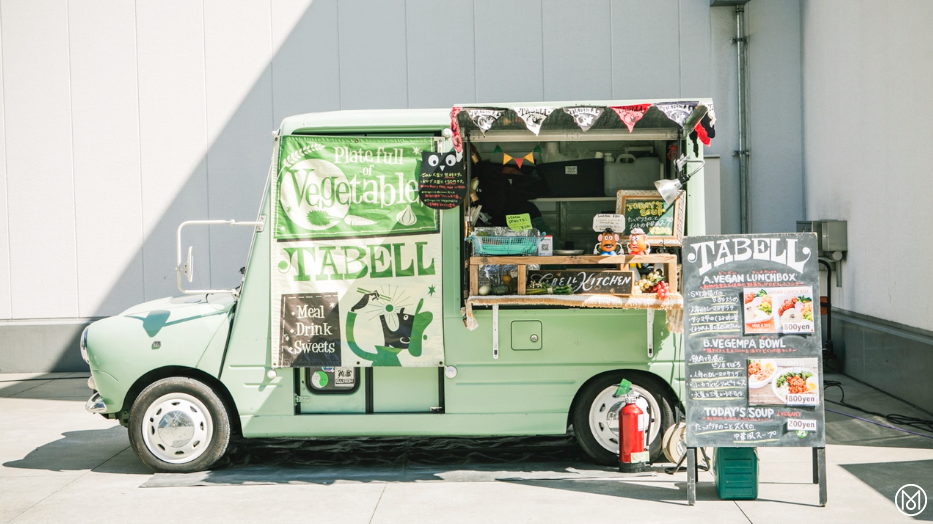
Click here for a short video (by Monocle) about Tokyo’s nascent “kitchen car”, or food truck, scene. (The soundtrack is fun.) Historically, street food stands, or “yatai,” have had a questionable reputation in Japan. They proliferated across the country following World War II when times were tough and food was being rationed. But as Tokyo prepared to host the 1964 Olympics, local governments began to clamp down on yatai. They were seen as unhygienic and a place for drunks to hang out. There may have also been a sense of shame around the country’s post-war struggles. Whatever the case may be, these new food trucks have — aided by technology — changed the way people eat on the street.
If you’ve ever watched a documentary on food, you’ve probably seen the terrible ways in which chickens are raised and farmed. If you have the means, free-range and organic is the way to go. But I appreciate that some – most according to this Economist article – must opt for whatever is cheaper.
The Economist deals with the unfortunate side of the chicken industry, but it also talks about how chicken became the rich world’s most popular and widely traded meat. Since 1990, beef and pork consumption has remained roughly the same in OECD countries; whereas chicken consumption has increased by some 70%.
Also interesting are the regional preferences when it comes to the parts of the chicken. Here is an excerpt from the article (and yes, I prefer white meat):
Though Westerners prefer lean, white meat; many in Asia and Africa prefer dark meat, which includes legs and thighs. These preferences are reflected in local prices: in America breasts are 88% more expensive than legs; in Indonesia they are 12% cheaper. Differences in the price of chicken feet are even starker. The thought of eating talons is abhorrent to many Westerners, but they often feature in Cantonese recipes. China now imports 300,000 tonnes of “phoenix claws” every year.
I reckon that a lot of this popularity has to do with chicken’s reputation as a healthy meat. That is certainly the primary motivation for me. Though I do get thrown off when I see the size of chickens on antibiotics. The Dutch have a word for this: plofkip. It translates to “exploded chicken.”
I realize that this post has little to do with cities, other than the inference that Hong Kong is likely a major buyer of feet. But if you’re at all curious about the stuff you put inside your body – I clearly am – here’s the full article.
Bloomberg is running a video series right now called Next Jobs. It is a look at the careers of the future. Episode four is about a vertical farmer named Katie Morich and a startup called Bowery Farming, which does this out of a nondescript building in New Jersey.
The video focuses more on Katie’s life and less on vertical farming. But it did introduce me to Bowery Farming, which I am intrigued by. So I thought I would share both the video and the company. It is a compelling pitch: local production; ideal conditions; no pesticides; and software that optimizes it all.