
Daily insights for city builders, delivered every morning at 6 AM ET. I’m Brandon Donnelly — a Toronto-based real estate developer and founder of Globizen. I’ve been writing here since 2013.

Tag: economies of scale

  • The fast-foodification of cities

    Greg Isenberg recently wrote about what he refers to as the fast-foodification of everything — including cities. His arguments are that (1) we have reached peak sameness (Toronto is largely indistinguishable from, say, Sydney) and (2) the best brands and companies going forward will be local, unique, and community-driven.

    I don’t know how to assess whether we have reached peak sameness, but I do know that, whatever we are experiencing right now, is at a minimum 100 years in the making. The International Style (of architecture), which emerged after WWI, is exactly what the name suggests. The intent was to fashion an approach to architecture that worked anywhere in the world. Location, climate, and context were all irrelevant.

    This approach has been widely criticized for the reasons you might expect and for the reasons that Isenberg outlines in his post. But sameness is not exclusively the result of European architects who wanted to eschew ornament and local flourishes. As the world continues to globalize and become “smaller”, there is an inevitability to this growing and continued sameness. Business wants economies of scale.

    But there is no question that, more than ever, people are craving unique and local experiences and places. And if you can create that in our globalized world, you are going to win.

  • A taxonomy of moats

    Jerry Neumann’s recent blog post on the “taxonomy of moats” is a great summary of the ways in which companies — and perhaps even cities — can protect themselves against competition.

    Here’s an excerpt from his introduction:

    Value is created through innovation, but how much of that value accrues to the innovator depends partly on how quickly their competitors imitate the innovation. Innovators must deter competition to get some of the value they created. These ways of deterring competition are called, in various contexts, barriers to entry, sustainable competitive advantages, or, colloquially, moats. There are many different moats but they have at their root only a few different principles. This post is an attempt at categorizing the best-known moats by those principles in order to evaluate them systematically in the context of starting a company.

    And here is his taxonomy of moats. He identifies four main sources:

    As a sidebar, consider how this might also apply to cities.

    Scale, for example, matters a great deal. We know that as cities get bigger, people tend to walk faster, have broader social connections (the relationship is super-linear), and be far more productive and innovative.

    If you’d like to read Jerry’s full post, click here. And if you’re interested in this space, I recommend you also check out Fred Wilson’s recent post on, “The Great Public Market Reckoning.”

  • Economies of scale in the car and housing industries

    Over the weekend I watched this interview discussion between Elon Musk and Marques Brownlee. If it doesn’t show up below, you can find the video here.

    [youtube https://www.youtube.com/watch?v=MevKTPN4ozw&w=560&h=315]

    Elon figures that if Tesla works really hard they could probably come out with a USD 25,000 car in about three years. The key to that affordability is twofold: (1) design & technology improvements and (2) scale. 

    So part of the answer is just time. As design and engineering iterations continue to take place, the components will become better and cheaper, just as they have for things like cell phones. Elon estimates that we’re in the 30th iteration of the cell phone today.

    But the second factor is simply volume. And that got me thinking about housing production and the similar importance of scale and density. We do a lot to limit volume, despite saying we want more affordable housing.

  • Should we go backward to go forward?

    Robert A.M Stern–who is a fairly traditional architect (stylistically) and Dean of the Yale School of Architecture–recently coauthored a book called “Paradise Planned: The Garden Suburb and the Modern City.” It’s over 1,000 pages. I haven’t read it yet and I likely won’t, but I did just read this op-ed piece in the New York Times by Allison Arieff and I wanted to comment.

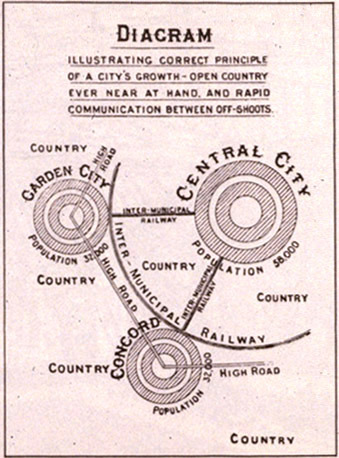
    In the book, the authors argue that the solution to our suburban problems is to return to a “tragically interrupted, 150-year-old tradition” known within urban planning and architectural circles as the Garden City movement. Here’s how Arieff describes it:

    The garden suburb is — because it still exists in many places — a planned, self-contained village located usually outside a major city. Ideally, it features a variety of housing types, though by variety, we’re talking single-family homes and a few low-rise multifamily buildings.

    In contrast to the suburbs we’ve come to be most familiar with, these featured homes are situated in a comfortably dense, highly walkable environment designed around a public center or square.

    But in addition to being more dense and walkable, the big difference for me is that the garden city (to use the original terminology) was initially intended to be self sufficient economically–rather than just serve as a bedroom community for the central city.

    It was all incredibly rational. As one garden city reached its population and employment projections, the next garden city node would be created and connected to the network via road and rail. And by using land relatively intensely, it meant that more of the countryside could be preserved as undeveloped land.

    But while I would agree that the suburbs aren’t going to go away (I’ve said this before) and that we should be making them more dense and walkable, the book (well, the article) got me wondering to what extent the Garden City model applies from an economic standpoint. Should we be trying to create poly-centric cities with tidy little self-sufficient pockets of employment? Or should everything primarily feed a central city?

    The irony of the decentralized information economy is that it appears to be encouraging centralization across and within cities. But even before the rise of the internet and other technologies, there have always been real economic benefits to firms clustering in cities. Known as agglomeration economies, it’s one of the reasons cities even exist in the first place.

    Certainly, there’s a lot we can learn from the way we used to build and plan our cities and towns (they were designed around people as opposed to cars). But something doesn’t sit right with me in terms of the way the Garden City movement thinks about cities, economically. It seems idealistic.

  • Industrial vs. internet scale

    I was watching this talk with Albert Wenger of Union Square Ventures last night. He was recently in Toronto for a Wattpad board meeting (USV is an investor).

    It’s an interesting discussion that touches on education, healthcare, Canada’s tech ecosystem, as well as a bunch of other things. But one point that Albert made that I particularly like is the comparison between industrial and internet scale.

    In both cases, it’s all about growth and scale. The bigger a firm can get, the better.

    But with industrial production, scale is all about driving down the marginal cost. This is also known as economies of scale. As firms increase in size, efficiencies are found that allow the unit of production to drop in price. This, in turn, creates defensibility, because smaller firms simply can’t compete in the market.

    With internet platforms the situation is different. Sure, there are still economies due to scale, but their competitive advantage is often derived from the fact that, on the margin, every new user increases the value for every other user on the network. This is called a network effect.

    A perfect example of this is Facebook. People use Facebook because all of their friends are there. And as more and more friends join, it becomes increasingly more valuable. Without friends, a social network has little value. This make starting one fairly difficult. However once started, network effects are incredibly difficult to dismantle. This is their defensibility.

    Another network effect example that Albert mentions is search (i.e. Google). This one isn’t so obvious. It may not seem like there are network effects with search, but there are. As a search user, you enter a query and then select from a list of results. In doing so you’re actually helping the search engine figure out what the best and most relevant results are for the keyword(s) you just entered. Again, in the end, everybody benefits.

    I found this interesting because, in the case of internet platforms, scale is directly related to value proposition. The bigger something gets, the more useful it becomes. Now, you could maybe argue that the same is true for industrial production, but it’s a bit more tenuous. The direct link is cost.