Daily insights for city builders, delivered every morning at 6 AM ET. I’m Brandon Donnelly — a Toronto-based real estate developer and founder of Globizen. I’ve been writing here since 2013.

Tag: dublin

  • Prerequisites for a successful pedestrian-only street

    image

    A few of us had a really great discussion on Twitter recently about pedestrian-only streets. It was kicked-off by a tweet about Spark Street Mall in Ottawa, which many argue needs a rethink.

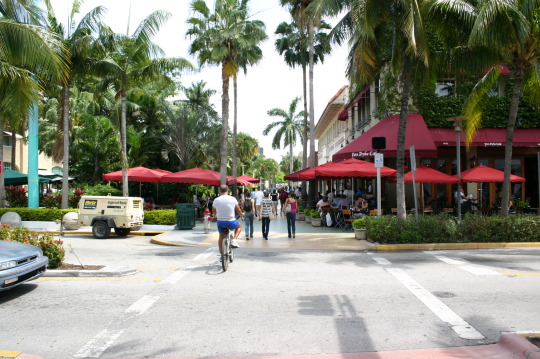
    One of the comments was that a lot of people tend to overvalue their worth. And I will admit that I am probably one of those people. If you’ve ever visited places like Grafton Street in Dublin, Lincoln Road in Miami Beach, or Kensington Market in Toronto on a pedestrian Sunday, you can’t help but think to yourself: why don’t we do more of this? They’re such great places to be.

    But the research suggests that these success stories are few and far between. 

    Below are the key findings from a report that was shared on Twitter during our discussion. It’s by Cole E. Judge and it’s called, The Experiment of American Pedestrian Malls: Trends Analysis, Necessary Indicators for Success and Recommendations for Fresno’s Fulton Mall.

    – Pedestrian malls in the United States have an 89% rate of failure. Most have been removed or repurposed. Only 11% have been successful.

    – Of the 11% successful pedestrian malls, 80% are in areas with populations under 100,000.

    – Certain indicators need to be present for a pedestrian mall to be successful in the United States: near or attached to a major anchor such as a university, situated in close proximity to a beach, designed to be a short length in terms of blocks, in a town/city with a population under 100,000, and/or located in a major tourist location such as Las Vegas or New Orleans.

    – Cities that have embraced the Main Street and Complete Streets models have experienced turn-arounds in their downtowns with more investment, higher occupancy rates and more pedestrian traffic.

    Though the report lists proximity to a beach as helping pedestrian malls, this is more about having a strong anchor than it is about climate – which is a commonly held excuse for why they don’t work. The report cites lots of failed pedestrian malls in California.

    Furthermore, if you look at the list of successful pedestrian malls, about half of them are in colder climates. And if you search the report for the word “weather” it only comes up once. The word “climate” doesn’t come up at all. 

    So I don’t believe that they’re not possible in colder climates. Ski resorts, for example, usually have great pedestrian-only spaces because they have a strong anchor – the mountain.

    But I do agree that pedestrian-only streets aren’t possible everywhere. And the more I think about this topic, the more I agree that we are overvaluing pedestrian-only. I guess that’s why our focus today is more on complete streets.

  • Merry Christmas from post-tribe Toronto

    Belfast Christmas Market by Peter Holloway on 500px.com

    https://500px.com/embed.js

    Merry Christmas and/or happy whatever you happen to celebrate around this time of year.

    Hopefully things have slowed down for you all and you’re relaxing with family and friends either at home or somewhere on vacation. I’ll be doing that here in Toronto and making pancakes for breakfast, because that’s what I like to do on Christmas morning.

    If you’re in the market for some long form reading material while you relax, I recommend you check out an article in The Walrus called, After the Troubles. It’s by Toronto-based planner Joe Berridge – who is a partner at Urban Strategies – and it’s the story behind his team’s Belfast City Centre Regeneration Strategy and Investment Plan.

    It’s a fascinating and entertaining read, and there are lots of comparisons between Toronto and Belfast. Here’s a little taste:

    “IT WOULD BE HARD to conceive of two cities more different than Belfast and Toronto. One old world, one new; one grand, one utilitarian; one barely ticking over, one growing like topsy. And of course, one tribal, the other the epitome of post-tribe. Belfast is 96 percent white—forget about Catholic-Protestant, that’s the critical urban statistic. And yet it’s important to remember that Toronto itself was once the largest Orange town in the world. (Wikipedia asserts that every mayor of Toronto since its founding was an Orangeman until Nathan Philips, a wonderful Jewish mayor, was elected in 1954.) Even the current mayor, John Tory, draws his name from a bunch of brigands and royalist cattle thieves in the Irish backcountry.”

    I spent a bit of time in Belfast when I was working in Dublin (2007) and so it was particularly interesting for me to read about his assessment of the city. Like Berridge, I found the city eerily empty during off-peak times. But it’s an architecturally rich city and a fascinating city for urbanists because of all that has happened.

    Though now we are talking about “after the troubles.” Things are progressing. And that strikes me as a positive thought while I make my pancakes on Christmas morning.

  • The world’s top 23 financial centres (after London and New York, of course)

    The 2015 edition of The Global Financial Centres Index (GFCI) was just released last month. It is often used as one of the sources for ranking financial centres.

    The index – which is now in its 18th edition – is created using two main ingredients. The first is an analysis of 5 broad areas of competitiveness: 1) business environment, 2) financial sector development, 3) infrastructure, 4) human capital, and 5) reputational & general factors. And the second is an online survey given to financial services professionals. The 2015 edition includes responses from 3,194 professionals.

    Below are the top 25 financial centres in the world according to the GFCI (the full list has 84 cities).

    image

    Here are a couple of things to note from this year’s index: 

    London has overtaken New York for the top spot – but both remain more or less at parity if you dig into the numbers. 

    Dublin is performing particularly well in Western Europe.

    The leading centre in Eastern Europe is Warsaw (38th), with Istanbul just behind it.

    Toronto is now second in North America, only to New York.

    Sao Paulo remains the top Latin American centre.

    And, Los Angeles (49th) and Liechtenstein (60th) join as new entrants this year.

    If you’d like to see the full report and ranking, click here.

  • Dublin 2007

    image

    In 2007, I spent the summer working in Dublin, Ireland for a boutique real estate consulting firm called Urban Capital. (For those of you who are from Toronto and know the industry, there’s no connection between the Urban Capital in Dublin and the Urban Capital in Toronto.)

    At the time, they were working with a number of government agencies on the development of masterplanned communities, as well as on specific development projects. Real estate was booming and everyone wanted to be a part of it – including the band U2.

    But as you all know, the following year (2008) wasn’t kind to the real estate industry and, in particular, to Ireland. That year the country fell into recession for the first time since the 1980s and became labeled as one of the “PIGS.”

    I really wish I had started this blog by that point because it would be interesting to look back today on my posts from that summer and see how I was thinking about the Dublin real estate market. I remember having many Guinness-fueled discussions about whether the bull market could continue.

    In any event, the Irish economy is coming back.

    This year GDP is expected to grow by 5.4%, which would make it the fastest growing economy in Europe. National debt is also falling. At the end of 2013 it stood at €215 billion or about 123% of GDP. And at the end of 2014 it had fallen to €203 billion or about 109% of GDP. The national debt is expected to fall below 100% of GDP by 2018.

    At the same time, Ireland also got permission to pay off its bailout loans early. That’s a good sign.

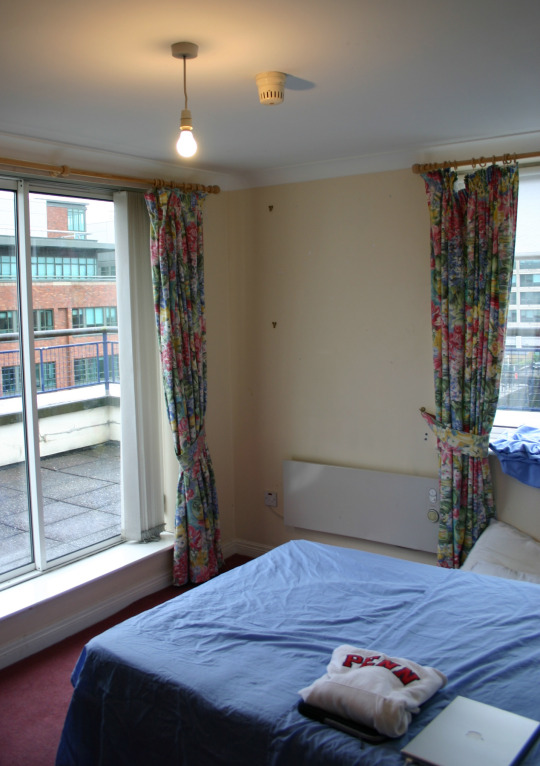
    I’m thinking and reading about all of this today because I was looking through my photo collection this morning and I stumbled upon a folder titled “Dublin 2007.” The photo at the top of this post was the terrace that I had outside of my apartment in the Docklands area. I don’t think I used it once that summer. 

    And here’s a photo of my bedroom. It must have been the curtains that sold me on the apartment.

    image

    I had a great time in Dublin that summer. It’s a fun and young city and I remember being incredibly impressed by the quality of city building that was going on. I’m sure that wasn’t lost in the Great Recession.

  • Do you love or hate streetcars?

    image

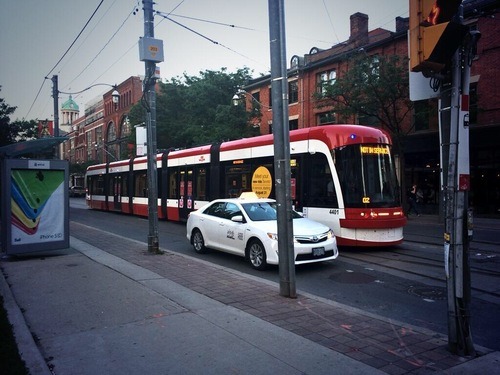
    Tonight I saw one of Toronto’s new streetcars cruising down King Street. They’re still in test mode and the first batch won’t go into operation until this August, but every now and then you’ll see one circulating around the city. This was the first one I’d seen in person.

    If you’re a transit geek or urbanist, you’re probably excited about the arrival of these new streetcars. But I know that there are a lot of people who aren’t. They hate streetcars and they think of them as basically rolling stop signs on our congested downtown streets. And since these new streetcars are even longer than our existing ones, they’re worried they’ll just make the situation worse.

    Personally, I think that streetcars mixed into traffic is generally pretty inefficient. But I know that surface light rail has the potential, when executed properly, to be a cost-effective and sustainable way of efficiently moving lots of people around a city. When I lived in Dublin I took the Luas every day. It was great.

    So I’m curious to hear from you. What do you think of Toronto’s new streetcars? Let me know in the comment section below.

  • All streetcars are not created equal

    With Toronto preparing to deploy the first batch of its new streetcars this summer, there’s been a lot of talk about streetcars in general. Rob Ford has said he wants to get rid of them all together and I hear a lot of other people expressing similar frustrations: Streetcars are rolling stop signs. Streetcars block 2 lanes of traffic. Why don’t we just use more buses? Streetcars cause traffic. And so on.

    So what should we do?

    First, let me start by saying that buses suck. I’m a huge proponent of public transportation in cities, but there’s nothing quite like a rush hour bus ride to have you question your economic status in life. Bus routes have also been shown to have little economic development value, where as fixed rail lines (such as streetcar, LRT and subway) generally increase surrounding property values and spur investment.

    Second, my view is that streetcars themselves as a transportation technology aren’t the problem. It’s our execution. I’ve touched on this topic before on ATC, but I’d like to reiterate a few points here. 

    The value of light rail is that it’s a relatively inexpensive way (compared to subway) of efficiently moving a lot of people. But in order to do that, you need deploy it in a sensible way. In my mind, that primarily involves 3 things: giving streetcars their own dedicated lanes (grade separation), having a reasonable number of required stops, and streamlining the onboarding and off boarding process. Today, we don’t do a great job at most of these things (although our new streetcars will use a proof of payment model).

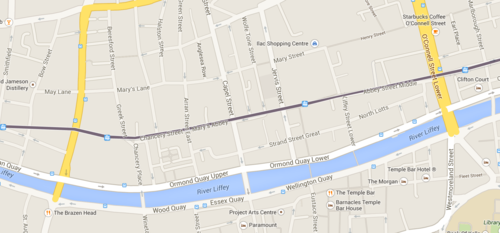
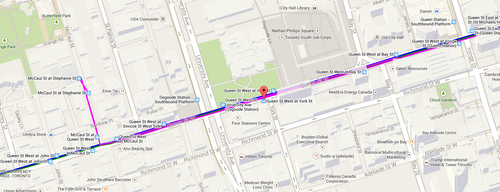
    Take a look at this comparison between Dublin’s Luas light rail system and Toronto’s streetcar system. Both images are at the same scale. Notice the dramatically different stop spacing. Much of the Luas system also runs on its own dedicated lanes.

    Dublin:

    image

    Toronto:

    image

    Every time a Toronto streetcar stops it generates waste. Cars are forced to stop behind it. Everyone on the streetcar has to sit and wait while somebody fumbles through their change looking for a token. But there are other ways to do this. There are ways to make light rail more subway-like, despite the fact that it may be above ground.  And so I don’t think we should be so quick to write off all streetcars.

  • Who is worried about Canada’s housing market?

    Atlantic Cities just posted an article on the world’s 5 largest housing bubbles. In descending order of real growth, they are:

    1. Israel
    2. Norway
    3. Switzerland
    4. Canada
    5. Germany

    Not surprisingly, Canada is on the list. There is, of course, lots of talk both locally and abroad about the stability and sustainability of our housing market. Here’s what the article had to say about Canada:

    “With real home price appreciation near 20 percent, Canada’s home price growth has been raising eyebrows. Bank of Canada governor Stephen Poloz doesn’t see a bubble, but others aren’t so sure. Climbing alongside housing prices have been levels of household debt, which surmounted 165 percent of income in the second quarter of 2013. (That’s not too far from where they were in the U.S. before it suffered its housing crisis.) And the Bank of Canada itself has even warned about risks posed by frothy condo sectors in big cities like Toronto. A few hedge funds, such as San Francisco-based Hyphen Partners, have even made high-profile bets on a Canadian housing bust. They haven’t paid off, yet.”

    And here’s the full list of countries:

    image

    Overall, it’s not surprising to see that Canadian home prices have risen so dramatically since Q1-2009. As the US sank into deep recession (2008-2009), Canadian credit became cheap in order to stave off a recession of our own. This fuelled the housing market, which is an asset class that’s inextricably linked to financing costs.

    The same thing happened in Ireland, which today sits at the bottom of the above list. It has seen real prices drop roughly 40% since Q1-2009. By adopting the euro currency, Ireland no longer had control over its own monetary policy (this is one of the downfalls of a centralized currency). So when the economies of the larger continental countries stuttered, interest rates were dropped. For the strong Irish economy, it ended up creating a housing bubble.

    I worked in Ireland in the summer of 2007 and I remember people telling me about this. Already at this point there was concern that the market had become overheated. There are obvious parallels to what has happened in Canada, even though we don’t share a common currency. The Canadian and US economies are inextricably linked.

    So will the same thing that happened to Ireland happen here in Canada? Nobody knows for sure, but I think we can take comfort in the actions taken by the feds to tighten up lending. They’re acutely aware of what easy credit has done to the housing market and they’re trying to temper it. And it’s certainly had an impact.

    Early this week when I was on the panel about investing in condominiums, I asked a lot of the realtors about what they were seeing in the residential marketplace. A great number of them told me that their clients were struggling to obtain financing. A lot of deals were falling through because of it.

    If you’re worried about our housing market, this should be taken as great news. Choke off credit and you choke off real estate.