Daily insights for city builders, delivered every morning at 6 AM ET. I’m Brandon Donnelly — a Toronto-based real estate developer and founder of Globizen. I’ve been writing here since 2013.

Tag: driving

  • Autonomy, sometimes

    Benedict Evans raises a number of good points and asks a bunch of good questions about the “steps to autonomy” in his recent blog post.

    Right now we’re all talking about autonomous vehicles in terms of their level of autonomy – namely 1 through 5. L1 is some degree of autonomy, but in almost all situations, you still need a human driver. L5 is no human driver needed, ever.

    But as Evans points out, the level of autonomy depends on the place, and it is unlikely – at least initially – that L4 or L5 will mean L4 or L5 in all environments. Here is an excerpt from his post:

    It naturally follows that we will have vehicles that will reliably reach a given level of autonomous capability in some (‘easy’) places before they can do it everywhere. These will have huge safety and economic benefits, so we’ll deploy them – we won’t wait and do nothing at all until we have a perfect L5 car that can drive itself around anywhere from Kathmandu to South Boston. And so, if we call a car even L4, we have to say, well, where are we talking about? We might mean ‘most of this country’. But more probably, it will be L4 in one neighborhood, L3 in another and only L2 in a third – and a car might encounter all three of those on one journey. Put your route into the map and it will tell you if today is an L5 day or not.

    Thinking about the Gartner Hype Cycle, there’s often (always?) a “peak of inflated expectations”, as well as a chasm that new technologies need to cross as they are being adopted.

    Benedict’s article reminded me that we’re probably coming off that peak with autonomous vehicles and about to enter the so-called “trough of disillusionment.” 

    Autonomous vehicles represent a monumental shift in mobility, which will in turn impact our cities. That’s going to seem like an insurmountable challenge – until it doesn’t.


  • Road pricing for whom?

    New York City is considering a congestion charge for drivers entering Manhattan below 60th street. It is part of Governor Cuomo’s Fix NYC plan. But we all know how difficult these things are to implement.

    Last month, Felix Salmon wrote a piece in Wired where he argued that our cities are dying of traffic congestion and that the cause is ride-hailing services like Uber and Lyft. The solution: A tax on ride-hailing services.

    The article elicited a few reactions, including this one by Charles Komanoff over at Streetblogs and this one by Joe Cortright over at City Observatory. Joe’s message: “The problem isn’t the ride-hailed vehicles, it’s the under-priced street.” 

    Precisely.

    Felix later followed-up with a post on his blog where he clarified that the reason he loves this idea – of taxing ride-hailing companies, not riders – is that it’s far more politically palatable than a blanket tax on all cars. I don’t disagree.

    Which is why I think my idea is something which is eminently politically possible, in contrast to congestion pricing, which has been implemented exactly nowhere in the USA.

    Americans love their cars, and they love the freedom that cars represent, and they hate the idea that they should be taxed for driving their cars. Tolls on roads and bridges are bad enough, but a fee just to drive in to a city?

    That said, I’m with Charles and Joe. 

    Last year, it was reported that roughly 25% of all Uber trips in New York City were UberPool trips. I’m not sure what the number is today, but these are people who are car pooling to get around. That’s generally considered to be a positive thing.

    Are these really the trips we want to be discouraging (and singling out) with a charge simply because we don’t have the moxie to do what is right and makes rational sense?

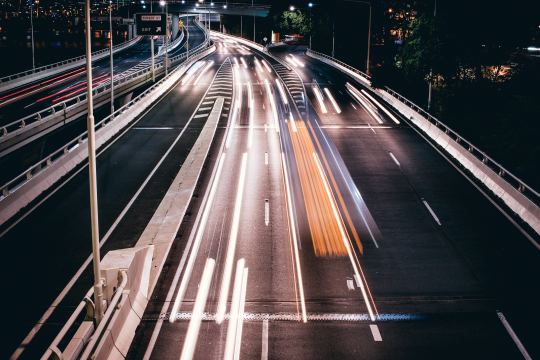
    Photo by Austin Scherbarth on Unsplash

  • Will autonomous vehicles make location irrelevant?

    I am not convinced that autonomous vehicles will make “location” irrelevant. 

    But I do agree with the following line from this recent Bloomberg article called, A Driverless Future Threatens the Laws of Real Estate.

    “The link between property and transport has been perhaps the most durable in human history.”

    So this remark by David Silver could very well be correct:

    “Real estate might be the industry that is most transformed by autonomous vehicles.”

    Technological advances in mobility have historically brought about decentralization because each advance – from streetcars to the automobile – made it reasonable to travel further distances.

    Of course, autonomous vehicles are also expected to free up our time and focus while in transit – although trains do that for us today albeit with that pesky last mile problem.

    But just like the internet in the late 90′s didn’t make location irrelevant (the opposite appears to have happened), I am similarly unconvinced when it comes to autonomous vehicles. What we consider a desirable location may simply shift.

    So this is not to say that the won’t see profound change in our cities. We will. Which is why we’re all trying to get ahead of it.

  • The case for self-driving electric car fleets

    Below is a presentation by Frank Chen – head of research, deal, and investing at the venture firm Andreessen Horowitz – which makes the case for self-driving electric car fleets.

    He starts the presentation by talking about why he thinks this shift is going to happen faster than most people think. 

    One reason for this is that the batteries are becoming dramatically cheaper and the battery makes up a large part of the cost. By 2025, it is expected that electric vehicles will become cost neutral with ICE (internal combustion engine) vehicles assuming zero government subsidies.

    And by 2038, Bloomberg believes we will hit peak ICE vehicle sales. That is, electric vehicle and ICE vehicle sales globally will hit 50/50. Norway has already hit this threshold but they impose heavy financial penalties on ICE vehicles.

    2025 is not that far away.

    If you can’t see the presentation below, click here.

    [youtube https://www.youtube.com/watch?v=of5j-Lztqrg?rel=0&w=560&h=315]

  • Great things that happened on transit

    Elon Musk’s apparent distaste for public transit and random strangers prompted a Twitter battle last week. Though for the record, Musk later clarified that he loves trains, most subways and London buses.

    Transit planner Jarrett Walker retorted that Elon’s views are the “essence of elite projection”. What’s good for Elon Musk may not, in fact, be good for the broader society. Elon responded by calling him an idiot.

    All of this prompted Brent Toderian – city planner and former chief planner of Vancouver – to initiate the hashtag: #GreatThingsThatHappenedOnTransit. It then took off and the transit stories started pouring in.

    Not surprisingly, this has been getting a lot of attention. It’s Elon Musk after all. But billionaire celebrities aside, it does serve as a good example of the two sides of this debate.

    Some people seem to think that I am anti-car. I can see why some people might think that, but I am not anti-car. I love nice cars. And I love nice trains. What I value first and foremost is the city. 

    The kind of city you can build on the backbone of transit is very different than the kind of city that gets built around the car. And as a rule of thumb, I prefer the former over the latter.

    But this is not to say that the public transit model is perfect. It’s far from perfect for many reasons. And it can get even more imperfect when we don’t pair it with the right land use policies.

    Deploying heavy rail through low density areas – that are by design inhospitable to car-less humans – will not magically flip the modal split. Public transport alone cannot solve that problem.

    At the same time, if you’re a regular reader of this blog you’ll know that I am enamoured by the possibilities of autonomous electric vehicles. I am not assuming that the “car” of tomorrow will look and perform anything like the car of today.

    Mobility is such an exciting space right now.

  • End of the automotive era

    Bob Lutz is a former vice chairman and head of product development at General Motors. Recently, he had this to say about the future of the auto industry. 

    Here are a couple of powerful snippets:

    It saddens me to say it, but we are approaching the end of the automotive era.

    The auto industry is on an accelerating change curve. For hundreds of years, the horse was the prime mover of humans and for the past 120 years it has been the automobile.

    Now we are approaching the end of the line for the automobile because travel will be in standardized modules.

    Everyone will have five years to get their car off the road or sell it for scrap or trade it on a module.

    Bob is 85 years old. This is somebody who spent his entire life in the auto industry telling us that the old model is now done. 

    It reinforces something that I wrote about here, where the “end of the automotive era” was pegged at around 2021. 

    And it is part of the mental model that I have started relying on today for decision making.

    Photo by Alessio Lin on Unsplash

  • Self-parking cars

    I recently tested out BMW’s self-parking feature. I think it’s called parking assistant. But that doesn’t feel quite right, because it didn’t really assist. It actually did everything.

    As soon as you slow down and start driving past parked vehicles, the car automatically starts scanning and measuring the length and depth of available spots. You see this happening in realtime on the car’s display in plan view.

    Once it finds a suitable spot, all you have to do is basically stop and press a button. No need to steer. No need to accelerate or break. No need to turn your head. It all happens automatically.

    After the car had parked, I immediately got out to see what kind of skills it had. It was inches away from the curb on both tires and 100% parallel to the curb. 

    I have to admit that I did feel a tad uncomfortable letting the car do everything. I am so used to turning around and being in control. I don’t even have a backup camera in my car.

    But this feature is probably (I’m guessing) already more capable than many human drivers when it comes to parallel parking.

    For those of you in the know when it comes to cars, this may be old news. But I was super impressed. And it was a good reminder of what’s coming down the pike.

  • Singapore just capped vehicle growth at 0%

    When I was in New York a few weeks ago, my friend (a New Yorker) said to me that he couldn’t imagine owning a car (he used to but got rid of it with zero remorse). He then elaborated on all of the nuisances that driving in the city produces.

    There are parts of Toronto where you can feel similarly. I feel fortunate to live in one of those parts. Of course, there are other parts of this city where the exact opposite is true. It’s inconvenient not to have a car. These are typically areas where lower land costs have been exchanged for higher transportation costs.

    The City of Toronto has a land area of approximately 630 square kilometers. If that’s all the land we had (the metro area is almost 6,000 square kilometers), you can bet we would think about land use and transportation a bit differently.

    Take for instance, Singapore, a city-state with an area of approximately 719 square kilometers. The Land Transport Authority estimates that 12% of the republic’s total land area is taken up by roads.

    Because of this, they just announced that they have lowered their vehicle growth rate (for cars and motorcycles) from 0.25% per annum to 0% effective February 2018. They can do this through their Certificate of Entitlement (COE) quota. And it won’t be revisited until 2020.

    Put differently: No more cars and motorcycles until, maybe, 2020.

  • Clean disruption of energy and transportation

    I just came across the below talk by Tony Seba about the coming “clean disruption” of energy and transportation. The talk follows his book of the same name. Click here if you can’t see it below. It runs about an hour, but I would encourage you to give it a watch. 

    [youtube https://www.youtube.com/watch?v=2b3ttqYDwF0?rel=0&w=560&h=315]

    The first few minutes will be things I’m sure many of you have heard before, such as the failure of Kodak to embrace digital cameras (film business considered too valuable), Moore’s Law, and so on. But he then moves on to cost curves, battery storage, solar power, and autonomous electric vehicles (A-EVs).

    You all know that I am fascinated by these topics, so here’s one piece that stood out for me: 2021 is his prediction for the year in which A-EVs become real and disrupt both internal combustion engine (ICE) vehicles and individual car ownership.

    Obviously this won’t happen overnight, but Tony’s belief is that 2021 will be the year that the economics of A-EVs become so compelling (10x) that it will crush our current business models.

    The argument is that on-demand ride hailing/sharing and A-EVs will converge and that Transportation as a Service (TaaS) will provide our mobility needs at a fraction of today’s costs. We’ve talked about this prediction before on the blog, but never has a timeline been attached to it.

    All of this reinforces two thoughts that I’ve been having over the past few years. One, I will probably never buy another combustion engine vehicle. And two, I should probably avoid buying another vehicle, period, until the next wave of business models becomes clearer. Leasing likely makes more sense at this stage if you need a car.

    In fact, Tony believes that with the collapse of individual car ownership, the resale value of cars could become negative. That is, you’d have to pay people to take a car off of your hands, because everyone will recognize the cost advantage of just using TaaS.

    We are doing everything we can to future proof our development projects so that they are ready for electric vehicles. But if A-EVs and TaaS completely erase individual car ownership within the next 5 years, then all of us in the industry are going to need to do much more to ready our buildings and cities.

  • Network effects for autonomous vehicles

    In my recent post about why I write about tech on this city building blog, I made a pithy comment about autonomous vehicles and why it is “largely a software challenge.” 

    The argument I was trying to make was that the hardware, similar to smartphones today, will likely become a commodity. More of the value will end up flowing to the firms that control the software.

    Benedict Evans has an excellent deep dive into this topic on his blog. The post is called: Winner-takes all effects in autonomous cars.

    Here’s an excerpt about hardware:

    To begin with, it seems pretty clear that the hardware and sensors for autonomy – and, probably, for electric – will be commodities. There is plenty of science and engineering in these (and a lot more work to do), just as there is in, say, LCD screens, but there is no reason why you have to use one rather than another just because everyone else is. There are strong manufacturing scale effects, but no network effect. [My link, not his.]

    And here’s his conclusion:

    So, the network effects – the winner-takes-all effects – are in data: in driving data and in maps.

    That said, it is still early days for autonomous vehicles. Who knows if these network effects will end up being highly defensible or weak. There are still lots of assumptions and questions at this stage.

    From a city building perspective, one of the major concerns with autonomous vehicles is that they could tempt us back to car-centric city planning. That would be a shame.

    Photo by Zachary Staines on Unsplash