Daily insights for city builders, delivered every morning at 6 AM ET. I’m Brandon Donnelly — a Toronto-based real estate developer and founder of Globizen. I’ve been writing here since 2013.

Tag: driving

  • Downward pressure on parking supply

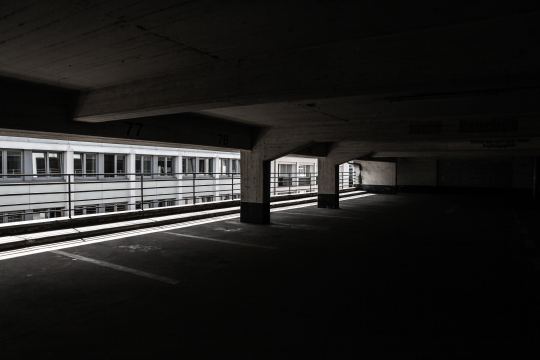
    There’s a significant amount of downward pressure on parking supply in most major cities. Part of this has to do with the push toward more sustainable forms of transport, which is, of course, a good thing. But it also has to do with rising construction costs, the fear of obsolescence in the wake of autonomous vehicles, and probably many other factors.

    Developers, ourselves included, have responded by being cautious about the amount of parking being provided and by considering alternative future uses for the parking that is being built. I think it is also obvious that we will continue to see more, rather than less, parking stackers and other more efficient parking solutions.

    So far the cost of parking in dense urban centers has continued to rise. A new parking spot in the core of Toronto priced at $100,000 would not surprise me. And Hong Kong recently set a record for what is allegedly the most expensive parking spot in the world: USD 765,000 or CAD 1 million.

    But what is going to happen going forward?

    Researchers at the Singapore – MIT Alliance for Research and Technology and MIT Senseable City Lab, along with Allianz, have recently tried to quantify what the impact of autonomous vehicles will mean on required parking, and on traffic, in Singapore. The study is called Unparking.

    Today, they estimate the total number of parking spots in Singapore to be around 1,370,000. This is based on minimum parking requirements from the Housing Development Board and on the idea that home-work commuting consumes two parking spots: one at home and one at the office.

    They model four different scenarios, but the last one is based on fully autonomous vehicles and on shared parking spaces. Holding current mobility demands and traffic volumes constant, the demand for parking in this scenario drops by 70%.

    It is possible to reduce the number of parking spaces even further to 85%, but this has a negative impact on traffic congestion in their model. Fewer parking spaces means the autonomous vehicles have to drive around more picking people up. 

    I also don’t know if there was any consideration given to induced demand as a result of the more affordable autonomous vehicles. Demand for transportation services is generally thought to be fairly elastic.

    Whatever the case may be, numbers are made to be questioned. And Singapore is a unique city-state. But ¼ the amount of parking does not seem that far fetched to me.

    Photo by Tobias Jussen on Unsplash
  • A picture of dynamic road pricing

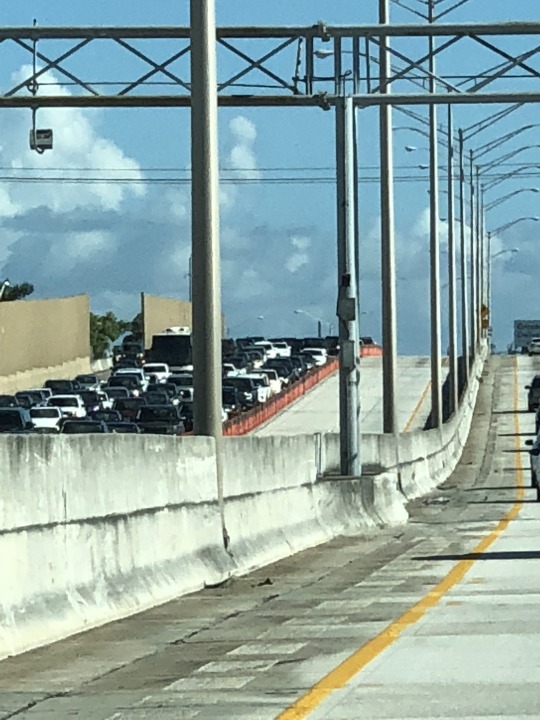
    Below is a photo of Interstate 95 near Miami, which, for the record, I myself did not take while driving.

    image

    The two empty lanes that you see are the “Express Lanes.” The price for using these lanes varies based on demand.

    During periods of low demand, the toll could be around $0.20 per mile. 

    During periods of high demand, such as during rush hour, it might be $1 per mile. 

    And during unusually heavy periods, like when there’s an accident, it could be more.

    We used these lanes while driving around the Miami area on this trip. The pricing always seemed reasonable and the lanes were never congested.

    I think the above picture is a good demonstration of how dynamic road pricing can be used alleviate traffic congestion.

    That’s why many cities, such as Portland, are exploring it as a solution. I wish Toronto would do the same.

  • Current state of autonomous vehicles

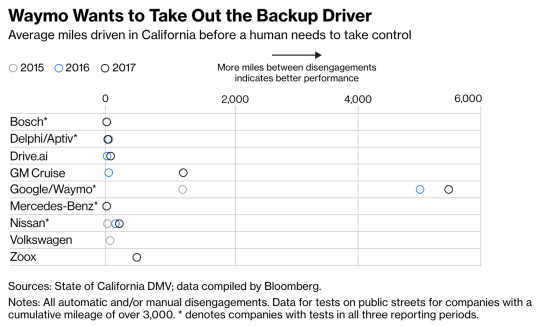
    This is an interesting piece by Bloomberg summarizing the current state of autonomous vehicles and in particular the (supposed) dominance of Waymo (Alphabet’s self-driving vehicle arm). Many believe they will be the first real entrant into the market.

    The company is currently running an “Early Rider” program in 25 cities. But its Phoenix trials are the furthest along, which isn’t at all surprising given the city’s car orientation and suburban fabric. Already Waymo has started offering passenger rides without a backup driver in the car.

    Overall, the company has come forward with four main business priorities:

    • Ride hailing
    • Trucking
    • Personal vehicles
    • Public transit

    But I still think that we’ll see a blurring of these priorities, if not outright cannibalization, as the cost per mile plummets. I mean, why own a personal vehicle if it is flat out easier and cheaper to just hail a robotaxi? 

    Here is an excerpt from the article talking about pricing:

    Tasha Keeney, an analyst at ARK Invest, says that Waymo could choose to offer an autonomous ride-hailing service today at around 70 cents a mile—a quarter of the cost for Uber passengers in San Francisco. Over time, she says, robotaxis should get even cheaper—down to 35 cents a mile by 2020, especially if Waymo’s technology proves sturdy enough to need few human safety monitors overseeing the autonomous vehicles remotely. “You could see software-like margins,” Keeney says.

    I can’t wait to be driven around for cents on the dollar. Click here to read the full article.

  • Minimum fleet

    Here is an interesting study by the MIT Senseable City Lab, which looks at: “the minimum number of vehicles needed to serve all the trips in New York without delaying passengers’ pick up times.” If you can’t see the embedded video below, click here.

    [youtube https://www.youtube.com/watch?v=nFo64kBGF6o&w=560&h=315]

    This is interesting because it begins to quantify the amount of waste running through the system today and the possible efficiencies brought about by autonomous vehicles. In this model, the current taxi fleet in NYC could be reduced by 40%.

    For more on the study, go here.

  • Portland is considering whether to solve traffic congestion

    image

    Chris Hagerbaumer is the deputy director of the Oregon Environmental Council. She recently delivered the below testimony on “variable traffic-based tolls”, a form of road pricing. This is something we have talked a lot about here on the blog. 

    Oregon is currently looking at implementing this on two freeways in Portland, which is why Chris delivered this testimony. And as many of you know, I am very much in support of this demand management approach. So here you are: why congestion pricing makes sense for Portland (taken from City Observatory).

    ——————————————————–

    The question in front of you is: how do we actually solve congestion, solve it in a way that is the least cost to the taxpayer, and in a way that doesn’t result in more pollution. When we add more supply (in other words, build more roads) we end up exactly where we started when it comes to congestion (due to induced demand), we spend billions of taxpayer dollars (much of which comes from drivers who aren’t the ones demanding more road space), we harm surrounding communities as highways encroach into neighborhoods, and we pollute the air and heat up the planet.

    Induced demand is the fact that when you add freeway capacity it induces longer trips, more sprawl and more driving. Traffic is like a gas, expanding to fit whatever space there is. In one infamous example, Texas spent nearly $2.8 billion expanding Katy Freeway to 26 lanes and congestion has actually worsened.

    Building new roads is a supply-side solution that simply doesn’t work.

    An effective, least-cost, environmentally sound way to address congestion is the proposal before you: congestion pricing to manage demand. Drivers pay an automated fee to enter highly congested roads at peak hours; in return, they travel smoothly and reliably, getting where they need to go on time. Prices are set at the lowest possible level to free up just enough road space to eliminate bottlenecks.

    When you eliminate bottlenecks and get traffic flowing freely, you have—in essence—added capacity. You no longer need to add new lanes, you save taxpayers a bundle, and you reduce dangerous auto and truck exhaust.

    Congestion pricing is a demand management solution that’s proven to work and does so in cities around the world. Drivers opposed congestion pricing at first: no one wants to pay more. But that opposition of 60% or more turned into support of 60% or more after congestion pricing was implemented. People’s opposition turned to support because they now get that it works—they experience the value.

    Equitable application of congestion pricing absolutely requires mitigating diversion to local streets. But note that congestion pricing actually pulls many drivers who were already cutting through local roads back to the highway because those drivers who were stuck in traffic now have an option to get where they need to go, on time, for a small price.

    Equitable application of congestion pricing also requires significantly increasing transit service and other travel options in the corridor and considering other means to make the system work for low-income commuters who must drive during peak hours, such as targeted discounts or exemptions.

    We think of highways as free and we think of driving as freedom, but by investing almost solely in infrastructure for cars over most of the 20th century and into the 21st century, we created a transportation system that is costly not only for our pocketbooks, but for our very health and wellbeing and our region’s economic prosperity, a transportation system that contributes to the existential risk of runaway climate change.

    You have an opportunity to make a decision that will lead to less time stuck in traffic, healthier air, and more economic prosperity for the region and state. We hope you embrace that opportunity.

    Photo by Zach Savinar on Unsplash

  • Urban metabolism

    I spent this morning in the suburbs bouncing around to a few different meetings. I then came back downtown so that I could get some actual work done in the office. And then after that, I was around downtown getting a bunch of different things done.

    I am mentioning this to you all because today I was reminded of how different the metabolic rate can feel in the city compared to the suburbs. There are even studies suggesting that people walk faster in larger cities.

    Some businesses, of course, require a lot of space and the economics simply do not work in the core of the city. We all get that. But if you’re competitive advantage is human capital, then this is something to think about.

    I feel like I spent most of my morning driving around, which I’m not complaining about, except that I could have probably had 3x as many meetings in the city during that same period of time. If you multiply that out over time, then we’re talking about a material spread in overall productivity.

    And we haven’t even touched on those fortuitous urban encounters, which do happen and do provide all sorts of benefits. As much as we’re all connected like never before – through things like, well, this blog – there’s nothing like shaking somebody’s hand and looking them in the eyes.

  • The most expensive parking spot in the world

    I saw in the news recently that Hong Kong just set a new world record for the most expensive parking spot. I think it also held the previous record.

    Last month somebody paid HKD 6 million for a single stall in the Ultima apartment complex in Kowloon. That’s about USD 765,000 or CAD 1 million based on today’s rates. And the spot is 16.4 feet x 8.2 feet, so that works out to about CAD 7,436 per square foot. 

    What is clear is that supply is not keeping up with demand. Here is the stat from a recent Toronto Star article:

    The number of parking spaces grew just 9.5 per cent to 743,000 from 2006 through 2016 [in Hong Kong], while the private car population surged 49 per cent to 536,025, according to a report by the city’s Transport Department.

    There are a number market forces which are undoubtedly bringing down the ratio of parking stalls to housing units. That same phenomenon is also pretty clear here in Toronto. But it is interesting to note the continued growth in private cars.

  • SoCal Googie

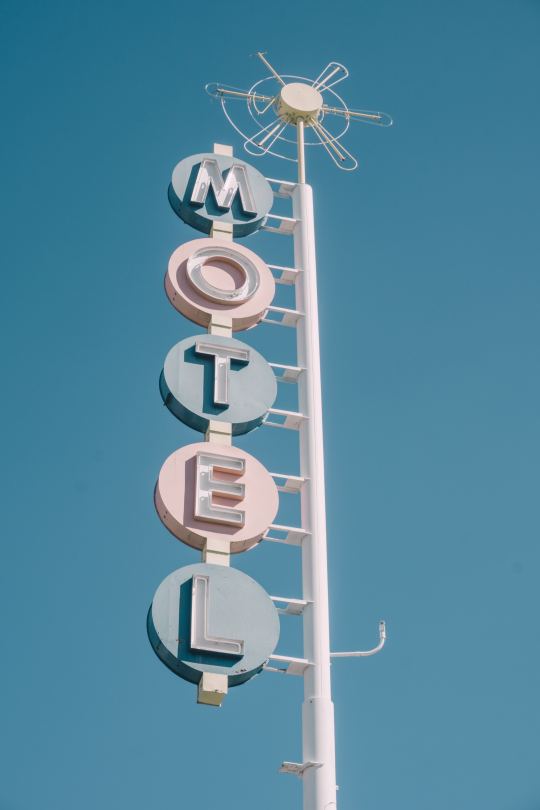
    I must have been sick for this lesson in architecture school, because I just discovered, through Curbed, that there is a subset of mid-century modern architecture known as Googie. It originated in Southern California in the 1940s and was all about the future, car culture, the Space Age, and the many other things that dominated the postwar years. Think starbursts, curvaceous geometric shapes, and bright colors. We all know the architecture. But did you know it was called, Googie?

    Supposedly the Googie movement was given its label by architecture critic Douglas Haskell, who used it in a derogatory way to describe criticize the architectural fashion at the time. Googie was the name of an actual coffee shop in West Hollywood designed by John Lautner. And that’s something that is noteworthy about Googie. It was a form of architecture for average buildings: coffee shops, gas stations, motels, and those sorts of things.

    There will always be critics who eschew that which is fashionable at the time. I suppose one could argue that if you’re being fashionable, then you’re not being timeless. Because fashion is about what’s current. And good architecture should be timeless, right? But there’s something so fascinating about a kind of built form that perfectly captures a particular time and place. Middle of the 20th century. Car-oriented Southern California. 

    Sometimes good architecture and design also needs a bit of time and distance in order to fully appreciate it. What was once garish may one day become treasured. Just give it a generation or two.

    Photo by ian dooley on Unsplash

  • Meet Replica

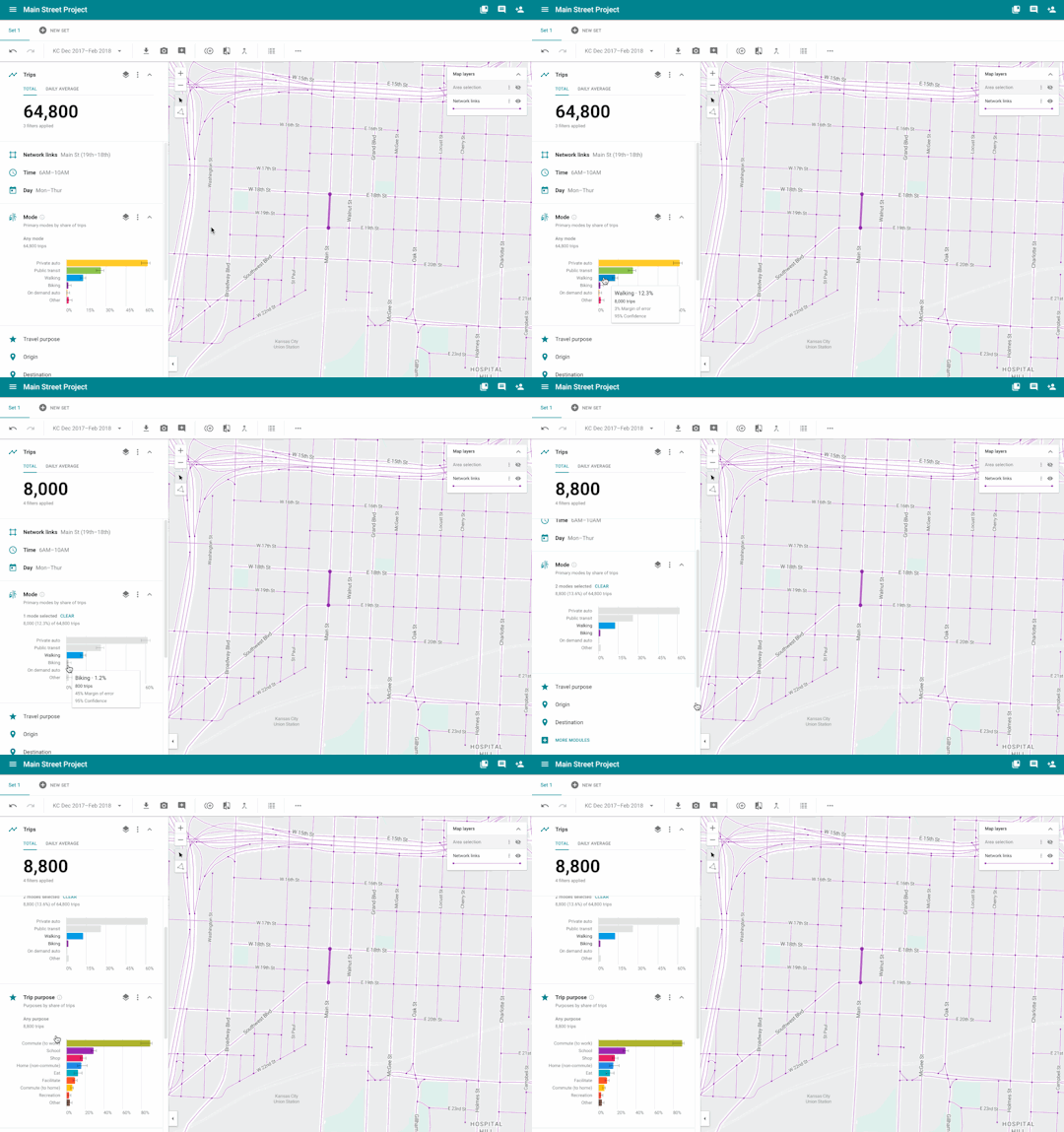
    Sidewalk Labs is currently building out a platform called Replica that will support them in their development plans here in Toronto. Replica is

    “a user-friendly modeling tool that uses anonymized mobile location data to give planning agencies a comprehensive portrait of how, when, and why people travel in urban areas.”

    Here is a preview of the Replica dashboard showing a section of Main Street in Kansas City. I hope the animated GIF shows up for you.

    The platform uses a combination of mobile location data (~5% of the population) and on-the-ground checks, typical stuff like manual traffic counts and transit boardings.

    The goal is to understand in real-time who is using a street, as well as how (driving? cycling?) and why (going to work?).

    Their introductory blog post obviously stresses the importance of personal privacy, but I am curious how they determine where people are going.

    I suppose if they pair journeys with destinations (and the durations at those destinations) they can make reasonable assumptions around the why.

    I think the benefits to all of this are clear. But does any or all of this worry you from a privacy standpoint?

  • Electric vehicles are mostly leased

    At the beginning of this year, Bloomberg published this article talking about how the vast majority of electric car drivers lease, rather than own, their cars. The stats are as follows: In the US, about 80% of electric battery vehicles and about 55% of plug-in hybrids are leased, whereas only about 30% of all vehicles in the country are leased. 

    It is, however, important to note that the above doesn’t include any data points from Tesla. Since they sell their cars direct to customers, as opposed to through dealers, they have no obligation to publicly release this data. And so apparently they don’t.

    Conventional wisdom suggests that if you plan to drive the same car for an extended period of time – the average age of a car on the road in the US is over 11 years – it makes financial sense to buy. But in this case, people seem to be worried about technological obsolescence and the weak resale market for electric vehicles. This may also speak to the type of customers who are currently buying electric vehicles; they are early adopters and don’t want old cars.

    I’ve also seen someone argue that because some states require a percentage of car sales to be zero electric vehicles, it can be more cost effective for manufacturers to sell/lease them at a loss than pay the penalties or buy the ZEV credits. And with a lease, they at least get parts back at the end of the term. But I honestly don’t know much of a factor this plays.

    I hadn’t thought of this before I stumbled across the Bloomberg article, but it all makes sense to me. I find this reversal in ownership interesting because it tells me that how we consume cars can very easily change, and probably will moving forward.