
Daily insights for city builders, delivered every morning at 6 AM ET. I’m Brandon Donnelly — a Toronto-based real estate developer and founder of Globizen. I’ve been writing here since 2013.

Tag: documentary

  • Waterfront Cities of the World comes to Toronto

    image

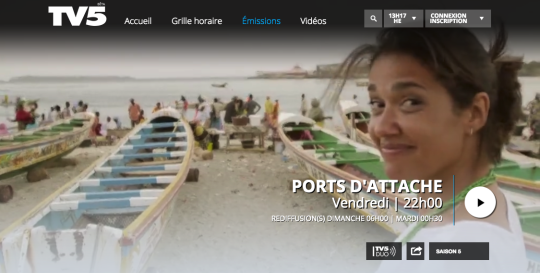
    This morning I was interviewed for a Montreal-produced TV show called Ports D’Attache. The English version of the show is called “Waterfront Cities of the World” and it airs on Discovery. 

    Here’s a list of all the cities they’ve visited in the first 4 seasons and here are all the shows from the first 2 seasons in English (which you can watch online for free).

    Rather than a travel show, it’s a look at the “spirit and soul” of each waterfront city through the lens of “local personalities.” There’s definitely a lot of fodder for city geeks and so I thought you all might find the series interesting.

    Toronto was the last stop of season 5. The other cities from this season include Philadelphia, Budapest, Rome, Taipei and Kuala Lumpur, to name only a few of them. 

    I’m glad that they decided to come to Toronto and I’m delighted that they invited me to be on the show. The team was great and, if you haven’t already noticed, I love supporting this city.

    The show will first be released in French (with my comments dubbed over), but an English version will follow. Once that version is released, I’ll circulate a link.
  • Real Scenes Documentary — a look at New York’s electronic music scene [Video]

    image

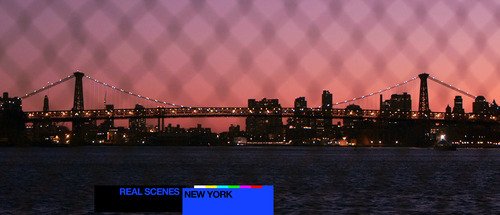
    I just stumbled upon a fascinating documentary series called Real Scenes. Each film explores “the musical, cultural and creative climate” within a particular city. 

    Below is Real Scenes: New York (click here if you can’t see it below). It’s an inside look at the underground music scene that has developed in Brooklyn, but that is at the same time being threatened by development and rising rents. Disclaimer: There’s a lot of f-bombs and a lot of hating on gentrification.

    [youtube https://www.youtube.com/watch?v=LDtf0uIUPuE?rel=0&w=560&h=315]

    I’ve only watched the New York video from this series, but I plan to watch each and every one of them. The other cities are Tokyo, Johannesburg, Paris, Berlin, Detroit, and Bristol.

    What’s fascinating about these short documentaries is that they give you a glimpse into a particular undertone within each city – one that would otherwise be hard to get if you weren’t living there and engrossed in the scene.

    It’s also interesting to see how some people view change within cities. 

    To some, transforming a neighborhood from one that looks like a “bomb went off” to something more pristine, is a good thing. But to others, it’s the worst possible outcome. It all depends on your frame of reference.

    Now, how do I get them to make a Real Scenes: Toronto? 🙂

    Image: Resident Advisor

  • Life below zero and underground

    image

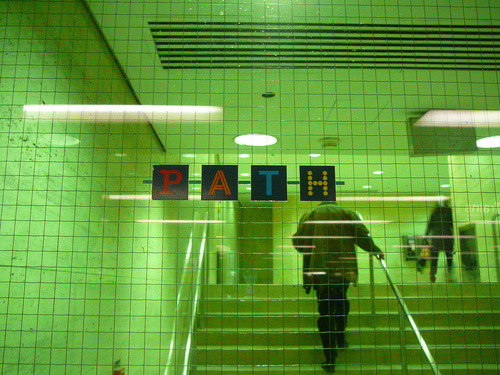
    A few years ago, I was touring a friend from the US around Toronto’s Financial District and the first thing he said to me was: “You have no retail.” And that’s certainly what it might look like at first glance.

    But there’s actually lots of retail. It’s just all underground in an over 30 kilometer long network of walkways called the PATH.

    Initially conceived of as the antidote to Canadian winters, “underground cities” are a kind of uniquely Canadian form of urbanism. Toronto and Montreal have the largest ones in the world and they continue to grow. As new towers are built, new connections are added.

    But the downside to all of this is that it pulls street life down underground. And it can conceal a lot of the urban vibrancy that is actually take place. So maybe we need to come up with design solutions to better connect these subterranean cities back to street level and also not forget about the street.

    I’m thinking about this today because of a CBC documentary I watched this morning called Life Below Zero. It basically argues that – unlike other cold climate cities and countries – the vast majority of Canadians actually hate winter. And underground cities are our way of trying to ignore it.

    Well, I don’t hate winter. In fact, I love it because it signals snowboarding season for me. But I may be in the minority. What’s your position on winter?

    Image: Flickr

  • The Human Scale

    Earlier today I stumbled upon a documentary called “The Human Scale.”  I haven’t watched it yet, but I’m planning to rent it from iTunes later this weekend. Here’s the trailer. Click here if you can’t see it below.

    [youtube https://www.youtube.com/watch?v=5CyLNS_ljHw]

    One of the things that’s so fascinating about studying cities right now, is that it feels as if we’re at a major turning point with respect to how we think about them. We’re coming off a long period (decades) of infatuation with the car, where planners and engineers predominately cared about one thing and one thing only: efficiently moving cars in and around cities.

    But having now fully built out cities around the car, we’ve come to realize two important things. First, that it’s virtually impossible to keep up with the demands of the car. No matter how many highways and roads you build, there always seems to be gridlock. And second, by focusing so closely on the car, we’ve built cities that aren’t great places for people.

    If you take a look at this short clip from The Human Scale (featuring Siena, Italy), I think you’ll immediately see how differently we used to build our cities and how disruptive the car has been to them. 

  • Thoughts on the OMB

    Last night I watched CBC’s the Condo Game documentary. This is what it’s about:

    “The Condo Game examines the forces at play behind the fastest moving condo market in North America – Toronto – and discovers that the glittering glass hides a sea of troubles.”

    If you haven’t seen it, you can watch it here at CBC’s Doc Zone. It’s about 45 minutes long.

    Generally, I found the piece to be overly sensationalized. (If you watched it and it left you worried about condos, contact me. I’d love to hear from you.) However, that’s not to say that the documentary doesn’t raise some important points. One that I absolutely think is worth discussing is the Ontario Municipal Board (OMB).

    Many developers like “the board” because it provides recourse. If the city fails to take action on a development application within 180 days, developers have the right to appeal to the board.

    While I do think it’s critical to have some sort of mechanism to unlock a gridlocked planning process, I also think that it’s fundamentally problematic to give the province ultimate decision making power over municipal planning decisions.

    Real estate development is very much a local business and these decisions should be happening at the local level. However, with the OMB looming overhead, it has left municipalities disempowered. “We’ll deal with it at the board” always remains an option. 

    But what if there wasn’t a board? What if municipalities and developers had to figure out a solution between the two of them? We’d certainly end up with less wasted money (on expensive lawyers), but I think we’d also end up with better design and planning outcomes.

    To do this though, the city needs to get their act together with respect to zoning. Almost nothing is zoned for what developers end up building. But I think this largely has to do with the fact that the city knows any dissenting decision will just get appealed. Again, they’re disempowered.

    So I think it’s time we empowered cities. This may seem scary to some developers at first, but there’s a lot to be gained.

  • Highrise

    A friend of mine recently told me about a documentary that he thought I’d like. It’s called Highrise. And it’s an exploration of vertical living around the world.

    But it’s not your typical documentary. It’s a multi-year, multi-media documentary that I’m still in the midst of exploring. There’s videos, interactive web documentaries, blog posts and other stuff planned.

    If you’re interested in highrise buildings and cities, you can start here and here on the New York Times’ website.