Daily insights for city builders, delivered every morning at 6 AM ET. I’m Brandon Donnelly — a Toronto-based real estate developer and founder of Globizen. I’ve been writing here since 2013.

Tag: development

  • Screw Toronto

    Hamilton, Ontario is on the rise. It’s no secret. 

    In fact, Toronto Life just ran a piece called The New Hamiltonians, where it profiled ex-Torontonians who have made the move west for more affordable housing and a higher quality of life.

    What stands out for me about the article is how there’s already growing resentment toward both developers and the local business owners who are helping to revitalize the city. Here is an excerpt:

    As builders encroach on Hamilton’s old neighbourhoods, a simmering resentment is building toward the upstart businesses that make rundown areas attractive to developers in the first place. Dave Kuruc, who owns Mixed Media, says that last year, the front door of his and neighbouring shops got slapped with a sticker that read “FUCK YOUR BOUTIQUE. DEFEND HAMILTON.” Last June, a bus tour for ­developers—branded “Try Hamilton!”—was interrupted by masked activists spraying sour milk out of water pistols and wielding signs that read “Developers + Investors = Predators.”

    So it’s not just developers. It’s also those damn boutiques. But the City of Hamilton eliminated development charges and put in place many other incentives for a reason. It wants to see more new construction. 

    Some people clearly aren’t happy about that.

  • Toward larger condo units

    One of the things that I’ve been following over the years (and writing about a lot on this blog) is average condo/apartment sizes, specifically in Toronto. I’m interested in this topic because I think it tells you a lot about what’s going on in the market and who is buying/renting.

    Developers are often criticized here for building tiny “shoebox condos.” It wouldn’t be unusual to see a building with an average unit size somewhere in the range of 600-700 square feet.

    But it’s important to keep in mind that the pull toward smaller units is largely because of one important reason: affordability. All things being equal, I’m sure that most people would gladly take an expansive 2,000 sf apartment. But how many people can actually afford a place that large? And for those who can afford it, many seem to opt for ground-related housing instead. So for the most part, the market has said: not many.

    But I’ve suspected for awhile that it was only a matter of time before we saw unit sizes start to creep upward. And indeed today there seems to be a trend toward larger units. I can’t tell you the exact percentage increase for average unit sizes across the city, but you don’t have to look very hard to find a proposed project with average unit sizes in the range of 1,000 to 1,500 sf. I spent this morning looking many of them up and going through their data sheets. If any of you have a larger sample size, please share it in the comment section below.

    To me this feels like a maturation of the market. More of us are deciding to move up, instead of out, which is absolutely what we need to do. Affordability, perhaps more than ever, is still a concern. But the confluence of a couple of factors seem to be expanding the multi-family market in this direction.

    One, empty nesters are starting to cash out of their large houses and they still want/need space. Two, the price of low-rise housing has increased so dramatically that it’s now out of reach for many and/or it no longer feels cost competitive on a per square foot basis. Three, Toronto’s status as a global city continues to increase and this is making it more of a magnet for foreign capital. And four, central and transit-adjacent housing is incredibly desirable for a large segment of the population. Horrible traffic is probably helping this one.

    If there’s any truth to my logic, then I wonder if we won’t see a bit of a bifurcation in the market, if we aren’t already. On the one end, there will still be the pull to shrink unit sizes and maximize affordability. See micro-units. But on the other end, there will be a product segment that now acts as a substitute for low-rise housing.

    I’ve said this before, but I’ll say it again: I think more families in condos and apartments would be a positive thing for the city.

  • New Slate website

    Earlier this week, we (Slate Asset Management) launched our new website. You can check it out at slateam.com. It’s now much clearer who we are and what we do. (There’s also a neat drone video of the Toronto skyline.) 

    On the landing page and in the very first tab (What We Do) it shows our different business lines: Private Equity, Institutional Separate Accounts, and Public. This is all about matching the right capital to the right real estate.

    Lots of people in our office worked very hard on this website and so I’m excited to share it on the blog. Let me know what you think in the comment section below. You can also subscribe to the Slate newsletter here and follow on Twitter here.

  • The gentrification cycle — is it a natural outcome?

    image

    Here is the stereotypical gentrification narrative: Rundown neighborhood sees artists (or other cool gentrification catalyst) move in. Area becomes cooler. Other people start to move in. Developers start building. People start to complain about gentrification.

    I don’t mean for this to be pejorative in any way. I was just trying to be matter-of-fact about it.

    When I wrote yesterday’s post about the Drake Commissary and the changes that have and will continue to happen in West Queen West and in the Junction Triangle, I knew in my mind that people would be thinking about gentrification. 

    Sterling Road is home to many artists and creatives. What will happen to them as the area develops? I am sympathetic to concerns around displacement. We’ve also seen what can happen to a neighborhood when even the big brands and big money decide to leave.

    But let’s dig into this narrative a bit more.

    Virtually every private sector building ever built was done with a profit motivation behind it. When that old abandoned brick-and-beam warehouse was built, it made economic sense to do so – or at least somebody believed that to be the case.

    In many/most cases this ends up being true. So when the building eventually loses its utility, it is because something has changed in the world. Manufacturing has gone offshore. People are now shopping online. The city has gone bankrupt. Tastes have changed and nobody wants to lease the building. The list goes on.

    When groups rediscover and repurpose these spaces they are effectively kick-starting a new lifecycle for the building. And under the right circumstances, a new cycle for the neighborhood. These are the artists, the nightclubs (see Berlin club scene), the brewers, and so on. This is a hugely valuable phenomenon for cities because fresh ideas often require cheap space.

    Of course, it may also be the case that the buildings aren’t empty. But new energy is still introduced to the neighborhood and things start to visibly change. 

    Where I think many people take issue is when these early adopters and pioneers ultimately get displaced because of their own actions. They are the ones who made the area desirable again and there’s a sense of ownership: “Hey, I was here first.” I get that. 

    But what we often forget is that what is old was once new. Some developer presumably made money building that abandoned building and many people came before us to lay claim to its spaces. 

    The fact of the matter is that neighborhoods and cities naturally go through cycles. They also ideally grow. That’s why I like when people talk about cities as organisms with metabolic rates. Change is a constant, even if it may not seem that way.

    Take, for instance, the suburban neighborhood where I grew up. We moved in when it was basically a new subdivision and so the area was filled with young families. I had lots of kids my own age to play with. It was loads of fun. The streets were always filled with kids.

    But we’ve all grown up and most of us have moved on, meaning the neighborhood no longer has the same character, despite the fact that the built form has basically remained the same. When I go back to the area, I no longer see any kids playing in the streets. But that’s not to say it won’t happen again.

    This is a subtle example of one of the ways in which neighborhoods go through cycles – this one being a demographic one. Though it can obviously happen through more dramatic changes, such as new development or the abandonment and repurposing of older buildings.

    So if we are to assume that these sorts of natural cycles and changes are happening all around us, here are my honest questions. 

    Can and should gentrification (i.e. investment) be stopped? If so, are we saying that neighborhood cycles should be halted at one precise point in time, perhaps after the early-adopters take root? Or should we try and temper the pace of change? Is it simply a case of too much of a good thing?

    Let me give another example.

    I live in a condo building that is less than 5 years old. It’s 33 storeys, which is one of the higher buildings in the area. I’m sure it was contentious when it was initially proposed.  

    There are people who live and own in my building who today have real concerns about the other developments proposed and underway in the neighborhood. They worry that it will negatively impact the neighborhood, traffic, their views, and so on. But how does that work?

    To me, this is selfish. Because this is not a case of investment with displacement. And less than 5 years ago – before my building was built and occupied – we were the outsiders. I was the guy that current residents were worried about. Who am I to now turn around and say that nobody else is welcome now that I’m here?

    I say all of this not because I profess to have all of the answers. But because these are hot button issues and I think we’d be well-served by more precision in our discussions. Cities change and grow. That’s what makes them incredible and resilient places. Stasis is not an option. 

    So how should we ride the growth and the cycles?

  • Building Tour: Oben Flats Leslieville

    I toured Oben Flats Leslieville today, which is a 48-unit purpose-built rental building at 1075 Queen Street East in Leslieville (Toronto). It was designed by superkül

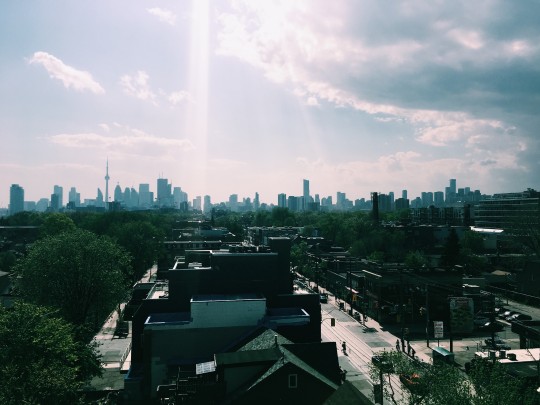
    Oben Flats is doing some very cool things, so I would encourage you to check them out if you’re in the market for a new luxury rental (or you just want to nerd out about property). The image at the top of this post is the west view from the rooftop terrace.

    Here are 3 things that stood out for me:

    1. One of the interior amenity spaces for the building is actually on the ground floor attached to the main entrance. There’s a fireplace, a wet bar, a set of wine fridges and free wifi. Oben Flats hosts regular events in this space, but I was told that residents also regularly hang out in it. They’ll bring their laptop down and have a glass of wine. 

    What I like about this is that it encourages social interaction within a multi-family building typology. I would love to see more of this kind of thinking. Part of the reason you live in a city is to interact with other humans.

    2. Oben Flats has developed their own signature scent and regularly curates a music playlist with the help of BELLOSOUND. Both of these items are pumped throughout the common areas of the building, which is not that dissimilar from what you might find in some luxury hotels. I have one of their candles sitting on my desk right now, so my office smells like Oben Flats. I’m into it.

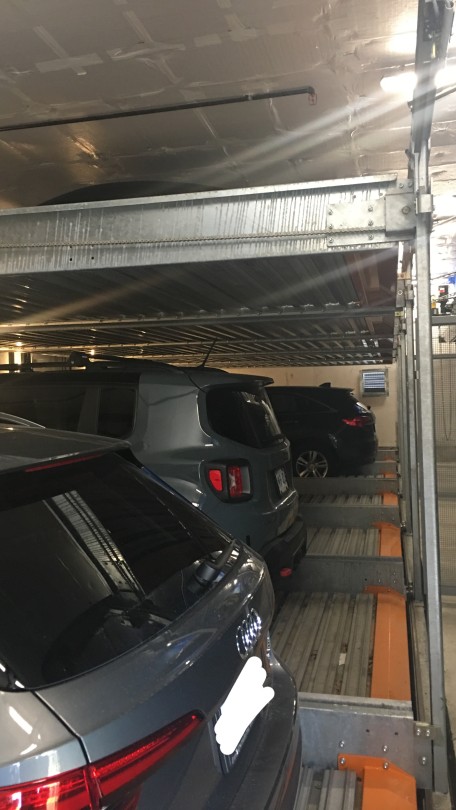
    3. Another unique feature of the building is the fully automated hydraulic car-stacking system. Here’s a photo of what the guts of that looks like:

    There are 3 platforms in each bay (the bottom one is below-grade in the above picture). And there’s always one empty spot so that the platforms are able to shuffle around both horizontally and vertically. However, as a user, you never see this. You simply hit a button and drive into your bay. It’s always the same one.

    I’ve said many times before on this blog that I think we will see way more of these types of parking solutions

    in the city

    going forward.

    There are other cool things I could mention about the building, but it’s far too nice out to sit at my desk any longer. Before I sign off though, I should mention that this is in no way a sponsored post. I simply admire what Oben Flats is doing. 

    See you tomorrow.

  • Powerhouse: A case study in neighborhood infill

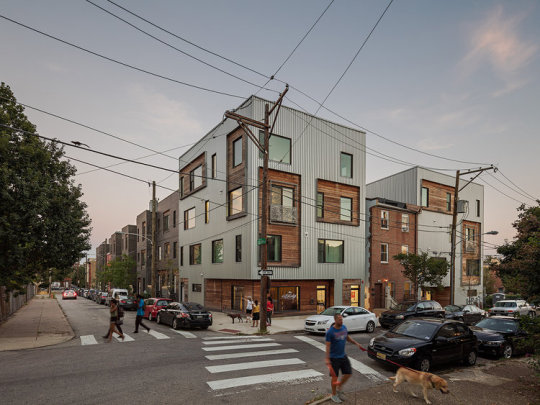
    Dezeen recently featured the above project in Philadelphia by Interface Studio Architects. It’s called Powerhouse and the goal was to provide a variety of different housing typologies and tenures within a dense infill project that, at the same time, remains in keeping with its context.

    The full block complex contains 31 residential units, which are a mixture of apartments, duplexes (stacked towns), live/work units, and single-family townhouses. There’s also a corner retail space. 10 of the units are rental and the balance are for sale. The development also incorporates 3 existing rowhouses on the block. (Were these the holdouts?)

    Here is a diagram from ISA to give you a sense of how these different housing types come together:

    The project feels germane to Philly’s urban fabric and it is certainly interesting in its own right. But for those of us from Toronto, it’s perhaps even more interesting because it’s a scale of infill development that we don’t see very often in this city: low-rise intensification. (Also commonly referred to as “The Missing Middle”.)

    Recently I’ve been speaking with a number of people about whether or not Toronto should be thinking differently about its low-rise neighborhoods. Because as it stands today, even this sort of gentle density can cause quite a stir

    Two thoughts immediately come to mind – one of which will not surprise anyone who reads this blog. Firstly, I see laneway housing as an elegant way to intensify low-rise neighborhoods without changing their character. That’s why I’m proposing this house.

    Secondly, I have long felt that we should rethink how we treat arterial roads that are not designated as “Avenues.” That is, we should encourage greater densities. An “Avenue” designation signals mid-rise. But absent this, our policies are frankly retrograde, given the way some of these arterial streets have evolved over the years.

    What are your thoughts about this scale of infill?

    Images: ISA

  • Amazon is just getting started

    image

    The Economist has an article up talking about what a behemoth Amazon has and will continue to become. Here are some interesting stats for you to think about:

    • More than half of every dollar spent online in America now goes to Amazon
    • Amazon’s share price has increased 173% since the beginning of 2015 (12x faster than the S&P 500)
    • With a market capitalization > $400 billion, it is the 5th most valuable company in the world
    • 92% of its value is supposedly being derived from profits expected after 2020 – they are playing the long game
    • Investors believe that revenue will go from $136 billion (2016) to half a trillion over the next decade

    If I can buy something online, instead of in person, I will do it. And that very often leads me to Amazon. In fact, I bought my new camera lens from them last week. Many others seem to be doing the same.

    When I go to a store now it’s because I need something immediately or because I’m looking for a new experience. I want novelty and I want to feel something special when I walk in. That, or I just need groceries.

  • Landowner vs. city

    In my BARED post with Michael Cooper he described real estate development as being one of the most creative things you can do because of all of the constraints that one has to deal with. This certainly feels true on many days.

    A lot of these constraints also create competing tensions. One example is the tension between what landowners want and what the city may want.

    The value of development land is dependent on what you can build on it. It is, in theory at least, the residual claimant once you factor in all of your other development costs. But in a competitive land market, owners will naturally have high expectations around what their land is worth. And telling them about the intricacies of your residual claimant Excel model will fall on deaf ears if the output doesn’t match their expectations. They see what other land is selling for – even if the land use policies are entirely different – and they want the same or more.

    So to make the math work, it often becomes about density. In practice, many financial models are probably working in the opposite direction to what I described above: here’s how much money the landowner needs to sell; now let’s figure out if we can get enough density to make this work.

    Of course, the challenge with this approach is that you naturally start to push up against a ceiling with respect to density. Landowner wants more density. City wants less density. If I ever ran a development model today where this wasn’t the case, I would instinctively worry that my model wasn’t working properly.

    And therein lies the tension: how can I give this landowner the money that she/he wants, but at the same time satisfy the city and the community, and build enough density such that the project doesn’t lose money? For the time being, ignore the archaeological dig that will need to be done on the site and the creek running underneath it that is going to add $2 million to your underground costs.

    This is where you have to get creative. One potential solution is try and make the price dependent on achieved density. But not all landowners will go for this and sometimes the price spread is so great that even a density bonus isn’t going to close the gap.

    I like to believe that there’s always a creative solution to every problem. Try and make it work. Don’t give up. But the reality is that in many cases the land just isn’t worth the asking price and you’re going to need to walk away. That can be sad, but it can also be the smart thing to do.

  • Big bad developer

    I just stumbled upon an older (2014) article by Oliver Wainwright in the Guardian called, The truth about property developers: how they are exploiting authorities and ruining our cities. In case the title didn’t give it away, it’s a scathing article about the current state of real estate development and city building.

    Here’s an excerpt:

    “Across the country – and especially in superheated London, where stratospheric land values beget accordingly bloated developments – authorities are allowing planning policies to be continually flouted, affordable housing quotas to be waived, height limits breached, the interests of residents endlessly trampled. Places are becoming ever meaner and more divided, as public assets are relentlessly sold off, entire council estates flattened to make room for silos of luxury safe-deposit boxes in the sky. We are replacing homes with investment units, to be sold overseas and never inhabited, substituting community for vacancy. The more we build, the more our cities are emptied, producing dead swathes of zombie town where the lights might never even be switched on.”

    Now, I’m not that familiar with the London market, so I can’t really comment on the dead swathes of zombie town. But I did enjoy the insights into the UK entitlement process.

    At the same time, my overarching thought as I read through the article was that I don’t believe that making money and doing what’s right need to be mutually exclusively. You can do both in development and in business. Making money as a developer does not mean you have to build shitty buildings.

    Part of the development game is managing an endless number of competing tensions. And profitability and responsible city building is just one of them. Of course, you have to want to do the right thing in the first place.

  • Toronto’s first condo replacement project

    image

    Last month a deal here in Toronto caught my attention because of how rare it is. 

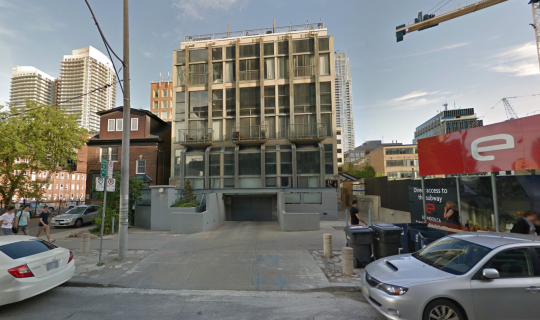
    It was the sale 39-41 Roehampton Avenue as a development site for a new (proposed) 48 storey condo tower.  What’s unique is that it’s being called the first ever “condo replacement” project in the city.

    What that means is that the existing 27 unit condo building (built in the 80′s) was bought out (along with some other adjoining lands) and it will be replaced by a new condo tower.

    In order for this to happen a minimum of 80% of the condo owners had to agree to the sale. According to Bisnow, the owners received approximately $550 per square foot, which is thought to be above market for the building (though well below market for new construction).

    I wonder how many owners voted no. If everybody had voted yes, they probably would have mentioned 100% buy-in. I also wonder if this could mark the start of a wave of “condo replacement” projects.