Daily insights for city builders, delivered every morning at 6 AM ET. I’m Brandon Donnelly — a Toronto-based real estate developer and founder of Globizen. I’ve been writing here since 2013.

Tag: development

  • BIG’s IQON in Quito

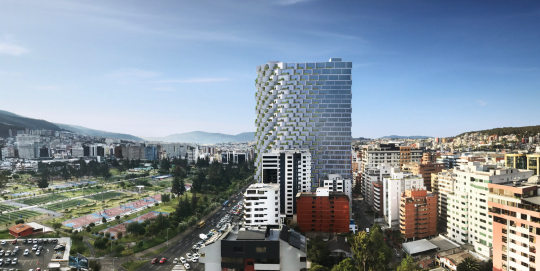
    BIG just announced its first project in South America. It is a 33 storey residential building in Quito, Ecuador. When completed, it will be the tallest building in the city. The developer is Uribe and Schwarzkopf

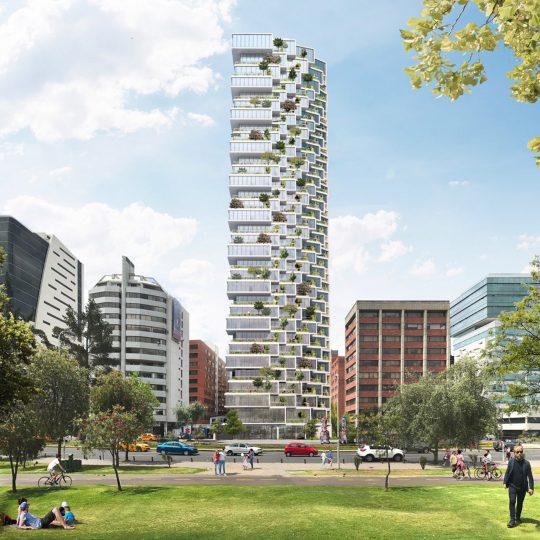
    Here are a couple of other images:

    The building is made up of “concrete boxes” that, when rotated, create terraces for the apartments. On one corner of the building the apartments are “through-units”, meaning they have two exposures. In this case, it is north and south.

    While different, we are starting to see some similarities across BIG’s projects, which isn’t meant as a criticism. I am thinking of Telus Sky, Vancouver House, and even KING Toronto. 

    They are, at least partially, about expressing the individual apartments and creating opportunities for outdoor spaces. This also serves to break down the overall scale of the building.

    What do you think of the project?

    Images: BIG

  • Japan’s solution to housing affordability

    image

    There’s a debate among urbanists as to the full impact of housing supply on overall affordability. But it should make intuitive sense that as new people move to a city and as new jobs are created, there will be a need for additional housing. Here is an excerpt from Vox citing a recent FT article talking about how Japan may have figured out the solution to rising home prices:

    The reason, argues Financial Times writer Robin Harding, is that Tokyo does a better job of allowing housing supply to keep up with housing demand. In 2014, Tokyo issued permits for 142,417 new housing units. In contrast, the entire state of California — which has three times the population of Tokyo — issued permits for only 83,657 new housing units. Little wonder that demand for housing has outstripped supply in the Bay Area.

    In the United States, local housing markets are plagued by grassroots “Not In My Back Yard” (NIMBY) activists who organize to stop efforts to build town homes and apartment buildings in their local neighborhoods. Because every construction project is located near somebody, the result tends to be that little housing gets built anywhere.

    I don’t have a copy of the FT article and I do firmly believe that supply matters a great deal, but I think there are also a number of other factors that need to be taken into consideration here. Japan has a depopulation problem. The country has lost about 1.4 million people since 2010

    They also have fairly insular views around immigration. They are over 3.5x larger than Canada in terms of population and yet they take in fewer immigrants each year. So I think it’s worth looking at this conclusion closely. (This is me trying to avoid confirmation bias.)

    Image: Vox

  • Cities are always changing. What’s happening in Miami Beach?

    image

    The Miami Herald has a recent article up asking: Has Miami Beach lost its mojo? While the beach will always be an immense draw, there’s concern that entertainment dollars could now be starting to favor mainland neighborhoods like Wynwood, Brickell, and the Design District. 

    Here are some of the reasons why it is believed that may be happening:

    – Structural changes to the retail landscape

    – High rents have pushed out all of the interesting and distinctive tenants

    – City is too lenient when it comes to the nighttime economy; South Beach has become a circus

    – Investors and developers are worried about the Beach’s exposure to sea level rise

    – Strips like Ocean Drive and Lincoln Road have simply completed their urban cycle and are no longer attractive and novel

    – Overdevelopment of luxury housing (curiously, there’s a preservationist quoted in the article who appears to believe that restricting development to only mid-rise will result in less luxury housing)

    Many of these points are certainly not unique to Miami Beach. We know the retail landscape is changing. But as I was reading through the article, I was once again reminded that cities are always changing – even when we try and stop them from doing that.

    There are over 900 historic buildings in the Miami Art Deco District. Most are low-rise and mid-rise. This includes the iconic Ocean Drive. And yet the above article is all about the changes that the Beach has seen and experienced over the years.

    Oftentimes we only associate change with new buildings. But architectural preservation does not guarantee any sort of urban stasis. Cities are far more complex than that.

    Image: Photo by Ryan Spencer on Unsplash

  • Canadian minimalism

    I have one more note to share this week about Junction House and then I promise we’ll be back to regular scheduled programming. Below is a copy of the press release that went out yesterday afternoon. It includes a few more renderings for the project.

    ————————————

    October 11, 2018 (TORONTO) – After unveiling plans for a Studio Gang-designed tower at Yonge and St. Clair earlier in the summer, Slate Asset Management enters the fall market with a new mid-rise condo offering in the Junction. Designed by acclaimed Canadian architects, superkül, and emerging local interior design firm, Dialogue 38, Junction House further solidifies Slate’s approach of leading with design and city building when it comes to residential development.

    “We invest in designers because we believe in design innovation,” says Brandon Donnelly, VP of Development for Slate Asset Management. “For us, good design moves beyond aesthetics and actually solves problems and creates value for people. We want to empower each of our collaborators to come up with bold ideas, as well as think beyond our individual projects and consider the broader community.“

    Sited at 2720 Dundas St W, just as the road begins to bend, Junction House is conceived as a new gateway into one of Toronto’s most vibrant neighbourhoods. The ambitious design brief challenged superkül and Dialogue 38 to define a Canadian brand of minimalism that at the same time reflects the historic material palette and creative energy of the Junction community.

    “One of our inspirations was picking up on Scandinavian and Japanese approaches to minimalism, but through the lens of the Junction. What would that look like? How could we make sure our homegrown brand of minimalism is seen as approachable and in keeping with the neighbourhood?” says Donnelly. “We also really wanted to look at multi-storey suites – which eventually became The House Collection – and explore how we could replicate the single-family experience in a boutique mid-rise format,” he adds, citing the influx of families into the Junction and the need for new residential options in the city more broadly.

    “The building was designed from the inside out,” says Andre D’Elia, Principal at superkül. “We focused on the suites because, ultimately, that is where people are going to live and spend most of their time. We didn’t just design a nine-storey building, we designed 144 homes that occupy the same built form.”

    When it came to the exterior cladding, D’Elia says the focus was on reflecting the immediate context, while elaborating on the details. “We immediately thought of red brick, which is prevalent in the neighbourhood, and ended up cladding the first five storeys of the building with it. In order to add a sense of movement we staggered and angled the brick columns to play with light and shadow. We’re also introducing some old-world brick-coursing to add visual interest and mirror the local context.”

    Dialogue 38 was tapped for the interiors after Donnelly visited a café designed by the firm in the east end of downtown. “Their work is what motivated us to reach out, because it seemed to get the Canadian minimalist sensibility we were after,” explains Donnelly.

    Bennett Lo, Founder of Dialogue 38, says his approach was to focus on delivering design that would last. “We’re all influenced by trends and lifestyle, but our designs need to stand up against time. How do you produce something that is going to have immediate appeal and provide its own kind of interest, without feeling dated in a few years? The idea was to strip the design back and focus on the essentials, while at the same time incorporating aspects of the area. The suites and common areas will have smooth concrete ceilings and warm touches of wood throughout – and the lines are clean and open.”

    The nine-storey building will also feature an expansive lobby that doubles as a co-working space, as well as a gym that draws on the warm materials of the suites and common areas. Lo says the design of the amenity space is optimized to encourage active use. “We focused on the amenities that we know people use, and spent our energy crafting spaces that embody the spirit of the building. The benefit of a boutique mid-rise is the opportunity to extend your living space in to the amenity spaces, and provide moments of social engagement in the building.”

    “We’re a short walk to the UP Express station at Bloor, which can take you downtown in less than 10 minutes. That proximity gives us an opportunity to have a dialogue between the Junction and the rest of the city. The proposed sign marks the Junction’s location and lets you know where you’re going, but also, where you should be,” says Donnelly.

    Junction House offers 1, 2, and 3-bedroom suites, as well as its signature House Collection, ranging from 500 sq. ft. to over 1,500 sq. ft. and starting from the $400s. To register visit: JunctionHouse.ca

    Press Contact:

    Vakis Boutsalis, kg&a

    Vakis@kga-inc.com / 416 537 0954 / 416 578 1741

    About Slate Asset Management L.P.

    Slate Asset Management L.P. is a leading real estate investment platform with over $6.0 billion in assets under management. Slate is a value-oriented manager and a significant sponsor of all of its private and publicly-traded investment vehicles, which are tailored to the unique goals and objectives of its investors. The firm’s careful and selective investment approach creates long-term value with an emphasis on capital preservation and outsized returns. Slate is supported by exceptional people, flexible capital and a proven ability to originate and execute on a wide range of compelling investment opportunities. Visit slateam.com to learn more.

  • A video and some art

    We made a video for our Junction House project. If you can’t see it embedded below, click here. You may have already seen some of the cut-downs on my socials, but this is the full version.

    [vimeo 293178524 w=640 h=300]

    The stickers under our projecting Junction House sign box irk me, but otherwise we’re all really happy with the way the video turned out. We wanted it to feel real and authentic.

    I am also thrilled to announce that we have partnered with a few local artists for this project. 

    The first is Leeay Aikawa. She is a multidisciplinary artist who moved to Toronto from Japan in 2003 and now works and resides in the Junction. We’re excited to have the opportunity to exhibit her work. You’ll find it in our “sales gallery” when that space opens.

    The next artist will remain a secret for now (though that’s a hint). Stay tuned to the blog and the socials.

  • Battle of the Bungehuis

    image

    This past July, Soho House Amsterdam opened up in the storied Bungehuis building. Not really news, other than the fact that FT just published this article talking about the building’s history and some of the project’s hurdles, which I of course found interesting.

    Completed in 1934, the Bungehuis originally served as the offices for a prominent trading company. The architect was ADN van Gendt. When he died during the building’s construction, Willem Jacob Klok took over.

    Also noteworthy about the building’s construction is that, according to Wikipedia, twenty houses had to be demolished in order for it to be constructed.

    This underscores a point that I have made before on the blog. Cities are not static. Most of us probably look at the Bungehuis and consider it to be quite a handsome piece of architecture. Some of us may even go so far as to say that we don’t make buildings like they used to.

    Soho House is on record saying that they were “not very budget-conscious” during the renovation because of the sense of responsibility that they felt around the building and its history.

    image

    But I think it’s important to note that this building was initially built for a for-profit company and things had to be demolished in order for it to come to fruition. 

    I can’t say for sure whether this development was opposed in the 1930s, but it may have been. Cities and buildings have a way of ingratiating themselves over time.

    In any event, starting in the 1970s, the building became home to the arts faculty at the University of Amsterdam. And as recent as 2015, it became home to the Bungehuis occupations – a protest occupation started by students and staff of the University who were opposed to a slew of academic cuts.

    image

    Then in a state of poor repair, the building was ultimately sold to Aedes Real Estate, who now leases it to the Soho House Group for their private club and 79 room hotel. Above is a picture of the club’s rooftop pool and lounge.

    The big hurdle, or at least one of them, was the fact that Amsterdam currently has a moratorium on new hotels – as a way to try and mitigate “overtourism” – unless it can be demonstrated that it will represent “an extraordinary addition to the existing stock.”

    Since Soho House Amsterdam opened in July, I guess we know the answer to that test. But it sounds like it may have been a battle. That wouldn’t be a first for this building.

    Images: Soho House Group

  • Create things people love

    I just finished listening to this podcast about venture capital and consumer products. One of the underlying questions is whether we are currently in a “consumer downturn.” Rebecca Kaden of Union Square Ventures (USV) talks about the importance of “platform shifts” for venture returns. These are moments where a new technology hits the marketplace and there’s a corresponding mass consumer adoption. When and where will that next shift occur? Maybe it’ll be in real estate.

    I like the discussions at 10:00 and 13:50. The first deals with the importance of non-paid customer acquisition strategies for consumer products. Rather than relying on bought attention, you really need organic growth strategies, which is often an indication that people are passionate about your product. This is arguably more important when you’re fundamentally reliant on massive growth/scale, but whether we’re talking about software or a home, I still believe it’s paramount. Create things people love.

    The second point is about commerce, Amazon, and how USV avoids investing in companies that are unlikely to ever win against Bezos. Kaden’s position is that Amazon’s advantage is and has been more executional than structural. They are simply really good at doing things better. But Amazon wins at logistics, speed, and value. They are not as focused on experience, entertainment, and discovery. And people still want that.

    I’ll stop there. If you can’t see the podcast below, click here.

    [soundcloud url=”https://api.soundcloud.com/tracks/507691569″ params=”color=#ff5500&auto_play=false&hide_related=false&show_comments=true&show_user=true&show_reposts=false&show_teaser=true&visual=true” width=”100%” height=”300″ iframe=”true” /]

  • The rise of proptech

    A friend of mine flipped me this New York Times article today talking about the rapidly growing interest in proptech and about Opendoor – a topic and a company that I have written about many times before on the blog.

    Here’s a snippet about proptech:

    The hauls are part of a race by investors to pour money into technology for real estate, or what Silicon Valley now calls proptech. Having watched tech start-ups upend old-line industries like taxis and hotels, venture capitalists are casting about for the next area to be infused with software and data. Many have homed in on real estate as a big opportunity because parts of the industry — like pricing, mortgages and building management — have been slow to adopt software that could make business more efficient.

    On the Opendoor front, which is the largest/most valuable company in the proptech category, they have now raised over $1 billion. By the end of this year they plan to be in 22 cities across the United States.

    Interestingly enough, they have started experimenting with other business models, beyond just buying and flipping homes. They now circumvent agents and sell some homes directly to customers.

    But Eric Wu, the CEO of Opendoor, believes that you can’t automate proper advice and so that will remain. The role of agents is simply about to shift from “administration” to that of “advisory”.

    I have been arguing for years that the home buying and selling process is ripe for change. And what we are seeing today is really the start of that.

    According to the NY Times, real estate tech startups raised $3.4 billion in funding last year. Some firms, such as Fifth Wall Ventures, are entirely dedicated to the space.

    This is money betting on change.

    Photo by Grant Lemons on Unsplash

  • Rules are meant to be broken

    Things are busy right now as we get ready to unveil Junction House this fall and so I’m a bit behind on my news and reading. 

    I just finished reading Alex Bozikovic’s Globe article on BIG’s new KING Toronto project (official name). It is an interesting piece about creating villages and a sense of community in new developments – something that Bjarke Ingels has been focused on for many years. 

    Below are a few renderings of the project. I’m excited for this one. And as I said before on the blog, I am sure it will be precedent setting in a number of ways.

    One remark from the article that stood out for me is this one here:

    Still: The design breaks a lot of rules. Which is why it took two years of difficult negotiations with city planners to reach approvals. “We wanted it to be quieter,” says Lynda MacDonald, a senior Toronto planner who was involved in overseeing the project. “It’s a very large project, and we wanted to make sure it respected the character of King Street.”

    I am often asked why we don’t see more innovation in architecture and real estate. There are a number of reasons for that. One of them is risk. Development is in many ways a game of risk mitigation. 

    But another reason is that when you try and do something unconventional that disrupts the status quo, you also call into question the typical planning criteria used to evaluate projects. And that may slow you down.

    Alex accurately points out in his article that we are used to doing things around here in one of two ways:

    The King Street project is also an ambitious experiment with urban design. There are basically two species of tower in Toronto: a midrise slab of six to 10 storeys, which steps back at the top; and a “tower-and-podium,” a model borrowed from Vancouver that combines a fat, squared-off base (or “podium”) with a tall, skinny residential tower. Both can work, but can also create the big-box blandness that many people dislike about new urban housing.

    None of this is to suggest that we should ignore the character of a particular area. It is critical and I believe that KING Toronto has been mindful of that. 

    But I also firmly believe in ambitious city building and I think there’s no question that KING Toronto is doing exactly that.

    Images: Hayes Davison via Dezeen and courtesy of Westbank

  • Housing supply and displacement in San Francisco

    Joe Cortright recently wrote about a study by Kate Pennington (UC Berkeley), which looked at the impact of housing production on legal eviction in San Francisco. The goal was to figure out if new housing supply actually causes displacement.

    To do this, Pennington went block-by-block and looked at new housing projects, as well as over a decades’ worth of eviction notices. 

    The relationship between the two was found to be “statistically indistinguishable from zero.” In other words, the “monthly probability of an eviction notice” does not change when new housing supply is completed nearby.

    Some have been critical of her findings and some have questioned whether legal eviction notices are, in fact, the right proxy for displacement.

    But I agree with Joe Cortright in that this still feels like a meaningful relationship to understand, especially when we’re talking about a tight housing market like San Francisco’s.

    Photo by Matthew Cabret on Unsplash