Daily insights for city builders, delivered every morning at 6 AM ET. I’m Brandon Donnelly — a Toronto-based real estate developer and founder of Globizen. I’ve been writing here since 2013.

Tag: design

  • It Will Never Work

    On March 31, RIBA North (Royal Institute of British Architects North) in Liverpool will be opening the doors on a new exhibition that explores 25 years of award winning work by the developer and self-described “regenerator”, Urban Splash. I love the name of the exhibition. It’s called: “It Will Never Work.”

    Here is a short description of the exhibition:

    Urban Splash profess to have started without a plan, purposefully ignoring advice and routinely rejecting accepted development processes. At every step ‘it will never work’ has been a call to action rather than a discouragement.

    The company’s maverick presence on the development landscape of the North has changed the way we live, work and play in our cities, and their continued success as ‘established innovators’ is helping to shape urban futures.

    If you aren’t familiar with the work of Urban Splash, I would encourage you to check them out. When I was first starting out in development and scouring the world for developers that actually cared about design and cities, these guys were on my shortlist.

    So I have been a longtime follower and I have developer friends here in Toronto who I know also admire their work. Sadly, I have no plans to be in Liverpool anytime soon. But maybe some of you do.

  • Neighborhood depopulation

    Recently we’ve been talking about California’s Proposition 13 and how it may be creating a disincentive for longtime homeowners to move. They’re enjoying below market property taxes, and so they stay put, even if they may have too much house.

    But this concept of “overhousing” isn’t unique to California. The Globe and Mail just ran a piece talking about how Toronto’s designated “Neighborhoods” are losing people as the nests empty out, seniors remain put, and the broader city booms.

    The rate of depopulation that created the spare bedrooms in Toronto’s low-rise neighbourhoods is stark: “Since 2001, about 52 per cent of the land mass of Toronto has reduced in density of population by about 201,000 people,” Mr. Smetanin says. “Other parts of Toronto have grown by 492,000.”

    The irony of this phenomenon is that the city’s Official Plan considers these Neighborhoods to be “physically stable”, as well as “one of the keys to Toronto’s success.” However, things are clearly changing behind that physical stability.

    Photo by Verne Ho on Unsplash

  • UNStudio announces new tech architecture company (and thoughts on the smart home)

    Dutch architecture firm UNStudio has just launched a new company called UNSense, whose purpose is to explore and develop “new sensor-based technologies that are specifically designed to positively impact people’s physical, mental and social health.” They are calling the new business an “arch tech company” and it is their belief that, at some point, all architecture firms will become arch tech companies. You can learn more about UNSense, here.

    This announcement got me thinking about the state of smart home technologies, which, of course, is this massive buzzword that everyone is throwing around these days. Many of us have smart thermostats, voice assistants (that may be listening to our every word), wifi lights, and so on. And you can do some pretty neat things with software like IFTT, such as program your lights to come on at sunset or when you walk in the door.

    But as cool as they may be, these smart home devices have always felt like patchwork add-ons to me. I understand that this is partially driven by what customers can easily adopt and I don’t mean to discredit the value that they bring, but today’s post is about reminding us to also think more fundamentally, as opposed to just incrementally.

    Smart thermostats, for instance, give us the functionality to adjust our heating/cooling from our phone. But at the end of the day, they still control the same underlying system, which, by the way, is a fairly simple one. When it gets cold (because of our R-3 windows), the heat turns on. When it gets warm enough, the heat turns off. Zoned systems certainly add another layer of sophistication, but are we optimizing for the right variables?

    UNSense works at three scales: Cities, Buildings, and Interiors. And if you look at what they are trying to do at the building scale, it is around the interface between inside and out. Designing transformable facade systems and buildings that can respond to their environment and our changing needs. These are not new ideas, but in today’s tech-driven world, the timing may just be right.

    If you think about the climate we have here in Toronto, it is actually an incredibly difficult design problem. We have cold winters and hot humid summers, which means we have to solve for two different extremes. Mechanical systems have made that a lot easier to do, but if we’re going to meet the energy and greenhouse gas emission targets that we’re all talking about, we’re going to need a hell of a lot more than just smart thermostats.

    Image: UNSense

  • The 2018 Henley Passport Index

    image

    I still have every passport that I have ever owned. The older ones are far more interesting because I was younger and always looking for creative ways to travel around the world. The older I get the less interesting my passports get. Now I find it difficult to travel away from my desk at lunch.

    Passports are highly symbolic to me. It equals a particular kind of freedom. But I suppose that’s because I have a pretty good passport. 

    According to the 2018 Henley Passport Index, the Canadian passport is tied for 5th – along with Switzerland, Ireland, and the United States – in terms of the number of countries you can access without a visa. 176 countries in total.

    The highest ranking countries this year are Japan and Singapore. With those passports you have visa-free access to 180 countries. The last place country, at 105th, is Afghanistan. You get 24 countries.

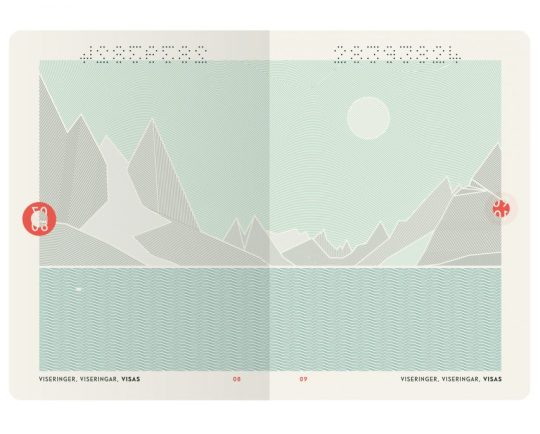
    Switching to design – because that matters – I think you would be hard-pressed to find better looking ones than the new Norwegian passport (pictured above and set to be put into circulation later this year) and the Swiss passport. The Swiss passport is allegedly the first to be professionally designed.

    How does your passport fare on the Passport Index?

    Image: Dezeen

  • Don’t touch the walls

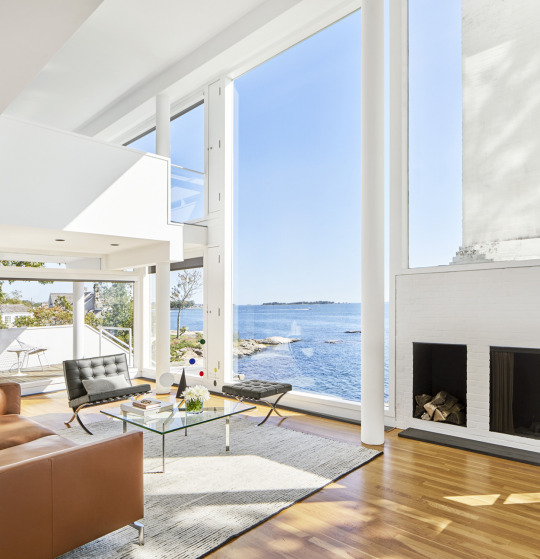
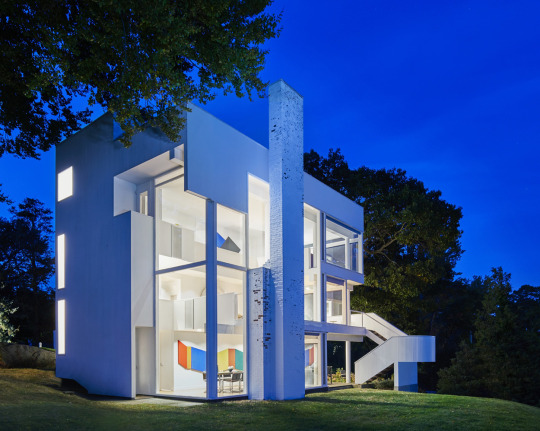
    The Smith House by Richard Meier turned 50 years old last year. In celebration of that, photographer Mike Schwartz took these photographs. And just recently they were published in Surface Magazine along with an interview of both Meier and Chuck Smith. Smith’s mother commissioned the house (completed in 1967) and he was 8 years old when the family moved in.

    My favorite comment in the article is this one by Smith:

    “Don’t throw balls in the house, and don’t touch the walls.” I must have heard “don’t touch the walls” three or four times a day. That said, there’s a crack in one of the windows where I shot it with a BB gun. We got away with some things.

    Modern architecture was supposed to be a perfectly engineered machine for living. But I guess living didn’t include touching the walls or shooting BB guns in the house.

    My favorite photos – both from Mike Schwartz – are these two:

    imageimage

    They feel like inversions of each other. The first one (day shot) is all about the views outward. Meier also talks about how the white on white helps to enhance this experience. The second one (night shot) turns the house inward on itself. Smith talks about how at night the view disappears and all you’re left with is your own reflection.

    I also like how the paint is flaking on the fireplace, which by the way, is perfectly on axis with the home’s entry. It makes you work a little bit for the view. Apparently keeping the paint on was a problem since day one. But it gives the house – which is otherwise seemingly perfect – a bit of a patina. 

    However, I’m guessing that Meier would prefer the paint stay on.

  • Are we entering a new era of tech-driven city building?

    Emily Badger of the New York Times published an interesting piece yesterday talking about the tech industry’s current obsession with trying to fix cities. And there are certainly many problems to fix.

    Staying true to tech and engineering parlance, there’s lots of talk of optimization. How do you technologically optimize a city, for things such as affordable housing?

    There’s no doubt that many of you will sympathize with this statement: 

    To planners and architects, all of this sounds like the naïveté of newcomers who are mistaking political problems for engineering puzzles.”

    But naïveté is not always a bad thing and with all of the money sloshing around in this industry, there’s also no doubt that this is likely a new era of city building.

    The article ends by quoting JD Ross, the 27-year old co-founder of Opendoor – a startup that we have discussed many times before on this blog and is now valued at over $1 billion.

    It is him saying that he wants to figure out how to put $100 million into this space as soon as he can figure out the right target to optimize for. “It’s better than buying a Bugatti.”

    Of course Sidewalk Toronto – which is mentioned a few times throughout the article – is already a perfect example of tech infiltration.

    But I think Dan Doctoroff gets it right when he posits that the real naïveté will come from disrespecting urbanist traditions.

    Photo by David Alacaraz on Unsplash

  • Chipperfield to build tallest building in Hamburg

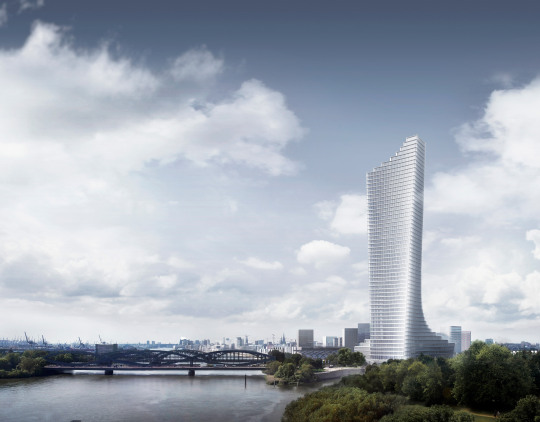
    David Chipperfield Architects has just won a design competition for the tallest building in Hamburg. It is set to rise 230 meters and look something like this:

    image

    There’s a real elegance to its simplicity. It also feels like an appropriate pairing with the nearby Elbphilharmonie designed by Herzog & de Meuron.

    But the first thing I thought to myself when I saw the design was: “Must be office. There are no outdoor spaces.”

    And sure enough, the plan is for 104,000 sm of primarily office. There are also plans for restaurants, shops, exhibition areas, and a hotel and bar.

    Some architects begrudge having to incorporate balconies into their tower designs because they can break up the elevations, muddy the concept, and create thermal bridging concerns.

    This tower – called the Elbtower – is a good example of why that is the case.

    Image via Dezeen

  • Skater’s Paradise: On/Off

    This skateboarding video is incredibly well done. I particularly like the 42 second mark. If you can’t see it below, click here.

    [vimeo 227394921 w=640 h=280]

    It’s incredible from a filmmaking standpoint, but – as I have said many times before on this blog – it also showcases the deep relationship between skateboarding and the urban environment.

    I can’t think of many other sports with that kind of relationship.

  • Revisited: Habitat 67

    Last summer I went to see Moshe Safdie’s Habitat 67 in Montréal. Unfortunately, you can really on experience the architecture from the street. The entire complex is clearly marked as private and you can tell they have to work very diligently to keep the throngs of architecture nerds at bay. I almost called up an agent to see if I could see one of the listed apartments, but decided not to waste anybody’s time.

    Thankfully, James Brittain has a photography exhibition going on in London right now called Revisited: Habitat 67. The aim of the exhibition is to expose the hidden side of the famous housing complex, which I find fascinating, particularly because I wasn’t able to see anything hidden last summer. You can check out a bunch of his photos over at The Spaces.

    There are many dimensions to Habitat 67. But one aspect that stands out is this idea of conferring the benefits of low-rise single-family housing – things like large outdoor spaces and access to light – onto higher density urban housing. It is something that architects today still explore and something that we consider in basically all of our development projects. Habitat 67 considered this over 50 years ago.

  • In defense of Instagrammable moments

    Surface Magazine – and more specifically the CEO of Surface Magazine – recently published this article criticizing the “trend” toward designing for Instagrammable moments.

    Here is an excerpt:

    We—and yes, this includes architects, too—have succumbed to the pressures of gaining followers, likes, and comments. High-priced, difficult-to-attain architecture degrees are now, incomprehensibly, being used to create “Instagrammable” installations for things like impromptu selfie fashion shoots and hotel lobby photo booths. The whole thing is, I must say, sad. It’s embarrassing enough that our team at Surface has received press releases from architects promoting their latest project with “Instagram-friendly interiors.” They can’t be serious.

    And here are his final words:

    If retail is dead, then its rebirth will depend on creating memorable atmospheres that don’t call for #✌💙👯🙋📷.

    I certainly appreciate the push for lasting and memorable spaces, but, at the same time, I can’t say I’m nearly as fussed about lobby selfies and the alleged timelessness of Instagram. 

    In fact, I think it would be an interesting exercise to study how social media may be impacting the way we design physical spaces.

    Maybe it is simply a fad being promulgated by “knucklehead junior marketers” or maybe 100 years from now nerdy architectural historians will look back on that quaint period of time when we designed spaces to service rudimentary 2D images shared amongst friends.

    Whatever the case may be, I think that architecture, like all art, should embody the milieu in which it was designed. 

    But often we have biases telling us that what is new is not as good as what’s existing and already accepted.