Daily insights for city builders, delivered every morning at 6 AM ET. I’m Brandon Donnelly — a Toronto-based real estate developer and founder of Globizen. I’ve been writing here since 2013.

Tag: design

  • Hotel room as shop

    Vipp is a 3rd generation family-owned Danish company that makes everything from kitchens and lighting to prefab homes. But it all started with a pedal-controlled waste bin that Holger Nielsen – a metalworker – crafted for his wife Marie’s salon in 1939.

    I love their design philosophy. It is centered around “fewer but better products” and around lasting function over ephemeral trends.

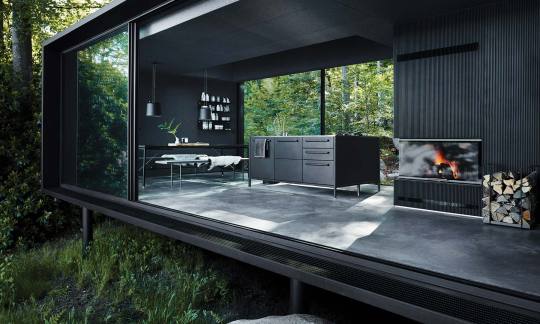
    But equally interesting is what they are doing with their Vipp Hotels. Instead of large hotels, they offer individual rooms in unique locations, such as this 55 square meter design object in the Swedish wilderness (pictured above).

    The rooms they have crafted are, not surprisingly, stunning. And that’s because they are deliberately designed as a tool to showcase their kitchens, bathrooms, bins, and other products. 

    Here is a quote from their CEO taken from a recent Surface article:

    “Traditional retail seems to be losing its power, but what is not losing power is our desire to see or do something interesting. I see our hotels as the experience economy coming alive,” says Kasper Egelund, CEO of Denmark-based Vipp.

    Clever.

    Image: Vipp
  • A demand-driven apparel world

    Here is an interesting article from Loose Threads that talks about the profound impact that data and fast fashion are having on apparel brands, transforming them from supply-driven businesses to demand-driven ones. It adds a bit more nuance to the trope that tech is disrupting retail simply because people are choosing to buy online.

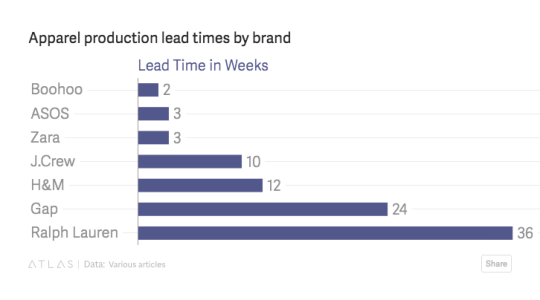
    The argument, here, is about a more fundamental shift in commerce. Brands are now forced to move faster than ever before. Product lead times are dropping (see below via LT). Customer feedback loops are almost instantaneous because of social. And the result is that customers are now the driver: Figure out what people want right now and then create that supply as quickly as possible.

    image

    Fast fashion certainly isn’t a new concept, but the data, algorithms and demand planning systems are only becoming more robust. Merchandise buying – historically the work intuitionists trying to predict what customers will want seasons into the future – is now an automated process that optimizes itself following every click, abandoned shopping cart, and social media like. 

  • Studio Gang’s first project in Los Angeles

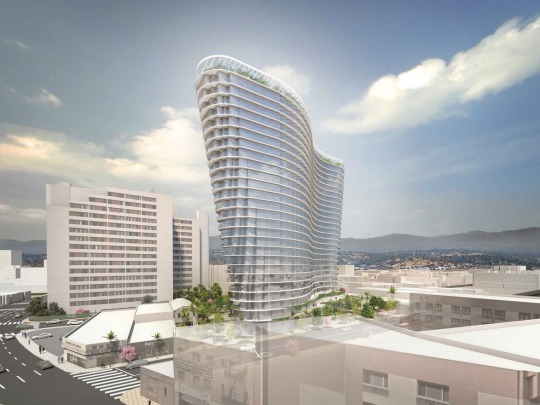
    This past week Studio Gang unveiled its first project in Los Angeles, a curvaceous apartment (300 rental units) and hotel (149 rooms) tower in Chinatown.

    The developer is Paris-based Compagnie de Phalsbourg and the hotel component is expected to be operated by the European brand, MOB Hotel.

    Above is the only rendering I could find. If you would like to read a bit more about the project, check out Curbed LA.

    Image: Studio Gang

  • Likely to liquefy in an earthquake

    Today’s post is going to be a short add-on to yesterday’s post about the sinking Millennium Tower in San Francisco. Today, the New York Times published the below map showing the areas of the city likely to “liquefy in an earthquake.” It goes on to note that “at least 100 buildings taller than 240 feet were built in areas that have a “very high” chance of liquefaction.”

    The article might leave you with the feeling that current building codes are inadequate for the pending “Big One” in San Francisco. So I thought I would reblog this post from last fall which talks, in more detail, about how one of the best structural engineering firms in the world designed the tallest building in San Francisco.

    Image: New York Times

  • The golden era of Canadian graphic design

    Over a year ago I wrote about a Kickstarter campaign that wanted to make a documentary to celebrate “the golden era of Canadian graphic design.” 

    And after I wrote about it, my friend Dave Wex – who, like me, is a lover of all things Canada – backed the project. Yesterday he flipped me the latest update. 

    The trailer is out and the world premiere of Design Canada is scheduled for Wednesday, June 13, 2018 at the Hot Docs Cinema here in Toronto. After that, it will move to Montreal and Vancouver. 

    If you can’t see the trailer below, click here.

    [vimeo 263571655 w=640 h=280]

    Tickets available, here.

  • 11 Hoyt, Brooklyn

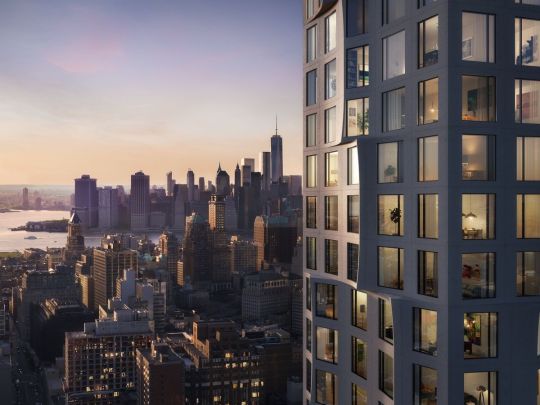
    Tishman Speyer just unveiled a new condo project in Brooklyn called 11 Hoyt. And it just so happens to be Studio Gang’s first residential project in New York City. Preview above. More renderings over here.

    It’s a 51 storey condominium with 480 residences and 55,000 square feet of indoor and outdoor amenities. The unit mix ranges from studios to four-bedroom residences, and prices range from $600,000 to over $4 million (USDs, of course).

    If you’re from Toronto, you’re probably looking at the renderings and thinking to yourself: “There are no balconies or outdoor spaces.” But that’s fairly typical in the NYC market, as I understand it.

  • Living on water

    Phaidon has a new architectural book out that surveys 55 homes, all of which have some sort of connection to water, whether that be an ocean, lake, river, or pool. It’s called Living on Water. I don’t (yet) have a copy, but it looks like the perfect coffee table book for a cottage, summer home, or studio apartment with zero connection to water. Monocle on Design recently interviewed the editor of the book (podcast episode here). So if beautiful homes on the water are your thing, maybe check it, and the book, out.

  • Two new chiefs

    image

    There were some big announcements in the planning world this past week here in the Greater Toronto Area. Gregg Lintern (follow him on Twitter) was named the new chief planner of Toronto (he was previously the acting chief planner following Jennifer Keesmaat’s departure) and Andrew Whittemore (couldn’t find him on Twitter) was named the new chief planner of Mississauga.

    As I went through the articles announcing the above appointments, I couldn’t help but be reminded that this region is at an exciting and pivotal moment in its history. All of the talk is about improving urban mobility (i.e. becoming less dependent on cars); intensifying around transit stations (as well as gently intensifying neighborhoods); making downtown a better place for families; and so on.

    It can be easy to feel defeated in this big bad world of city making. Oftentimes things seem to get reduced to either urban vs. suburban rhetoric or, as if nothing else matters, this one simple question: “But, how tall is the building?” So its nice to know that those at the helm continue to see endless opportunity in this region. I know that I wouldn’t want to be doing what I’m doing anywhere else.

    Photo by mwangi gatheca on Unsplash

  • The 100 million city

    The Guardian recently published this reminder that the real population growth in the world today is happening in Asia and Africa. The article is called, “The 100 million city: is 21st century urbanisation out of control?” Much of the data is from this 2016 paper by Daniel Hoornweg and Kevin Pope, which projected the populations of the world’s biggest cities by 2100.

    The standout example is that of Lagos, Nigeria, which went from under 200,000 people in the 1960s to an estimated 20 million people today. Though, I would imagine that the ubiquity of informal settlements makes it difficult to come up with an accurate number.

    Still, it is one of the world’s top 10 largest cities and, by 2100, it may be the largest city in the world. The Guardian described the population as young, fertile, and increasingly urban. The median age in Nigeria is 18 and the fertility rate for the content is 4.4 births per woman.

    I am mentioning all of this today because I think it grants some perspective. This is an immense city building challenge, not only because of the unprecedented growth rate, but also because it remains largely poor. Lagos, a city, may add more than 2.2x the population of Canada, a country, during the balance of this century.

  • What are the most important condo and rental building amenities?

    Last night I casually asked the

    Twittersphere

    what the most important condo amenity is, besides a gym. 

    That tweet got quite a few responses – everything from rock climbing to a proper facility for realtor lock boxes.

    Given the response, I thought it would be worthwhile to be a bit more rigorous in this analysis. So I have created an online survey that you can very quickly fill out by clicking here

    Here’s how this is going to work:

    – You have to enter your email address. Sorry, some friction. I figured that would make the data a bit more reliable. Don’t worry your email is safe.

    – You can select a maximum of 3 amenities. One of them can be “Other”, in which case you would then enter in an amenity not already found on the list.

    – The order of the amenities in the survey is being randomized so as to avoid any possible it’s-near-the-top-and-I’m-too-lazy-to-scroll bias.

    – You’ll be able to see the results of the survey after you’ve responded. I’ll also post the results to this blog so that it’s public and people learn things. Individual emails will, of course, never be published.

    Developers should be building what people actually want and will use. Now is your chance to tell us what that is. Click here for the survey.