Daily insights for city builders, delivered every morning at 6 AM ET. I’m Brandon Donnelly — a Toronto-based real estate developer and founder of Globizen. I’ve been writing here since 2013.

Tag: culture

  • The Grouse Grind is no joke

    Our server at lunch today told us that the Grouse Grind hike should take us about 45 minutes. She also mentioned that she has seen some people attempt it in flip flops, but that she would strongly advise against that. That was sound footwear advice. But even sans flip-flops, it still took Bianca and I about an hour and a half.

    The Grouse Grind is no joke. It is 850 meters of nothing but steps and steep incline. But it is well worth it.

    I’ve heard that some people do “the Grind” for meetings and/or business development. In fact, Chip Wilson, founder of Lululemon, has said before that he uses it to vet potential partners. It’s a way for him to test cultural alignment. That makes a lot of sense when you consider what Lululemon is all about.

    This exact approach — you know, doing “the Grind” — may not make as much sense for other businesses and industries. But it doesn’t change the fact that culture is critical within organizations. And as far as I can tell, the most effective way to cultivate it and test for alignment is to be face-to-face.

  • Ray: Architecturally-inspired homes at the intersection of art, culture, and community

    Back in 2008, Dasha Zhukova and Roman Abramovich hired starchitect Rem Koolhaas and founded a new contemporary art museum in Moscow called the Garage Museum. Supposedly this was the first philanthropic institution in Russia dedicated solely to contemporary art. (Here’s a short video in case you’re curious what it looks like.) After it opened, the founders apparently had a realization about the way people like to consume art. Yes, people like to look at art and ponder deep things. But it turns out that people also like just being around art and other art-like things. People started coming to the Garage Museum not only to view the various exhibitions, but also to just hang out.

    This insight is now being used to inform a new real estate development company, also by Dasha, called Ray. The mission of the company is to create “architecturally-inspired homes at the intersection of art, culture, and community.” Their first two projects are in Harlem and Fishtown, Philadelphia, but apparently they have something cooking in Miami as well. What Ray hopes to do is integrate art and culture in a more meaningful way through cultural programming, exhibitions in their buildings, artist studio spaces, and other creative ideas.

    There’s also an affordable housing angle. According to the WSJ, Ray’s Harlem project is a joint venture with L+M Development Partners. I don’t know any of the specifics of this deal, but I know L+M, because one of their founding partners, Ron Moelis, was a professor of mine in graduate school. L+M is focused on affordable and mixed-income housing and uses tools like the Low-Income Housing Tax Credit (LIHTC) to make these sorts of projects financially feasible. They aren’t, otherwise. I learned all about them in school and I always found it to be a great way to get the private sector building affordable housing.

    “Art and culture, community, and accessible pricing.”

  • We are hiring for the Development team

    Slate Asset Management is hiring.

    We are looking to hire an Associate or Director to join the Development team here in our Toronto office. The full set of responsibilities can be found over here on LinkedIn, but at a high level, we are looking for someone who wants to join an entrepreneurial team and lead — fairly independently — a portfolio of urban infill projects.

    Our approach to development really stems from the broader Slate platform. We are bold and thematic investors who work to create long-term value for our investors and partners. From a development perspective, that translates into an unwavering commitment to design & culture, innovation, and disciplined project execution.

    We pride ourselves on working alongside the world’s best architects and designers, and uncovering opportunities that others may be overlooking. We are proactive and hands-on in everything that we do. We also feel an inherent sense of responsibility for the buildings that we create and we want the work that we do to help improve our cities. We stand behind our product.

    If this sounds like a mission that you can get behind, then I would encourage you to learn more about us at slateam.com and submit an application via LinkedIn. Please note that we are also asking candidates to introduce themselves through a short video.

  • A mismatch of expectations

    Seth Godin’s blog post this morning, called “I hate this restaurant,” is really excellent. I would encourage you all to read it. In it, he talks about a mismatch of expectations. More specifically, he gives the example of somebody going to a restaurant and not liking what’s on offer, and therefore being upset. It’s not that the food was bad or that the restaurant has failed, it’s just that the person didn’t get what they were expecting. There’s a mismatch. And this, of course, happens all over the place and not just in restaurants. In his view, this failure is caused by a few different factors that ultimately result in us — the people that are involved in everything from the arts to business — having to make a decision about the kind of operation we would like to run. Below is an excerpt of those things. For the full post, click here.

    This failure comes from a few contributing factors, all amplified by our culture:

    First, you can’t know if you’re going to like an experience until you experience it. All you know is your understanding of what was on offer. And because there are so many choices and there’s so much noise, we rarely take the time to actually read the label, or we get carried away by the coming attractions, or we just don’t care enough to pay attention until we’re already involved.

    [And marketers are complicit, because in the face of too much noise, they hype what’s on offer and overpromise…]

    Second, because many people are afraid. They’re afraid of the new and even more than that, afraid of change. Most people in our culture would like to be entertained not transformed, lectured at instead of learning.

    Third, the double-edged sword of giving everyone a microphone means that we’ve amplified the voices of dissent at the same time we’ve given people a chance to speak up about their desires. This means that mass culture is far more divisive than it ever was before, and it also means that bubbles of interest are more likely to be served.

    And so the fork in the road:

    You can either turn your operation into a cross between McDonald’s and Disney, selling the regular kind, pandering to the middle, putting everything in exactly the category they hoped for and challenging no expectations…

    Or you can do the incredibly hard work of transgressing genres, challenging expectations and seeking out the few people who want to experience something that matters, instead of something that’s merely safe.

  • The work of centuries

    Witold Rybczynski’s recent post about the tragic fire at Notre-Dame de Paris provides an interesting summary of cathedral construction techniques over the years:

    The Paris fire is also a reminder of what a weird hybrid structure Gothic cathedrals really are. The ancient Romans roofed their basilicas and baths with concrete vaults (the Pantheon with a dome), and the Byzantines used thin domes and vaults of brick. Over time, builders lost these skills and Romanesque cathedrals were roofed with exposed timber rafters like big barns. This made the buildings highly susceptible to fire, often caused by lightning strikes. The solution, pioneered at Durham Cathedral in the 11th century, was to build a lightweight ribbed stone vault over the nave. The timber roof remained, so the vault had no structural function (except to support itself) but it separated the interior from the flammable roof above. This was largely effective as the April 15 fire shows.

    Below is an image from the WSJ depicting Notre-Dame’s timber rafters and showing the extent of the area consumed by the fire. Fortunately, relatively little of the cathedral was actually destroyed.

    Going forward, there will almost certainly be a debate about how the roof and spire should be rebuilt. What materials and construction methods are appropriate for this emblem of Christianity and French culture?

    But I agree with Witold in that “there is nothing inauthentic about rebuilding.”

    It is common to lament that buildings simply aren’t built like they used to be. But this is not a new phenomenon. Construction methods change, as do the skills of builders.

    There may have been critics in the 1220’s complaining about how the cathedral’s roof was built using wood, instead of concrete or brick vaulting. But that’s what was relevant at the time.

    We also know that there have been periods of time since its construction where Notre-Dame simply languished. In fact, some have argued that this week’s fire was the result of decades of neglect.

    But Victor Hugo once wrote that, “great buildings, like great mountains, are the work of centuries.” Despite what unfortunately happened this week, that remains true of Notre-Dame de Paris.

  • Photoblog: Aga Khan Museum

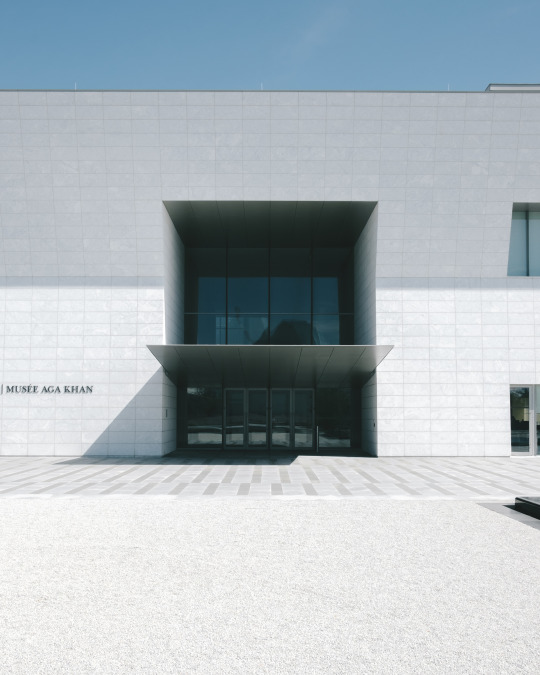
    Today we visited the Aga Khan Museum here in Toronto, which is a museum dedicated to the arts of Islamic civilizations. I had been outside the building before but this was my first time inside and my first time seeing some of the collections.

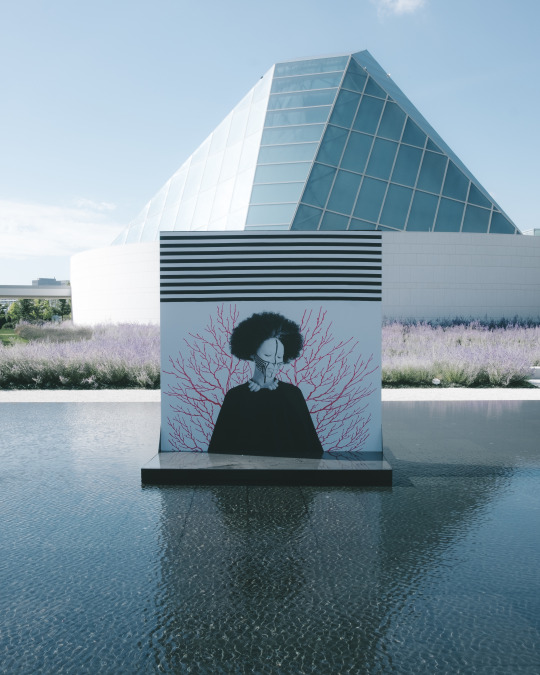
    Here is the main entrance:

    image

    Here is a photo looking the opposite way over one of the reflection ponds:

    image

    The museum was designed by Japanese architect Fumihiko Maki and was completed in 2014. 

    The site area is approximately 70,000 square meters and the building itself is approximately 11,600 square meters. Maki won the Pritzker Prize in 1993.

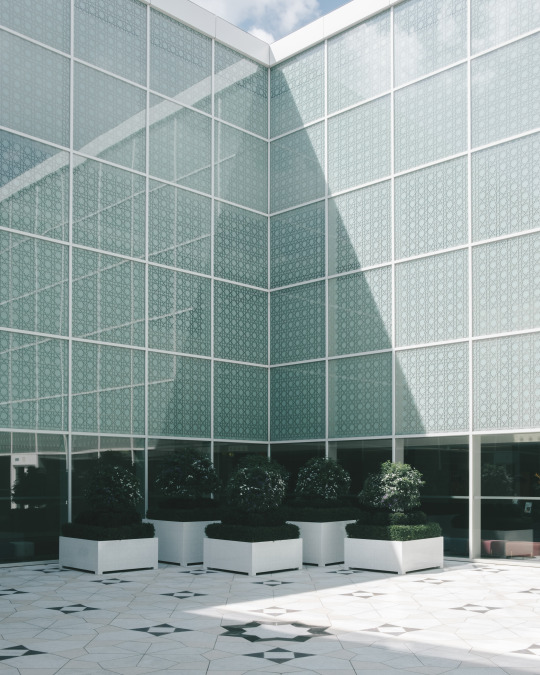
    Here is the building’s interior courtyard, which was one of my favorite parts:

    image

    The glass is patterned with the Islamic eight pointed star. But since the symbol is typically represented by two overlapping squares, the patterning was placed on two different sides of the double pane glass. Or at least that’s my guess as to why they did it that way.

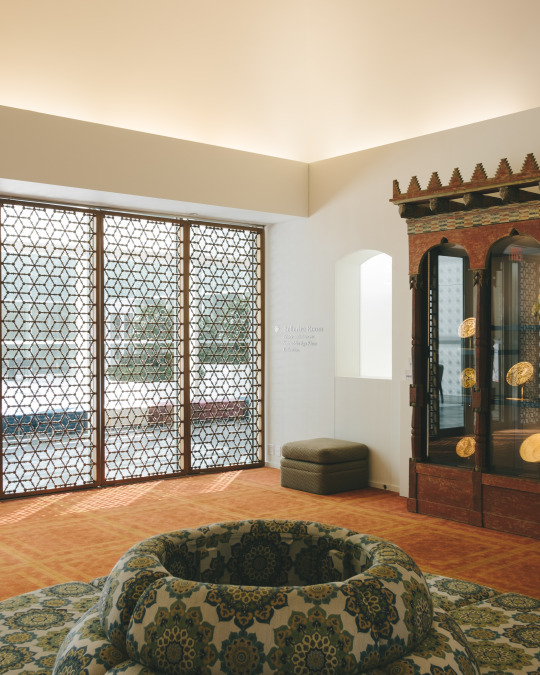
    Lastly, here is the Bellerive Room:

    image

    It was designed to be a contemplative room that could, on occasion, also host intimate events and performances. Note the shadows being cast by the screens in front of the windows.

    If you haven’t yet been to the Aga Khan Museum it is worth a visit, even if you just walk the formal gardens surrounding it.

  • Where’d the night go?

    I’m a few months behind on this one, but back in April the CBC published a documentary called: Where’d the night go? 

    It’s about Toronto’s grassroots music community and “DIY venues”, all of which are under pressure as a result of rising real estate values and an overall crackdown on illegal venues. This is a perfect example of what Jane Jacobs was getting at when she said that new ideas require old buildings. 

    If you can’t see the video below, click here. When I watched it, I got stuck watching 3 pre-roll ads. Sorry if that happens to you as well.

    //www.cbc.ca/i/caffeine/syndicate/?mediaId=924601923901

  • Why what happens after dark matters to creative industries

    I have been very vocal on this blog about the importance “nighttime economies” for cities and for its creative industries. So I continue to be encouraged by all of the attention that this topic is getting over the last year or so.

    Recently, the Creative Industries Federation released a report called: Because the Night – Why what happens after dark matters to the creative industries. It’s a look at creative industries in the UK and the role that nightlife plays in supporting them.

    Here are some of their takeaways:

    Creative industries in the UK have been growing faster than any other sector since 2008. CIF estimates that 1/11 people now work in this space, with the number being much higher in London: 1/6.

    The value of restaurants, clubs, bars, pubs, live music venues, and theaters, is that they are places to connect, showcase talent, develop ideas, and so on. They are also critical in attracting top talent because, well, people not surprisingly like to have fun.

    In the span of one decade (2005 to 2015), it is estimated that the UK lost roughly half of its nightclubs. The total went from 3,144 to 1,733. From 2007 to 2015, London lost 35% of its “grassroots music venues”, which, historically, have served to support emerging artists.

    Arguably, some of this may be due to changes in consumer preference and broader shifts in terms of the way people discover/consume music. But it’s also thought to be because of rising urban rents, concerns around noise and revelry, and so on.

    Still, the nighttime economy in the UK is thought to be worth £66 billion per year and to employ some 1.3 million people. It’s an integral part of our urban economies and so it’s time we acknowledged and celebrated it as such.

  • Ian Gillespie: It’s not about business

    The founder of Westbank, Ian Gillespie, recently sat down with Bloomberg TV to discuss the Toronto and Vancouver real estate markets; his Mirvish Village (Honest Ed’s) redevelopment project; affordable housing; and the markets he is and plans to be focused on (Vancouver, Toronto, Seattle, Tokyo, San Francisco).

    I like the part where he says that he’s really not that interested in business.

    If you can’t see the video below, click here.

    https://www.bloomberg.com/api/embed/iframe?id=6542ca85-017c-436e-aefc-25d8f4bb9b66

  • Miami nice

    Art Basel Miami Beach is going on right now so a few of us were talking about it in the office this week. If I had the time, I would have loved to go back this year.

    I think it’s great how Miami (Beach) seems to be infusing art, design, and culture into seemingly everything it does.

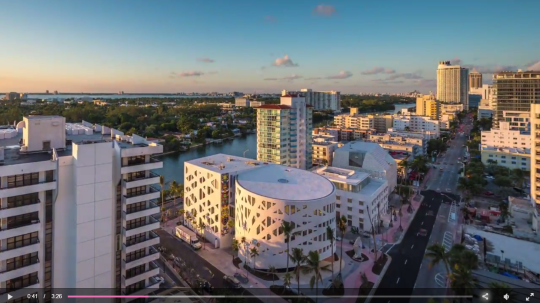
    Here is a really well done video tour of Miami’s Faena District (via Wallpaper*). It’s definitely worth a watch. Screenshot below.

    If you don’t know the story behind Alan Faena, you should also read up. He’s an Argentinian fashion designer turned real estate developer.