Daily insights for city builders, delivered every morning at 6 AM ET. I’m Brandon Donnelly — a Toronto-based real estate developer and founder of Globizen. I’ve been writing here since 2013.

Tag: climate change

  • UNStudio announces new tech architecture company (and thoughts on the smart home)

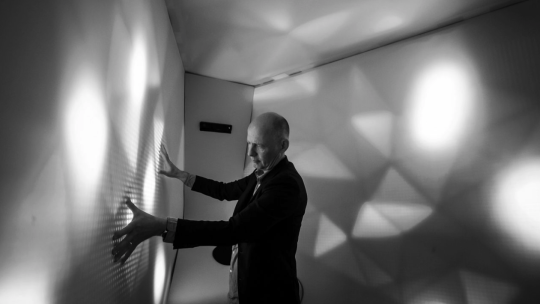
    Dutch architecture firm UNStudio has just launched a new company called UNSense, whose purpose is to explore and develop “new sensor-based technologies that are specifically designed to positively impact people’s physical, mental and social health.” They are calling the new business an “arch tech company” and it is their belief that, at some point, all architecture firms will become arch tech companies. You can learn more about UNSense, here.

    This announcement got me thinking about the state of smart home technologies, which, of course, is this massive buzzword that everyone is throwing around these days. Many of us have smart thermostats, voice assistants (that may be listening to our every word), wifi lights, and so on. And you can do some pretty neat things with software like IFTT, such as program your lights to come on at sunset or when you walk in the door.

    But as cool as they may be, these smart home devices have always felt like patchwork add-ons to me. I understand that this is partially driven by what customers can easily adopt and I don’t mean to discredit the value that they bring, but today’s post is about reminding us to also think more fundamentally, as opposed to just incrementally.

    Smart thermostats, for instance, give us the functionality to adjust our heating/cooling from our phone. But at the end of the day, they still control the same underlying system, which, by the way, is a fairly simple one. When it gets cold (because of our R-3 windows), the heat turns on. When it gets warm enough, the heat turns off. Zoned systems certainly add another layer of sophistication, but are we optimizing for the right variables?

    UNSense works at three scales: Cities, Buildings, and Interiors. And if you look at what they are trying to do at the building scale, it is around the interface between inside and out. Designing transformable facade systems and buildings that can respond to their environment and our changing needs. These are not new ideas, but in today’s tech-driven world, the timing may just be right.

    If you think about the climate we have here in Toronto, it is actually an incredibly difficult design problem. We have cold winters and hot humid summers, which means we have to solve for two different extremes. Mechanical systems have made that a lot easier to do, but if we’re going to meet the energy and greenhouse gas emission targets that we’re all talking about, we’re going to need a hell of a lot more than just smart thermostats.

    Image: UNSense

  • Random thoughts about climate change

    One of the things that I have been wondering lately with all of the devastation caused by hurricanes Harvey and Irma is if we need to be viewing these catastrophic incidents as the result of climate change or if we’re being too quick to apply the availability heuristic.

    The latter being: “Look at all of these horrible hurricanes. Climate change must really be here and happening right now.”

    Albert Wenger is covering this topic on his blog right now through his “Uncertainty Wednesday” series and has also written similar posts in the past. The current series is still ongoing, but a few things stood out to me as I was going through the archives. I’ll mention 3 of them today.

    Firstly, it’s important to understand the difference between weather and climate. Weather is what’s happening at any given moment. Climate, on the other hand, is the statistics of weather. Albert proposes the following definition for climate, which I like:

    “Climate is the probability distribution of possible weather events.”

    Secondly, the data is clear: We have gotten far better at forecasting weather over the years. Accuracy has greatly improved. 

    But we’re still pretty bad at it, particularly over longer periods of time. According this graph, we’re about 97.5% accurate for 3 day forecasts, but only about 40% accurate for 10 day forecasts. So by “longer periods of time”, I’m really talking about forecasts that go out beyond one week. That’s not very far into the future.

    Thirdly, Albert has this post from last year where he talks about the flooding we saw on the U.S. east coast and also the slowing down of the Gulf Stream

    This is fascinating, and also frightening, because the Gulf Stream is a vital ocean current. Among other things, it warms western and northern Europe – likely making it warmer than it otherwise would be – and, according to some models, it lowers the sea level along the U.S. east coast by as much as 3 feet

    The frightening part is that as the Gulf Stream slows it also stops pulling away the same amount of water from the coast, which is arguably why mean sea level is increasing.

    I say “arguably”, but the data clearly suggests an acceleration in the rate of rise. Here are two charts that Albert prepared. And there’s more: The U.S. east coast may also have it worse in terms of sea level rise precisely because of this phenomenon.

    This is an interesting and, of course, important topic. This post obviously doesn’t do it justice, but I am trying to learn as much as I can. Writing always helps with that.

    Photo by Joseph Barrientos on Unsplash

  • Ecodesign for cities and suburbs

    Larry Beasley and Jonathan Barnett are about to start teaching a free online course through the University of British Columbia edX called: Ecodesign for Cities and Suburbs. It starts April 4, 2017 and runs for 6 weeks.

    Here’s what you’ll learn (taken verbatim from edx.org):

    • The principles of ecodesign and why it is important as a response to the current disorganized urban growth model
    • Ways to adapt to a changing climate, and ways to mitigate climate change locally
    • Policies to balance auto and airplane transportation with walking, cycling, transit and high-speed rail
    • Ways of designing urban and suburban regulations to make cities more livable and environmentally compatible
    • Strategies for designing and managing the public realm, plus innovative arrangements and processes for implementing ecodesign

    The course is geared toward urbanists from all over the world and so the case studies will be global in nature. You can also participate as actively or passively as you’d like. Though, if you’d like to get a certificate, then you need to fully participate.

    What immediately stood out for me was the focus on both cities and suburbs. In many ways the suburbs are a more challenging problem to solve. So I hope there’s a good amount of focus on that context.

    Beasley was formerly co-director of planning at the City of Vancouver and Barnett is a professor of city and regional planning at the University of Pennsylvania (my alma mater). It should be an interesting course.

  • Stepping back

    Yesterday the New York Times reported on the fact that Donald Trump has ordered the removal of most of Barack Obama’s policies intended to fight climate change. 

    (Interestingly enough, the Editorial refers to Donald Trump as simply Donald Trump, but it refers to Barack Obama as President Barack Obama.)

    Here’s a sampling of what they had to say:

    It was dismaying also because it repudiated the rock-solid scientific consensus that without swift action the consequences of climate change — rising seas, more devastating droughts, widespread species extinction — are likely to get steadily worse. It was dismaying because it reaffirmed the administration’s support for older, dirtier energy sources when all the economic momentum and new investment lies with newer, cleaner forms of energy. It was dismaying because it flew in the face of widespread public support for environmental protection — including the pleas of the executives of hundreds of major American corporations who fear that without energy innovation their costs will rise and their competitive edge over foreign companies will be lost.

    This is certainly frustrating, but as they mention in the article, it is not unexpected.

  • The politics of flooding

    Do you believe that human action has caused and is causing negative outcomes with respect to the environment?

    The New York Times published a feature piece this week on the flooding of the US east coast. 

    Associated with the article is a fantastic infographic that shows all of the NOAA (National Oceanic and Atmospheric Administration) tide gauges up and down the eastern seaboard. It then zooms in to a few locations and shows mean sea level rise (in inches) since 1950 and the number of days of “nuisance flooding.”

    Here’s a sample screenshot:

    If you don’t feel like reading the full article, at least check out the infographic. The increase in nuisance flooding for some cities – such as Wilmington, N.C. (shown above) and Annapolis, MD – is astounding.

    What’s frustrating about the whole climate change debate is that it remains not only a debate, but an ideological debate. Here’s a quote from the article that stood out for me:

    “I’m a Republican, but I also realize, by any objective analysis, the sea level is rising,” said Jason Buelterman, the mayor of tiny Tybee Island, one of the first Georgia communities to adopt a detailed climate plan.

    In other words: I’m not supposed to think this way, but I do.

    Politics.

  • Climate change gridlock

    I spent this morning reading an article called: How climate change is rapidly taking the planet apart. Here is an excerpt from the introduction: 

    “According to Naomi Oreskes, a great number of climate change scientists (she interviewed most of the top 200 climate change scientists in the US) suffer from some sort of mood imbalance or mild or serious depression. It is easy to understand why: we see the climate change taking the planet apart right in front of our eyes. We also clearly see, right in front of us, what urgently needs to done to stave off global disaster on an unprecedented scale. We need carbon taxes and the reconversion of industry and energy towards zero CO2 emissions systems. This route is without any doubt technically and economically feasible, but politically it seems to be permanently locked. If we do not unlock it, the future looks bleak, not to say hopeless, for humankind.”

    It’s clearly not a positive article. But it is an important read. We know we need to immediately and drastically reduce CO2 emissions (for all the reasons explained in the article), but we simply aren’t doing that.

    Part of the problem, I think, is that it’s easy to lull ourselves into complacency. We read about it and we notice the erratic weather patterns, but for the most part the status quo isn’t all that bad for most of us. Life just goes on.

    There’s evidence that revenue-neutral carbon pricing could actually increase productivity levels. It would force innovation. But it doesn’t yet appear to be 10x better than what we have today – which is often what you need to get people to accept change.

    So instead we hold largely ineffectual climate change conferences, which allow us to tell ourselves that we are, in fact, doing something. But I don’t think we’re being bold enough. And that’s too bad.

  • We’re eliminating parking minimums

    I’ve been writing about the hypocrisy of parking minimums for years now. Some posts here, here, and here

    To me, it doesn’t make sense to try and promote more sustainable forms of urban mobility while at the same time mandating a minimum number of parking stalls in every new development. 

    Do you want people driving or not driving? Pick one.

    That’s why I was happy to see the following action item in the province of Ontario’s five year plan to transition to a low-carbon economy and fight climate change (thank you Ken Wilcox for bringing it to my attention):

    image

    I haven’t gone through the entire action plan and so this post is not a commentary on that. It is, however, a commentary on subsection 1.4. I believe it is the right thing to do and I’m stoked to see it in the plan.

  • World after capital

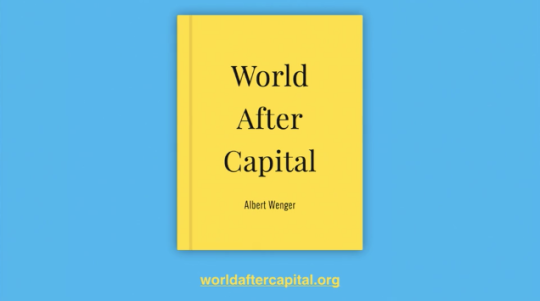
    Albert Wenger is currently in the process of writing a book called World After Capital. The book isn’t finished yet. It still exists in a crude rough draft form. But already he has made it freely available online. You’re also welcome to comment and contribute to the book as he works on it.

    Why has he done it this way? 

    Because this format of publishing is in line with where he believes the world is heading. He believes we are headed towards a world where new forms of surplus – brought about by technological innovation – will create greater levels of freedom: economic freedom, informational freedom, and psychological freedom.

    His overall thesis is that the world has been moving through a series of scarcities. As hunter and gathers, the scarcity was food. In our agricultural period, we learned how to create food surpluses (which freed up more of our time), but it then produced land scarcity. Once the industrial revolution hit we once again freed up more of our time through surpluses, but then the scarcity became centered around capital. We also started to negatively impact the environment. Today, as we clearly move away from the industrial economy towards a knowledge and information economy, Albert believes the new scarcity is attention. (I wrote a related post about a month ago.)

    If you’re interested in this topic and don’t feel like diving into his book, I suggest you watch this 23 minute presentation by Albert Wenger. I watched it this morning and he talks about everything I mention above. 

    Here’s one of his slides that I felt was important to share:

    Why it’s interesting to think about this shift is because there will inevitably be positive and negative outcomes associated with it; there will inevitably be groups who, probably because of self-interest, would rather cling to the past; and because there are pressing global issues that we need to be focusing our attention on – issues such as climate change.

    I can’t help but wonder about all the ways this shift could reverberate through the economy and our cities. Earlier this week I wrote a post about architecture as a tool for capital. But with our current fixation on “starchitecture”, one could argue that we have already transformed architecture into a new tool – a tool for grabbing attention. If you believe that attention is the new scarcity, then this makes perfect sense.

  • What sea level rise is doing to the urban landscape of cities

    Resiliency is an important topic in urbanist circles these days.

    New York is working on a 10 mile “Dryline” to protect itself from future storms similar to Hurricane Sandy. And Miami Beach – one of the most vulnerable cities in the U.S. to sea level rise – is frantically building pump stations and raising its seawalls, streets, and sidewalks.

    Here’s what the city’s public works director had to say via a Curbed article published about a week ago:

    Miami Beach is planning to spend upwards of $500 million over the next five years on the pump stations and street-raising projects. “We are quite certain we are going to buy ourselves another 30 years, and we are hoping we are going to buy ourselves another 50 years,” Carpenter said.

    According to Wired, sea levels off the coast of South Beach have risen by 3.7 inches since 1996. But over the last 5 years the high tide levels have had an average increase of about 1.27 inches per year!

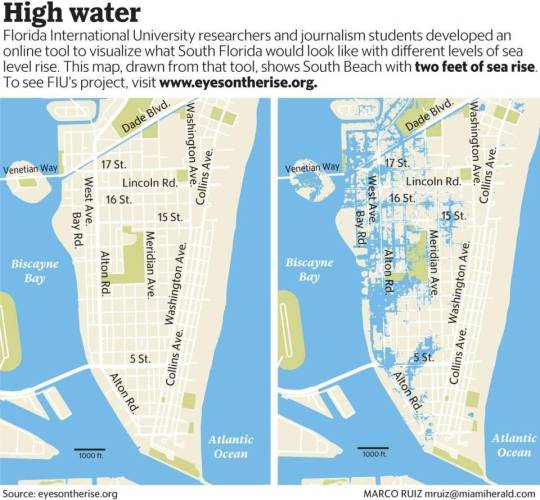
    This matters a great deal because of what South Beach would look like if sea levels increased by 2 feet (via the Miami Herald):

    It’s for this reason that Miami Beach has been working to alter its street elevations and install pumps – as many as 80 of them over the next 5 years – that quickly drain stormwater into Biscayne Bay. (The drains are equipped with backflow preventers so that the water leaves but doesn’t come back into the island.)

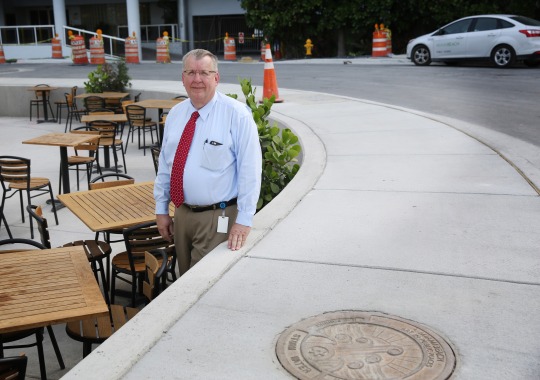
    Here’s an example of a raised street and sidewalk (via the Miami Herald):

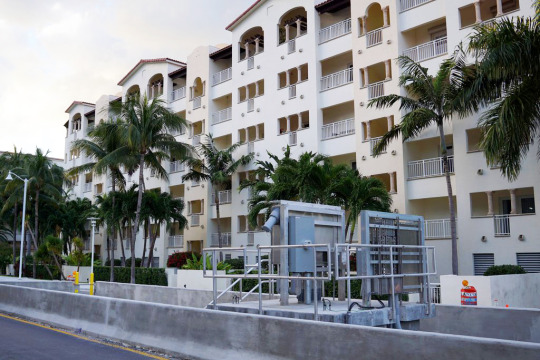
    And here’s an example of a pump station (via Curbed):

    All of this strikes me as necessary work for Miami Beach. But I also think it’s important to keep in mind that all of this is patch work – regardless of how necessary it is right now. 

    The bigger question is: what are we doing to stop sea level rise? That’s the only way we’re going to get to true, urban, resiliency.

  • Net-positive buildings — why a green building isn’t what you think it is

    image

    “We can’t address climate change without thinking about buildings.” -Bryn Davidson, Lanefab (Vancouver)

    This is a line from a recent TEDx talk by Bryn Davidson, who is one of the founders of Lanefab out of Vancouver. Lanefab is a design and construction firm specializing in sustainable infill / laneway homes. Unlike Toronto, laneway houses are actually allowed in Vancouver.

    If you have any interest in climate change, I would encourage you to watch his talk. It’s less than 20 minutes long and he addresses many of the misconceptions that I think people hold about what it means to build “green”. Click here if you can’t see it below.

    [youtube https://www.youtube.com/watch?v=JEUShQ7r_tE]

    While I think it’s great that the green agenda is much more front and center these days, I agree with Bryn in that we’re not yet on a sustainable path forward. For many people, being green means buying a LEED certified home, having a Tesla in the garage, and having a Nest thermostat on your wall. And certainly those things help.

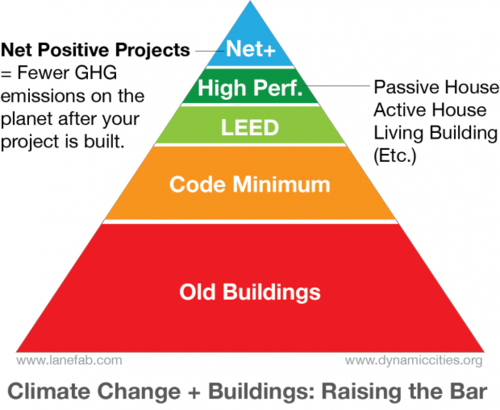
    But they’re not the whole story. Instead of just focusing on green and LEED buildings, Byrn argues that we need to take it a step further and start focusing on “Net Positive” buildings. In other words, ask yourself this: Will there be fewer green house gas emissions on the planet after your project is built?

    image

    More specifically, he outlines 3 criteria:

    1. How good is your building?
    2. Where is it located?
    3. What does it replace?

    The idea behind this framework is that the building itself (i.e. How good is your building?) is only one piece of the story. What also matters is its location and what it happens to be replacing. Is the building in a walkable area? Is it on a greenfield or infill site? Is it replacing an old energy inefficient building? Is it intensifying land use patterns?

    All of these things matter when it comes to assessing our greenhouse gas emissions.

    Let’s now apply this framework to three different building typologies: mid and high rise condominiums, and laneway houses. In the context of a Net Positive building, they all do quite well. In Toronto, we could certainly do a lot to improve the way many of our condo buildings are built, but they are usually in the right kinds of areas and they are the right kind of building typology.

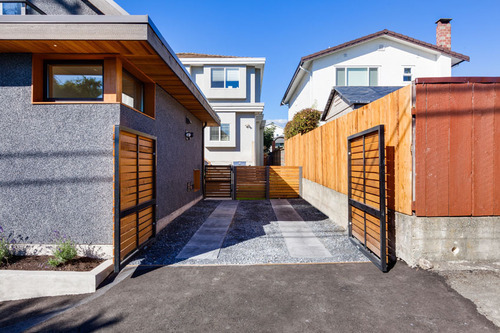
    Similarly, laneway houses as a whole are an incredibly sustainable building typology. In fact, I would argue that an energy efficient laneway house is easily one of the most sustainable homes you could build. They’re compact. They’re located on under-utilized and previously developed land. They often replace parking. And they increase population densities in established residential areas, which then makes transit more feasible.

    But again, here in Toronto we’re not allowed to build them.

    So whether you like it or not, if you’re involved in shaping the built environment, you’re also involved in climate change. This is a job for architects and developers, but also policy makers and communities. Laneway housing is a perfect example of that. Lots of people would build them — if only they could.

    Image: Lanefab