Daily insights for city builders, delivered every morning at 6 AM ET. I’m Brandon Donnelly — a Toronto-based real estate developer and founder of Globizen. I’ve been writing here since 2013.
Traveling is one of life’s greatest experiences. Pack a carry-on (so you bring only what you really need). Strip yourself of your regular surroundings. And explore the world with new eyes — maybe with a camera in your hand.
First, the why. The why is to build better cities. And it’s as simple as that. I love cities. The team loves cities. And we all feel a great sense of responsibility when it comes to doing our part to make them more prosperous, more beautiful, and overall better places to live and work.
It is for this reason that Globizen refers to itself as a city builder. We obviously didn’t invent this moniker, but we do take it seriously. And our specific intent is to be both a city-building company and a city-building community.
What this means is that we do the things that most companies do, including trying to make money. But in parallel to this, we also aspire to create a community of like-minded city builders.
City building isn’t just about real estate development. It’s also about the artist that just painted a mural, the local restauranteur that just opened up a new concept, and the individual that just did something, whatever that may be, to improve their community.
We would like to do our part to celebrate these actions and support more of them. This is how we want to build.
As for what we actually do, we are developers of creative mixed-use infill projects. Currently, we are developing and managing projects on our own account (we invested our own equity) and on behalf of great partners. But in all cases, we have a consistent investment philosophy and approach to development:
Focus on fundamentals
Search for overlooked assets and opportunities
Embrace non-consensus views
Create value by innovating with design, culture, and technology
Execute with discipline and passion
Think long term
We are actively looking for new development opportunities. We are also exploring/underwriting a number of income-producing asset strategies. If you’d like to pitch us a site or project, or you just want to grab a coffee somewhere cool, please feel free to send me an email (brandon.donnelly@globizen.com).
On this blog, we often talk about city building in the context of doing things to help improve a city — whether that be a development project, a new public art mural, or an interesting local business. These interventions help to build a city. But even more specifically, the term has, for many, come to mean building up a city in a positive way.
But there is another way to think about city building. You can think of it in terms of building actual new cities. We’ve spoken about some of these before, namely this one in California and this odd one in Saudi Arabia. But apparently it is becoming more common. According to The Economist, the world is now building more new cities than it has in the last 80 or so years:
Egypt’s “New Administrative Capital” is part of a rush of city-building. Firms and governments are planning more settlements than at any time in the post-war period, with many already under construction. Ninety-one cities have been announced in the past decade, with 15 in the past year alone. In addition to its new capital in the north, Egypt is building five other cities, with plans for dozens more. India is considering eight urban hubs. Outside Baghdad, Iraq, workers have just broken ground on the first of five settlements.
In some cases, it is being done as a solution to urban congestion. If this city is too expensive and unaffordable, just create a new one. This appears to be part of the idea with the above city outside of San Francisco. Of course, new cities can also be created for ideological reasons, or for political purposes, which was the case with Brazil’s capital city, Brasilia.
Here, the idea was to move the federal capital away from the country’s populated southeast region to a more geographically neutral location in the middle of the country. It also turns out that seeding a new city with government institutions is a good way to get one of these started. Existing cities do, after all, benefit from network effects.
History points to characteristics shared by successful projects. State institutions can help anchor cities, as Brasília (in Brazil) and Chandigarh (in India) showed in the 20th century. Although both have had problems, people in Brazil and India are voting with their feet. Brasília’s population is growing at 1.2% a year, more than double the national average. Chandigarh, a state capital, is now India’s fourth-richest region on a per-person basis.
But putting money, ego, and ideology aside, when does it actually make sense to start a new city in lieu of just expanding (or addressing the problems in) the one(s) you’ve already got? Population size can’t be the only factor in determining whether a city is “full”, because Tokyo seems to do just fine as the largest metropolitan area in the world.
If it hasn’t already been done, I think this would make for an interesting research project. Until then, there’s this (paywalled) Economist article.
There’s a narrative out there that all developers are uncreative and greedy, and if only they would start being more creative and generous, we could solve the housing affordability problem that is plaguing many (if not all) global cities. In other words, the solution to increasing the supply of low and middle incoming housing is simply a psychological reframing on the part of developers.
The problem with this mental model is that it ignores reality. Development happens on the margin. The market is competitive. It’s difficult to find developable sites. And it’s a challenge to make projects work. More often than not, you have to say no as a developer. No I can’t buy this land. No I can’t build housing here. And no the market will not support new office space here. Sorry, but no. (See cost-plus pricing.)
Development needs to give back. On the blog we usually call this city building. And that’s because it implies a greater sense of civic responsibility. Developers aren’t just building one-off buildings, they’re building a city. I believe wholeheartedly in this. But the belief that projects can be saddled with an endless array of government fees and civic contributions is a problematic one. There are limits — because markets have limits.
Last weekend I went by Sidewalk Toronto’s “experimental workspace” at 307 Lake Shore Blvd East. It is open to the public every Sunday from 11am to 5pm if you’d like to drop in.
This week they had their #BuildingRaincoat on display, which is an adjustable awning system designed to protect public sidewalks, mitigate the impacts of adverse weather, and improve outdoor comfort.
Also installed were a number of the paving systems that they are currently piloting. They’re working with over 20 different vendors to try and create the “holy grail” of street paving.
They define that as a system capable of the following four key features: modularity, heating, lighting, and permeability. Here’s an example of what one of them looked like (it was snowing at the time and, yes, Doc Martens):
With modularity, the goal is to make it possible for a single person to be able to pull up and replace one of the hexagonal slabs. This would dramatically change how we repair and patch our roads. Supposedly, they’re also more resistant to cracks, which means fewer potholes.
The key benefit of a heated paving system is an obvious one. When needed, their test system automatically heats the slabs to 2-4 degrees celsius in order to melt any snow and/or ice. That’s as warm as you need apparently.
They have two heating systems running at 307. The first is hydronic (fluid in pipes just below the pavement) and the second is conductive heating (thin conductive film in or under the pavement).
I’m sure many of you will be questioning the environmental and carbon impact of a heated public realm. And that is certainly a good question. But the status quo in this city involves about 131,000 tons of road salts per year. That’s a problem.
The lighting feature is pretty neat because there are a variety of different use cases beyond just demarcating space. One example that Sidewalk gives is that it could be used in a bike lane to tell you how fast you need to ride in order to hit all green lights.
Finally, permeability matters because it minimizes runoff and allows water to be absorbed in situ. The tradeoff is that it makes the slabs structurally weaker. So that is still being worked on.
I am thrilled to see this sort of urban innovation taking place right here in the city. If you haven’t already, I recommend checking out 307.
Later this month the new 9.7 km North-South metro line in Amsterdam will start service. Like most large scale infrastructure projects, its opening has been delayed many times. 8 times according to this source. But this post is not about that. It’s about a byproduct of the line’s construction.
The excavations required for the line meant that two sections of the Amstel River – namely the Damrak and Rokin sites – had to be drained. This took place from 2003 to 2012 and gave archaeologists unprecedented access to the bottom of a river in the middle of a historic city center.
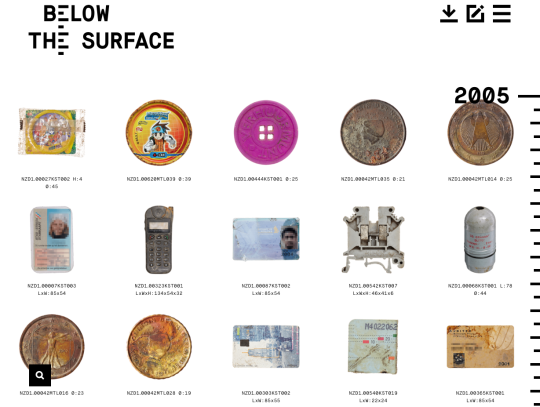
Amsterdam started as a small trading port along the banks of the Amstel River some 800 years ago. So not surprisingly, they found a few things. Over 17,000 objects were found and all of them have been catalogued online according to time period, use, material, and location found.
For the full catalogue of objects, click here. Screenshot of the catalogue shown above. And to learn more about the entire project, start here. There’s a lot of good stuff in there for city nerds.
I am sure you all know Vans. But you may not be aware of Build for Bokma. They are a non-profit whose mission is to create skateable public structures. And their long-term goal is to develop a permanent skatepark that commemorates the late Canadian pro skateboarder, Justin Bokma.
A big part of skateboarding culture is reimagining spaces and adapting to different urban environments. And if you think about it, that’s exactly what The Bentway is doing. They are reimagining a part of this city’s urban infrastructure. So I think this is a perfect fit and I am excited to see it come to life this summer.
Today I was at the Land & Development Conference here in Toronto. I started live tweeting during the breakfast, but my vintage iPhone 6 couldn’t keep up, so I had to stop. Some insights throughout the day. But a lot of what you would expect. I suppose it’s more about the networking.
I would, however, like to reiterate something that Ken Greenberg mentioned about Employment Areas/Lands in Toronto. For those of you who aren’t familiar, these lands are essentially intended to serve one, and only one, purpose: employment. And the process for introducing a mix of uses, including residential, is an onerous one to say the least.
I appreciate why this is the case. But I agree with Greenberg in that this kind of single use zoning is antiquated. It does not reflect the realities of the market today. There are other mechanisms we can use to maintain and provide for employment, and ensure that we don’t end up with a city of all residential.
The University of Toronto just announced a new School of Cities. It will begin operations on July 1 of this year (2018) and bring together researchers from various disciplines to address the world’s most critical urban challenges.
Insert stat here about the percentage of the population that will live in an urban area by 2050.
There are more than 220 faculty members across 40 different academic divisions at the University of Toronto who are doing urban-focused work. The School of Cities is intended to bring those minds together.
So far there are plans for a “global cities summit” and an “urban lab” that will also bring students, faculty, industry, and government together. The intent is for the School to act as a city builder both locally (Greater Toronto Area) and globally.
This once again goes to show just how important we are all taking urban issues today. But I am sure this blog audience didn’t need to be reminded of that.
If you would like to sign up for updates from the School of Cities, you can do that here.
Sidewalk Toronto is currently looking for “12 smart, creative, and caring people who are interested in the future of Toronto’s waterfront and how we [Sidewalk Toronto] can responsibly incorporate technology to improve urban life.”
Each Fellow will complete a 2-day orientation session in Toronto; 6 days in Amsterdam and Copenhagen; 5 days in New York City and Boston; 3 days in Vancouver; and then do a final 2-day working session back in Toronto before presenting their takeaways.
This feels like a response to the criticism that Sidewalk Toronto wasn’t doing enough to listen to the community and that it simply wanted to build a tech-infused neighborhood that could serve us more ads – but it’s cool nonetheless.
If you’re between 19-24 years old and you live in Toronto, you can apply here. It sounds like a fun opportunity for young city builders. I know that I certainly would have been all over it when I was in that age bracket.