
Daily insights for city builders, delivered every morning at 6 AM ET. I’m Brandon Donnelly — a Toronto-based real estate developer and founder of Globizen. I’ve been writing here since 2013.

Tag: cities

  • New startup wants to solve urban congestion through data and lotteries

    image

    If you’re a regular reader of Architect This City, you’ll know that I’m a supporter of congestion and road pricing. Any valuable good or service, such as a road, that’s offered for all intents and purposes as free, will never be able to keep up with demand. You need to price it.

    However, the political risk associated with implementing something like this has made it such that few cities around the world have done it. London and Singapore are the two most common examples.

    The more populist solution is to simply build more roads and highways, even though study after study shows that this doesn’t work. If it did, we would have already solved the problem of traffic congestion. And we most certainly haven’t.

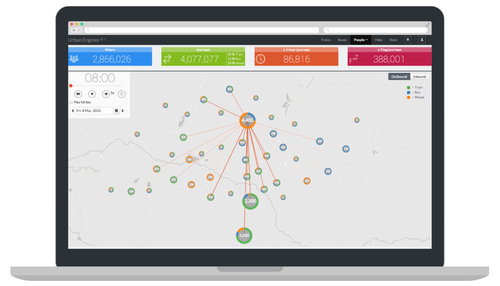
    Which is why I’m excited about a new startup that recently launched called Urban Engines. Their solution is twofold. It’s based on incentives and on treating people and cars in cities as sensors that feed back data into their network. Here’s a brief video. If you can’t see it below, click here.

    [youtube https://www.youtube.com/watch?v=oaCp5Tl-uAc]

    The data piece is almost a no-brainer (provided they can get the data). The more data we can collect about the way people and cars move in a city, the more they’ll be able to optimize and manage the flows. The possibilities are endless.

    But what I found really interesting is their incentives based approach. Typical road pricing methods are, one could argue, a punitive approach. As traffic increases so does the price of the road. (I like to look at it as efficient pricing.)

    With Urban Engines, their approach is the opposite: it’s to reward people–through money and lotteries–for driving during off peak times. It’s smart because selling a reward program to cities will be a lot easier than selling a new charge.

    Overall, this a great example of how startups are stepping up to solve some of our most important societal problems. For more information on Urban Engines, check out their website and this writeup on CityLab.
  • How could cities better connect all their residents to economic opportunity?

    image

    This blog post is a submission to a group blogging event being put on by Meeting of the Minds and Living Cities. The focus is on urban opportunity. Click here for more information about the event.

    Since the beginning of time, the purpose of cities has been to bring people together to socialize with one another and to generate wealth. And, today, more than ever, the potential returns of being smart and being in a global city are huge. Cities are our economic unit. They are what’s driving the global economy.

    But as the world continues to urbanize at an unprecedented rate and as the global economy becomes increasingly concentrated in select urban centers, how do we ensure that all city dwellers are connected to the economic opportunities being made available by this new information age?

    Here are 3 suggestions.

    First, we need broad and equitable access to education. I was deliberate in talking about the “returns of being smart.” Education and the right skills are even more critical today, because the labour market is not what it used to be. In Edward Glaeser’s book, Triumph of the City, he talks a lot about Detroit and how the greatest thing the city–and the car industry–did in its history was create lots of high paying jobs for people with little or no education. However it was also possibly the worst thing Detroit did because, today, the city is now stuck with that legacy. And those same high paying jobs for people with little or no education aren’t coming back. The labour market has changed. 

    Second, we need to ensure that people living in cities have the opportunity to be physically connected. That our cities offer strong transportation and mobility options and that our cities are designed to be inclusive. When I was visiting a friend in Los Angeles a few years ago and lamenting about the traffic, he responded by telling me that LA traffic is merely a socioeconomic problem. If you have the means, you get to live in desirable central neighborhoods where your commute is entirely reasonable. And if you don’t have the means, well, then you get stuck with a horrible 2-hour commute. We know that the rich will always outbid the poor for housing in any city, but as much as possible, we need to give people physical mobility so that they can then achieve economic mobility.

    At the same time, the design of individual neighborhoods and buildings matters a great deal. If you’ve ever watched The Human Scale, you’ll likely remember the line:

    “First we shape our cities and then our cities shape us.”

    As one example, the documentary talks about how masterfully modernist architecture from the 60s and 70s achieved extreme forms of social isolation. It cleansed the urban environment of any sort of public life and brought it all up into disconnected towers. The problem was that it was far too rational. The power of cities lies in their organic and evolving nature. And when you constrain them with mechanisms such as single use zoning and other restrictions, you stifle their potential to generate economic opportunities for their residents–which, as we’ve said, is one of the main reasons people choose to live in cities in the first place. 

    Finally–and this is a bit of a tie in for everything we’ve been talking about–we need to be proactive about inequality. Research shows that there’s a direct correlation between income inequality and social mobility. The more income inequality a city or country has, the less intergenerational social mobility it has–not to mention that it also leads to more crime and other negative externalities. This is a complex issue though, and I won’t pretend that it can be easily solved with a better public transit and more bike lines. It’s something much deeper and more broad. This one is about a belief that cities should be designed to enhance everybody’s quality of life and to make everybody richer, not just a few.

    Photo: Wikimedia

  • Is there an urban planning pendulum?

    Take a look at this tweet I came across yesterday:

    image

    A different way of thinking, a century apart. pic.twitter.com/GoxUQs0bB4

    — Darren Proulx (@dnproulx)

    May 5, 2014

    //platform.twitter.com/widgets.js

    On the left is a picture of some crowded and dense city at, I presume, the turn of the 20th century. And on the right is a picture, today, of your generic suburban city with lots of cars, a broad street and auto-oriented signage everywhere.

    As the captions say, the city on the left is what modernist architects like Le Corbusier and powerful city builders like Robert Moses were trying to fix. What we ended up with, as a result of these efforts, is the city on the right. Now, today, we–architects, planners and urbanists–are all trying to correct what we see as a huge misstep in the way we designed and built cities.

    But is it really an anomalous misstep or is it simply a preferential pendulum that swings back and forth from generation to generation? One generation thinks cities are dirty and evil and that they need to be evacuated. And then the next generation loves them and wants to move back into them, which is what’s happening today.

    Dogma–particularly when it comes to cities–takes a long time to percolate through the system. Le Corbusier was espousing his city building ideals of “towers in parks” in the 1920s. That’s when he proposed to demolish 2 square miles of Paris (Plan Voisin) and turn it into what most people today would think looks like a New York public housing project.

    But for these new ideas to take hold, young architects, planners and builders first need to become indoctrinated in school or wherever they’re learning the ropes. Then, they need to get out and start practicing and mature to a point where they’re starting to influence and control substantial city building decisions. That’s why, I think, Le Corbusier’s ideas of the 20s really only became widely accepted as planning principles in the post-war years.

    Because of this though, I sometimes wonder if I too am just following the natural cycle of changing tastes. When I went to architecture school, we were taught that public transit is more efficient than private cars, density is good for the environment and for economic development, and that Le Corbusier was generally a crappy city builder. And if you’re a regular reader of this blog, you’ll know that that is generally the view I take here.

    But when I ask myself this question, I think of a few things. First, if you look at the urbanization of ancient cities, they were always organized around strong public spaces. The desire for human beings to be able to walk around, conduct business and socialize with each other is not a new phenomenon. And our post-war planning ideals put a strain on that.

    Second, take a look at the world and what’s happening. The majority of people now live in cities and we’re continuing to urbanize at a frenetic pace. Shenzhen in China went from a population of just over 300,000 people in 1979 to over 10.5 million people today. That is the pace of urbanization that city builders need to deal with. It’s unprecedented.

    And to even begin to make that manageable, I don’t think we can continue to build cities like the ones on the right side of the picture, above. It’s unsustainable both environmentally and from a mere space planning standpoint. There simply isn’t enough room.

    So call me a product of the times, but I just don’t see our current planning goals as one side of a swinging pendulum. I see them as a return to what cities have always been about: a place for people to interact, socialize and generate wealth.

  • Why cities need to be our economic unit

    Last year I wrote a post called Province of Toronto, where I briefly talked about the outdated nature of how cities are organized and governed in Canada. I was effectively arguing that, in today’s global economy, our dominate economic unit needs to be the city–not the province. 

    This isn’t something that gets talked about a lot, but I feel strongly that we should be looking at it. We’re unnecessarily crippling the economic, social, and cultural potential of our cities because we, to put it bluntly, haven’t gotten around to reorganizing our governance structure.

    Well, this evening, I happened to stumble upon a great post by The Urbanophile called, Are States an Anachronism? In it, he cites a book by Richard Longworth called Caught in the Middle (that is now on my Clear reading list), which argues that states, as an economic unit in the US, are not only outdated, but hugely detrimental to the economy.

    More specifically, he outlines the following concerns (taken directly from The Urbanophile blog):

    1. States do not represent communities of interest.
    2. Arbitrary state lines encourage senseless border wars.
    3. Many state capitals are small, isolated, and cut off from knowledge about the global 21st century economy.
    4. Metro areas are the engines of the modern economy, but the rules for municipal and regional governance are set by states, and often in a manner that is directly contrary to urban interests.
    5. States can’t to much to help, but they can do a lot to hurt.

    For a complete explanation of each of the above points, I would encourage you to check out the full blog post, here. As I said before, this isn’t a topic that’s top of mind for most people. But it’s an important one. Our global competitiveness is at stake.

  • Location-based social network Foursquare is unbundling

    I’ve been a Foursquare user for a number of years now. I like seeing which friends are nearby and where I’ve been. I love the data aspect of it. It’s a kind of urban “spidey sense.”

    Sometimes when you “check-in”, the app will tell you the last time you were there (if it’s been awhile), how many consecutive weeks you’ve been there (which I like seeing when I check-in at the gym), and also give you any tips that others may have left about the place you’re at–such as, try the sea urchin ceviche.

    But Foursquare has been struggling. Check-ins proved to be a bit of a fad and Yelp solved the what-do-you-want-to-do-tonight problem better. However I’ve always felt that, on a fundamental level, Foursquare had the potential to be so much more powerful than Yelp. 

    Well, today the big news in the tech world is that Foursquare is unbundling its app. There will be Foursquare and there will be Swarm. Foursquare will be a recommendation engine that helps people find places to eat, drink, shop and so on (just like Yelp), and Swarm will be all about social–seeing where your friends are and which ones are nearby. And along with this unbundling, there will be no more check-ins:

    But how can Foursquare personalize its users’ results if they are no longer collecting check-ins, the foundation of Foursquare’s recommendation engine? Crowley smiles and says something a bit shocking. He no longer needs check-ins, the meat and potatoes of Foursquare’s entire business and data collection engine for the last five years.

    Not only has Foursquare collected 6 billion check-ins, he says, but it has collected five billion signals to help it map out over 60 million places around the world. Each place is a shape that looks like a hot zone of check-ins — of times when people have said “I’m here.” Foursquare’s “Pilgrim” location-guessing engine factors in everything from your GPS signal, to cell tower triangulation, to the number of bars you have, to the Wi-Fi networks, in order to create these virtual shapes.

    Now that it has this data, Foursquare can make a very accurate guess at where you are when you stop moving, even without a check-in, it’s a technology it hopes will allow it to keep its database of places fresh and accurate. Foursquare calls these implicit check-ins “p-check-ins,” or Neighborhood Sharing. Take your phone into four or five different Japanese restaurants over the course of six months and without a single check-in Foursquare will learn that you like Japanese food and start making recommendations for you based on that data.

    There will obviously be a number of people who have anxiety about an app that’s passively tracking everywhere they go and then trying to feed them recommendations (come eat here!), but I do think they’re on to something.

    The opportunity with Foursquare (and its data) is that the recommendations can be tailored. If I’m looking for a place to eat, Foursquare will already know that I love Mexican and that I just worked out (meaning I’m probably extra hungry). Personally, I’m okay with that.

    But then I start to wonder how this might impact cities. If the process of discovery becomes this automated and this tailored, how might it change the way we organize and design our cities?

  • The suburbs, they are a changing

    Earlier today, a good friend of mine shared this New York Times article on my Facebook wall. It talks about how some suburbs are taking action to try and curb the exodus of young people to cities. They’re doing things like making themselves more walkable and building bike lanes. I thought it was an interesting article.

    Of course, it’s not just young people moving from the suburbs to the city. It’s also a case of young people living in the city and never leaving for the suburbs–which they have traditionally done. 

    I’ve talked about this topic a lot here on ATC, but I wanted to share this article because I think it’s one thing to talk about how city centers are on the rise and it’s another thing to talk about how suburbs are starting to take notice and take action to curb their (potential) decline.

    I say potential because some would argue that the suburbs aren’t necessarily on the decline–we just have a scenario where young people are delaying that period of their life, either for economic reasons or for personal/lifestyle reasons.

    I, however, would disagree. I think the growing preference for cities is a real societal shift. That doesn’t mean I think the suburbs are going to die though. There will likely always be a segment of the market that prefers that housing type (or some variation of). I just think the suburbs aren’t going to be what they once were to previous generations.

  • The business of cities

    Over the past few months on this blog, I’ve started to introduce business terms into the way I describe and talk about cities. I’ve referred to residents and visitors as customers of a city, experiences within a city as products and services, and cities themselves as businesses. Until now though, I hadn’t explicitly talked about this parallel or fleshed it out in any sort of detail. But I think it’s an interesting one so I’d like to do a bit of that today.

    The reason I started referencing cities with business terms is because I think it speaks to 3 important characteristics of cities. First, cities, just like businesses, are in direct competition with each other. We rank cities. We compare GDP per capita. And they fight, or at least should, to attract the best people and to achieve economic dominance.

    Second, city prosperity can be ephemeral. We tend to think of cities as being quite permanent–centuries old–but history is littered with failed cities or cities that simply lost their economic importance (see Detroit). Consider this: The center of trade at one point was the Mediterranean Sea. Then, as the New World emerged, it shifted to the Atlantic. And now, one might argue that it’s moving over to the Pacific (and Asia). Either way, these macro shifts push certain cities to thrive and others to decline. The time horizon is longer than, say the rise and fall of Blackberry, but it’s similar nonetheless. Nothing is guaranteed.

    Third, cities have become centers of lifestyle and consumption. That’s why I previously argued that any economic development strategy should consider lifestyle, and whether or not people actually want to live in the place. In business terms, you need to offer products and services that people actually want. You need to respond to customer needs.

    And if you think of cities in this way, I think you’ll come to the conclusion that, just like businesses, strong cities require strong leadership and management. They need to ensure that they’re delivering the right products and services to their customers and that they’re staying ahead of the innovation curve.

    The switching costs may be higher for cities compared to, again, something like a mobile phone, but that doesn’t mean people won’t eventually vote with their feet and leave for somewhere better.

  • What do venture capitalists have to do with cities?

    This morning I woke up to a tweet from somebody asking me why–despite my obvious love of cities and real estate–do I seem more influenced by venture capitalists on my blog. He wondered if it was because of a lack of public/online real estate thought leaders.

    I responded by saying yes; that’s part of the reason. I honestly can’t think of one real estate developer that hosts a personal and regular blog. (If you know of any, please pass them along.) Whereas I can’t think of a major VC who doesn’t blog.

    Sure there are other real estate professionals who blog, but a lot of those sites just feel like giant lead generation tools and those aren’t enjoyable to read. I’m trying not to create that kind of blog. The trust of readers is more important to me than trying to promote my businesses.

    But the other reason I often cite venture capitalists and “tech” centric topics is because I believe in cross pollinating industries. I don’t believe the world operates neatly under silos and neither should our minds and businesses. I’ve also argued many times before that with software eating the world, nobody should be ignoring technology.

    At the same time, the consumer web feels to me like this profound social force changing the way people live and interact with each, which, if you think about it, is what cities have always been about. And so I see all kinds of interesting overlaps.

    Of course, I also look to planners, designers and other urbanists for inspiration. But I don’t like to do so exclusively. Industries, like anything else, can quickly become insular–whether tech or urban planning. My interest–and the focus of this blog–is cities. And I will continue to incorporate ideas and viewpoints from any discipline that I think touches them.

  • Improving urban mobility

    If you’ve ever ridden a busy Toronto streetcar, you’ll know this story:

    You’re waiting outside in the cold for a streetcar. When one–actually 4–finally arrive all bunched up together, they’re so packed with people that you’re not actually able to get on. You try one anyways and the driver makes an announcement for everyone to “move back” so that more people can onboard via the front door. After a few minutes of people shuffling to try and get further back, you’re finally able to squeeze on–even if you are virtually sitting on the driver’s lap. You then travel about 2 blocks before the streetcar stops and the same thing repeats. The result is an absolutely infuriating mobility experience that usually makes walking the preferred choice. Who said that downtown already has enough subways?

    Over the weekend, I was watching this TED talk with Charlie Rose interviewing Larry Page of Google. One question that Rose asks Page is about why he’s so fascinated with transportation and mobility. That is, why is Google so committed to driverless cars? Page then talks about his experience of waiting for buses when he was a student at the University of Michigan and how he would think about all the inefficiencies in the system. He also talks about how half of the urban fabric of Los Angeles is made up of roads and parking lots and that this is a terrible outcome of the mobility choices made in that city.

    I’ve said before that transportation is one of the biggest challenges facing Toronto today. And I truly believe that. But that’s probably the case in most, if not all big cities. Getting people around a city efficiently is such a fundamental need. It stimulates economic growth and it improves quality of life. And those are typically the reasons why people choose to live in cities: to make money and to have a better life. 

    Now, I’m a big proponent of public transportation, but I’m also excited by the advances being made outside of mass transit. With driverless cars, electric cars, networks such as Uber and Hailo, and the emergence of the sharing economy, you could easily imagine a bunch of different ways in which mobility could be improved in our cities. Take, for my example, my own driving patterns. I probably drive my car 2, maybe 3 hours per week these days. That translates into a weekly utilization rate of roughly 1.2%! (2 hours / 168 hours week). That’s terribly inefficient. We can do better. And I think we will.

  • It’s all about people

    Yesterday evening I met up with a talented Toronto-based technology entrepreneur who also happens to be passionate about cities. The conversation meandered between both worlds, but we ended up coming back to one central theme: It’s all about people.

    Facebook didn’t just buy WhatsApp for the technology. It spent $19 billion on almost half a billion active users. That’s what matters. Do people want to occupy your (real or virtual) space? Have you created a community? Whether it’s an app, a building or a neighborhood, you’re useless without engaged participants.

    And to be perfectly honest with you, that’s my ultimate goal for this blog. Ideally I’d like each and every post to inspire conversation and debate (just like this one did on gentrification). A one-sided conversation can only take you so far. The real value happens within communities.