Daily insights for city builders, delivered every morning at 6 AM ET. I’m Brandon Donnelly — a Toronto-based real estate developer and founder of Globizen. I’ve been writing here since 2013.

Tag: cities

  • 6 things about cities from Richard Florida

    Last week Richard Florida headlined an “Urban Lab” panel at the NYU Schack Institute of Real Estate. It was moderated by Sam Chandan, who is dean of the Shack Institute. 

    Here are 6 takeaways from the discussion, with a few of my own thoughts attached:

    1. Suburban brain drain. This is happening. Florida states that (real estate) development is the key to rebuilding the suburbs. It will challenging to reorient the suburbs away from the car (though suburbs vary greatly), but I do agree that many suburban areas need a refresh to keep them relevant against this brain drain.

    2. Decline in home ownership. Florida believes we will see owning vs. renting drop to about 50-50. This would be a pretty big change given that US homeownership is currently hovering in the low 60s and this is already at historic lows. However, the trend is towards urban and that often means more renting.

    3. New city characteristics. Access to urban amenities, cultural capital, and transportation is critical and should drive new development. Transit and rail infrastructure can “open up” new areas and combat issue #4, below.

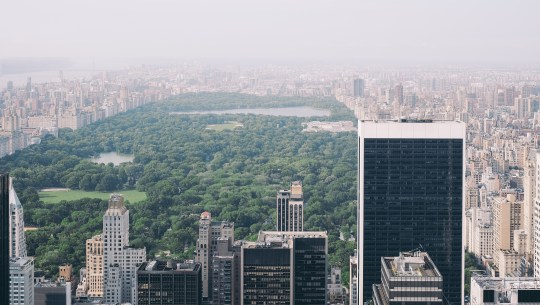
    4. Housing affordability. Florida reiterates “the great inversion.” Poverty moving to the suburbs; cities now housing the rich. He also isn’t sure that capitalism alone will solve this problem. Gives example of Manhattan where market is focused on high-end luxury residential.

    5. Florida argues that planning and real estate knowledge need to come together to overcome some of the information-asymmetries inherent in the development industry. I’ve written about similar ideas before. I try and apply this sort of multi-disciplinary thinking to urban issues.

    6. Micro-living is not a silver bullet for “chronic poverty.” I think it serves a segment of the housing market.
  • PHLEGM video

    This past summer I wrote about the 8 storey mural (by street artist PHLEGM) that was about to go up on the side of a Slate building at the corner of Yonge + St. Clair in midtown Toronto.

    Well, that mural is now complete. It’s been in the news a bunch over the past couple of months, both locally and internationally. designboom (they’re allergic to capital letters) wrote about it last month.

    In case you missed all that press and/or you’d like to learn more about the process, here is a video that the STEPS Initiative published last week. It’s 5 minutes. If you can’t see the video below, click here.

    [vimeo 185861345 w=640 h=360]

    The STEPS philosophy of creating public art in unlikely urban spaces is a hugely interesting one. It’s really the antithesis of the white-walled art gallery.

  • The rise of paradiplomacy

    In the words of Mike Bloomberg, then mayor of New York: “We’re the level of government closest to the majority of the world’s people. We’re directly responsible for their well-being and their futures. So while nations talk, but too often drag their heels, cities act”. Whereas diplomacy is carried out for the state, paradiplomacy is executed for the population.

    Rodrigo Tavares has an interesting article up at the World Economic Forum talking about the rise of foreign policy and international relations at the local level. The argument is that as cities rise (and they are certainly rising) paradiplomacy is inevitable.

    He admits that the diplomatic networks tend to be stronger for regions who have “flirted with sovereignty.” Regions such as Quebec, Catalonia, and Scotland are given as examples. However, this shift is by no means exclusive to them. Lots of examples in his article.

    It is also manifesting itself very differently compared to at the national level. And that’s part of the advantage. One example is London & Partners, which is an arm of the City of London that sells consulting services to other cities and nations who want to replicate its successes. Do nations do this?

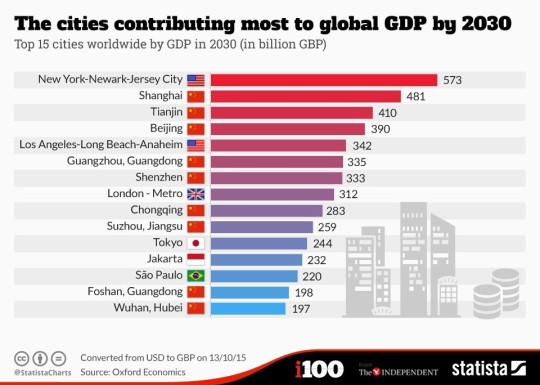
    I have argued before on this blog that our governance structures do not accurately reflect today’s urban reality. Rodrigo’s article is a reminder that we continue to underestimate the role of cities in the global economy.

    I’ll end with this chart from his article:

    image

  • Urban change through rapid prototyping

    image

    The Market Street Prototyping Festival is just finishing up in San Francisco. The festival, which is now in its 3rd year, is centered around urban interventions that can be rapidly prototyped and tested. The goal is to discover new ideas that could be used to transform and improve Market Street – the city’s civic spine. It is a joint effort of both the San Francisco Planning Department and the Yerba Buena Center for the Arts.

    Here is a list of all the prototypes. You can “like” projects, but I wish they would have made it easier to filter and see which ones are the most popular.

    One project that I liked is Vote With Your Feet. It consists of two doorways and a single crowdsourced YES/NO question above it. You vote by choosing a doorway. Once you walk through, you are then shown the results. Here’s a Boomerang video of it in action. I like it because it provides a frictionless way to acquire lots of ground-up feedback. Imagine placing something like this at the exit of a busy train station or transforming the existing doors.

    Tactical urbanism can be a great mechanism for investigating and instigating positive change. This is hugely important considering how slow moving and bureaucratic city building can be. It’s not the same format, but NXT City here in Toronto has similar ambitions. They source new ideas for our public spaces from young people. I am thrilled that both of these initiatives exist.

  • The value of urban lighting

    image

    This week I picked up the Philips Hue lighting system. For those of you aren’t familiar with it, it’s a connected home lighting system. All you need are a Philips Bridge (which hooks up to your wireless router); a smartphone; and whatever bulbs, lightstrips and fixtures you want to use with it. It also works seamlessly with the Apple Home app.

    At first I was a bit nervous that it would turn my place into a cheesy nightclub. But as soon as I powered it on and started messing around with the Hue app, I was blown away by the quality of the light and the options. There are settings for reading, to simulate a sunset, and so on. You can schedule routines, such as a bedtime lighting scheme, and you can even color match a photo to find exactly the light you want.

    After playing around a bit, I then sent out an obligatory tweet saying that I was now hooked on and obsessed with the Philips Hue lighting system. Trust me, it’s really cool. My friend Andrew then responded saying that he doesn’t get it. Why would anyone want a color of light besides “white?” To me, this is like asking: Why would anyone want to see a beautiful sunrise or sunset? The sun should just appear or disappear using one consistent color.

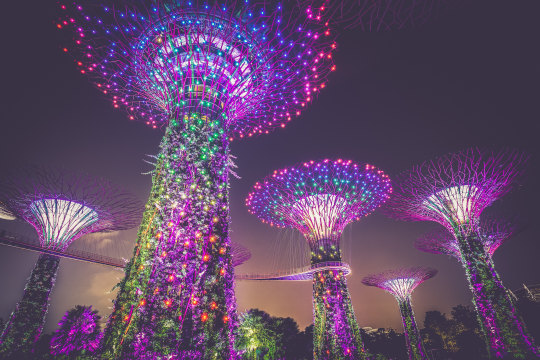
    In a city like Toronto where most of us in the winter will wake up when it’s dark and come home from work when it’s dark, I have always believed that we should be more creative and daring with the way we light our city, our buildings, and our public spaces. We don’t want to be kitschy about it, but there’s an opportunity to maximize our darker months and enhance the overall urban experience.

    The CN Tower is a perfect example. Its night lighting has completely changed how we view it and has become a beacon for what is going on in this city. I can see it clearly from my elevator lobby and I always look to see what color it is. I’m not great at picking out when it’s Rett Syndrome Awareness Month, but I can usually tell when there’s a game going on.

    Now my place is certainly not the CN Tower. And there’s only one CN Tower in the world. But that doesn’t mean we can’t get fun and creative in other ways within the shared walls of the public realm. We should do that. Let’s not be so conservative.

    If any of you have great examples of urban lighting, please share it in the comments below. Perhaps we can all use it as inspiration to make a change.

  • Flynn in the city

    I very much enjoy the branding and marketing side of the development business. It’s probably an architect / designer thing. So I’m always looking out for interesting case studies.

    Recently I came across The Flynn in Chelsea, New York. The developer is IGI and the agency is Winkreative.

    What they did was create a namesake character named Flynn. Everything then became about a day in the life of. 

    The Instagram account is flynninthecity. They made colorful animations. And they even partnered with the Spring Street Social Society to host in-person performance art pieces. The Being Flynn series was a bunch of vignettes that combined “dance and physical comedy” and highlighted a cast of fictional characters who all, of course, reside at The Flynn.

    As you all know, selling condos is typically about selling a lifestyle. A dream. In this case, they created a character to show you exactly what that dream should be.

    Real estate marketing can sometimes often be cheesy. But I thought this was a clever and overall creative approach. Winkreative does great work.

    What do you think of the approach?

    Image: Winkreative

  • The lure of super-places

    image

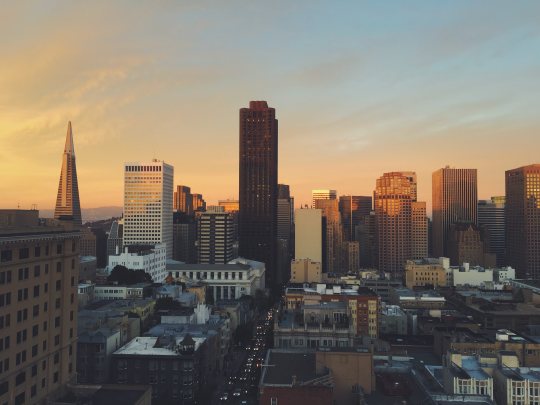
    If you’re a very talented person, you have two choices: you either move to New York or you move to Silicon Valley. This is the message that Peter Thiel delivered to a conference being held in Chicago earlier this month. Not surprisingly, it pissed a few people off.

    Peter responded by saying that he was simply illustrating the “extreme version” of a metaphor about the impacts of globalization and technology. And while it certainly doesn’t sound very nice if you’re sitting in Chicago, or the countless other fantastic cities between the coasts, I can appreciate what Peter is getting at.

    Saskia Sassen is known for coining the term global city. These are cities which play an important role in the functioning of the global economy. But what has happened, she acknowledges, is an even further concentration of activity within a select few “super-places.”

    Here is an excerpt from a Financial Times article by Simon Kuper (2014) talking about Amsterdam’s position in the world:

    “…a new, higher category of cities may now be emerging: global capitals. Amsterdam has risen but New York, London and Hong Kong have risen faster. The Dutch elite is moving to Amsterdam; but many ambitious Dutch people no longer want to join the Dutch elite. They want to join the global elite. That often requires moving to a global capital.”

    Anecdotally, I can say that almost everyone I know who has left Toronto for an opportunity has moved to New York, Silicon Valley, London, and so on. They have moved up the rank of global cities/capitals.

    So while Peter may not have chosen the right way to deliver this message, I do believe it is a message worth delivering.

  • Building crap

    Last night I participated in an excellent dinner discussion with a group of planners, architects, city officials, and politicians from Amsterdam. They were visiting Toronto to see first hand what rapid intensification has done to this city. And I very much appreciated the invite. Thank you.

    My message was that intensification has created a far more vibrant and exciting city compared to 15 or so years ago. It’s hard to know what exactly could be correlated with intensification, but we have certainly seen an explosion of culture, innovation, and pride in this city – among many other things. (It could be all Drake’s doing.)

    However, the counter argument at the dinner table was that Toronto is letting unfettered development produce unremarkable architecture. We are simply building glass tower after glass tower. And I know that, for many of you, this will ring true. I hear it all the time, including in the comments of this blog.

    Now, I will be the first to admit that there has been a lot of shit built in this city. No argument there. Some people have no taste. But at the same time, I think it’s myopic to assume that it’s strictly because of profit-motivated developers. 

    Oftentimes the perception is that development projects are awash in cash. There’s tons of money in which to do the right thing. Developers just need to stop being so greedy and start being more creative.

    The reality is that developers operate within a market. There are real limits to what people will pay for new space. And when, for instance, land prices go through the roof (an input), municipal fees jump (cost of doing business), and approvals drag (time value of money), guess where everyone starts looking for savings? In the build.

    I say this not to justify building crap. If I had it my way, everything would be beautiful. I champion design whenever possible. I say it simply to shed light on the process. Because when we all understand the factors at a play, I believe we all become more effective at finding solutions.

  • Planning for the unplanned

    I was listening to The Urbanist (Monocle Radio) last night while I was making dinner and there was a segment on Moscow’s “illegal retail kiosks.” These are small scale retail structures that were built without formal planning permissions and so the city decided to demolish them. 

    There was lots of backlash. Photos here.

    Now, I’ve never been to Moscow. So I can’t really comment on the attractiveness and usefulness of these kiosks. But I suspect that these illegal retail kiosks, many of which seem to have been located around metro stations, contributed quite a bit to the city’s urban vibrancy. Retail is hard to get right. It doesn’t work everywhere.

    All of this got me thinking about our tendency to sterilize and overplan cities. I’m not saying that planning is bad. It’s not. But I do think we should acknowledge that we don’t know everything about the future and that human ingenuity will undoubtedly unlock new things we never thought would be beneficial.

    So how do we plan for the unplanned? Perhaps it starts with accepting the off-center. Here’s a quote from Anthony Bourdain (it’s all over the internet, but I can’t seem to find the original blog source):

    I think that troubled cities often tragically misinterpret what’s coolest about themselves. They scramble for cure-alls, something that will ‘attract business,’ always one convention center, one pedestrian mall or restaurant district away from revival. They miss their biggest, best, and probably most marketable asset: their unique and slightly off-center character. Few people go to New Orleans because it’s a ‘normal’ city — or a ‘perfect’ or ‘safe’ one. They go because it’s crazy, borderline dysfunctional, permissive, shabby, alcoholic, and bat shit crazy — and because it looks like nowhere else. Cleveland is one of my favorite cities. I don’t arrive there with a smile on my face every time because of the Cleveland Philharmonic.

    There’s value at the margins.

  • Building the future

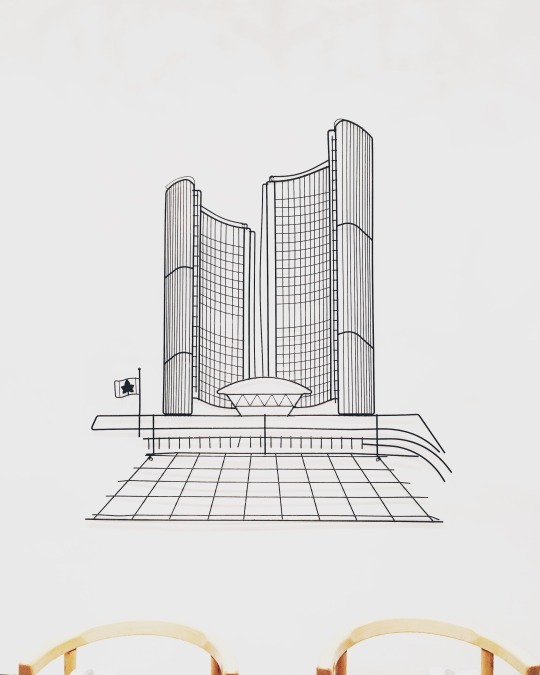
    Toronto-based heritage architect Michael McClelland recently published a piece in Spacing called: Misuse of Heritage Conservation Districts can deaden both past and future

    Here are a couple of snippets:

    The City of Toronto believes it has found a silver bullet to control development pressure in the downtown core through the use of a tool known as a “heritage conservation district” (HCD).

    The problem is that HCDs are meant to conserve intact and bone fide heritage areas, such as Wychwood Park, Rosedale, or Cabbagetown. They were never intended to control development downtown.

    In preparing for a HCD designation, consultants trained in history examine an area’s context and determine what is of value historically. They do not generally study the growth potential of an area, its future, nor any economic considerations, nor the larger planning policy framework, or even an evaluation of the built form generated by other market forces. HCDs look at heritage.

    The rigidity of the proposed new urban design controls introduced by the HCDs effectively prohibits innovative and thoughtful architecture in the downtown core.

    My own view is that it should be a balance between preservation and progress. We should respect our past, but at the same time look towards the future. Don’t fear change. Michael argues that HCDs achieve neither of those things. It’s worth a read.

    Speaking of the future, the CityAge conference is returning to Toronto on October 6 and 7. Their mission statement is about “building the future.” I was on one of their panels last year and it was an overall great event.

    If you’d like to attend, use the code “CITYAGE” to save $100. And if you’re a young professional (under 35) and/or a startup, email Marc Andrew to get an even sweeter deal. Tell him you’re a reader of this blog.

    Image: Photo by me taken at People’s Eatery on Spadina Avenue