
Daily insights for city builders, delivered every morning at 6 AM ET. I’m Brandon Donnelly — a Toronto-based real estate developer and founder of Globizen. I’ve been writing here since 2013.

Tag: cities

  • New School of Cities

    The University of Toronto just announced a new School of Cities. It will begin operations on July 1 of this year (2018) and bring together researchers from various disciplines to address the world’s most critical urban challenges. 

    Insert stat here about the percentage of the population that will live in an urban area by 2050.

    There are more than 220 faculty members across 40 different academic divisions at the University of Toronto who are doing urban-focused work. The School of Cities is intended to bring those minds together.

    So far there are plans for a “global cities summit” and an “urban lab” that will also bring students, faculty, industry, and government together. The intent is for the School to act as a city builder both locally (Greater Toronto Area) and globally.

    This once again goes to show just how important we are all taking urban issues today. But I am sure this blog audience didn’t need to be reminded of that.

    If you would like to sign up for updates from the School of Cities, you can do that here.

    Photo by Jorge Vasconez on Unsplash
  • Less, rather than more, housing

    Earlier this year I wrote about the California housing bill (827) intended to dramatically increase housing supply around transit stations all across the state. Well that bill was rejected last month and the Los Angeles Times wrote this post post-mortem explaining why and how it went wrong. Their argument is that it came down to opposition from low-income residents who feared that an increase in housing supply would lead to greater displacement.

    On a related note, the Official Plan Amendment and Zoning By-law Amendment that would permit laneway suites in Toronto went to Community Council this week. They voted to defer the decision for a month. Only 3 of 13 councillors voted to pass the proposal, despite there being 185 letters of support and only 4 letters of opposition. For more information on what the hell happened, check out this Lanescape post.

  • The Cherry Street Lakefilling project

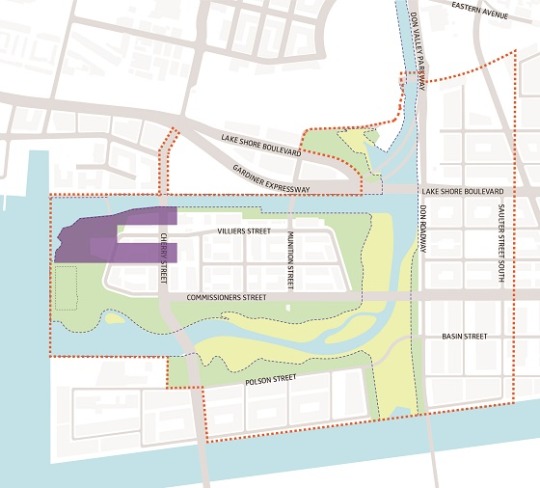
    It’s going to take a generation to build it out, but one of the most exciting revitalization projects in Toronto is going to be the Port Lands area. However, before that can really start happening and new communities can be built, the entire area needs to be flood protected. Currently about 290 hectares (717 acres) in this part of the city are prone to flooding.

    One component of the flood protection program is the Cherry Street Lakefilling Project. Below is a plan of what that means (from Waterfront Toronto). The area in purple is new land that will be created as part of the process. Supposedly this is important for a few reasons. For one, it will allow the Cherry Street bridge to be relocated, which, in its current location, is creating a pinch point during floods.

    image

    I am mentioning all of this today because I am personally excited about this revitalization project. Hopefully I’ll see it complete in my lifetime. And maybe I’ll be fortunate enough to work on some of the buildings when that time comes. I also really wanted to share the below video with you all, showing the lakefilling in action. I bet many of you aren’t aware that this is happening.

    If you can’t see the video below, click here.

    [youtube https://www.youtube.com/watch?v=C0q_Wvn91zE?rel=0&w=560&h=315]

  • Branding is part of city building

    Below is a good discussion with Aaron Renn about how to brand a city. I fully agree with two of the points he makes: (1) Not enough cities are thinking holistically about this topic and (2) tech startups, bicycle lanes, and craft breweries aren’t going to cut it as a strategy. Every city is focusing on that sort of stuff these days. Zero differentiation. Find something germane to your city and start building on it. If you can’t see the embedded podcast below, click here.

    [soundcloud url=”https://api.soundcloud.com/tracks/436104924″ params=”color=#ff5500&auto_play=false&hide_related=false&show_comments=true&show_user=true&show_reposts=false&show_teaser=true&visual=true” width=”100%” height=”300″ iframe=”true” /]

  • A unique taste in buildings

    image

    A condo developer friend of mine once told me something along the lines of this: “Brandon, I have generally learned over the years that if I like something, it probably means the general public [our purchasers] isn’t going to like it. And that’s because if I like it, there’s probably something unique or quirky about it.”

    When he told me this it made perfect sense to me, because there’s a well documented taste divide that seems to exist between architects and design-types and non-architects and non-design-types (whatever this latter categorization means).

    A few years ago The Architects’ Journal published an article referencing a 1987 study that took a group of students – some architecture students and some non-architecture students – and asked them to rate the attractiveness of a series of photos containing both unfamiliar people and buildings.

    What they discovered was that most people had similar views on the attractiveness of the people. I guess hotness is somewhat universal. But when it came to the buildings, the viewpoints were completely opposite. The architecture students’ favorite buildings were what everyone else disliked the most.

    The conclusion in the article: “Professionals are, empirically, the very worst judges available of what people want or like in the built environment.”

    Photo by Simon Goetz on Unsplash

  • Assortative mating at elite colleges

    When demographers talk about how educated a city or place is, they often refer to the percentage of the population with a 4-year college degree. This may seem crude, but so far it has been found to be one of the best predictors of higher income levels and overall urban prosperity.

    When you add in the fact that people tend to marry people that are similar to themselves – often called assortative mating – you get a driver for income inequality. People with high incomes are marrying other people with high incomes.

    In this recent New York Times article they dive into the sorting that can happen even within colleges, including elite colleges. 

    According to data from the Equality of Opportunity Project, if you were born between 1980 and 1984, went to Princeton, and came from a family with a household income in the top 20%, you had a 56% chance of being married by the time you hit 32-34 years old.

    However, if you came from a family with a household income in the bottom 20%, you only had a 34% of being married by the time you hit the same age bracket. One possible explanation is that if you’re from a lower income family, you simply aren’t privy to the same “clubs”, where people mate, even though you still got into Princeton.

    To reinforce this point even further, the above data suggests that only about 1.3% of Princeton students that come from a poor family will ultimately end up a rich adult. About 72% of Princeton students come from a household in the top 20 percent.

    When I look at the numbers for Penn, my alma mater, the marriage spread isn’t quite as dramatic. The marriage rates are 55% and 48%, respectively, for the top and bottom 20%. Maybe that makes it more egalitarian. Or maybe not.

  • Toronto is finally ready to permit laneway suites

    Some of you might remember that last summer the city refused my laneway house/suite here in Toronto.

    Well that was last summer and this is this summer.

    On May 2, 2018 – which just so happens to be my birthday – Toronto and East York Community Council will consider a staff report for a City-initiated Official Plan Amendment and Zoning By-law Amendment that would permit laneway suites in the Toronto & East York District.

    Here are a couple of excerpts from the summary section (full report, here):

    This report recommends establishing a planning framework to permit laneway suites on lands within the Toronto and East York District that are designated as Neighbourhoods by amending both the Official Plan and City-wide Zoning By-law.

    A second unit can take many forms but is generally considered to be subordinate to the primary dwelling unit on a lot. Second units are an important part of the City’s rental housing stock. Laneway suites are one form of second unit.

    This report contains a detailed planning rationale for the introduction and regulation of laneway suites within the Toronto and East York area and discusses the policy implications and intent of proposed performance standards and criteria. 

    These performance standards and criteria intend that laneway suites will provide a new form of ground-related, rental and extended family housing that will fit appropriately within the scale of established Neighbourhoods, and limit their impact on the existing physical character, while contributing to the growth of the City’s rental housing stock.

    What a thoughtful birthday gift. Thank you.

  • Tim Hortons is moving its HQ to downtown Toronto

    Yesterday it was announced that Tim Hortons would be moving its corporate headquarters from Oakville, Ontario to downtown Toronto. 

    They’ll be taking 6,000 square meters of space in the PATH-connected Exchange Tower and moving all 400 employees by the end of this year.

    I’m more of a Starbucks coffee drinker, but I am interested in this move. Here’s what their president, Alex Macedo, had to say about it (quote from the Financial Post):

    “Consumer trends are changing very fast. We want to remain an innovative company,” he says. “We want to be able to react to guest changing behaviours so we thought being positioned in Toronto would allow us to do that.”

    This is a good follow-up to a post I wrote back in April 2015, which talked about the trend of companies moving from the suburbs to downtown Toronto. I guess that is still happening.

  • Hamilton’s Pier 8

    In December of last year, the City of Hamilton launched an RFP process to find a team (from the list of prequalified bidders) to develop a new urban community at Pier 8 along the waterfront. The ambition is somewhere around 1,500 new residential units and approximately 13,000 square meters of commercial and institutional space.

    That process has narrowed the pool to 4 teams and 1 will ultimately win the exclusive right to develop the new community. Here are the teams, along with a link to their submission materials, including a short video that I understand was a requirement of the RFP.

    – GulfDream (link)

    – Tridel (link)

    – Urban Capital / Core Urban / Milborne Group (link)

    – Waterfront Shores (link)

    This is a super exciting project for Hamilton. So I would encourage you to take a look at the presentation materials. At this point, you only have until Tuesday, April 17, 2018 to provide any comments to the City’s evaluators. If you’d like to view the boards in person, you can do that this Monday and Tuesday in the main lobby of City Hall.

  • New York City’s retail vacancy problem

    The New York Post has some interesting articles, here and here, on the growing retail vacancy problem in NYC. (Thank you Michael for the link in the comments this week.)

    The vacancy rate on Amsterdam Avenue in the Upper West Side is said to be around 27% and it is said to be around 20% on a stretch of Broadway in Soho. It has become such a problem that Mayor Bill de Blasio wants to implement some sort of retail vacancy tax:

    “I am very interested in fighting for a vacancy fee or a vacancy tax that would penalize landlords who leave their storefronts vacant for long periods of time in neighborhoods because they are looking for some top-dollar rent but they blight neighborhoods by doing it,” he said on WNYC. “That is something we could get done through Albany.”

    But this is based on the assumption that greedy landlords are simply holding out for exorbitant rents. It doesn’t consider the fact that, maybe, there is simply too much retail space:

    Only a few grasp the true scope of the problem. Vornado Realty Trust titan Steven Roth said we can only cure the national plague through “the closing and evaporation” of up to 30 percent of the weakest space — which would take five years.

    All of this, of course, has me thinking about the future of ground floor main street retail. What are your thoughts?