Daily insights for city builders, delivered every morning at 6 AM ET. I’m Brandon Donnelly — a Toronto-based real estate developer and founder of Globizen. I’ve been writing here since 2013.

Tag: china

  • With Vancouver voting “no” to transit tax, could Hong Kong now serve as inspiration?

    https://500px.com/embed.js

    Earlier today it was announced that Metro Vancouver voted “no” to a 0.5% sales tax increase that would have been used to fund a $7.5 billion regional transportation plan. 

    Roughly 62% of respondents said “no”. And not surprisingly, the percentage of people who voted “no” increased as you moved outward towards the suburbs. But even the City of Vancouver itself sided slightly with “no” at 50.81%.

    Since I’m not that plugged into the Vancouver scene, I’m not going to comment on this issue. But hopefully you all will in the comments below. I know that a lot of you are incredibly passionate about this.

    Instead, I’d like to pose two questions. 

    Firstly, why is it that Asian transit operators seem to be so much better than North American transit operators at recovering their costs through fares? (Urban density and car ownership likely have something to do with it). And secondly, why hasn’t Hong Kong’s famous “rail plus property” transit model been exported to North America?

    For those of you unfamiliar with Hong Kong’s Mass Transit Railway Corporation, here’s how much money they make (via The Atlantic from 2013):

    The Mass Transit Railway (MTR) Corporation, which manages the subway and bus systems on Hong Kong Island and, since 2006, in the northern part of Kowloon, is considered the gold standard for transit management worldwide. In 2012, the MTR produced revenue of 36 billion Hong Kong Dollars (about U.S $5 billion)—turning a profit of $2 billion in the process. Most impressively, the farebox recovery ratio (the percentage of operational costs covered by fares) for the system was 185 percent, the world’s highest. Worldwide, these numbers are practically unheard of—the next highest urban ratio, Singapore, is a mere 125 percent.

    In addition to Hong Kong, the MTR Corporation runs individual subway lines in Beijing, Hangzhou, and Shenzhen in China, two lines in the London Underground, and the entire Melbourne and Stockholm systems. 

    And here’s how they do it (also via The Atlantic):

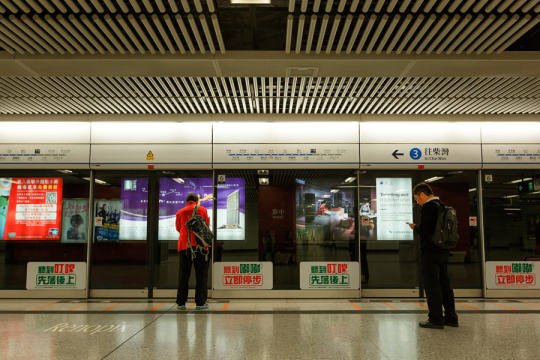
    Like no other system in the world, the MTR understands the monetary value of urban density—in other words, what economists call “agglomeration.” Hong Kong is one of the world’s densest cities, and businesses depend on the metro to ferry customers from one side of the territory to another. As a result, the MTR strikes a bargain with shop owners: In exchange for transporting customers, the transit agency receives a cut of the mall’s profit, signs a co-ownership agreement, or accepts a percentage of property development fees. In many cases, the MTR owns the entire mall itself. The Hong Kong metro essentially functions as part of a vertically integrated business that, through a "rail plus property” model,  controls both the means of transit and the places passengers visit upon departure.  Two of the tallest skyscrapers in Hong Kong are MTR properties, as are many of the offices, malls, and residences next to every transit station (some of which even have direct underground connections to the train). Not to mention, all of the retail within subway stations, which themselves double as large shopping complexes, is leased from MTR.

    I believe that we could do this too. So hopefully we can have a great discussion about it in the comment section below.
  • Doing new things

    image

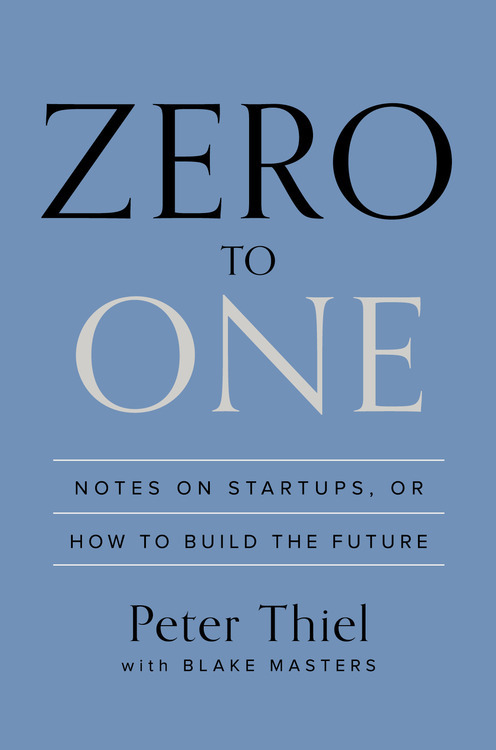
    I just finished reading Peter Thiel’s new book, Zero to One: Notes on Startups, or How to Build the Future. For those of you who may not be well-versed in the world of technology geeks, Peter Thiel is an entrepreneur and investor. He was one of the founders of PayPal back in 1998 and was the first outside investor in Facebook in 2004. He invested $500,000 for a 10.2% stake in the company!

    While the focus of the book is obviously on technology startups, it’s less about “here’s how you build a startup” (there is no formula) and more about “here’s how to think about the world, humanity, and the future of our civilization.” So even if you’re not a founder, or startup and technology enthusiast, I think you’d still find it really interesting.

    As one example, Thiel makes the distinction early on in the book between what he calls “vertical or intensive progress” and “horizontal or extensive progress.” The specific example he gives is of typewriters and word processors. If you take one typewriter and figure out how to make 100 of them, you’ve made horizontal progress. However, if you’ve just replaced typewriters with word processors, you’ve made vertical progress.

    In other words, vertical progress is doing new things and horizontal progress is just copying things that we know already work. In the grand scheme of the world, he argues that globalization is really just a form of horizontal progress. The rise of China is a result of them copying what has already worked in developed countries. But the true way to advance our economy and civilization is to not just copy – that’s easy – it’s to do, new, things.

    That, of course, is a lot harder to do. But to build the future, you need to build things and do things that haven’t been done before.

    Which is why Thiel actually gives $100,000 to a handful of college students every year so that they can drop-out and pursue a startup. In his mind, our education system is just perpetuating the status quo. MBAs move money around without creating anything new. Lawyers just preserve value and mitigate risk, also without creating anything new (Thiel is trained as a lawyer). And so he doesn’t believe that is the best way forward.

    This may not sit right with many of you, but questioning the status quo is a prerequisite if you’re trying to do new things.

  • Taking a picture of the world, every day

    This morning I finished watching the rest of Steve Jurvetson’s Spark 2014 talk, which I shared with you all yesterday. And so I’ve got technology on the brain right now.

    I’ve said this many times before on ATC, but I truly believe that the pace in which technology is infiltrating “non-technology” companies is only going to increase. The video clip of Flux.io is a perfect example of that. After watching that demo yesterday, I immediately thought a handful of consultants that real estate developers use on projects that the Flux platform could replace.

    image

    So today I thought I would share another company that Steve talks about in yesterday’s video called Planet Labs. Planet Labs’ mission to image the entire world and make it universally accessible to people. But unlike Google and Microsoft – who already offer satellite photography – Planet Labs has figured out a cost effective way to do it on a daily basis.

    Because the problem with services like Google Maps and Bing is that they’re updated too infrequently. If I go to Google Maps right now, the building I live in doesn’t even exist in their aerial photography of Toronto – it’s still a parking lot. So there are limits to what you can do with this information.

    But once you increase the image frequency to daily, you create all sorts of new opportunities. You could track the number of cars in every parking lot in the world to measure retail activity (an example Steve gives in his talk). You could track changing water levels. You could track deforestation. You could track urbanization in China. And the list goes on. Here’s a blog post from Planet Labs that gives a few examples of the benefits of daily imaging.

    To return to my earlier point, consider the fact that every potential use case I’ve just outlined is in an industry that most of you wouldn’t consider to be tech. And yet Planet Labs is clearly a technology company. So the key insight here is really to focus less on the way things are done and classified today, and more on the way they could be – and likely will be – done in the future.

    Image: Planet Labs

  • From bicycles to cars in Beijing

    image

    Earlier this week, a friend of mine shared this TED talk on my Facebook wall talking about the state of climate change in the world. The talk is by Nicholas Stern. And at one point he talks about the incredible urban transformation that has taken place in Beijing over the last couple of decades; specifically, the shift from a bicycle oriented city to a now automobile oriented city.

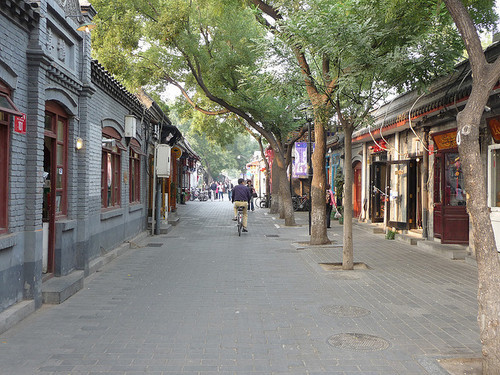
    I knew that this was the case, but it got me thinking. Because alongside this mobility change, there’s also been – not surprisingly – pronounced changes to the urban fabric of the city. The most significant is perhaps the demolition of the city’s hutongs and siheyuan. Hutongs are basically narrow alleys (see above photo) and siheyuan are the traditional Chinese courtyard houses.

    For centuries, these alleyways and courtyard houses have defined Beijing. And while I realize that not all of them were as glamorous as Melbourne’s laneways, only about 1,000 of Beijing’s original 6,000 hutongs remain (according to Time). Which makes me wonder: Is China making the same mistakes that we made in the 20th century?

    Because as the developed world moves toward transit oriented development, bike lanes, heritage preservation, and compact urban living, China has seemingly gone and done the exact opposite. They got everyone off bicycles and into cars, and they went and erased a scale of urbanism that has been in place for centuries.

    This is not to say that China doesn’t deserve to have the same standard of living as the developed world. It absolutely does. It just seems a bit ironic to me that the things we’ve become sharply critical of, are exactly what China seems to want to recreate.

    Image: Flickr

  • Why Vancouver’s housing market hinges on China’s economy

    Last week a friend of mine sent me a really fascinating article from The Economist talking about the role of foreign investors in Vancouver’s housing market. If you subscribe to The Economist, you can click here to read the article. If you don’t subscribe, you’ll have to rely solely on what I’m about to say.

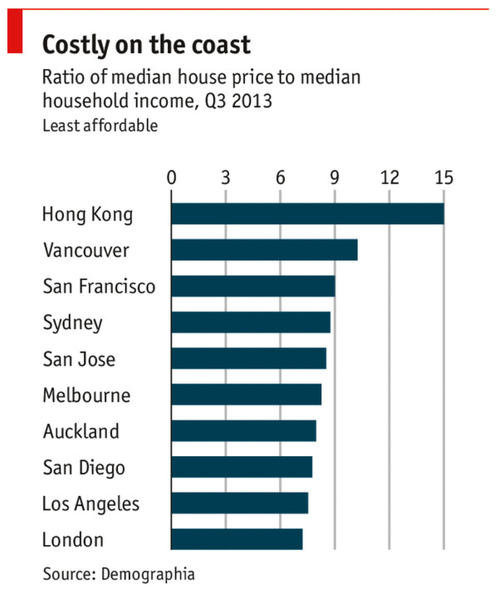
    In case you weren’t aware, Vancouver is an incredibly expensive city when it comes to real estate. The average price for a single-family detached house is now around C$1 million. By some measures, that makes it the most expensive housing market in North America. Here’s a chart that looks at house prices as they relate to household income:

    image

    According to The Economist, the median household income in Vancouver is $68,970. This places them 23rd out of 28 in terms of Canada’s major cities. So how is it that homes are, on average, selling for $1 million? The locals don’t seem to be able to afford them.

    Well, it’s a well known fact that Chinese buyers continue to be an integral part of Vancouver’s housing market. In fact, up until this year, Canada offered a fast track option for citizenship applications if you brought at least $800,000 into the country.

    So we know that foreign buyers are having an impact. It’s a phenomenon we’re seeing in many other cities around the world, such as London. But to what extent is hard to measure–which has forced analysts to get creative.

    To try and figure out what percentage of homes are going to foreign buyers, analysts have been looking at macro data, filing through sales records, and even monitoring utility bills to see which homes might be sitting empty.

    What they found is that there’s a fairly significant correlation between economic activity in China, and Vancouver’s housing market. When the Chinese economy does well, so do Vancouver homes. Interesting. Still, that doesn’t quantify impact.

    When analysts looked for utility bills that would suggest an empty home, they found that only about 8% of high end downtown condos were likely sitting empty. That’s a relatively small amount. It could be vacancy rate.

    But when they looked for “mainland Chinese-sounding names” on sales records, they found that for homes priced $3M and up, almost ¾ of the buyers could be from mainland China. Now that’s a significant number!

    I found this all rather fascinating and I thought you all might as well. It yet again reminds me of how much opacity there is in real estate markets. We’re all craving better data. Why else would people be scouring utility bills?

  • Is there an urban planning pendulum?

    Take a look at this tweet I came across yesterday:

    image

    A different way of thinking, a century apart. pic.twitter.com/GoxUQs0bB4

    — Darren Proulx (@dnproulx)

    May 5, 2014

    //platform.twitter.com/widgets.js

    On the left is a picture of some crowded and dense city at, I presume, the turn of the 20th century. And on the right is a picture, today, of your generic suburban city with lots of cars, a broad street and auto-oriented signage everywhere.

    As the captions say, the city on the left is what modernist architects like Le Corbusier and powerful city builders like Robert Moses were trying to fix. What we ended up with, as a result of these efforts, is the city on the right. Now, today, we–architects, planners and urbanists–are all trying to correct what we see as a huge misstep in the way we designed and built cities.

    But is it really an anomalous misstep or is it simply a preferential pendulum that swings back and forth from generation to generation? One generation thinks cities are dirty and evil and that they need to be evacuated. And then the next generation loves them and wants to move back into them, which is what’s happening today.

    Dogma–particularly when it comes to cities–takes a long time to percolate through the system. Le Corbusier was espousing his city building ideals of “towers in parks” in the 1920s. That’s when he proposed to demolish 2 square miles of Paris (Plan Voisin) and turn it into what most people today would think looks like a New York public housing project.

    But for these new ideas to take hold, young architects, planners and builders first need to become indoctrinated in school or wherever they’re learning the ropes. Then, they need to get out and start practicing and mature to a point where they’re starting to influence and control substantial city building decisions. That’s why, I think, Le Corbusier’s ideas of the 20s really only became widely accepted as planning principles in the post-war years.

    Because of this though, I sometimes wonder if I too am just following the natural cycle of changing tastes. When I went to architecture school, we were taught that public transit is more efficient than private cars, density is good for the environment and for economic development, and that Le Corbusier was generally a crappy city builder. And if you’re a regular reader of this blog, you’ll know that that is generally the view I take here.

    But when I ask myself this question, I think of a few things. First, if you look at the urbanization of ancient cities, they were always organized around strong public spaces. The desire for human beings to be able to walk around, conduct business and socialize with each other is not a new phenomenon. And our post-war planning ideals put a strain on that.

    Second, take a look at the world and what’s happening. The majority of people now live in cities and we’re continuing to urbanize at a frenetic pace. Shenzhen in China went from a population of just over 300,000 people in 1979 to over 10.5 million people today. That is the pace of urbanization that city builders need to deal with. It’s unprecedented.

    And to even begin to make that manageable, I don’t think we can continue to build cities like the ones on the right side of the picture, above. It’s unsustainable both environmentally and from a mere space planning standpoint. There simply isn’t enough room.

    So call me a product of the times, but I just don’t see our current planning goals as one side of a swinging pendulum. I see them as a return to what cities have always been about: a place for people to interact, socialize and generate wealth.

  • Invest in whatever China blocks

    Last weekend I posted a poll asking readers what they think the “capital of the world” will be in 2050. It was really the 2nd half of a two part poll. The first one asked what people think the capital of the world is today. And the majority of people said New York.

    While New York still came out on top in the 2nd poll, the most notable difference is the rise of Chinese cities. Behind New York is Shanghai, Hong Kong and Beijing. And in a way, this order makes sense to me. China would like to see Shanghai on top of Hong Kong, because it’s perceived as being more Chinese (Hong Kong is still too British). But both are still more economically important than Beijing.

    Still, my own belief is that China is going to need to go through some structural changes before its cities really have a chance of dethroning New York (or London, depending on your vote in the first poll). And I think it has to do with openness, transparency and freedom. Fred Wilson probably put it best when he said to basically invest in whatever China blocks:

    As our [Bitcoin] panel was winding down, Superintendant Lawsky asked what countries were doing it right. I didn’t answer that question but instead decided to talk about one that isn’t doing it right and brought up China and noted that a fantastic investment strategy would be to have invested in every Internet service that China has blocked. My point being that the services China likes to block are the really important ones that have been built on the Internet.

    He then goes on to say that he believes there’s a strong correlation between innovation and freedom. And I would agree. So until China stops blocking the innovation that is likely going to drive the world forward, I think it’s going to struggle to assume a true leadership position.

    What are your thoughts?

  • The essence of the stock market is speculation

    Dutch architecture firm OMA (Office for Metropolitan Architecture) has a subtle way of being incredibly subversive in their architecture.

    The recently completed 1.9 million square foot Shenzhen Stock Exchange (SZSE) building is presently making the rounds online and I personally find it incredibly striking. It has the same timelessness about it that makes me love Mies’ Toronto Dominion Centre.

    But it wasn’t until I read the description on OMA’s website that I decided to blog about it. Here’s the first paragraph:

    “For millennia, the solid building stands on a solid base; it is an image that has survived modernity. Typically, the base anchors a structure and connects it emphatically to the ground. The essence of the stock market is speculation: it is based on capital, not gravity.

    All of these factors suggest an architectural invention: our project is a building with a floating base. As if it is lifted by the same speculative euphoria that drives the market, the former base has crept up the tower to become a raised podium.”

    It’s a powerful, yet potentially controversial, symbol, as one could argue that efficient markets should, at least in theory, operate not on ramped speculation but upon fundamental values. However, if markets are an expectations game, perhaps you could simply argue that the building symbolizes a perceived bright future.

    Either way, very interesting.