Daily insights for city builders, delivered every morning at 6 AM ET. I’m Brandon Donnelly — a Toronto-based real estate developer and founder of Globizen. I’ve been writing here since 2013.

Tag: casey neistat

  • I finally tried Apple Vision Pro

    I know I’m late to the party on this, but I finally tried Apple Vision Pro this weekend. I was in the Apple Store at the Toronto Eaton Center getting the battery replaced in my phone, so I decided to do a demo. And let me tell you — I was totally blown away. I messaged everyone I knew (after I got my phone back) and told them that they need to try it.

    To be clear, though, very few people right now want to actually buy this computing device. Initially, Apple was thinking that it would sell upwards of 800,000 units this year. But now it expects to sell somewhere closer to 400,000. Maybe. The device is too expensive, too bulky, and the use cases just aren’t there for someone to feel they need to buy it.

    I also found that, when I was looking at the world around me, I could tell I was looking at a video. It wasn’t exactly perfect. (Vision Pro creates a mixed-reality experience by recording the world around you and then playing it back to you.) But that’s okay. The hardware will get better. The price will come down. And the developer community will build a bunch of killer apps that nobody has even thought of yet.

    None of this changes the fact that the device is still an astonishing technical achievement. The eye tracking works perfectly. All of my hand gestures were flawlessly picked up. And the overall experience was entirely immersive — from 3D videos (recorded on regular iPhones) to a butterfly landing on my hand and a velociraptor flaring its nostrils right in front of me.

    What was most impactful to me is that I could easily imagine a future where all of this works. Is this a more exciting way to watch sports? Yes. I sat courtside and Lebron dunked in my face. Is this a better way to watch movies on a plane? By far. Will this be used to help build buildings and coordinate design & engineering disciplines? Yes, absolutely, among many other things.

    It is also easy to imagine how spatial computing is likely to dovetail with other innovations such as AI and blockchains. Mixed-reality or extended reality blurs the line between physical and digital. And in my mind, AI becomes the way in which we will want to interact with this new computing world. (It’s not easy to type on a virtual keyboard.)

    At the same time, digital artifacts will come to be viewed much differently when they’re all blended in. An NFT sitting in a cold wallet is going to feel a lot different than an NFT hanging in a fully immersive 3D gallery that is viewed by millions of people. This strengthens the case for blockchains, and the ownership of digital objects, products, and services.

    Maybe this is really far into the future. I don’t know. But regardless, if you haven’t already, I would encourage you to book a demo at your local Apple Store. However cool and great you think it will be, it will be better. I’m not suggesting you should buy one, but I am suggesting that you need to try it out and see a glimpse into the future.

    And if any of you are working on Apple Vision Pro software that is somehow connected to the design and construction industry, I would love to hear from you and learn more about what you’re up to. I have complete conviction that this will form the future of our industry. The best place to reach out is here.

  • And that’s a wrap

    My time in the mountains has come to an end. I’m on a flight back to Toronto and about to start watching old Bond movies (as one should). If you don’t ski or snowboard or do any other winter sports, it’s maybe hard to relate to this, but the mountains are a truly special place. I’m always sad to leave them. In my opinion, there’s no better place to disconnect and recalibrate.

    And even though I’ve been mostly disconnected, it has been hard not to miss the hype around the new Apple Vision Pro, which was released into the wild this week. I haven’t tried one yet, but every review that I have read or watched seems to come to the same general conclusion: “Wow, this thing is incredible. It feels like a glimpse into the future of computing.”

    If you’re looking for a comprehensive technical overview of the device, you should check out Marques Brownlee’s video, here. But if you’re just looking to get a sense of what it might be like to, you know, wander around New York City wearing one, you should definitely check out Casey Neistat’s video, here.

    Now I think there’s no question that there’s a dystopian element to all of this. When Casey is standing around and watching a butterfly eat his donut, he looks pretty strange from the outside. Only he is seeing the butterfly. But then again, we all look pretty weird standing around staring down at our phones all the time. Maybe this will help us become less disconnected. I don’t know.

    Either way, it’s hard not to imagine this changing — a lot. I mean, here’s just one small example. Already Zillow has an app for Vision Pro that allows you to tour homes for sale. Assuming it’s as good as everyone says it is, I can’t imagine anyone going to physically tour a home ever again, unless they’re really serious and/or ready to put in an offer.

    Of course, there’s also no shortage of people saying that this device is simply too expensive. But I think that misses the point. This is version one. At this point, Apple just needs to be directionally right about what they are calling “spatial computing.” (They don’t want you to call it VR.) Because if they are right, the price will come down and then we’ll all be watching old Bond movies on these devices.

  • Segways, scooters, and AI-powered electric shoes

    The original Segway launched in 2000 and was supposed to revolutionize micro-mobility and the “last-mile problem” associated with getting around cities. Instead, only about 140,000 units were sold in the following two decades and, in 2020, the company stopped production on the namesake vehicle. In hindsight this seems kind of obvious. Segways are/were clunky and expensive. There’s a learning curve. And it’s infinitely difficult to look even remotely cool while riding one.

    But one thing they did get right was the problem. There was in fact a need for micro-mobility solutions, which is why we have seen bike share and e-scooter ridership grow, like this, since the late 2000’s. I think it remains to be seen just how ubiquitous things like e-scooters will become in our cities. But in 2021, there were 900,000 electric scooters sold in France alone. So we’re already doing much better than the Segway did during its lifetime.

    As I have said before, I am a big fan of electric scooters. And I wish that Toronto would stop being so conservative with allowing them in the city. But I remain open to other ideas, so here’s another last-mile solution to consider: $1,400 AI-powered electric shoes. Casey Neistat recently reviewed them in New York City and, I can safely say, that they look Segway-like in terms of their clunkiness and overall attractiveness. They’re still in the prototype phase and they do make you walk about 250% faster; but I’m not yet convinced.

    How about you?

  • New ideas like buildings people don’t want

    There is a very common story that plays out in cities. It starts with an area that has seen disinvestment and is probably a little seedy and/or dangerous . This creates an environment where rents and real estate as a whole are relatively inexpensive. New, cool and creative businesses start to move in (attracted by said inexpensiveness) and the area begins to turn around. Eventually it becomes suitable for institutional-type investors, and this ultimately leads to everything becoming expensive as a result of demand outstripping supply. Gentrification complete.

    The great irony of this story is that you sometimes, or oftentimes, lose the very things that made the area cool and interesting in the first place. Here is an example from Miami:

    The result has been a property speculation boom that, when combined with the city’s relatively low wages, put many businesses and residents on the street. Asking rents for industrial space, for instance, went up by 53 percent in the last year alone. Nobody can afford to buy, let alone rent, adequate space for a music venue because so much land has been snapped up by outside investors with a predilection for grand, “world-class urban” designs

    And for some areas, it is arguably the result of a careful and deliberate plan that was put in place nearly two decades ago:

    Teele’s commissioner district in the early 2000s included both Park West and the historically Black neighborhood of Overtown. At the turn of the millennium the area was blighted and crime-ridden thanks to years of racist, regressive policy decisions from segregation to redlining. His plan was simple but incredibly effective. He spearheaded a campaign to revitalize the area by granting a limited number of 24-hour liquor licenses to clubs like Space. Dozens of venues rose up on and around 11th Street, including vast, multi-room clubs like Metropolis, live venues like Studio A and Grand Central, and more intimate spots like Vagabond. Sporadic police raids also gave the area a druggy, dangerous reputation, inadvertently raising its allure. 

    This reoccurring arc has led some people to conclude that cities and/or areas seem to want to follow a kind of binary outcome: they’re either dying or they’re too successful. Why can’t we just have urban homeostasis? I don’t think this is necessarily always the case. Cities go through cycles just like any other market. I also know that it’s complicated. But I do feel strongly that we need to be mindful that part of what makes cities such wonderful places is that they are factories for new ideas and creativity.

    I can’t remember when or exactly how he said it, but YouTuber Casey Neistat once described New York City as an incredible island (Manhattan?) where misfits from all over the world come to do whatever the hell they want. And that part of the reason for this is that nobody cares what you do, because everyone is just so damn busy. You could certainly argue that New York isn’t what it used to be. But the lesson here remains the same: Cities are at their best when they allow humans to create, build, experiment, and express themselves.

    And oftentimes a great place for that is in a space that nobody else wants.

  • New, mini, electric skateboard

    image

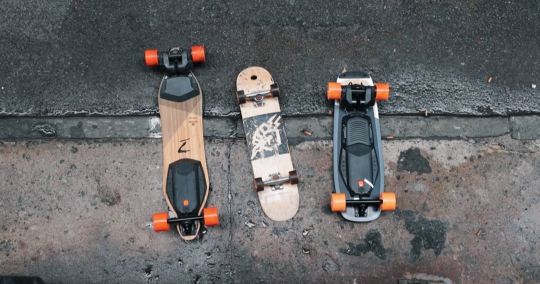
    Boosted — which is a California-based company that makes electric skateboards — has just released a new smaller and more affordable version called the Mini S.

    Casey Neistat — who helped popularize the original models through his wildly successful YouTube channel — recently vlogged about it and it ended up crashing their website. That’s how things work these days.

    Now, this new version is still USD 750 (so CAD 1,000), but it is significantly less than their other, bigger, models.

    The Mini S goes up to 18 mph and lasts for about 7 miles (optional extended range battery available). So it’s perfect for short jaunts around the city and as a solution to that pesky last mile problem. 

    I am seriously considering getting one for my short commute to the office. That way I’m not breaking a sweat in my suit. But $1,000 remains an awful lot for a skateboard.

    What do you think?

    Image: Casey Neistat via Boosted

  • Drone footage of Chicago’s riverfront

    Dezeen just published the below video of Chicago’s revitalized riverfront. The Chicago Riverwalk extension and renovation was completed in 2016 by Boston-based Sasaki Associates and Ross Barney Architects, and the video is by Chang Kim. It does a great job showcasing the city’s enviable connection to the water. If you can’t see it below, click here.

    [youtube https://www.youtube.com/watch?v=7T9xH2C-Ggk?rel=0&w=560&h=315]

    On a separate but somewhat related note, I am continually impressed by the work that is coming from filmmakers, vloggers and YouTubers like Casey Neistat and Sam Kolder (who, by the way, is from Toronto). Individual content creators continue to change the way we all consume content and, consequently, the way companies now need to market.

  • Snowboarding, vlogs, Cape Town, and marketing

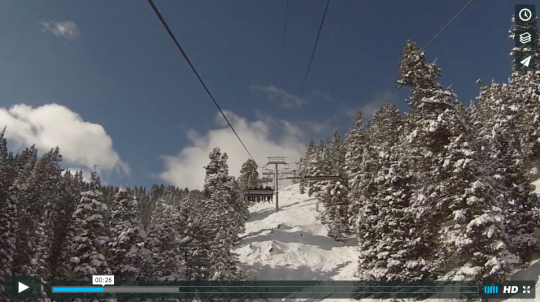
    This morning, instead of my usual routine of writing alongside a cup of coffee, I decided to finally edit all of the skiing and snowboarding footage that I took last month in Park City, Utah. Click here for the final cut.

    Compared to the video we did for Jackson Hole, I don’t like the selfie perspective as much. It doesn’t show enough of the person. This time we used the Go Pro 3-way arm, but in Jackson we used a plastic tube that I think was used for a beer funnel before that. Next year we’ll go back to that.

    Video is a lot of fun and I would love to figure out a way to incorporate more of it into this blog. But that’s a far bigger time commitment and I am not prepared to allocate resources to that. I write every day. That’s my thing.

    I am, however, not ignorant to what’s happening in the world of video blogging. And I think there are lots of opportunities for businesses who have the resources to allocate towards projects like this.

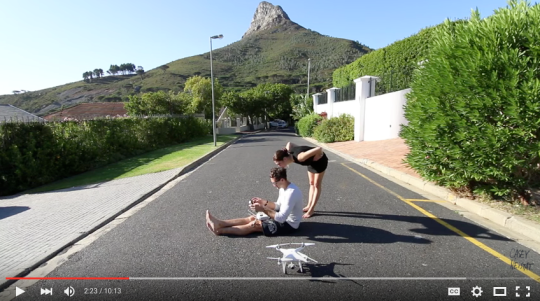
    Take for instance this vlog by New York video guy Casey Neistat. It’s probably the best piece of marketing that the Phantom 4 drone could have asked for. It’s authentic. I watched it and now I want one. Take my money. 

    (Note to city geeks: It’s worth watching just for the drone aerials of Cape Town, South Africa.)

    To my knowledge, I don’t think people are doing anything like this in the real estate business. But eventually it will happen. Because people are becoming increasingly immune to your typical marketing pieces.

  • What to do when a car is blocking your bike lane

    I was out for a bike ride last night and, on my way home, I decided to try out the new dedicated bike lane on Adelaide Street. Usually I would take King Street, but it was completely full because of Caribana parties.

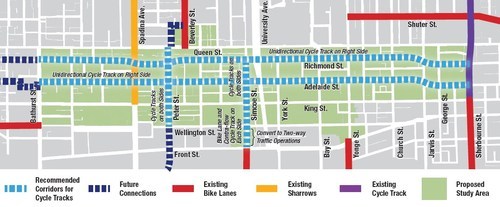
    For those of you who may not be aware, the city of Toronto is currently piloting two dedicated bike lanes on Adelaide Street and Richmond Street in the downtown core. Both streets are one-way and because the lanes were so big to begin with (highway-like spacing), I’m told that these new bike lanes didn’t even eat up a driving lane.

    Here’s a map of the pilot area:

    image

    Given that dedicated bike lanes are a scarce resource here in Toronto, I have to say that it was rather luxurious having my own piece of road. And because there’s no longer any fear of parked car doors swinging open, I was able to ride a lot faster than I normally would. 

    But as my friend Evgeny pointed out earlier this week, there’s a big difference between dedicated and grade separated bike lanes. Indeed, on my trip from Bathurst Street to Church Street last night, I encountered 3 cars parked in my lane.

    //platform.twitter.com/widgets.js

    So, I hope that these bike lanes become a permanent fixture downtown, but that the city makes them grade-separated. I’m sure people will use them. At the same time, I think they could also act as a catalyst for more pedestrian life along both of these streets.

    If you haven’t yet tried them out, I would encourage you to do so. The city is tracking usage and so you would be supporting the cause. And if there’s anybody parked in your lane, below is one way to handle it. It’s a video by Casey Neistat out of New York. If you can’t see it below, click here.

    [youtube https://www.youtube.com/watch?v=bzE-IMaegzQ?rel=0]