Daily insights for city builders, delivered every morning at 6 AM ET. I’m Brandon Donnelly — a Toronto-based real estate developer and founder of Globizen. I’ve been writing here since 2013.

Tag: car free

  • Berlin is considering going car free

    Berlin is considering something pretty radical. A grass roots movement called Volksentscheid Berlin Autofrei, or the People’s Decision for Auto-Free Berlin, is trying to turn the entire core of the city into a car-free zone. (There would be some exceptions and so we should maybe call it primarily car free.)

    The area in question is everything inside of the city’s circular S-Bahn train line (pictured above), which would make it the largest car-free zone or mostly car-free zone in the world. It’s larger than Manhattan and it’s about the size of London’s zones 1 and 2, to help give you a sense of the scale.

    So far the group has collected about 50,000 supportive signatures and, according to Fast Company, the Senate of Berlin is set to make a decision on the proposal next month. I have no idea how much community and/or political momentum this actually has, but I love how bold of an idea this is.

    Is it too bold?

    Again, it is perhaps useful to flip the question and use Seth Godin’s status-quo-bias-checker model when thinking about this. If the center of Berlin was already car free and a community group had just come forward with a plan to now allow vehicles, how do you think you’d feel? I could see that being contentious.

    Do you think Berlin should do it?

    Image: City of Berlin via Fast Company
  • A completely car-free neighborhood in Arizona

    The New York Times recently published this interesting piece about Culdesac and the completely car-free community that they are building just east of Phoenix in Tempe, Arizona (a place that is not generally known for its walkability). Culdesac calls itself the first “post-car real estate developer in the United States.” And so their Culdesac Tempe project has been designed to house 1,000 residents and exactly 0 cars.

    When the first phase is completed next year, residents will be restricted from having a car within the community and they’ll also be restricted from parking on any nearby streets. (This second stipulation was done to assuage concerns that a zero parking community would create a spillover effect in the surrounding area.) Instead, residents of Culdesac Tempe will rely on their local amenities, as well as on transit (it’s on a light rail line), biking, ride-sharing, and other forms of urban mobility.

    While this may seem kind of crazy for sprawling Arizona, the company’s thesis is both clear and clever. The future of American cities needs to be the kind of walkable urbanism that you find in places like the northeast. But at the same time, the fastest growing cities in the United States are generally in the Sun Belt. What they are doing is building walkable urbanism in the places where people clearly want to live.

  • 2017 year in review

    I just finished going through my list of 2017 goals. I didn’t accomplish everything I wanted to, but I did manage to check off a number of professional and personal goals.

    Some of the remaining goals have been pushed to 2018. But there are also items that I have since realized aren’t worth pursuing and so I have dropped them from the list.

    All that said, it was a great year. Here is a rapid-fire summary of 2017 told through posts from this blog.

    Thanks for reading. Onward my friends.

  • New London Plan released today

    A draft version of the new London Plan was released today for public consultation. It is “the spatial development strategy for Greater London”. And you can download all 524 pages of it, here. A final copy of the Plan is expected to be published by fall 2019.

    Here is what mayor Sadiq Khan had to say about the Plan (quote from The Guardian):

    “I am using all of the powers at my disposal to tackle the housing crisis head on, removing ineffective constraints on homebuilders so we make the most of precious land in our capital.”

    And that tone comes through in the document. Here is an excerpt from the “optimising housing density” policy section:

    “For London to accommodate growth in an inclusive and responsible way every new development needs to make the most efficient use of land. This will mean developing at densities above those of the surrounding area on most sites. The design of the development must optimise housing density.” (Section 3.6.1)

    The Plan also contains a set of clear performance indicators. They cover things like the supply of new homes, the supply of affordable homes, modal share in the capital, and so on.

    The ambition is 66,000 net additional homes each year. And by 2041, the goal is that 80% of all trips in London will be by foot, cycle, or public transport. There simply isn’t road the capacity.

    Which is why the plan also specifies parking maximums, as opposed to parking minimums. The Plan wants the starting point for any development that is well-connected to transit – or to future transit – to be “car-free”.

    If you have a chance, the new London Plan is worth a scan. Maybe you don’t want to print it though.

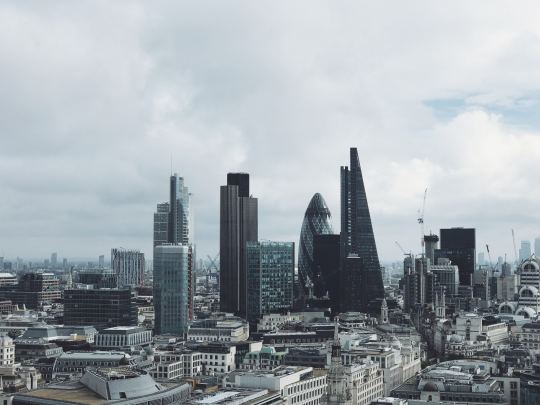
    Photo by Rob Bye on Unsplash

  • Towards car-free living

    Right now, there’s an apartment building in San Francisco that is trying to encourage car-free living by offering residents a $100 per month credit that can be used for Uber and/or for public transit. Prospective residents can even get a $20 credit to go check out the community. (The program is a partnership with Uber.)

    The reason this leasing strategy caught my attention is because we’re at a point where city builders are now trying to recalibrate themselves to this new emerging world. 

    When I was at the Land & Development conference earlier this month, one developer brought up this exact point. He more or less asked: If you’re starting development on a new building today and you’re expecting approvals in 2 or so years and completion in another 3 or 4 years, what do you think the state of cars/driving will be at that point? Should you really be building all that underground parking?

    These are great question. And they highlight one of the challenges of development. It takes a long time to bring new supply to the market and a lot can change during that time period. My sense is that we are pretty clearly seeing downward pressure on driving and car ownership.

    That said, this isn’t the case in every city or in all parts of a particular city. I just got back from a trip to a Detroit where it’s pretty hard to imagine the city being oriented around anything but the car. But in cities like San Francisco and Toronto, car-free living is already a reality for many people and so we need to respond to that.

    How do you see yourself driving, or not driving, in the next 5 to 10 years?

  • Toronto already has a laneway community on the islands

    image

    It feels really good to have shared the details about my laneway project yesterday. It’s a project I’ve been working on for a few years now, and – though I’ve spoken to architects, engineers, and city staff about the project – I hadn’t really gone public with it. And I’m happy I did.

    I got a lot of great feedback from the twittersphere. In fact, I didn’t receive one negative comment about the idea of a laneway house in Toronto. Everyone seemed to think it was a great idea and many expressed their dismay with the city’s reticence to formally support them.

    I also received a number of encouraging emails, one of which was from a resident of the Toronto Islands. And he raised a really great point: Toronto already has a very successful community of laneway-like houses and it’s called the Toronto Islands.

    The streets are no wider than the laneways we have here on the mainland (and even smaller in some cases) and yet there are about 250 houses serving a population of roughly 750. He went on to mention that they even have “downsized garbage trucks”, which are used to navigate the small, car-free streets of the Toronto Islands.

    What this reinforces is that our aversion to laneway housing is not because we can’t figure out the logistics of how to service them. We can and are already doing that. If we can figure out how to do that on the islands, I’m pretty sure that we could also figure out how to do it on the mainland. 

    So what this really comes down is that there isn’t the political will to make this happen. And there isn’t that will, I’m guessing, because there’s a fear of upsetting the established neighborhoods. That’s why Ontario’s Places to Grow Act (2005) was deliberate in concentrating growth in specific areas of the city – it meant that we could say that the rest of the city would receive little to no growth.

    We’ve since revised that position with the push to intensify our Avenues with mid-rise buildings. But just as we went from high-rise to mid-rise intensification, I think it’s only a matter of time before low-rise intensification starts to also happen.

    I firmly believe that the demand is already there for laneway housing (the Lanehouse on Bartlett pretty much sold out in one evening). It’s simply a matter of now figuring out the supply side of this equation.

    Image: Ward’s Island (Toronto Islands)