Daily insights for city builders, delivered every morning at 6 AM ET. I’m Brandon Donnelly — a Toronto-based real estate developer and founder of Globizen. I’ve been writing here since 2013.

Tag: business

  • Barrels and ammunition

    A few weeks ago I watched a talk by Keith Rabois called, How to Operate. Keith is a venture capitalist with Khosla Ventures, the former COO of Square, and a member of the PayPal Mafia.

    The talk was primarily geared towards startups, but much of what he talked about could be applied to any organization where people are managed. So whether you’re an architect, real estate developer, or governmental organization, I bet you’ll find the lessons relevant.

    One in particular that stood out for me was the idea of barrels and ammunition.

    For a lot of organizations, the thought is often that by adding more people you’ll be able to increase output. More people = greater velocity. But Keith’s reasoning is that most people are actually ammunition. And just like in war, it doesn’t exclusively matter how much ammunition you have. You can only shoot through the number of barrels you have. Output depends on barrels.

    So who exactly are barrels?

    Barrels are the kind of people who can take something from idea all the way through to completion, while at the same time taking a group of people along with them. They are, in other words, your leaders.

    But, they are difficult to find.

    There are fewer barrels than ammunition. And, the culture of the organization itself will impact every person’s ability to be a barrel. Here’s how Keith puts it:

    Barrels are very difficult to find. But when you have them, give them lots of equity. Promote them, take them to dinner every week, because they are virtually irreplaceable because they are also very culturally specific. So a barrel at one company may not be a barrel at another company.

    That’s something for you to think about as you start your workweek.

    Image: Flickr

  • The case for not being mean

    Startup guru Paul Graham writes really interesting essays. Judging by the date stamps on his website, he’s been easily doing it for more than a decade. And he’s gotten really good at it – everyone in the startup community reads them. Whenever he posts one, I know I read it. No question. 

    His most recent essay is called: Mean People Fail. And in it, he argues that the structural changes that have happened in our economy have also meant a reversal in the correlation between “meanness” and success. I know that might sound a bit funny, but hear him out:

    For most of history success meant control of scarce resources. One got that by fighting, whether literally in the case of pastoral nomads driving hunter-gatherers into marginal lands, or metaphorically in the case of Gilded Age financiers contending with one another to assemble railroad monopolies. For most of history, success meant success at zero-sum games. And in most of them meanness was not a handicap but probably an advantage.

    That is changing. Increasingly the games that matter are not zero-sum. Increasingly you win not by fighting to get control of a scarce resource, but by having new ideas and building new things.

    That has always been the case for thinkers, which is why this trend began with them. When you think of successful people from history who weren’t ruthless, you get mathematicians and writers and artists. The exciting thing is that their m.o. seems to be spreading. The games played by intellectuals are leaking into the real world, and this is reversing the historical polarity of the relationship between meanness and success.

    This makes sense to me. But the other reason I find this interesting is because I’ve wondered before if I should be more of an asshole in my professional life. Some people are really good at being assholes. I’m not. It’s not in my nature. When I manage and work with people, I’d rather try and create intrinsic motivation as opposed to using some form of brute force. In my view, the latter burns social capital.

    So if you happen to be of the same mindset, you might like to hear that you’re probably sitting on the right trend line. Don’t be mean.

  • I’m back from Startup Weekend

    image

    I usually write on Architect This City every day. But this past weekend I skipped both Saturday and Sunday, which is something I haven’t done in the 15 months that I’ve been writing this blog. I hate missing days. I really do. But I had no choice. I was at Startup Weekend here in Toronto.

    For those of you unfamiliar with the global Startup Weekend initiative, let me tell you how it works.

    Last Friday night, hundreds of people from Toronto’s startup community convened at the MakeWorks coworking space in Toronto’s west end to pitch and hear new business ideas. The floor is always open to anyone who would like to pitch, but you only have 60 seconds (hard stop) to convince the crowd that your idea is worth pursuing. This past weekend there were about 40 pitches.

    Following the pitches, the crowd then gets to vote on their favorite ideas. The top pitches – there were 13 selected this past weekend – get to move on and the people who delivered those pitches become team leaders. They are then asked to get up one more time to tell the crowd who they need to develop their idea over the weekend. Once that happens, everyone starts scrambling around to try and put together a team. It’s all about hustle.

    Immediately after the teams are formed, the work starts.

    By Sunday at 5pm, you’re expected to have validated your idea and problem in front of real people, executed on some sort of minimum viable product (the solution), and ideally brought in some of your initial customers. Because at the end of the weekend, all the teams get up and deliver a 5 minute pitch in front of a panel of judges who assess you on how well you did against those 3 objectives.

    It’s a weekend of raw adrenaline. I wouldn’t be surprised if I lost about 5-10 pounds as a result of how little food I ate and how much coffee I consumed.

    I pitched a real estate related idea – just like I did 2 years ago at the last Startup Weekend I attended – and I was fortunate enough to win the top pitch on Friday night. I think it may have been because I said fuck in my pitch. Although, a lot of people also remembered me from the previous Startup Weekend and started calling me “Mr. Real Estate.”

    //platform.twitter.com/widgets.js

    Our team ultimately didn’t place – which may have been because it was an Internet of Things themed Startup Weekend and we weren’t that – but I think we developed a super solid business idea.

    Either way, I had a blast. We knocked on people’s doors to validate our idea. We got a ton of positive feedback on what we were trying to do. And I was fortunate enough to meet a bunch of smart and ambitious people. I was so impressed by what our team accomplished.

    But what I also love about events like Startup Weekend is that it shows you how vibrant the startup ecosystem really is in Toronto. There is no shortage of passionate entrepreneurs in this city fighting to change the world. And what’s great about this community is that they all know how hard it is to start something from nothing, and so they’re incredibly supportive. 

    If you have any interest, I would encourage you to check out events like Startup Weekend. They’re a lot of fun and they all contribute to the greatness of this city.

    Image: The Unlyst Team at Startup Weekend TO 2014 (Jerry, Louis, Landon, and me)

  • The will to try new things

    image

    I’m a big fan of wine. But in particular, I like and I support Ontario wines. And last night I was in Niagara-on-the-Lake for the Stratus Vineyards annual harvest party. It happens every year and, as the name suggests, it kind of marks the end of the growing season for the vineyard. I say kind of because not all varietals have been harvested by this time.

    At one point during the evening, I was speaking with the winemaker, J-L (Jean-Laurent) Groux, who is a native of the Loire Valley in France and first learned how to make wine in Burgundy and Bordeaux. And I asked him: why Niagara? Why did you bring your talent to Niagara? (When he came, Niagara would have had a great reputation for crappy wines.)

    He first responded by saying that he had been traveling around the world to different wine regions, and Niagara just so happened to be where he was when he ran out of money. But he went on to say that he saw Niagara as a place of opportunity. It was a region on the rise and he knew that he would have the creative freedom to experiment and do whatever he wanted.

    And that just wasn’t the case in France where tradition dictated. Good for Niagara.

    But as he was telling me all of this, I couldn’t help but think that it’s the classic business story of incumbents and disruptors. I’m not saying that French winemaking will get disrupted. I’m just saying that in a world of established wineries, corporations and other groups, it would seem impossible for them to be threatened in any way by upstarts. They, the incumbents, have more money, more people, and more resources all around.

    But what they sometimes lose along the way, is the will to try new things.

  • Why I didn’t go work for my favorite architect

    As a result of writing Architect This City, I’m fortunate enough to receive a lot of emails from random people. But I’m always open to meeting new people, and so I enjoy this very much.

    One of the most common questions I get is from architects, and students of architecture, who want to know about transitioning over to real estate development. (Posts related to this topic also happen to be some of my most popular.)

    So today I thought I would share a story with all of you about the one decision that ultimately lead me into real estate development.

    When I started graduate architecture school, I already had inklings that I was going to get into development. That’s one of the main reasons why I went to Penn. I knew that I could concentrate in real estate and I knew that I could take courses over at the business school. And that’s exactly what I wanted to do.

    But during my first year, I still wasn’t exactly sure how I was going to reconcile this dual interest. In fact, I remember feeling really conflicted. I loved architecture and design, but I also really enjoyed business and entrepreneurship. I was also interested in making money, and architecture isn’t often the best place to do that.

    So for my first summer internship, I decided to apply to both architecture firms and to real estate developers. I was fortunate enough to be offered jobs in both. And on the architecture side, I actually got my top choice, which was the Bjarke Ingels Group in Copenhagen. To this day, Bjarke remains one of my favorite practicing architects.

    But when I looked at the numbers, I quickly realized that real estate developers were prepared to pay me about 3x more than any architect would and that, if I were going to take an architecture job, I was going to end up going more in debt just to live throughout the summer.

    While internships are often career loss leaders, I took this as a sign of things to come. This was a 10 or 20 year decision in my mind. And even though I loved architecture, I figured I would quickly fall out of love with it if I couldn’t pay my bills or live the lifestyle that I wanted.

    So I accepted a real estate job and I moved to Dublin, Ireland for the summer to work for a small consultancy called Urban Capital (no relationship to the Toronto firm of the same name). And I haven’t looked back since.

    This may not have been the right decision for some of you, but it was for me. So if you’re at a crossroads, my advice is always to think about where you’d ideally like to be in 10 or 20 years. Because once you establish that, it’ll become much easier to make that decision today.

  • The branding of places

    image

    Most people would agree that branding is a powerful and important exercise in the world of business. We recognize that brand equity is something that pays dividends in the future.

    When you walk around a city with a Starbucks, Tim Hortons, or some other coffee cup in hand, you are sending signals about who you are as a person and consumer. So, you could argue that you’re consuming the cup, as much as you are consuming the coffee.

    But one area that still feels like it’s in its infancy is place branding. That is, the branding of nations, regions, cities, and places. I’ve talked a lot about the business of cities and how impressions are created around cities, but I’ve never explicitly talked about place branding.

    However, it is an area on the rise. Monocle has written extensively about the importance of nation branding and there are firms, such as Vancouver-based Resonance, that now specialize in the strategy and branding of places.

    Here’s a short 5 minute video that they prepared talking about place branding and their approach to it. If you can’t see the video below, click here.

    //player.vimeo.com/video/66920801

    But at the same time, there are more grassroot ways in which a place brand can emerge. Think about the number of times Jay-Z has referred to himself as the Brooklyn boy or Drake has promoted Toronto in one of his videos. It’s hard to measure the impact of these sorts of things, but I am sure there is one.

    Here’s another example – a 4 minute video of Drake talking about why he loves Toronto. Click here if you can’t see it below.

    [youtube https://www.youtube.com/watch?v=M3TrbGEJbio?rel=0]

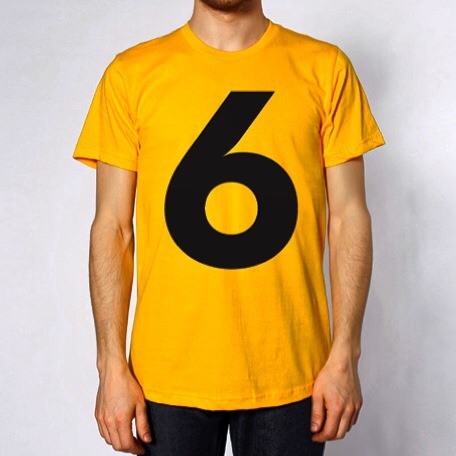
    Recently, you may have heard that Drake is about to give Toronto a new moniker: The 6. Some think it is in honor of our two main area codes 416 and 647, and I think that’s probably a good guess.

    But whatever the reason, I thought it was an interesting exercise in place branding. So I decided to partner with Toronto-based design firm Badd Press and make a “The 6” t-shirt (shown at the top of this post). You can get yours for $30 by visiting shopATC.

  • The business of cities

    Over the past few months on this blog, I’ve started to introduce business terms into the way I describe and talk about cities. I’ve referred to residents and visitors as customers of a city, experiences within a city as products and services, and cities themselves as businesses. Until now though, I hadn’t explicitly talked about this parallel or fleshed it out in any sort of detail. But I think it’s an interesting one so I’d like to do a bit of that today.

    The reason I started referencing cities with business terms is because I think it speaks to 3 important characteristics of cities. First, cities, just like businesses, are in direct competition with each other. We rank cities. We compare GDP per capita. And they fight, or at least should, to attract the best people and to achieve economic dominance.

    Second, city prosperity can be ephemeral. We tend to think of cities as being quite permanent–centuries old–but history is littered with failed cities or cities that simply lost their economic importance (see Detroit). Consider this: The center of trade at one point was the Mediterranean Sea. Then, as the New World emerged, it shifted to the Atlantic. And now, one might argue that it’s moving over to the Pacific (and Asia). Either way, these macro shifts push certain cities to thrive and others to decline. The time horizon is longer than, say the rise and fall of Blackberry, but it’s similar nonetheless. Nothing is guaranteed.

    Third, cities have become centers of lifestyle and consumption. That’s why I previously argued that any economic development strategy should consider lifestyle, and whether or not people actually want to live in the place. In business terms, you need to offer products and services that people actually want. You need to respond to customer needs.

    And if you think of cities in this way, I think you’ll come to the conclusion that, just like businesses, strong cities require strong leadership and management. They need to ensure that they’re delivering the right products and services to their customers and that they’re staying ahead of the innovation curve.

    The switching costs may be higher for cities compared to, again, something like a mobile phone, but that doesn’t mean people won’t eventually vote with their feet and leave for somewhere better.

  • Earth’s biggest ____store.

    Imagine this sequence of events (and don’t peak by clicking on any of the links).

    The year is 1994.

    You notice that the internet is starting to become a big deal and that more and more products are being sold online. As a result of this trend, you decide to start an online business.

    You write up the business plan and begin operations out of your garage. You then get lucky (or you’re just smart and talented). Within 2 months, sales reach $20,000/week. That’s over a million dollars a year.

    Business continues to grow and within 3 years you’re able to take your company public, raising $54 million at a $438 million valuation. Over the subsequent two years, you’re then able to raise an additional $2.2 billion in debt to fund your continued growth. 

    The year is now 2000.

    You were just named Time magazine Man of the Year. And traditional brick-and-mortar retailers are really taking notice (i.e. suing you). That’s pretty impressive after only 6 years of operation. 

    This company is called Amazon. And that “you” is Jeff Bezos.

    I was reading up about how much of an asshole Jeff Bezos is, and then became interested in the Amazon story. I thought I would share a bit of it with you all here.