Daily insights for city builders, delivered every morning at 6 AM ET. I’m Brandon Donnelly — a Toronto-based real estate developer and founder of Globizen. I’ve been writing here since 2013.
I’m in Whistler right now and I went heliboarding for the first time yesterday. It had been on my bucket list for maybe 10 years and so it feels fantastic to check it off.
Here’s what I can tell you: WOW. It did not disappoint.
It was easily one of the greatest life experiences I have ever had. We also got lucky with a crystal clear bluebird day.
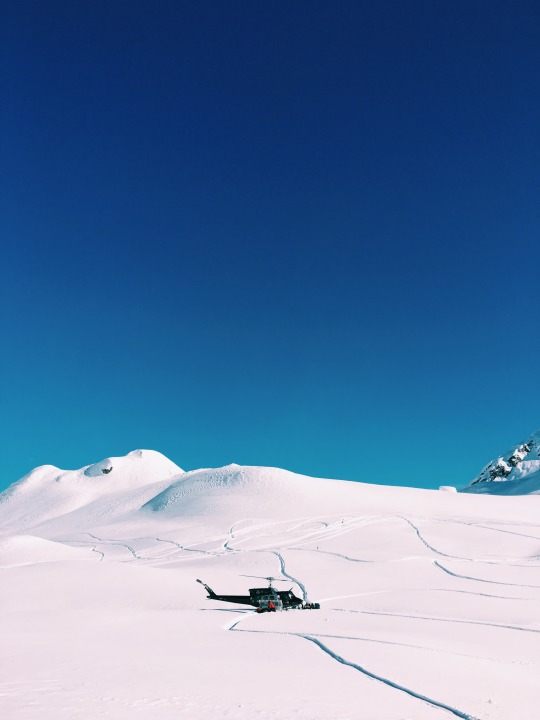
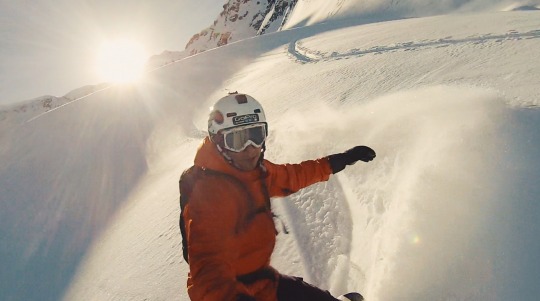
I don’t do many photoblog posts here on this blog, but I’m going to do one today, because I think the occasion demands it. But of course, even these photos don’t do the experience any justice.
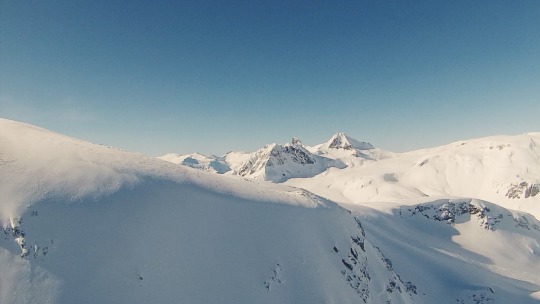
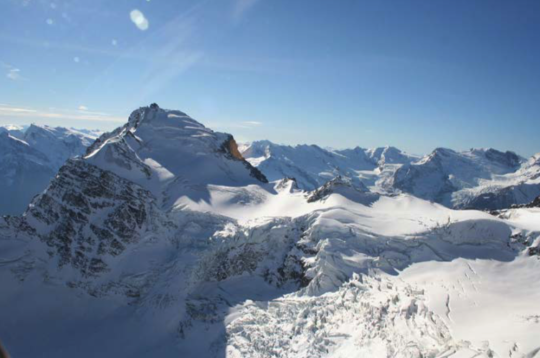
View from the helicopter:
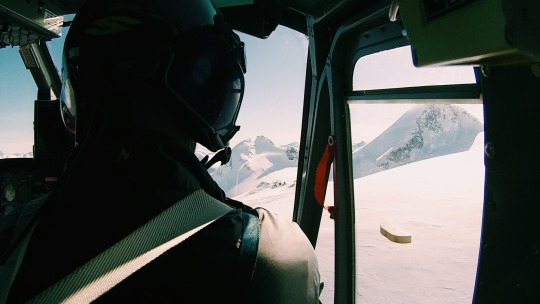
View over the pilot’s shoulder as we were about to land:
I know it’s only August, but I am already thinking of snowboarding.
And I just recently learned that the British Columbia government has given the go ahead for a new multi-peak and year-round ski destination near Valemount, BC. The summits will include Mount Pierre Elliot Trudeau, Twilight Glacier, Glacier Ridge, and Mount Arthur Meighen.
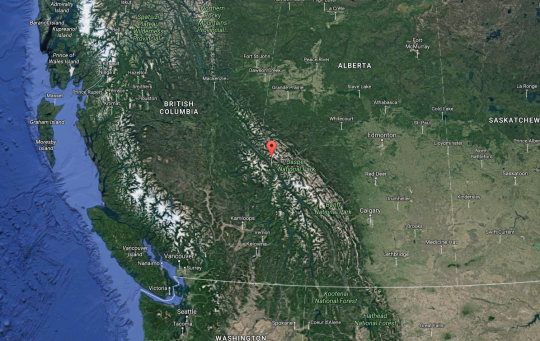
Here is where Valemount is situated. It’s a 7 hour drive from Vancouver and a 5.5 hour drive from Edmonton.
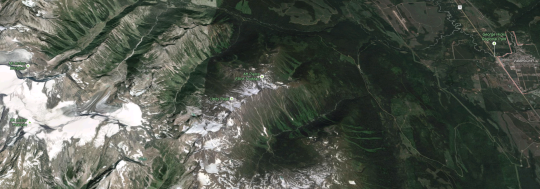
Here is the mountain range in relation to Valemount. Right hand side of the image. Sorry, I know it’s small.
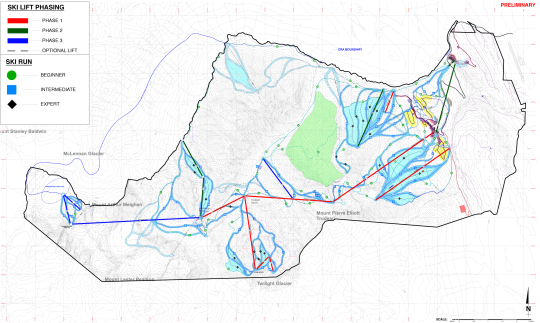
Here is the master plan that just got approved. Valemount is once again on the right / east.
And here is why this is a big deal (at least in my world):
– Valemount has the potential to be “the third largest lift-serviced non-contiguous vertical” in the world at 2,260m (7,415 feet). Zermatt, Switzerland and Chamonix, France are number 1 and 2. Of course, it would still get the title of the largest vertical drop in North America.
– There are a number of glaciers that would allow for summer / year-long snowboarding.
– They want to create a multi-valley snowboarding experience, similar to the European Alps.
– The mountain range has one of the highest average snowfalls in Canada. Valemount gets 5.36m (211 inches) per year and at an elevation of 1,800m it’s 14m (551 inches) of snowfall per year. This is more than Whistler. Because of this, they are not planning any snowmaking.
– There’s an airport nearby.
– One of their guiding principles is to minimize the environmental impact.
Construction is expected to begin in the spring of 2017 and the plan is to open to the public by December 2017. The first phase will include Twilight Glacier at an elevation of 2,530m (8,301 feet). So right from the outset, there will be summer skiing.
If you’re curious what the master plan for a ski resort looks like, you can download the entire report here. It’s only 324 pages.
Despite being rainy and unusually warm, I had a great time in Revelstoke, BC. I first heard about the city a few years ago when I told a close friend of mine (who is an avid snowboarder) that I was going to Whistler. He told me: “Forget Whistler. Go to Revelstoke.”
Revelstoke has been on the map for skiers and snowboarders for decades. Some consider it to be the helicopter skiing capital of the world. But there are only so many people who can afford $1,000+ per day skiing, so it wasn’t until 2007 when the first gondola opened up on Mount Mackenzie that people started calling Revelstoke the next Whistler, the next Jackson Hole, the next Zermatt, and so on.
As both a snowboarder and a real estate developer, this is of course exciting. Everybody wants to be a part of the next big thing and they want to call it before anyone else. That’s how you make money – by being right about things before the masses catch on and/or when everyone else thinks you’re wrong.
But 2007 happens to come before 2008. And 2008 wasn’t a kind year to the real estate community. Revelstoke was no exception.
The condos at the base of the mountain weren’t selling (about half of the ones that did sell were sold to Canadians I was told). Expansion plans to become the largest ski resort in the world were scaled back. And the resort teetered on the brink of bankruptcy. But since then, new ownership has taken over the resort and the sentiment on the ground seems to be that Revelstoke – as a real estate play – is somewhere near the bottom.
But something even more interesting is happening in Revelstoke, beyond just luxury condos at the base of a mountain. And since I was on the disabled list for the second half of my vacation, I had time to explore.
I was fortunate enough to meet a local entrepreneur (who happened to also be from Toronto) and his message to me was clear: Ontario is moving in. Both talent and capital from Ontario are starting to flock to this small mountain town of almost 8,000 full-time residents (it’s technically classified as a city). And from my experience at the bars and restaurants in town, he appears to be right.
Now, you might be thinking these people are just ski bums looking for an excuse to live in a mountain town. But is that such a unique and bad thing? Today’s up and coming generation is looking for lifestyle + career. And so if your city or community can offer both, you have a competitive advantage when it comes to attracting talent.
Revelstoke knows they have the outdoor amenities and the “epic pow”, so now all they need to do is bring the businesses. And that’s exactly what Revelstoke wants to do. If you’re an entrepreneur or business owner, Revelstoke wants you to move there. I’m serious. The vision is to create a sustainable live, work, and play mountain community in the BC interior.
I hope that happens.
Drop me a line if you want to talk mountains and business.
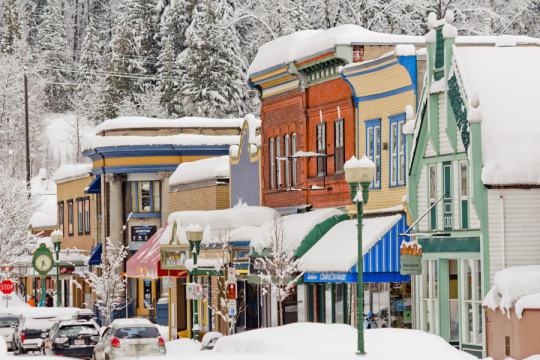
Post Update: The beautiful photo of Revelstoke at the top of this post was taken by Ian Houghton out of BC. This is his business website and this is his Facebook page.
Today’s Architect This City post is being brought to you live from the mid-base lodge at Revelstoke Mountain Resort on Mount Mackenzie in British Columbia.
It’s currently foggy, rainy, and about 2 degrees celsius — which I’m told is fairly anomalous for this area. It’s unfortunate for my friends on the slopes, but it makes me feel somewhat better about hanging out all day to rest my back and shoulder.
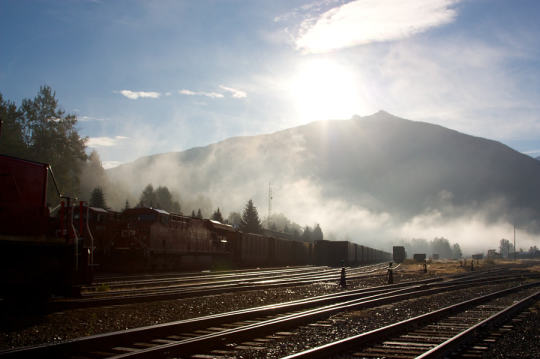
The town of Revelstoke was founded in the 1880s when the Canadian Pacific Railway connected the area. And traditionally its economy has been closely connected to that rail. However, with amenities like the resort I’m currently sitting in, its economy now increasingly includes tourism.
One of the most interesting reminders for me on this trip through the Canadian Rockies is how instrumental rail was in unifying and then building this country. But in actuality, it wasn’t just rail. It was rail plus property.
Within the Canadian Pacific Railway was a division called Canadian Pacific Hotels, which built and operated both urban and rural hotels such as the Banff Springs Hotel and the Chateau Lake Louise (both of which I visited for the first time on this trip). And today, these railway hotels are absolutely some of Canada’s most inspiring landmarks.
The model at the time was simple.
Sir William Cornelius Van Horne — who was president of CPR in 1888 — believed: “If we can’t export the scenery, we’ll import the tourists.” He knew that it was all about moving as many people as possible. And to do that he needed to create accommodations and destinations all along the rail. In other words, rail alone wasn’t going to cut it. It had to be rail plus property.
This of course is a model that still persists today. Many public transit authorities, such as the MTR in Hong Kong, have been hugely successful by adopting a rail plus property model.
However as the case study of the Canadian Pacific Railway demonstrates this is not a novel approach. It’s actually a tried a true model. Rail, and infrastructure in general, goes really nicely with property development.
So why don’t all transit authorities adopt a rail plus property approach?
This past week was Toronto’s first real snowstorm of the season. It was awesome. I love snow. And part of the reason I love it, is because it means snowboarding season is here. Yes, the “mountains” in Ontario suck, but Quebec and Vermont aren’t too far away and every February there is The Annual.
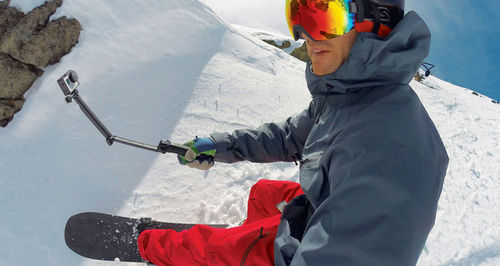
This year in preparation for the season I decided to splurge on a GoPro camera. We had a lot of fun filming last year in Jackson Hole and, since it looks like we’re going to have close to 10 people at this season’s Annual, I wanted to throw another camera into the mix. Expect another ski and snowboard video sometime in February 2015. We’re heading out to Alberta and British Columbia.
I also ordered this mount for the camera:
But as I was ordering the camera, I started to think about what else I could use it for. And then it hit me: city tours. One of the things I love to do in the summer is ride my bike around the city and explore. I like to find areas I don’t know very well, find new developments I may have missed, and generally just get to know the city more intimately.
Being on a bike is really the perfect way to do this. You don’t cover enough ground walking and with driving you simply miss too much of the city. So what I want to do is strap my GoPro to my handle bars and bring you along for these exploratory bike tours. I think it could be a unique way to show you the city – even if you happen to also be from here.
How does that sound?
It likely won’t happen until the spring, but if you’re interested in joining me, let me know. I think this could be a lot of fun with a group of city geeks.
This change has been in the works for a number of years. And it’s already allowed in most of Europe and in other places in Canada, such as British Columbia. So it’s nice to see this finally happen here in Toronto.
The reason this is a big deal, and worthy of a blog post, is that it changes the cost structure for mid-rise buildings. Simply put, wood frame buildings are cheaper to construct compared to reinforced concrete and other buildings materials.
Some people think this just means developers will make greater returns. But I don’t think that’s the case (see microeconomics). The real opportunity here is to spur mid-rise development on sites that – before this change – would have been previously un-developable. That is, you just couldn’t make the numbers work.
As much as mid-rise buildings make a lot of sense from an urban design standpoint, it’s not always easy to find good mid-rise development sites. Mid-rise buildings are generally less efficient to build compared to towers and you have a lot of fixed costs that don’t scale down just because you’re doing a smaller project.
So what this change in cost structure will, hopefully, do is allow more product to enter the market. And since many big urban centers operate with perpetual supply deficits – precisely because it’s often so hard to build – this should actually help with affordability.