
Daily insights for city builders, delivered every morning at 6 AM ET. I’m Brandon Donnelly — a Toronto-based real estate developer and founder of Globizen. I’ve been writing here since 2013.

Tag: branding

  • How cities get branded

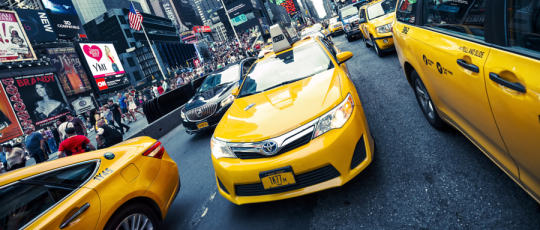
    Taxi on Times Square by frederic prochasson on 500px.com

    https://500px.com/embed.js

    I have been thinking a lot about city branding lately. It’s a topic I’m interested in to begin with, and all of the Blue Jays mania going on in Toronto right now has got thinking about our own brand.

    Because at the end of the day, yes, it’s baseball. But it’s also something much larger. It’s about civic and national pride, and it’s about who we are as a city. That’s why city branding has become a global industry and why it’s so closely connected to tourism, media, sports, and entertainment.

    Still, great city branding is incredibly difficult to do. Lots of cities have tried and lots of cities – from Adelaide to Toronto – have failed. Anyone remember the “Toronto Unlimited” brand of the mid-2000′s? It had absolutely zero stickiness.

    But in reality, cities are brand building all the time whether they realize it or not. Here in Toronto, our biggest brand builder right now is probably Drake. That might sound silly to some, but I believe it to be true. And next to that, you have people like Jose Bautista with his bat flips and his support of local brands like Peace Collective. In addition to their day jobs, these people are helping to shape the identity of the city.

    What, then, is professional city branding supposed to do?

    Well, in my opinion, it is their job to mine a city for the things that already exist. A city brand, no matter how great it may be, cannot be expected to create something from nothing. There has to be something there to begin with.

    But once you identify that something, a great city brand can tie it all together; create a cohesive and collective identity; and serve as a guide for future decision making. And when that’s done effectively, you actually begin to enhance the things that you initially started out with. The associations become even more powerful.

    So today I thought we could have a discussion in the comments about city brands. How would you describe the brand of your city in one sentence?

    For me, I would describe Toronto along the lines of being the most livable and multicultural 24/7 global city. And when you think of it this way, you can probably see why I think a 2AM last call at the bar is laughable.

  • What are your disciplines?

    Photograph sunset drag by Philippe Clairo on 500px

    sunset drag by Philippe Clairo on 500px

    I’m sitting in Calgary International Airport right now waiting for my flight back to Toronto. This marks the end of the 6th Penn Annual (our annual ski and snowboard trip). We all had an amazing time and I can’t wait until next year’s annual. We’ve already (pretty much) decided that it’s going to be in Park City, Utah.

    As you can probably tell, I like traditions and routines. As boring as that might sound, I think there’s a lot of value in doing the same thing over and over again. 

    It’s why I do an annual ski and snowboard trip every February with some of my closest friends (to a mountain we’ve never been to before). It’s why I write something – no matter how short it might be – every day here on Architect This City. It’s why I lift weights 3-4 times every week. It’s why I’m interested in brand building (creating equity takes consistency and time). It’s why I love the permanence of real estate. And it’s also why I like dollar cost averaging when it comes to investing.

    I guess you could say I like the long game. I enjoy having “disciplines.”

    And that’s because I think there are very few substitutes for hard work and sustained efforts. We all love to talk about those overnight success stories, but in reality they’re often the farthest thing from overnight. I know that it takes time to get great at something. And I also know that I’m not always going to be right. But the simple act of not stopping can take you pretty far.

    In any event, I hope you enjoyed all the mountain town talk (I have a few more ideas I want to write about) and my Snapchat stories (if you followed along). I got really into Snapchat on this trip. And that’s because I think the platform is at a tipping point where brands are going to start thinking of it as a legitimate marketing channel – and not just an app for teens.

    Do you have any routines or disciplines? If so, feel free share them in the comment section below. Or if you hate routines, tell us why.

    See you in Toronto 🙂

  • What’s a bean worth?

    Yesterday I tweeted this picture out from Chicago:

    //platform.twitter.com/widgets.js

    Many of you, I’m sure, have seen this public sculpture before, either in person or somewhere online. It’s called Cloud Gate and it’s by Anish Kapoor – though its nickname has become, quite simply, the bean.

    Given that it’s been a hugely successful piece of public art, I asked what people thought the ROI of it might be. Obviously I wasn’t expecting any sort of number, but I wanted to draw attention to the fact that the right kind of investment in public art can pay huge dividends. Oftentimes we, developers and others, don’t think of it in this context though.

    And it’s probably because it’s so hard to figure out what those dividends might be. What’s the value of a big recognizable bean that everyone around the world associates with your city? But if you think about it, it’s not that different than a corporate logo that everyone knows is yours, which is why I’m interested in the branding of places.

    However, as Gil Meslin rightly pointed out in his tweet storm response to my tweet, it’s hard to consider the bean investment in isolation. I mean, the whole point of the bean is to reflect the surrounding urban landscape. So if it wasn’t for the larger Millennium Park investment and the beautiful historic buildings along Michigan Avenue, maybe that bean wouldn’t be the bean that it is today.

    Ultimately, that just makes coming up with any sort of defensible ROI even more difficult. But that shouldn’t deter us. Because as I’ve said before, just because you can’t measure or prove it (right now), doesn’t mean it isn’t a good idea. In this case, I think it’s pretty clear that this bean has been a hugely successful investment.

  • The branding of places

    image

    Most people would agree that branding is a powerful and important exercise in the world of business. We recognize that brand equity is something that pays dividends in the future.

    When you walk around a city with a Starbucks, Tim Hortons, or some other coffee cup in hand, you are sending signals about who you are as a person and consumer. So, you could argue that you’re consuming the cup, as much as you are consuming the coffee.

    But one area that still feels like it’s in its infancy is place branding. That is, the branding of nations, regions, cities, and places. I’ve talked a lot about the business of cities and how impressions are created around cities, but I’ve never explicitly talked about place branding.

    However, it is an area on the rise. Monocle has written extensively about the importance of nation branding and there are firms, such as Vancouver-based Resonance, that now specialize in the strategy and branding of places.

    Here’s a short 5 minute video that they prepared talking about place branding and their approach to it. If you can’t see the video below, click here.

    //player.vimeo.com/video/66920801

    But at the same time, there are more grassroot ways in which a place brand can emerge. Think about the number of times Jay-Z has referred to himself as the Brooklyn boy or Drake has promoted Toronto in one of his videos. It’s hard to measure the impact of these sorts of things, but I am sure there is one.

    Here’s another example – a 4 minute video of Drake talking about why he loves Toronto. Click here if you can’t see it below.

    [youtube https://www.youtube.com/watch?v=M3TrbGEJbio?rel=0]

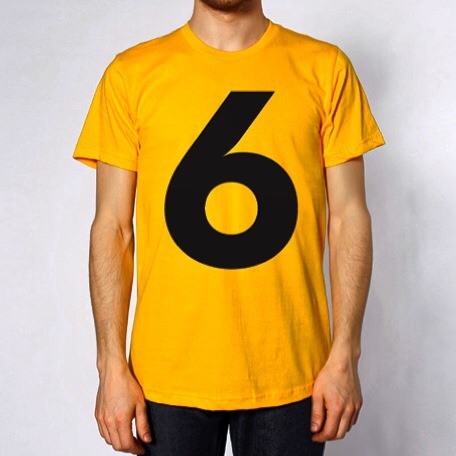
    Recently, you may have heard that Drake is about to give Toronto a new moniker: The 6. Some think it is in honor of our two main area codes 416 and 647, and I think that’s probably a good guess.

    But whatever the reason, I thought it was an interesting exercise in place branding. So I decided to partner with Toronto-based design firm Badd Press and make a “The 6” t-shirt (shown at the top of this post). You can get yours for $30 by visiting shopATC.