Daily insights for city builders, delivered every morning at 6 AM ET. I’m Brandon Donnelly — a Toronto-based real estate developer and founder of Globizen. I’ve been writing here since 2013.

Tag: branding

  • What’s in a name?

    Picking a name for someone or something can be a daunting task. I have never had to name a newborn baby (though I’ve witnessed lots of people go through that process). But I am often involved in the naming of new buildings. Sometimes that process involves sitting in a room with a list of possible names in front of you, and having to decide which one is optimal. I don’t love this approach. Nowadays, I find it’s better to have the name naturally emerge early on in the development process, well before there’s an actual brand and identity for the project. You want it to accurately embody the vision for the project, the site’s history and context, and you want to know that it has some durability over time. Or at least, that’s the goal.

    On a related note, the New Yorker recently published an interesting piece on why your name matters. In the middle of the 20th century, research suggested that our chosen names were hugely impactful to life outcomes, and that more typical names were better than unusual ones. The theory was something known as the implicit-egotism effect, which basically states that we like things, including names, that most resemble ourselves. We want familiar. Which to me, immediately suggests that this effect must depend on cultural context. What is considered “typical” obviously changes depending on where you are in the world.

    Our thinking has advanced since then. More recently we have found that it’s not the name itself that creates the better life outcomes. Because if you control for a child’s background and upbringing, any sort of name effect seems to disappear. However, names do in fact signal who we are. They imply certain things. Many of us have heard about the studies that use resumes with different names to test how people respond. Names just aren’t inherently deterministic. You probably aren’t more likely to become a doctor simply because of your name.

    Although, I’m not sure that takes much of the pressure off of picking the right one.

  • A story about architecture, interiors, and branding

    I was recently having a debate with one of our architecture partners about the interrelationship between architecture, interiors, and branding. This came up because, in New York City, you almost need a name brand architect attached to your project in order to sell luxury condos.

    But this raises an interesting set of questions: How much value is driven by the quality of the architecture versus the architect’s brand? (Though, presumably you need the former in order to build the latter.) And how much of the value is actually just driven by the finishes (interiors) and the branding that you layer on after?

    This latter scenario is a depressing thought for architects. It is architecture as a kind of “empty vessel.” One that just gets dressed up for today’s Instagrammable moments. And I am sure that you can think of some examples of this. Not everything can be capital A architecture.

    But what is clear is that the most successful design-driven projects don’t think in this way. They are thoughtful and deliberate about each component, and they all work together to strengthen each other. Marketing, after all, is about telling the right story. It is always helpful when you actually have one to tell.

  • “BRAND”

    image

    For a number of reasons, I am fascinated by the streetwear label, Off-White

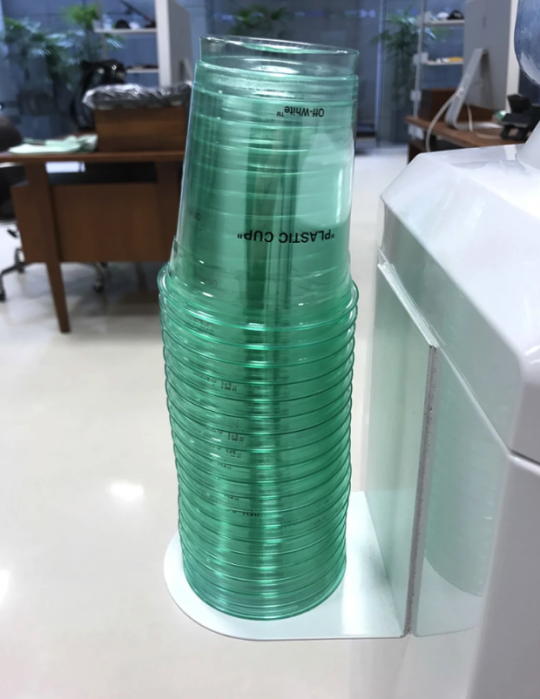
    It is one of the hottest labels in fashion, and yet there’s a part of me that doesn’t really get it. It’s mostly bold text, usually in quotations, on various apparel items. A set of Wellington boots might be plastered with “FOR RIDING.” A winter coat might be plastered with “DOWN JACKET.” And when they collaborate with Nike, the shoes might be tagged with “AIR.” Quotations included. Is that fashion?

    But then you hear Virgil Abloh – the founder of Off-White, who by the way was also trained as an architect before becoming creative director for Kanye West – talk about his brand and it starts to make more sense. The quotation marks are supposed to signal “ironic detachment and a comment on the idea of originality.” Okay, so a little more sense.

    Part of his inspiration comes from the work of Marcel Duchamp. In 1917, Duchamp shocked the art world with, Fountain. Some would consider this to be the most pivotal art piece of the 20th century. It was an off the shelf urinal that he simply signed, dated, and placed on a pedestal. Though initially rejected as art, it eventually redefined what art could be, shifting it from, “new physical creations to [the] moulding [of] ideas.”

    The corollary to this was that anything could be art, even something as utilitarian as the catch basin that you pee into. And this insight is something that Abloh has used to fuel his label. But he has taken it a step further. He has leveraged the ubiquity of these everyday-items-elevated-to-art as a way to elevate his own brand. Here’s a quote by Abloh from the Guardian:

    “The idea [that] an everyday object is art. Branding is generic and if I adopt the generic, then it becomes my branding, but it normally occurs in life.”

    In other words, he is co-opting generic and ubiquitous items – like, for instance, the patterning on caution tape – for his Off-White designs. And if you believe that a bit of brand equity is at least partially driven by brand ubiquity, well then you might start to see the value in this approach. He is simply assigning authorship to things that are already omnipresent.

    But, is that fashion? I guess that depends on whether you consider Duchamp’s Fountain to be art.

    Image: SSENSE

  • Branding is part of city building

    Below is a good discussion with Aaron Renn about how to brand a city. I fully agree with two of the points he makes: (1) Not enough cities are thinking holistically about this topic and (2) tech startups, bicycle lanes, and craft breweries aren’t going to cut it as a strategy. Every city is focusing on that sort of stuff these days. Zero differentiation. Find something germane to your city and start building on it. If you can’t see the embedded podcast below, click here.

    [soundcloud url=”https://api.soundcloud.com/tracks/436104924″ params=”color=#ff5500&auto_play=false&hide_related=false&show_comments=true&show_user=true&show_reposts=false&show_teaser=true&visual=true” width=”100%” height=”300″ iframe=”true” /]

  • Centralized taxi branding vs. decentralized ride fulfillment

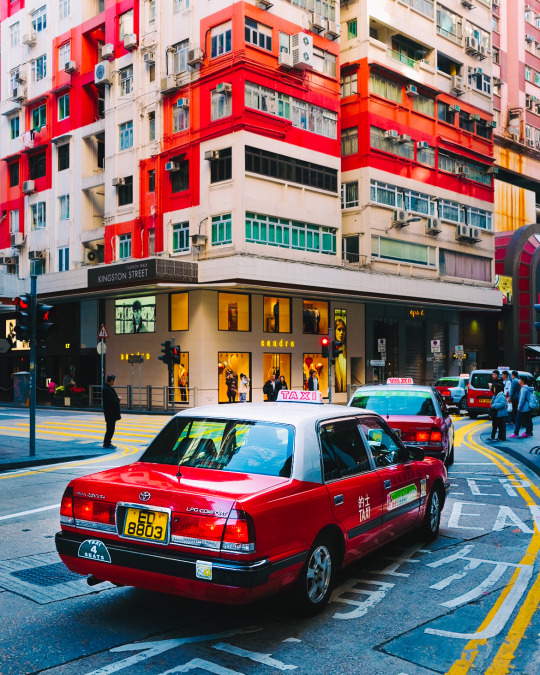
    Back in 2013, when this blog was in its infancy, I argued that Toronto needs a consistent taxi brand. Since nobody was reading the blog at the time, I am sure that most of you have never read this post. I even forgot about it, until last night when I posted this photo of Hong Kong to Instagram:

    It reminded me of the role that taxis play in city branding. This photo is clearly of Hong Kong. But take away the taxis in the foreground and I would really have to think in order to identity it. I would then be searching for street signs and looking to see what side of the road the cars are driving on.

    Now, a few things have changed since 2013. Back then I didn’t have the same appreciation for decentralized ride hailing (Uber and Lyft), though I did have the same distaste for the taxi cartel. And I recognize that there is a tension between centralized taxi branding and a decentralized approach to ride fulfillment. 

    I’m not exactly sure how to solve this problem, but maybe it gets easier with autonomous vehicles and probable changes to the way consumers own, or don’t own cars. I believe it’s important for places and cities to have specificity. If you have any thoughts, please leave a comment below. 

    (I am trying to respond to all comments on this blog, because I’m finding it impossible to respond to all blog related emails. Sorry.)

  • rain gravity heat cold

    image

    Today I got a copy of rain gravity heat cold. It’s a book by the Toronto-based architecture firm superkül and it’s meant to celebrate their first 10 years of practice. 

    The book itself was put together by Blok Design. Blok has also done a new – yet to be rolled out – identity for superkül. (Definitely worth a click through.)

    One thing I wanted to highlight from the foreword of the book (written by Kiel Moe) is this line: “Great design does not respond to a static sense of context but rather perhaps transforms its flaws into assets and certainly amplifies the potential of site.”

    We often talk about contextual architecture. That is, architecture which responds to and is sensitive to its surroundings. But here’s the idea that responding is, in fact, not enough. The ambition should be “amplification of site through design.” 

    I like that a lot.

    If you’d like a copy of the book, it can be found on Amazon, at the University of Toronto bookstore, as well as, I’m sure, other places.

  • Flynn in the city

    I very much enjoy the branding and marketing side of the development business. It’s probably an architect / designer thing. So I’m always looking out for interesting case studies.

    Recently I came across The Flynn in Chelsea, New York. The developer is IGI and the agency is Winkreative.

    What they did was create a namesake character named Flynn. Everything then became about a day in the life of. 

    The Instagram account is flynninthecity. They made colorful animations. And they even partnered with the Spring Street Social Society to host in-person performance art pieces. The Being Flynn series was a bunch of vignettes that combined “dance and physical comedy” and highlighted a cast of fictional characters who all, of course, reside at The Flynn.

    As you all know, selling condos is typically about selling a lifestyle. A dream. In this case, they created a character to show you exactly what that dream should be.

    Real estate marketing can sometimes often be cheesy. But I thought this was a clever and overall creative approach. Winkreative does great work.

    What do you think of the approach?

    Image: Winkreative

  • The social shift

    Those of you who know me or are regular readers of this blog, will know that I’m an avid social media user. 

    My favorites – judging by battery consumption on my phone – are Twitter, Instagram, and Snapchat (donnelly_b). I think it’s incredible what these platforms are doing to branding, marketing, personal connectivity, city building, and the list goes on.

    To that end, the March issue of Harvard Business Review has an interesting article by Douglas Holt called, Branding in the Age of Social Media. Whether you’re running a company, a city, or a real estate development project, I think you’ll find the information relevant.

    The article starts by describing a shift, brought about by social, whereby big brands are now struggling to capture the attention of consumers. Instead, consumers are listening to individuals and more grassroots movements.

    “Or consider Red Bull, the most lauded branded-content success story. It has become a new-media hub producing extreme – and alternative – sports content. While Red Bull spends much of its $2 billion annual marketing budget on branded content, its YouTube channel (rank #184, 4.9 million subscribers) is lapped by dozens of crowdculture start-ups with production budgets under $100,000. Indeed, Dude Perfect (#81, 8 million subscribers), the brainchild of five college jocks from Texas who make videos of trick shots and goofy improvised athletic feats, does far better.”

    So what should brands be doing? Holt argues that they need to tap into these developing subcultures and emergent ideologies:

    “These three brands broke through in social media because they used cultural branding—a strategy that works differently from the conventional branded-content model. Each engaged a cultural discourse about gender and sexuality in wide circulation in social media—a crowdculture—which espoused a distinctive ideology. Each acted as a proselytizer, promoting this ideology to a mass audience. Such opportunities come into view only if we use the prism of cultural branding—doing research to identify ideologies that are relevant to the category and gaining traction in crowdcultures. Companies that rely on traditional segmentation models and trend reports will always have trouble identifying those opportunities.”

    For me, this ties into one of my favorite lines from Simon Sinek: “People don’t buy what you do, they buy why you do it.” And now, thanks to social, it has become a lot easier to figure out what people and communities care about. It has become easier to figure out your why.

    Do you see this as being relevant to your work? I am certainly thinking about it in the context of mine.

  • The city is the brand

    Oslo Barcode I by Michel Krämer on 500px.com

    https://500px.com/embed.js

    I was reading the internet this morning and I stumbled upon an interesting urban blogger from Oslo named Erling Fossen. Most of his writing is in Norwegian, but he does have a section called “City Notes” that is in English.

    I enjoyed this paragraph titled, "The city is brand.” It is taken from a post called, “7 lessons from Oslo Urban Arena.”

    As cities compete to attract talents, companies and investment, many cities have branded themselves as either the most creative city in the world, the smartest or the most liveable. In many occasions cities develop slogans to go with the message. But as brand expert Martin Boisen said: No one has ever moved to a city due to a logo. Action speaks louder than logos. Branding cities can actually be helpful. The world is a stage, and your city has a role to play. The first message is to avoid being a copy cat and focus on your own uniqueness. It is also just as important to involve a larger community to make branding work. It takes a village to brand a place. Equally important is to have strong leadership communicating the message. Strong leaders can rock the boat.

    I’ve written about city branding quite a bit here and this has always been my message. An excellent city brand must stem from some form of reality. If you want to be the most creative or the greenest city in the world, then you have to live and breathe that philosophy.

    I also feel strongly about not copying other cities. You might think that having (insert thing here), which was pioneered in (insert city here), will make you world-class. But that’s a pretty banal way of going about things.

    Instead, to reiterate Fossen, focus on your own uniqueness. Then market the hell out of it.