
Daily insights for city builders, delivered every morning at 6 AM ET. I’m Brandon Donnelly — a Toronto-based real estate developer and founder of Globizen. I’ve been writing here since 2013.

Tag: boutique hotels

  • Niagara’s wine country is missing something

    Neat B and I were in the Niagara wine region over the weekend and I was reminded of a few things:

    • Winemakers in Niagara will tell you that southern Ontario isn’t the easiest of places to grow and make wine. But whatever, I think that Niagara is highly underrated. Niagara has some exceptional wineries that you really should explore if you aren’t familiar. Ontario is also the largest ice wine producer in the world, by a long shot. We produce something like 90% of the world’s supply. Ice wine can be a bit of an acquired taste — they’re sweet. But if you get a chance, try one from Stratus. They are supposedly the driest in the world.
    • I don’t know how the wine demographics have shifted in other regions, but we were told over the weekend that 10 years ago it was mostly gray hairs who were out at wineries buying wine. Today, there are tons of young people in their 20s, 30s, and 40s. And we certainly saw that over the weekend. This shift has winemakers now adjusting their wines. I couldn’t tell you what a younger wine palate wants, but apparently it’s something.
    • Lastly, there is a complete lack of cool and modern boutique hotels in the area. I would imagine that part of this is because the Niagara wine region is still emerging. But I think the other reason has to do with my previous point: younger people now want to go to wineries and the hospitality sector hasn’t yet caught up. This strikes me as a massive opportunity.
  • Coolest boutique hotels in the world

    Today’s post is a question for all of you: What would you say are the coolest and most remarkable boutique hotels in the world right now?

    What is clear to me is that travel (and flexible work) will continue to be a growing market and that there is demand for a variety of different hospitality offerings.

    Sometimes people might want to stay in an Airbnb (which is usually a property owned by an individual or individuals).

    Sometimes people might want to stay in a branded and/or membership-based rental such as a Sonder or a Wander (which, in the case of Wander, is a collection of properties owned by the same company).

    And sometimes people might want to stay in a tried-and-true hotel.

    I think that all of these offerings serve different needs. And at the end of the day, I don’t believe that Airbnbs, or whatever permutation they take, will ever replace the best hotels. There are things you can get in a hotel that you can’t get elsewhere.

    So today I am hoping to crowdsource some of the best examples from all of you. Thanks in advance for any ideas you might send over.

  • Design-forward vacation rentals

    What I was getting at with the above tweet is that I think there’s way more demand, for places like this and this, than there is supply. Click on the first link and you’ll see that it’s booked up all summer long. And as for the second link, I just booked one of their rentals for this summer, but I have been trying — for years — to book it in the winter.

    I think the unmet use case is as simple as this: I live in a big city, and I want to get out of the city and go somewhere cool and design-forward. There are, of course, some options. But there’s a need for a lot more. Generally speaking, it feels to me like the majority of the supply is either (1) an expensive/large cottage or (2) an old “classic luxury” kind of hotel.

    I’m specifically referring to Toronto and southern Ontario with these options, but judging by some of the responses I got to my tweet, this appears to be an opportunity in many other markets as well. But I would be curious to hear from all you in comments or on Twitter. What “local” hospitality offerings are missing in your market? Where would you like to travel to and stay, but can’t?

  • Learning from boutique hotels

    At the beginning of this year, my friend Amy Bath wrote an interesting post on her blog comparing condos and boutique hotels. It’s called: Could condos be more like boutique hotels? It’s a great read and it touches on something that I think we will see more of going forward.

    The idea is that boutique hotels – many of which invest heavily in things like programming and “cultural engineering” – could serve as a model for condos and developers who want to further differentiate themselves by doing more with their common areas and amenities. I think it’s a great idea. 

    But let’s backup for a second.

    In many cases, I feel that developers tend to privilege the brands of their specific projects over their own corporate brands. This likely has something to do with the entrepreneurial nature of how development projects often come together, but I personally don’t think it’s the best approach.

    It’s the equivalent of a car company downplaying its own brand and instead creating a new one for each and every car model that it comes out with. That’s a lot of work and it’s harder to build brand equity that way. So I think the trend is probably away from this approach.

    But as that happens, developers will inevitably start to wonder how they can differentiate them themselves: How do I make my bricks and mortar less of a commodity? The same way that Apple made computers not about processor speeds and memory, but about something so much more. You create a brand story and an experience.

    And one of the best ways I think you could do that is through exactly what Amy is talking about: programming and cultural engineering.

  • Firm Profile: ASH NYC

    A friend of mine recently introduced me to a young real estate company out of New York called ASH NYC (the founders are around 30). 

    But in reality, calling them just a real estate company is an oversimplification. They’re actually a vertically integrated firm that brings interior design, real estate development, property management, hospitality, and a few other disciplines all under one roof. The way they talk about it is in terms of “joining historically compatible disciplines” and “creating both aesthetic and economic value” – which is a pretty neat approach.

    I’ve written a few times before about the future of the architecture profession and so I think it’s really interesting to see yet another example of design being completely integrated with real estate. And I’m certain we’re going to see more of these kinds of hybrid and integrated business models across many other industries.

    In my own career, I’ve been (somewhat similarly) fascinated by the intersection of design, real estate, and technology. And I suspect that many of you also feel like you’re operating in some kind of overlap. Is that true?

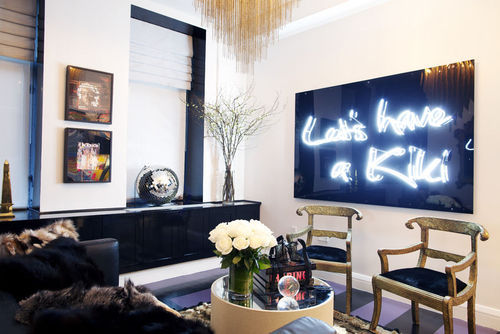
    Image: ASH NYC