Daily insights for city builders, delivered every morning at 6 AM ET. I’m Brandon Donnelly — a Toronto-based real estate developer and founder of Globizen. I’ve been writing here since 2013.

Tag: boston

  • Peer-to-peer solar startup

    Airbnb is a platform that connects people who have extra space with people who need space. It’s a peer-to-peer hospitality company.

    Yeloha, which is a startup I just discovered today, is a peer-to-peer solar company based out of Boston. 

    In the same vein as Airbnb, it connect people who have extra roof space (that’s suitable for solar collection) with people who want to buy solar energy (but may not have a solar friendly roof).

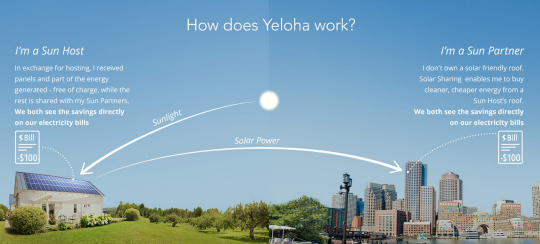
    Here’s an image from their website that explains how it works:

    image

    Basically, if you have a solar friendly roof, Yeloha will come and install solar panels on top of your place for free. You get to keep some of the energy that’s generated (about 1/3 apparently) which becomes a credit to your electricity bill. You are then known as a “Sun Host.”

    The remaining energy gets fed back into the grid and, if you don’t have a solar friendly roof, you can purchase this excess energy, which also results in a credit to your electricity bill. The solar electricity is less expensive than the regular grid electricity. In this case, you are known as a “Sun Partner.”

    I think this is a pretty neat idea. Neither party has to pay anything upfront. Both parties save money. And the result is more solar through a distributed and virtual net metering setup.

  • What food is your city famous for?

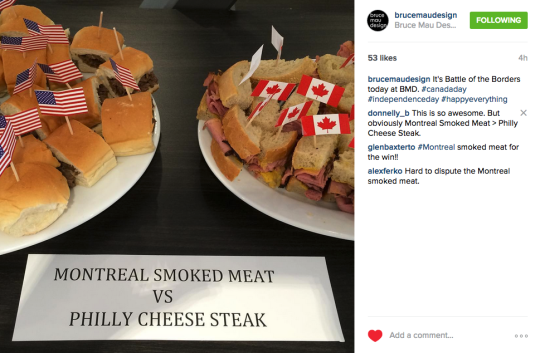
    Yesterday I came across the above Instagram post by Bruce Mau Design, which pitted the Philadelphia Cheese Steak sandwich against the Montreal Smoked Meat sandwich in a “battle of borders.” It was to celebrate both Canada Day and American Independence Day.

    I thought this was an awesome idea, so I tweeted out the photo. Then Daniel Kay Hertz – who is a Senior Fellow at City Observatory and from Chicago – asked me: “Is there a Toronto equivalent?

    And that got me thinking. 

    Montreal has smoked meat, bagels, and poutine. Philly has the cheese steak. Chicago has deep dish pizza. Quebec City has maple sugar and tourtiere (a kind of meat pie). New Orleans has po’boy sandwiches. Boston has clam chowder. Austin has tacos. Seattle has crab. And the list goes on.

    But what is the quintessentially Toronto dish? Asian fusion food? Peameal bacon sandwiches from the St. Lawrence Market? I really don’t know. So I think we should decide on one right now. Think of it as an exercise in city branding.

    Leave your suggestion in the comments below and we’ll have a vote.

  • Urban Engines launches app

    [youtube https://www.youtube.com/watch?v=FZ8ODREybcs?rel=0]

    About 9 months ago I wrote about a new startup called Urban Engines that was trying to improve urban mobility by using big data to optimize transit usage. 

    Last Tuesday the app launched in 10 cities across North America. So if you’re in Boston, Chicago, Los Angeles, New York, Portland, Seattle, San Francisco, Toronto, Vancouver, or Washington D.C., you can go ahead and download it right now.

    The biggest “wow factor” is probably the augmented reality feature that allows you to hold your phone up and see transit information overlaid on top of the street in front of you.

    But more fundamentally, the real potential lies in the platform’s ability to collect data on the way people move in cities and on how transit lines are performing, so that it can be fed back to improve overall efficiency.

    That’s why the company is also working with cities to give them 24/7 analytics and reporting on how every bus, car, and train is performing in their networks.

    My hope is that with better data at our disposal, we’ll be able to elevate the discussions around transit and transit planning. Without great data, it’s too easy for these discussion to become political.

  • Top 10 (US) cities for young smart people

    image

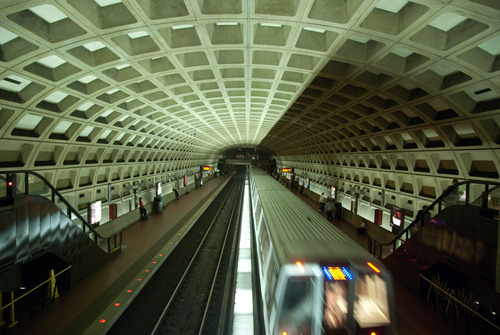
    I’m always on the lookout for great websites and communities dedicated to cities. And today, thanks to a friend of mine, I found a new one called City Observatory. It’s my new favorite site for city geeks.

    They describe themselves as a “data-driven platform for sharing, analyzing and discussing the success of cities.” As soon as I read that, I immediately subscribed. I’m a big believer in using data to elevate the discussions happening around our cities and to cut through the bullshit.

    I’m looking forward to digging into more of their articles, but I did already take a look at the first report they published, which is called: “The Young and Restless and the Nation’s Cities”. Click here to download the PDF.

    What the report talks about is a demographic group that they refer to as “Young and Restless”, and which they define as being 25-34 years old and having a 4-year degree. And they focus on this group because they see it as critical to driving local economic development.

    They’re the next generation who are going to start those companies and drive growth and innovation. And since the data shows that as people age, they become less willing to relocate (which intuitively makes sense), cities today are quickly realizing that they need to capture this group of smart people while they’re still restless (i.e. mobile).

    So if this is important, which cities (in the US) are winning right now? Here are the top 10 cities via City Observatory:

    1. Washington D.C. 8.1%
    2. San Francisco 7.6%
    3. Boston/Cambridge 7.6%
    4. San Jose 7.5%
    5. Denver 7.5%
    6. Austin 7.0%
    7. New York 6.6%
    8. Minneapolis 6.6%
    9. Raleigh 6.5%
    10. Seattle 6.1%

    The percentage represents the portion of the population that’s 25-34 years old and has a 4-year degree. I’ve just listed the cities here, but in reality they reference the entire metro areas.

    Do any of the cities on this list surprise you? None are surprises for me. It’s more or less what I would have expected to see, except maybe for the absence of Chicago (it’s 12th according to this ranking).

    Is your city doing enough to capture this group?

    Image: Flickr

  • How much does it matter what message a city sends you?

    In keeping with the recent theme about cities, their brands, and the messages they send, I thought I would revisit an old essay (2008) written by Paul Graham (of Y-Combinator) called “Cities and Ambition.” In it, he talks about the various messages that cities send us, such as:

    • You should make more money (New York)
    • You should be better looking (Miami?)
    • You should be smarter (Cambridge)
    • You should be more powerful (Silicon Valley)

    But the most interesting part of his argument is the belief that we are largely products of our environment. No matter how strong or formidable our personalities might be, the message a city sends us is hugely important. In fact, it might be impossible to escape it. Here’s how Paul puts it:

    How much does it matter what message a city sends? Empirically, the answer seems to be: a lot. You might think that if you had enough strength of mind to do great things, you’d be able to transcend your environment. Where you live should make at most a couple percent difference.

    But if you look at the historical evidence, it seems to matter more than that. Most people who did great things were clumped together in a few places where that sort of thing was done at the time.

    You can see how powerful cities are from something I wrote about earlier: the case of the Milanese Leonardo. Practically every fifteenth century Italian painter you’ve heard of was from Florence, even though Milan was just as big. People in Florence weren’t genetically different, so you have to assume there was someone born in Milan with as much natural ability as Leonardo. What happened to him?

    If even someone with the same natural ability as Leonardo couldn’t beat the force of environment, do you suppose you can?

    I don’t. I’m fairly stubborn, but I wouldn’t try to fight this force. I’d rather use it. So I’ve thought a lot about where to live.

    To some, this thought may depress you. I mean, if you happen to live in a city or place with the “wrong” message, you might feel as if you’re missing out. I know that thought certainly crossed my mind when I read his essay. But different messages resonate with different people, and so maybe the message your city is telling you is exactly the one you need to accomplish great things.

    In Toronto, I’d say that the message is similar to that of New York: You should make more money. Oh, and also that you should buy more condos 😉

    What message does your city tell you?

  • How will climate change affect our coastal cities?

    One of the reasons New York is the city it is today is because of the superiority of its port. For a number of reasons, which are better explained here by urban economist Edward Glaeser, New York was almost destined to become “America’s port.” Of course, this phenomenon is something that has been repeated all throughout history. Being connected to the right body of water, in the right way, has meant all the difference in terms of economic success.

    But with study after study demonstrating that our economic success is leading to severe climate change and to the melting of arctic ice sheets, those very same port cities are now being put at serious risk. How ironic. Hurricane Sandy was the largest storm surge in the history of New York. Prior to it occurring, the likelihood of such a storm would have been calculated at 0.1%. It was greater than a 1,000 year storm.

    But if the research is correct, we’re going to see more storm surges and we’re going to see rising sea levels. This makes many, if not all, sea port cities a high risk zone for flooding, which is why cities, such as Boston, have prepared comprehensive reports on how to manage a rising tide. From adjustable parapet walls to multipurpose green spaces that can absorb excess water levels, cities around the world are looking for solutions.

    But these are merely reactive solutions.

    What need to also be looking at is how we can fundamentally improve our economy so that we’re operating in a sustainable way. Some of the research suggests that what we’ve done is irreversible, but that doesn’t mean we should continue to make it any worse. Part of the issue with this “wicked problem” is that it doesn’t seem immediate to most people, yet. It’s too easy to ignore. But that doesn’t mean it doesn’t exist.

    Image: This Big City

  • Why the Gardiner East should be torn down

    Warning: This post turns into a bit of a rant near the end 🙂

    Since 2009 (well, much earlier actually), Toronto has been trying to figure out what to do with the eastern portion of the elevated Gardiner Expressway (the portion from Jarvis Street to the Don Valley Parkway). The process used to help make this decision is called an Environmental Assessment (or EA) and that’s what is currently underway. But it’s a painstakingly slow process.

    Recently though, a third public meeting was held in order to solicit feedback on the various design solutions and so there’s been a renewed interest in this city building issue. Since the beginning, my position has been that we should tear it down. And in this post I’m going to explain why I think that is exactly what the city should do. 

    But first, a bit of background.

    The EA started by identifying four “Alternative Solutions” to the problem of the Gardiner East. And they are: 

    1. Maintain the elevated expressway (Basically do nothing)
    2. Improve the urban fabric while maintaining the existing expressway
    3. Replace with a new above or below grade expressway
    4. Remove the elevated expressway and build a new boulevard

    They then went out and assigned these solutions to a bunch of architects and designers—whom are some of the world’s best—and asked them to come up with specific design proposals. These proposals are available online and that’s part of what the public has been commenting on.

    City Council seems to generally want the Gardiner down, but there are some naysayers. 

    Rob Ford doesn’t want it removed (option #1) because it’ll add to driver commute times (no surprise there) and Councillor Denzil Minnan-Wong is worried that tearing it down will just lead to another wall—a wall of waterfront condos.

    But I think these views are terribly shortsighted and I’ve made my position clear by submitting a formal response through the City’s public engagement portal. To explain my view here on Architect This City, I thought the best way would be to simply share my answers. So here they are.

    What do you like?

    [slideshare id=22945545&sc=no]

    I can honestly say that I love my city. I was born in this city. And I was raised in this city. This city has given me so much, which is why I feel so compelled to try and give back to it. It’s also the reason why I’m first to defend it when people talk about how great this or that city’s waterfront is and how much ours sucks. I mean, I know ours sucks. But we’re fixing it.

    We have a lot of great plans in the pipeline for our waterfront, but there’s a remaining obstacle: our elevated expressway. Boston buried theirs. And San Francisco transformed theirs into a magnificent public space. What are we going to do with ours? Now is the time to be bold and not settle for the status quo. That’s too easy. We need to remove the eastern portion of the Gardiner Expressway today and the design proposal by Field Operations offers a brilliant way to do it.

    Not only is removing the Gardiner the most cost effective solution ($470M, versus $870M to maintain, $865M to improve and $1.4 billion to replace), but it’s also the most desirable from a city building standpoint.

    The Gardiner is not the only barrier. We also have the rail lines. So while repurposing the Gardiner might be doable in isolation, we simply have too much friction standing between us and the lake. We need to remove the barriers that we can. It’s for this precise reason that Field Operations spent so much time worrying about the north-south connections. And I think their “architectural sleeves” are a really interesting way to solve this problem.

    At the same time, timing is an important consideration. As the surrounding East Bayfront area develops, it’s only going to become more costly to remove this stretch of the Gardiner. If we’re going to do this, now is the time.

    Finally, I think it’s important to note that Field Operations is the landscape architecture firm behind the wildly successful High Line in New York. So what we have is a firm that made a name for itself repurposing an old elevated rail line, telling us that our own elevated structure is worthless and uninspiring. Think about that for a minute. Should we really be spending more money to salvage the Gardiner East?

    What concerns do you have?

    That we’re getting hung up on commute times as one of the key decision making criteria. It’s a red herring. Let’s face it: irrespective of whether we tear down the eastern portion of the Gardiner or not, Toronto is fucked from a transportation and infrastructure standpoint. We’re sitting on decades of disinvestment and some of the longest commute times in North America.

    Field Operations put it well when they said that the tearing down of the Gardiner East needs to be thought of as a paradigm shift. We have a 25-year transportation plan waiting to be funded. Let’s go out and do that instead of trying to sacrifice our waterfront so that suburban commuters can save a few minutes. Let’s give them a shiny new train instead. They’ll like that.

    Either that or Torontonians need to stop talking about how great Chicago’s waterfront is, because we can do it too. Now is our chance.

    What advice do you have for the Project Team as the study moves into the next phase?

    Don’t listen to Rob Ford.

  • Those evil bikes

    image

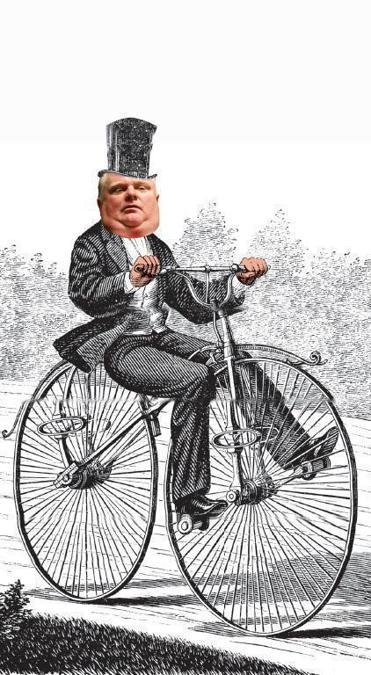
    I just stumbled upon an interesting piece in the Boston Globe (from last December) talking about how the bicycle is “emerging as a new conservative front in the culture wars.

    It starts by talking about Toronto mayor Rob Ford and asks: Who elected this guy? Their response comes down to mode of transport.

    The answer, in large part, comes down to transit. Ford is famously pro-car, and his strongest support came from suburbs outside downtown Toronto, where voters drive into the city during the day and return by car in the evening. One political scientist found that the strongest predictor of whether someone voted for Ford in the 2010 mayoral election was the person’s method of commuting: Car commuters were Ford voters; everyone else wasn’t. Ford repaid their loyalty by declaring on his first day as mayor that the “war on cars” was over; he abolished the vehicle registration tax and announced a plan to kill light rail in the city simply because, he said, streetcars “are just a pain in the rear end.”

    The article then goes on to argue that Ford is at the forefront of a growing conservative movement using bikes as a new political lightning rod. Conservative politicians view cyclists as urbanites (statistically this is true) and therefore not part of their core voter base (statistically this is also true). And so hating on bikes has become a convenient way for them to galvanize their support base.

    But beyond bikes, we’re really talking about a bigger city building issue: How do you unify a city with such divergent priorities? How do we stop this downtown versus the suburbs mentality? These are important questions and I don’t think the answer is to de-amalgamate Toronto. That’s the easy way out.

    Whether we like it or not, the Toronto region functions as one contiguous economic unit and, if we want to be able to effectively compete on the global stage, we’re going to need cohesion. We need to get our house in order. It’s still early days for Toronto’s 2014 mayoral election, but I really hope the next 4 years turn out to be better than the last. I think they will.