Daily insights for city builders, delivered every morning at 6 AM ET. I’m Brandon Donnelly — a Toronto-based real estate developer and founder of Globizen. I’ve been writing here since 2013.
Traffic congestion and a lack of affordable housing are two clearly defined problems facing most, if not all, major cities. We know they exist. We call them crises. And yet, we can’t seem to implement effective solutions, even though we know what they are. Why is that? In her new book, On The Housing Crisis: Land, Development, Democracy, Jerusalem Demsas makes the argument that it is a failure of local democracy. There is a disconnect between what we say we want to happen and what we are actually doing. This resonates with me. In my mind, it’s looking upstream at what is bottlenecking us from making the decisions that will produce better outcomes for our cities. So after reading this conversation with her about the new book, I decided to buy a copy.
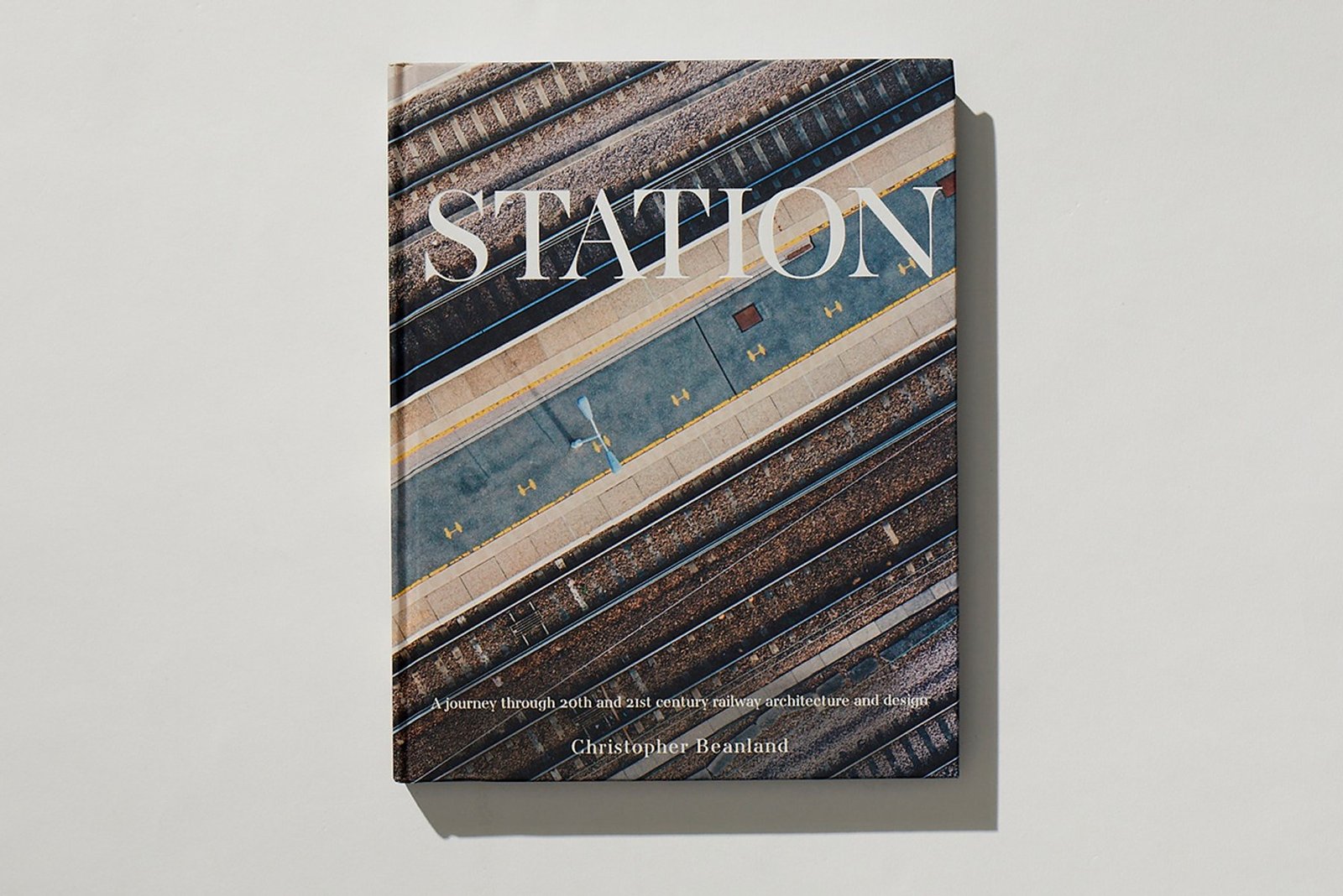
I would rather take a train to the office than drive. And given reasonable options, I would rather take a train than get on a plane. I like trains. So by default, it means that I’m interested in Christopher Beanland’s new book, Station. In it, he profiles some of the best railway architecture from the 20th and 21st centuries. Places like Union Station in Los Angeles, Hauptbanhof in Berlin, and Byappanahalli in Bengaluru. But as cool as these places are on their own, I think it’s important to keep in mind that trains exist as part of a network. And like all transport, they promote time-space convergence. This is part of what makes these spaces so interesting — they’re like a portal to somewhere else.
Heatherwick’s reticence makes his latest work more surprising. He is launching a 10-year campaign against the “catastrophe” of how buildings are built. Our cities, he argues, are in the grip of an “epidemic of boringness”. Most modern buildings are too flat, too plain, too straight, too shiny, too monotonous, too anonymous and too serious. They make us unhappy and ill, they make us not want to come into the office.
In his book Humanise, out on Thursday, Heatherwick derides architects as members of a modernist “cult”, which indoctrinates them during their seven-year training into thinking they don’t need the public’s approval. The result is the UK’s commercial buildings are so unloved that they have an average lifespan of perhaps 50 years, leading to huge carbon emissions as they are replaced.
I haven’t read it yet, but something tells me that I’ll probably agree with some/many aspects of the book and be annoyed by others.
What I’ll likely agree with is that our cities should be more playful, beautiful, and creative. They should be more human. And we should be more daring.
But what I’ll likely be annoyed by is the impracticality of the proposed approach(es). There are markets. There exists money. And there are reasons why many of Heatherwick’s projects are “luxury” ones.
Or maybe I’m just being cynical and I should wait and see.
I just ordered a copy of this book. So I haven’t read it yet. But I did just read this Q&A with the authors (and it clearly piqued interested). The central idea is that Tokyo — which is a massive city that is famous for somehow being both massive and exceedingly livable — is the product of something that the authors refer to as emergent urbanism.
What they mean by this is that Tokyo’s order, functionality, and livability is actually largely the result of emergent bottom-up actions, rather than top-down central planning. This isn’t to say that some top-down planning isn’t required for things like parks and transit. You still need some of that. But this is to say that Tokyo’s approach to urbanism is very different from what you’ll find in cities likes Paris and many others.
Here’s an example of what I’m talking about (taken from the above Q&A):
This is going to sound wild to anyone who lives in the US, but for any two-story rowhouse in Tokyo, the owner can by right operate a bar, a restaurant, a boutique, a small workshop on the ground floor — even in the most residential zoned sections of the city. That means you have an incredible supply of potential microspaces. Any elderly homeowner could decide to rent out the bottom floor of their place to some young kid who wants to start a coffee shop, for example. When you look at what we call yokocho alleyways — charming, dingy alleyways that grew out of the black markets post-World War II, which are some of the the most iconic and beloved sections of the city now — it’s all of these tiny little bars and restaurants just crammed into every available space.
What’s fascinating about all of this is that we’re talking about a kind of self-organizing urbanism. One that goes against everything that traditional city planning stands for. Using the above example, instead of saying that retail should go here, bars should go here, and residences should go only over here, Tokyo is basically saying you can do whatever you’d like.
If you’d like to open a tiny 4-seater bar that only serves Long Island iced teas to people wearing cosplay outfits on neon pink plastic chairs, you are free to do that. Oh, and by the way, we’re also going to make it a lot easier and cheaper for you to get a liquor license. This might sound chaotic, but it works for Tokyo. And it’s evidence that maybe a lot of our cities would be better off if only we let them be what they want to be.
As a general rule I don’t like to recommend books that I haven’t read yet. And so I’m not here today to recommend Jenny Schuetz’s new book about how to repair America’s crumbling housing policies. Instead, I’m just telling you all about it. You can then do your own research and decide if it’s worthy of your time. The premise sounds good though:
Unequal housing systems didn’t just emerge from natural economic and social forces. Public policies enacted by federal, state, and local governments helped create and reinforce the bad housing outcomes endured by too many people. Taxes, zoning, institutional discrimination, and the location and quality of schools, roads, public transit, and other public services are among the policies that created inequalities in the nation’s housing patterns.
This may be confirmation bias at work but I continue to feel like there’s a groundswell of interest in housing reform. In particular, there seems to be a growing interest in rethinking the privileges that we have decided to bestow upon low-rise housing (at least in this part of the world). But of course, that’s only one part of what is ultimately a complex set of systems.
I jus pre-ordered a copy of Edward Glaeser and David Cutler’s new book called, Survival of the City: Living and Thriving in an Age of Isolation. (I’m usually a hard copy kind of guy, but I decided to try this one out on Kindle / my iPad). The official release date is September 7, 2021, so if you’re reading this post in your inbox, the book is now available online.
I’m not familiar with the writing of David Cutler (he’s a public health expert), but I am a follower of Edward Glaeser and have written about his work on a number of occasions. Glaeser’s last book, Triumph of the City, was a kind of celebration of the wonders of urbanism. After reading it, you couldn’t help but feel that cities are our best chance at creating healthy, sustainable, and wealthy communities.
But in listening to Glaeser throughout this pandemic I have noticed that his commentary on the future of cities hasn’t been filled with unbridled optimism. You get the sense from him that cities are at a crossroads. This is not to say that city life will not persist, because it will. Cities are powerfully resilient. But not all cities are created equal. Some will continue to flourish in this new economy, but others will not.
This is one of the arguments that they make in this new book and I’m looking forward to reading it once it lands in my Kindle app.
Years ago I wrote about a book that venture capitalist Albert Wenger was writing — in public I would add — called The World After Capital. The public bit is interesting. As he was writing the book over the last ten years or so, he did it in public and published drafts along the way. This allowed him to get feedback, learn things, and revise accordingly. He calls this a “knowledge loop” and it ties in nicely with some of the topics that he covers in the book.
The first focus of the book is on explaining that capital (which was a constraint of industrialization) is no longer scarce. This isn’t necessarily true everywhere, but he argues that it is true in the developed world. What is instead scarce today is attention. That is our defining constraint as we continue to move into the Knowledge Age. The second focus of his book is on how he thinks we should best respond to these changes, as well as to the limitations of capitalism.
I haven’t read the book yet (only scanned it), but it’s now in my queue. Normally my queue consists of a stack of partially read books next to my bed. But this one is digital only for the time being. If you’d like to read a digital copy (there’s a downloadable PDF), go here. Apparently there will also be a hard copy available sometime later this year or early next year.
Gestalten and SPACE10 have a new book out that I think many of you may want to add to your library. It’s called The Ideal City, and it’s all about what’s next when it comes to cities. Here’s a short excerpt from the publisher:
Urban life is humankind’s biggest experiment to date, our cities are constantly evolving and adapting to climate and economy. The cities we have today are not necessarily the ones we need, but big and small innovation is rethinking visions of urbanization. Together with pioneering research and design lab SPACE10, we present future-orientated design which enhances quality of life and makes our urban spaces more vibrant.
As technology and urban life edge ever closer, The Ideal City explores the ambitious actions and initiatives being brought to life across the globe to meet tomorrow’s demand in clever, forwarding-thinking ways. From pedestrian infrastructure to housing, the book uncovers what is being discussed at the forefront of urbanism through expert essays and profiles.
“We learn from history that we do not learn from history.” -Georg Hegel
Back in March, I was reading everything I could find about COVID-19 and about pandemics. Eventually that tapered off. But this week I decided that it was time to go back and learn a lot more about the 1918 Spanish Flu.
I’ve just ordered John M. Barry’s 2004 book called The Great Influenza. Bill Gates wrote about it over the summer — after he reread it — and said that it will teach you almost everything you need to know about the influenza. He also said that it’s never been more relevant.
Despite happening over 100 years ago, there are no doubt lessons that we can learn from this great influenza. The most important being that leadership and honesty, of course, matter a great deal during a time of crisis.
Barry also argues that the 1918 influenza was responsible for altering the flow of history. He makes the claim (convincingly according to Bill) that it was a contributing factor in the rise of Hitler and the start of World War II.
So I’m looking forward to receiving my copy later this week. If you’d like to purchase your own, you can do that over here. And if you’ve already read it, please let me know what you thought in the comment section below.
I am reading Malcolm Gladwell’s latest book right now, called Talking to Strangers: What We Should Know about the People We Don’t Know, and I am intrigued by the chapter on Sylvia Plath’s unfortunate suicide and the concept of “coupling.” The idea behind coupling, which stands in contrast to displacement, is that when someone makes the very sad decision to commit suicide, it can often be coupled to a particular place or context.
Malcolm starts by giving the example of “town gas.” Prior to it being phased out in the 1960s and 1970s, most homes in Britain relied on a form of gas that contained carbon monoxide. And sadly, it became the most popular way for people to kill themselves. When Sylvia Plath took her own life in 1962, the death-by-carbon-monoxide-poisoning stat was 44.2% of all suicides in England and Wales.
The concept of displacement, on the other hand, surmises that if somebody wants to kill themselves, they will eventually find another way. But Malcolm convincingly argues that that is not necessarily or very often the case. As town gas was phased out of British homes, the number of suicides also declined in lockstep. Turns out that many of the previous suicides had been coupled to that particular tool.
Why this is potentially valuable to this blog audience is that this same coupling phenomenon can happen within our cities and to particular places. Malcolm gives the example of the Golden Gate Bridge in San Francisco, which has been the site of many suicides since it was first erected in 1937. The same, of course, can be the said about many subway systems around the world.
But again, there’s evidence to suggest that if you can save somebody on the Golden Gate Bridge (a suicide barrier was erected in 2018) or on a subway system by installing safety doors, there’s a good chance that many of those people will never actually find another way to commit suicide. In other words, you can save a bunch of lives by having the right provisions in place and not assuming that something is a foregone conclusion.