Daily insights for city builders, delivered every morning at 6 AM ET. I’m Brandon Donnelly — a Toronto-based real estate developer and founder of Globizen. I’ve been writing here since 2013.
I often get asked about my daily routine and how I manage to write, every, single, day.
Oftentimes people will say that I must not sleep. But the reality is that I love sleeping and I generally need a lot of it. I’m not someone who can function on 5 or 6 hours. I’m useless with that amount of sleep. One of the best productivity hacks for me is to simply sleep more and work less.
In terms of when I write, my preference is to write first thing in the morning – even though I don’t consider myself much of a morning person. I like to wake up, make breakfast and a coffee, and then sit down at my desk to both read and write. I like to do this before diving into email, before thinking about all the stuff that I need to do that day, and before going into the office.
Some days a post might take me 20 minutes and some days it might take me an hour. Where I struggle the most to write every day is when I’m traveling or when I have to be somewhere super early, which then means I’m writing in the evening. I like my routines.
I’m thinking about this right now not only because I often get asked this question, but because I’m currently making my way through a book by Adam Grant called Originals.
Though talent still matters, one the things he argues is that creative people tend to be creative because they are prolific. They produce a lot of whatever it is they do. And while much of it may be crap – he argues that Shakespeare penned a lot of crappy plays – it is through sheer volume that they end up achieving those creative breakthroughs.
This goes against the traditional notion of the “creative genius”, but I think there’s a lot of truth to it. It’s why good architects will iterate through many different building designs and it’s (partly) why bloggers like myself see value in showing up every day.
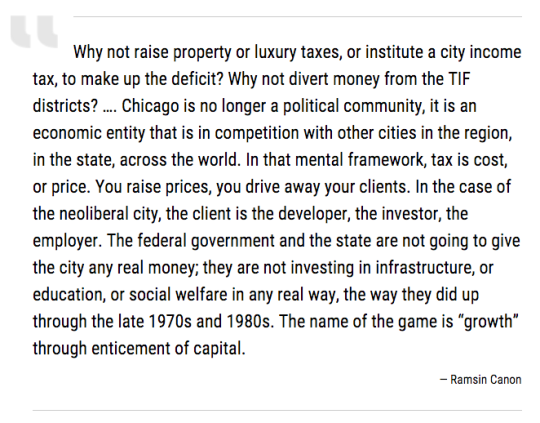
One of the central themes is the idea that globalization has caused a kind of bifurcation in cities – a disconnect between the local and the global. In an effort to compete with other global cities around the world, we have begun to turn our back on local concerns. At the same time, not every city has the market power of, say, New York or London.
So what does this mean for cities? Here’s a quote from the article that I think does a good job explaining the mental model:
At the end of the article, Aaron makes a number of recommendations for how to better think about local entrepreneurship and economic growth. The first one is as follows:
“Local civic priorities should favor building a successful and inclusive local economy, including entrepreneurship, over global concerns and real estate development.”
Despite this being seemingly contradictory to do what I do for a living, I think it’s important to note that on a fundamental level, architects and developers simply create space.
It might be a beautiful space. A space that improves well-being, creates value, and enables certain activities. But at the end of the day, there needs to be demand for that space. And a robust local economy is paramount to that equation. So I agree that we shouldn’t forget about local and expect that “if we build it, they will come.”
If you have the time, the full article is worth a read. It’s also part of a broader series on entrepreneurship and cities, so there are a bunch of other related articles on the same page.
Groceries have relatively low online penetration, which makes them great for brick-and-mortar retailers. I’ve written about this topic before in the context of big box stores and online shopping. But I clearly didn’t realize that it had become such a big segment for Walmart.
What’s also noteworthy about grocery shopping though, is that customers appear to be less likely to travel far distances for it, even for lower prices. This means that the radial impact of Walmart the supermarket is less significant and far tighter (~2 miles) than Walmart the discount store. Click here for that study.
This is important because a big catchment area has been central to the Walmart model. They consume cheap land on the outskirts of cities and then offload the transportation costs (indirect costs) to consumers in exchange for everyday low prices (direct costs). Studies show that we, consumers, typically undervalue indirect costs.
Charlie argues in his post that this does not mean that we should write off big box retailing. And I would agree. The Walmart Express concept may have failed, but they are clearly looking for ways to rethink their model. Urban stores will need to form part of that.
I recently started reading the blog of Michael Mortensen. Michael is a real estate developer and urban planner based in the UK. And if you like my blog, I think you’ll also like his.
Last week he published a post talking about a UK development company called Pocket and a recent design competition that they organized called “Pocket two bedroom.”
Historically the firm has been focused on well-designed and compact one bedroom apartments (38 square meters) that they deliver at a minimum 20% discount relative to typical market rate housing in London.
But over time, they found that they had to turn people away because they were looking for larger – yet still affordable – two bedroom apartments. So the firm decided to figure out how to scale their model to larger units.
To do this, they went out and asked 19 architects to come up with ideas for a two bedroom Pocket apartment. They then published all of the ideas online.
Firstly, I applaud them for making their competition results public. Most real estate companies wouldn’t do this.
Secondly, it’s interesting to take note of the recurring design themes, as they have on page 24-25 of their competition book.
Some of the themes include “deep thresholds” that blur private and communal spaces; “thick walls” that allow for storage and servicing; flexible spaces and fewer dedicated spaces; and dual entry apartments.
This last item was particularly interesting to me. It’s a simple idea – two separate doors leading into one apartment – but it can allow for a number of flexible sharing scenarios. I am already imagining somebody creating an Airbnb rental out of their second bedroom.
Tonight I attended and gave a short talk at a city building themed PechaKucha night here in Toronto. If you aren’t familiar with the PechaKucha 20×20 presentation format, click here.
The first PechaKucha night was held in Tokyo, but it has since expanded to over 800 cities around the world. Each city has a local organizer who acts as a steward and here in Toronto it is Amy Bath. She did a fantastic job this evening.
Tonight’s event was all about non-traditional forms of city building. It was not so much about how architects and developers are shaping the built environment – thought there was some of that. It was more about how interdisciplinary artists, graphic designers, bloggers, and others, are having an impact on cities. So in my case, I was speaking as a blogger, rather than as a real estate developer, which was a bit unique for me.
What excited me about tonight is the amount of talent and passion that we have in this city, and how so much of it is being harnessed to make cities better.
Jay Wall of Studio Jaywall is doing incredible work at the intersection of graphic design and city building. My friend Mackenzie Keast of Distl and NXT City Prize is organizing public space competitions and then working with the city to get them built. And my friend Justin Broadbent, who is an interdisciplinary artist, is just killing it and putting Toronto on the map. I don’t know how else to say it.
And this is just naming a few of the people in attendance.
I have so much respect for people who love the city they call home and actively try to make it a better place. That’s a lot harder to do than just complain about why your city isn’t (insert other allegedly better city here). But it’s also a lot more productive.
Earlier this week I somehow stumbled on an old (2012) Medium story by Ev Williams, called, Formula for Entrepreneurial Success. (Ev is the cofounder of Medium, Twitter, and Blogger. He basically invented blogging.)
His post includes 5 short recommendations, and is obviously aimed at entrepreneurs, but I think the lessons also apply more broadly to life in general. They resonated with me, so I thought they might also resonate with you.
So whether you’re starting a company, developing a new building, or just living life, here are Ev’s 5 points:
1. Work with amazing people. Don’t compromise on who you choose to found your company with and hire. Do not put up with ego-centric personalities or downer attitudes.
2. Take on big challenges. It’s pretty simple: Hard things are valuable; easy things are not so valuable. Reaching the mountaintop is rewarding because it is hard. If it was easy, everybody would do it.
3. Focus. Say no to most things: Features. People. Partnerships. “Coffees.” Projects. Only a few of them really matter. (Yes, it’s hard to know which.) Don’t get distracted.
4. Take care of yourself. When you don’t sleep, eat crap, don’t exercise, and are living off adrenaline for too long, your performance suffers. Your decisions suffer. Your company suffers.
5. Love those close to you. Failure of your company is not failure in life. Failure in your relationships is.
If I had to pick one of the items from this list, I’d say I struggle the most with focus. It’s not that I can’t focus and complete tasks, it’s that I’m the kind of person who wants to fill every second of the day with something meaningful. And when people email me wanting to go for coffee or help with something, I want to do it.
But unfortunately, time is a hugely valuable commodity and you have to be selective.
So surround yourself with amazing people. Don’t be afraid of big challenges and risks. Focus. Eat well and lift weights (my preference). And love the important people in your life.
I was recently interviewed by a Berlin-based online magazine called Archipreneur. You can read that interview by clicking here.
If you haven’t yet heard of Archipreneur, you should definitely check it out. It’s a great read. The magazine is dedicated to the intersection of architecture and entrepreneurship. They cover a lot of the same topics that I cover here on Architect This City – such as design, real estate development, technology, and so on. But they are generally more focused on architects (or people trained as architects, in my case) who are doing interesting things other than traditional practice.
I recently heard someone define a habit as something that you need to do in order to feel normal. In other words, until you do it, you don’t feel yourself.
This, of course, could refer to both good habits and bad habits. And most of us probably have habits from both camps. But I like it as a clear and simple definition.
I’ve written about disciplines and habits a few times before, because I think of myself as having a few. The most public of my habits is this blog and, at this point, I certainly don’t feel normal if I don’t write everyday. I’ve missed a few days since I started writing in 2013 and each time I felt bad.
My other big habit is going to the gym and lifting weights. And since my snowboarding injury back in February, I haven’t been able to do this properly (though I still tried). It’s easily the longest break I’ve taken from it since I started this particular habit when I was 16.
Because of this, I really haven’t felt myself for about 2 months. My energy levels aren’t the same and I just don’t feel as mentally sharp. Those are some of the main reasons why I love this habit. And I still haven’t adjusted.
Thankfully (with some help from Totum Life Science), my back and shoulder are finally starting to feel better. And so today, instead of writing about cities, I’m going to go to the gym and try and do one of my regular workout routines.
I’m not quite at 100% yet, but I should be soon. And then I’ll finally feel normal again.
Last month marked the one year anniversary of Architect This City. This means that I’ve been blogging every day for over a year. It’s been an incredible journey and I often tell people that they should give it a try if they have any inclination.
So today, I’d like to share some of the things I’ve learned over the past year. I actually started this post at the end of last month, but I needed some time to collect my thoughts. Now that they’re collected, here are 10 things I learned from blogging every day for a year:
1. Starting from zero sucks
Lots of people have grand ambitions of blogging their way to prosperity. But then they start and they realize it sucks. It’s incredibly difficult to write content on a regular basis when all you get back is crickets. All you’re doing is giving without getting anything in return. But that’s why starting anything from nothing is always difficult.
2. Passion actually means tenacity
When people say that you should follow your passion (you know that cliche), what they’re really getting at is that anything worth doing is going to be a complete and utter slog at times. And the only way to make it through those periods is to actually enjoy the journey enough so that you keep doing it when it’s not so fun.
3. Accomplishment has a lot to do with momentum
As much as starting sucks, once you get going you develop momentum. People start telling you that they read your stuff every day and you get addicted. You realize that you can’t stop. Somebody is actually reading what I’m writing! You also notice that things are starting to snowball. For example, it took me about 11 months to get 250 followers on Tumblr. It then took me another 3 days to break through 2,000. There’s a snowball effect.
4. It gets easier
I follow wine guy and internet marketer Gary Vaynerchuk. I love his energy. And one of the things he’s said about his father’s wine business, that he famously helped grow, is that even though he took it from $3 million in sales to $45 million in sales, he recognizes that the truly hard part was actually going from zero to 3. Starting from nothing is hard.
5. Good things come from putting yourself out there
Often I’ve found that my most popular posts have been the ones that I felt a little uncomfortable posting or that I quickly wrote without seconding guessing myself. Social media and internet marketing today, at least in my view, is all about being authentic, genuine, and as transparent as you or your business can afford to be. Because that’s what engages people.
6. Constraints can be great for creativity
I can be a bit of a perfectionist. It’s the designer in me. In architecture school, my favorite line was: Perfection or nothing. I got it from the German engineering and design firm, Werner Sobek. But perfectionism can be a debilitating. Sometimes it becomes a form of procrastination, which is why I decided to write every day. Because then you don’t always have the time to be a perfectionist. You just have to post. And that can be a great thing. As Steve Jobs used to say, real artists ship.
7. The internet democratizes
When you write a blog and put yourself out there publicly, people all of a sudden consider you an authority. They want to know your opinion and they begin to consider you as an expert in the topic you write about. Now, I’m not suggesting that I’m an expert on cities, but I think it’s incredibly powerful that people now associate me with cities, real estate, design, and all the other things that I’m passionate about.
8. Everybody is their own media company
This ties into the last point. What shows up first when you Google your name? Do you use social media? Do you own and manage your firstnamelastname.com? (i.e. brandondonnelly.com) In other words, what is your personal brand? It used to be hard to put yourself out there. The media channels were simply too expensive for individuals to start building their own brands. But today, anybody can create a free account on Facebook, Twitter, Tumblr, Instagram, LinkedIn, Pinterest, Snapchat, and all the other social channels that people are now using to market. And that means that each and every one of us is basically their own little media company.
9. The benefits of blogging are indirect
All that said, the benefits of blogging for me, so far at least, have all been indirect. I’ve probably only made a total of $300 in revenue directly attributed to this blog. But I didn’t start blogging to make money. I started writing because I knew that it was going to be beneficial to get my thoughts down on paper every day (it’s my public journal). I knew that I was going to learn a lot from others and the process. And I knew that it was going to be a great networking tool.
10. Lots of people care about cities
Given the mission of Architect This City, this is probably the most important takeaway from the past year: Lots of people care deeply about cities and the built environment. I initially thought that it was just going to be city geeks like myself that would enjoy what I was writing. But it turns out that city dwellers and urbanists all over the world recognize the importance of building great cities. We know that the majority of the world’s population now lives in a city, and so it makes sense for us to address something that impacts so many people’s lives.
On that note, thanks for reading Architect This City. I’m incredibly grateful. Here’s to another year!
Image: Pinterest (I like blogging with my morning coffee)
The Old Urbanist has just published an informative post called “Where Zoning Went Wrong.” In it, he talks about some of the defining characterstics of American city planning and suggests that the delegation of planning authority from states to local municipalities is what has caused many of the challenges that city builders now face.
But before we get into that discussion, let’s outline the characeristics. By way of Edward Bassett’s handbook on zoning (1922), the Old Urbanist outlines 9 characeristics of American planning. They are:
Approval of the exclusion of commercial activity from residential zones
Failure to disapprove of the exclusion of multifamily from residential zones
Extreme deference to localities
Insistence on a “comprehensive” plan
Irreconcilable conflict between planning and zoning
Heavy reliance on legal process as a substitute for sound policymaking
Rejection of aesthetic concerns
Concern with protecting the wealth of well-to-do homeowners
Lack of comparative focus
If you’re a planner or city geek, some of these items will be familiar to you – particularly the first one. Single-use zoning (or Euclidean zoning) is widely criticized as being hugely detrimental to cities, which is why mixed-use is so much in vogue right now. We’ve realized that there are tremendous benefits to creating neighborhoods and precincts where people can live, work, play, and learn. And not just do one of those things.
But one point that somewhat surprised me was number 3: the deference to localities. The Old Urbanist’s argument is that around the world – from Germany to Japan – state and federal governments play a much more active role in city planning as compared to the US. And that the result is a different kind of city. As one example, most other countries don’t have single-family detached-only residential zones. The US does.
Now, you could argue that it’s partially cultural. The US is all about individualism, whereas many other countries around the world have a greater sense of collectivism. But as the Old Urbanist suggests, it could also be because local municipalities are more prone to NIMBYism, which can ultimately lead to downzoning and more restrictive land use policies. Interesting.
It was surprising to me though because I’m a firm believer in strong cities. They drive the economy and I generally believe that they deserve to look after themselves. And so could it really be that they need higher levels of government to keep advocacy groups and community opposition in check?
Immediately I thought of the planning environment here in Toronto and Ontario. The Places to Grow Act, which is largely responsible for the intensification we’re seeing across the region, is provincial legislation. And “the Board” (OMB) that hears appeals arising from the municipal planning level is also provincial. So in other words, provincial decisions trump municipal ones.
Many people believe that the OMB should be abolished. But probably an equal number of people believe that it’s critical to keeping development moving in Ontario. And, given our discussion here, it could be keeping our land use policies in check.
But at the same time, I wonder if there isn’t a way to structure local planning such that it doesn’t succumb to individual interests and instead keeps the greater city building agenda at the forefront. If you have any thoughts on this, I’d love to hear from you in the comment section below.