Daily insights for city builders, delivered every morning at 6 AM ET. I’m Brandon Donnelly — a Toronto-based real estate developer and founder of Globizen. I’ve been writing here since 2013.

Tag: blog

  • Why blog?

    Someone recently asked me: “Why do you blog?”

    I have lots to say whenever someone asks me this and I’ve written a few of those things down, here. Obviously I believe that there’s tremendous value in writing your own blog and reading the blogs of others.

    It’s for these reasons that I really enjoyed one of Seth Godin’s posts this week called: Read more blogs. The post is about using an RSS reader (Feedly) to keep track of blogs (which I do), but it was the lead-in that caught my attention:

    Other than writing a daily blog (a practice that’s free, and priceless), reading more blogs is one of the best ways to become smarter, more effective and more engaged in what’s going on. The last great online bargain.

    Good blogs aren’t focused on the vapid race for clicks that other forms of social media encourage. Instead, they patiently inform and challenge, using your time with respect.

    He then ends by arguing that we shouldn’t sit idle while powerful gatekeepers like Google and Facebook “push us toward ad-filled noisy media.”

    The reality of many personal blogs is that they don’t live and die on clicks like other online media. It’s a labor of love and that makes it a unique place on the internet. I clearly like this place and, if you’re a reader of this blog, I suspect you might too.

    Thank you for reading my personal journal.

  • Warren’s blog

    I just finished reading Warren Buffet’s 2015 annual letter to Berkshire Hathaway shareholders. If you haven’t yet read one of his letters and you’re at all interested in business and investing, I would encourage you to check them out. (By going to their website you’ll also get a reminder of what the web looked like circa 1995.)

    When I read them I feel as if I’m reading a giant blog post from Warren Buffet – albeit one that only gets published once a year. They’re well-written and easy to read. They’re personal. They’re light and humorous. (He drops Tinder, the mobile dating app, in this year’s letter.) And they’re packed full of invaluable information and insights.

    To give you a sample, here are two snippets that I liked:

    “Our flexibility in capital allocation – our willingness to invest large sums passively in non-controlled
    businesses – gives us a significant edge over companies that limit themselves to acquisitions they will
    operate. Woody Allen once explained that the advantage of being bi-sexual is that it doubles your chance
    of finding a date on Saturday night. In like manner – well, not exactly like manner – our appetite for either
    operating businesses or passive investments doubles our chances of finding sensible uses for Berkshire’s
    endless gusher of cash.”

    “America’s population is growing about .8% per year (.5% from births minus deaths and .3% from net
    migration). Thus 2% of overall growth produces about 1.2% of per capita growth. That may not sound impressive.
    But in a single generation of, say, 25 years, that rate of growth leads to a gain of 34.4% in real GDP per capita.
    (Compounding’s effects produce the excess over the percentage that would result by simply multiplying 25 x 1.2%.)
    In turn, that 34.4% gain will produce a staggering $19,000 increase in real GDP per capita for the next generation.”

    Overall, he remains, and rightly so I’d say, very bullish on the United States: “For 240 years it’s been a terrible mistake to bet against America, and now is no time to start.”

    What do you think?

  • 16 mobile theses and how tech might change the built environment

    Caucasian woman standing near passing subway in train station by Gable Denims on 500px.com

    https://500px.com/embed.js

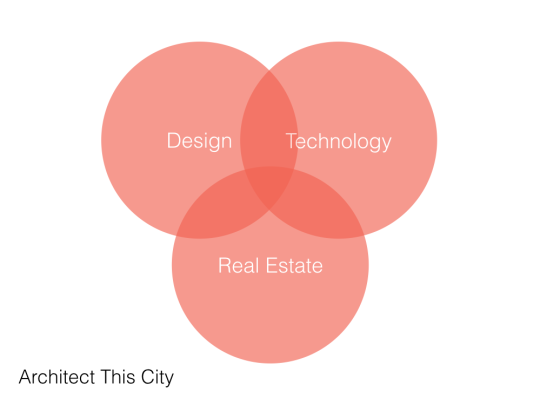
    One of the things that I try and do here on this blog is examine the intersection of design, real estate, and technology. I didn’t explicitly set out to do that, but more and more I find myself thinking that way when I’m writing and when I’m giving talks.

    Part of that is because of my passions, but part of it is because there is a big and important overlap. One example of that is autonomous, self-driving cars. The tech community is enamoured with driverless cars, but everyone involved in the built environment should also be thinking about their impacts. Because it’ll be significant.

    Benedict Evans – who is a venture capitalist with Andreessen Horowitz in the Valley – recently published a post called, 16 mobile theses. It’s a look at 16 topics, trends, and shifts that are happening in the tech space. (There’s also a related podcast discussion.)

    If you’re involved in internet products, you absolutely need to give it a read. But I also think it’s interesting to read it through the lens of a designer or real estate person. Productivity is changing. Notions around the living room are changing. And yes, autonomous vehicles are going to have a profound impact on the urban landscape of our cities – just as cars did initially.

    Below are 3 excerpts from Benedict’s post that I really enjoyed.

    The first is about mobile and just how massive it is:

    “The mobile ecosystem, now, is heading towards perhaps 10x the scale of the PC industry, and mobile is not just a new thing or a big thing, but that new generation, whose scale makes it the new centre of gravity of the tech industry. Almost everything else will orbit around it.”

    The second is about how “networked” is quickly becoming a given:

    “Our grandparents could have told you how many electric motors they owned – there was one in the car, one in the fridge and so on, and they owned maybe a dozen. In the same way, we know roughly how many devices we own with a network connection, and, again, our children won’t. Many of those uses cases will seem silly to us, just as our grandparents would laugh at the idea of a button to lower a car window, but the sheer range and cheapness of sensors and components, mostly coming out of the smartphone supply chain, will make them ubiquitous and invisible – we’ll forget about them just as we’ve forgotten about electric motors.”

    And the third is about those self-driving cars:

    “The move to electric and the move (if and when) to autonomous, self-driving cars fundamentally change what a car is, but also what the whole automotive system might look like. Electricity changes the mechanical complexity of cars and hence changes who might build them and what they might look like. Autonomy and on-demand services change who buys them, meaning the buying criteria will be different. But they could also change the urban landscape just as much as cars themselves did – what do mass-market retail or restaurants look like if no-one needs to park?”

    Can you think of other ways in which tech will impact cities and the spaces we occupy?

  • My blogging methodology

    I often get asked about the methodology behind my blogging. (Though I have written a few posts about it already.) 

    Most people seem to assume that I sit down on the weekends. Draft a content calendar. Write a bunch of posts. And then queue them up for the coming weeks. 

    I don’t do any of that (besides sit down).

    Instead, I get up every morning and I write something. Sometimes I wake up with an idea that’s been bouncing around in my head and sometimes I wake up with no idea what I’m going to write about. 

    In the latter case I just start reading the internet over breakfast until something interesting catches my attention.

    But in both cases, what you are reading about is what I am thinking about at that moment in time. 

    Because in addition to a blog about cities, this blog is about a discipline and a habit. It is about taking time every day to step away from tasks, sort through my thoughts, and write something. It’s one thing to think about something; it’s another thing to write about it.

    And so as much as I hope you all get value out of this blog, it also very much about the personal benefits I receive from doing this same thing over and over and over again.

    Now, in terms of the content, the focus is obviously on city building. But I’m more specifically interested in the following 3 areas and their overlap:

    If you’re a regular reader you know this.

    I didn’t set out to focus in this way, but it just happened over time. This is what I’m passionate about and so I naturally started applying it to our discussion on cities and city building.

    And finally, in terms of writing style, I’ve found myself adopting a particular structure.

    I often start with a personal note – almost as if this were purely a personal blog. Then I dig into a particular city building issue and try to uncover one particular way of looking at it. And then I end with a decisive position. I’ve seen this format on other blogs and I really like it.

    Obviously I don’t always follow this structure. For example, sometimes I haven’t made up my mind on a particular issue. But I try to. I lean towards the belief that a decisive wrong answer is better than a wishy washy right answer. So I push myself to take stances and have an opinion. 

    But in the end, the goal of every post is simply to present one idea for all of us to think about and then discuss. I’d like to believe that it keeps us all sharp. Hopefully it’s working for you.

  • Blogging as city building

    This past week I received 2 separate invitations to talk at events about blogging as a form of city building.

    The first is a Pecha Kucha talk being held here in Toronto on Tuesday, October 20th, 2015. If you’ve never heard of the Pecha Kucha movement, it’s basically all about rapid fire presentations. Each person gets 20 slides and 20 seconds for each one. 

    Here are the details for the upcoming Toronto event:

    image

    The second event is being held in Ottawa in the new year. I’ll write more on that closer to the date when I have more information to share.

    I haven’t yet figured out exactly what I’m going to talk about at each event, but I am starting to think about a few things.

    When I started writing this blog, it was intended simply as an outlet for my own city-related – and also personal – thoughts. Ultimately, the blog evolved into having its own mission, which is to promote the building of beautiful, sustainable, and globally competitive cities. And so clearly in my mind blogging was and is in fact a form of city building.

    But writing is vastly different than the kind of city building I do for a living. During the day I worry about things like rental rates, building setbacks, bulkhead locations, parking counts, and a bunch of other fun stuff.

    The two are certainly related, but the latter feels a lot more tangible. The result is spaces that people will occupy and buildings that will have some sort of impact on the overall built environment.

    But as you all know, city building is a lot more than just bricks-and-mortar. It is political. It is emotional. It is subjective. It is ego-driven. And it is so many other things. Because of this, words do have a role to play in shaping the cities we live in. And hopefully my words are having some kind of positive impact.

    At the same time, I see myself as simply part of a larger set of trends that are happening in both city building, as well as in many other sectors. Trends around transparency, decentralization, and the democratization of information.

    Technology today allows us to connect at zero marginal cost. And that is empowering people like me to self-publish, people to crowdfund real estate development projects, people to crowdsource community feedback for projects, and to do many other exciting things that weren’t possible before. Without this blog, most of you reading this right now would have absolutely no idea who I am.

    So I guess I kind of do know what I’m going to talk about.

  • This is a personal blog

    The internet has created an interesting dialogue between personal identities and corporate brands.

    In the pre-internet and pre-blogging days, it was harder for individuals to establish a strong brand and public identity for themselves, unless of course they were somebody famous. The cost of doing so was simply prohibitive. To promote meant print, TV, radio, billboards, and so on.

    But now promoting can mean anything from tweets to writing a blog like this one. And that has opened up the opportunity for anyone to put themselves out there.

    The dialogue, or tension in some cases, is that it becomes a balancing act: what should I be putting out there? Myself, some faceless brand, or a mixture of the two? Brandon Donnelly or Architect This City?

    If you a run a company, you’re probably debating this. Do I create a personal social media account, one for my company, or both? And how do I go about managing both?

    To be clear, this blog is a personal blog. It’s not a business. 

    Some people have suggested I start to allow multiple authors and turn it into more of a platform. But I thought about that and that’s not what I want to do. Which is why I continue to write at brandondonnelly.com (i.e. myname.com). I like that I can send this URL to anyone and they’re able to quickly understand who I am and what I’m about.

    Because what I write about are things that I’m passionate about: cities, design, real estate, technology, and so on. But I also mix in personal things so that I feel as if I’m writing a public journal. There are many benefits to keeping a journal (my 4th grade English teacher Mr. Hoad-Reddick told me so). And that’s really how this whole blog phenomenon started – they were personal places.

    Over time though, blogs evolved to become less personal and more corporate. And I am sure that some of you would rather I keep things strictly business around here.

    But to be honest, my favorite people and brands to follow online are the ones that do make their content personal. Yes, I want to learn new things about interesting topics, but I also enjoy the connection that comes with reading somebody’s personal journal and engaging in discussion with them.

    In fact, I hate it when my Twitter feed becomes nothing but companies tweeting out polished articles and reports. That’s boring. I like seeing real people in my feed. People sharing what they’re doing and how they’re feeling. People being authentic, genuine, and even vulnerable.

    And ultimately I find it makes their non-personal content that much more engaging. You have context. You understand their thought process. You can read between the lines. Those connections are what social media and blogging are really all about.

    So I’m thinking that I’m going to try making this blog a bit more personal and a bit more playful. I hope you enjoy it. And if you don’t, I’m sure you’ll tell me about it in the comments below.

    On that note, I’m off to the gym to lift some weights. Besides blogging, that’s another one of my habits that I need to do on a regular basis in order to feel normal.

  • Why I write something every single day, even if it’s garbage

    I was out for brunch last weekend with a few close friends from high school. It’s a “monthly reunion” that happens nowhere close to every month. But the hope is certainly there.

    During brunch the topic of my blog came up. And one of my friends asked me how I got started and how the hell I keep up with one blog post every single day. (I get that second question all the time.)

    I’ve written about this before, but I think it’s worth revisiting.

    Earlier this week venture capitalist Fred Wilson wrote a post on his blog called The Blank Screen. And I really liked how he described the experience of writing a daily blog post:

    Sometimes this process produces great insights for me and possibly others. Sometimes it produces garbage. But I’ve come to realize that the daily post, and its quality or lack thereof, is not really the thing. It is the ritual, the practice, the frequency, the habit, and the discipline that matters most to me. And, I would suspect, the same is true of the readers and commenters who frequent this blog.

    Fred’s blog was a major source of inspiration for me. I saw him doing it. I saw the value he was getting out of it. And I wanted to do it too. So I did, almost 2 years ago. 

    But he also inspired me in another way.

    Venture capital and real estate development share many similarities in my mind, even down to the way that deals are often structured with preferred returns and promotes.

    But the interesting thing about venture capital is that it went from a largely closed and “ivory tower” kind of industry to now one where almost every venture capitalist blogs, tweets, and strives for greater transparency (when possible).

    I thought this was a fascinating shift and it made me think that the exact same thing was bound to happen in real estate development. So I am trying to make that happen. Hopefully this blog is helping.

  • Most people still want to raise kids in a house (not an apartment)

    https://500px.com/embed.js

    Yesterday I ran a quick 3-4 question survey on ATC called homes for families. The objective was to get a sense of people’s preferences for apartment vs. ground-related housing (house or townhouse) when it comes time to raise a family.

    The results are public so anybody can take a look at the data. At the time of writing this post there were already 70 responses. That’s not a huge data set, but the data is more or less what I expected to see. 

    Here’s what I found (if the data set was larger, I would have made charts):

    The vast majority of respondents were from Toronto. No surprise there. That reflects the readership of this blog, which itself can be quite Toronto-centric at times. (I’ve been trying to branch out more, I swear.) That said, I was thrilled to also see respondents from cities like Seattle, Denver, Chicago, Porto, and Sydney.

    Of the people who specified that they have kids, 11% live in an apartment. 17% live in a townhouse. And 72% live in a house. If you add houses and townhouses together, you get 89% of people with kids living in some kind of ground-related dwelling.

    Of the people who specified that they don’t have kids, 61% live in an apartment. 6% live in a townhouse. And 33% live in a house. This is the kind of split that I generally expected to see for Toronto.

    For the people who specified that they don’t have kids, they were then asked where they plan to move if/when they do have kids. 13% plan to move to another apartment. 8% plan to move to a townhouse. 33% plan to move to a house. 23% don’t plan to move (i.e. they are planning to stay put). And 23% don’t plan to have a family.

    Interestingly enough, 100% of the people who said that they were not planning to move, were already living in a ground-related housing unit (a house in almost all of the cases). So in reality – and if you exclude the people who don’t plan to have kids – about 83% of respondents expect to raise their kids in a house or townhouse.

    Again, this isn’t a big sample size, but the trend appears more or less flat. 89% of respondents who already have kids are already living in a ground-related unit. And when people were asked to project where they would like to be living once they have kids, 83% said they want a house or townhouse.

    Do you think these numbers accurately reflect consumer preferences in your city?

  • I would make a terrible politician

    Ever since I was a little kid, I have thought that I would one day get into politics. 

    A lot of it has to do with me wanting to affect positive change, which is also one of the reasons I love real estate development (and one of the reasons I write this blog). Developers might have a bad rap in some circles, but I view it as a mechanism for positive change in the built environment.

    However, I have also felt that politics is something that’s better to do when you have grey hair and you don’t actually need the money to live. That way people take you more seriously and you can, hopefully, just do what you feel is right as opposed to playing the political game.

    But more and more I find myself thinking: Brandon, you would make a terrible politician.

    I don’t want to play games. I don’t want to have to think about which stance will win me the most votes. And I don’t want to have to dance around questions so I can avoid upsetting certain constituents. I’d rather be clear and decisive about what I think is the right thing to do.

    But that doesn’t always work so well in politics. So I think I’ll just stick to building things and writing this daily blog.

  • The definition of a habit

    I recently heard someone define a habit as something that you need to do in order to feel normal. In other words, until you do it, you don’t feel yourself. 

    This, of course, could refer to both good habits and bad habits. And most of us probably have habits from both camps. But I like it as a clear and simple definition. 

    I’ve written about disciplines and habits a few times before, because I think of myself as having a few. The most public of my habits is this blog and, at this point, I certainly don’t feel normal if I don’t write everyday. I’ve missed a few days since I started writing in 2013 and each time I felt bad.

    My other big habit is going to the gym and lifting weights. And since my snowboarding injury back in February, I haven’t been able to do this properly (though I still tried). It’s easily the longest break I’ve taken from it since I started this particular habit when I was 16.

    Because of this, I really haven’t felt myself for about 2 months. My energy levels aren’t the same and I just don’t feel as mentally sharp. Those are some of the main reasons why I love this habit. And I still haven’t adjusted.

    Thankfully (with some help from Totum Life Science), my back and shoulder are finally starting to feel better. And so today, instead of writing about cities, I’m going to go to the gym and try and do one of my regular workout routines.

    I’m not quite at 100% yet, but I should be soon. And then I’ll finally feel normal again.