Daily insights for city builders, delivered every morning at 6 AM ET. I’m Brandon Donnelly — a Toronto-based real estate developer and founder of Globizen. I’ve been writing here since 2013.

Tag: bike

  • Building Toronto Tomorrow

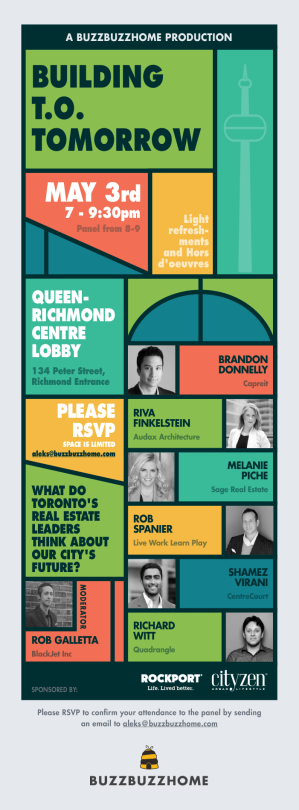
    I’m going to be speaking on a panel on May 3rd, here in Toronto, called Building T.O. Tomorrow. The topic is the future of this city.

    It is being put on by the good folks at BuzzBuzzHome and it will be held in the lobby of Allied’s new Queen-Richmond Centre (134 Peter Street). If you haven’t yet been to this building, that alone makes attending worthwhile.

    Here’s the event poster:
    If you’d like to attend, make sure you RSVP to aleks@buzzbuzzhome.com.

    On a largely unrelated note, I recently picked up the handlebar bicycle mount for my GoPro and I’m looking for some fellow city geeks who would like to ride around the city and film some – potentially cool – videos.

    I find that being on a bike is one of the best ways to experience a city (at least the cities that are actually bikeable). So I’m hoping some of that magic will translate into video. If that sounds at all interesting, drop me a line.
  • Munich is planning an ambitious…Radschnellverbindungen

    On Monday of this past long weekend, I went for a quick bike ride over to the Beaches, up to Little India, and then back down to the St. Lawrence Market. 

    The ride along Lake Shore and through the Beaches is one of my favorites. Minus a few awkward twists and turns as you leave the East Bayfront, it’s generally smooth sailing. It feels a bit like a bike highway.

    It took me about 24 minutes to get to the beach, which means I was traveling on average just over 20 km/h. If you lived in the Beaches and worked downtown, that would be a perfectly reasonable commute in my mind.

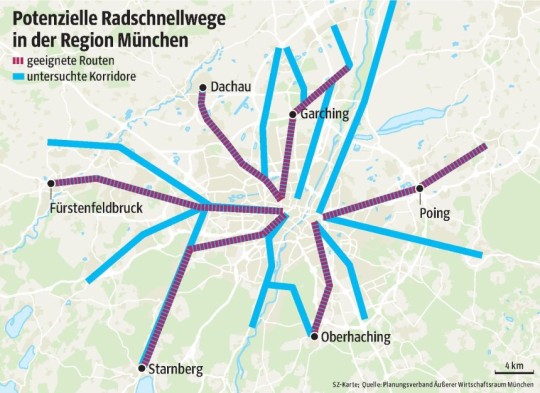
    And it’s for reasons like this that Munich is looking to invest in a huge network of bike highways. They’re calling it a Radschnellverbindungen – which I might start ambitiously calling some of the bike paths in Toronto – and the idea is to connect the city with all of the suburbs.

    Below is a map of the routes they’re looking at. The purple lines are “suitable routes” and the blue lines are corridors they’ve looked at it. If I’m wrong in my translation, blame Google.

    They are still in the feasibility stage, but the idea is for each bike path to be 4 meters wide and have no cross streets or traffic lights – essential a highway for bikes.

    And if you think this all sounds like a pipe dream, check out this video of the recently opened Cykelslangen (Cycle Snake) in Copenhagen.

    [youtube https://www.youtube.com/watch?v=iypvbe6J6Qs?rel=0]

    Would you commute to work on your bike if you had a highway, just like cars do?

  • Saturday morning bike ride to the Bluffs

    This morning I got up at 7:30am and met a good friend of mine at the St. Lawrence Market for breakfast.

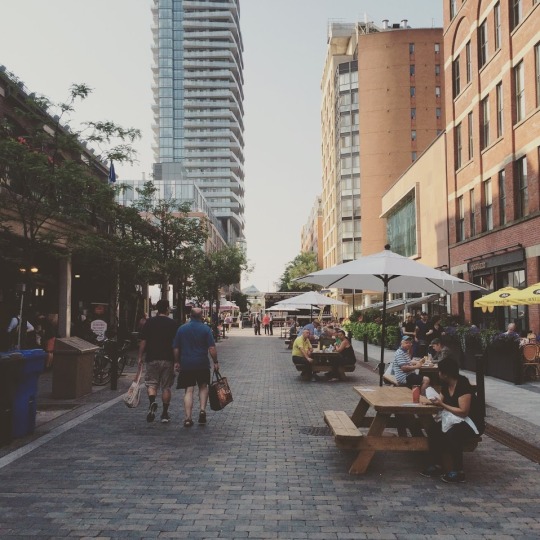
    Market Street is closed to cars today so it’s pedestrian-only. It should be this way all the time. They had a pig roasting on a spit when I walked by and a big stage set up. 

    Below is a photo of what it looks like. Keep in mind that this photo was taken just after 8:00am, which is why it’s not all that busy, yet.

    image

    When Market Street was redone a few years ago, the original vision for the street was for it to be pedestrian-only. But somebody told me that the city didn’t want that. Too bad. It strikes me as a perfect candidate for that.

    After breakfast, we then biked out to the Scarborough Bluffs in the east end of the city. If you click here, you can see the path we took via Strava. It’s only about 15km from downtown. The ride through the Beaches was by far the best stretch. The water was on my right hand side. The pavement was smooth and continuous. And I had George FitzGerald on my headphones for pacing.

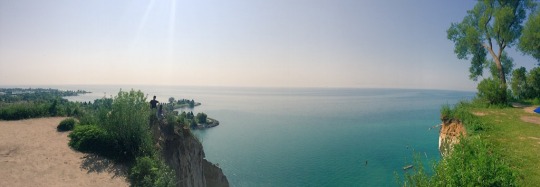
    When we got there, this was the view we were presented with:

    image

    It honestly doesn’t feel like Toronto. The water is turquoise and there’s a beautiful beach at the bottom of the cliffs. It felt like paradise.

    If you’ve never been to the Scarborough Bluffs, do yourself a favor and get out there on a beautiful summer day. It’s the dog days of summer and Toronto is a magical place right now.

  • World’s first connected bike for urban commuters

    image

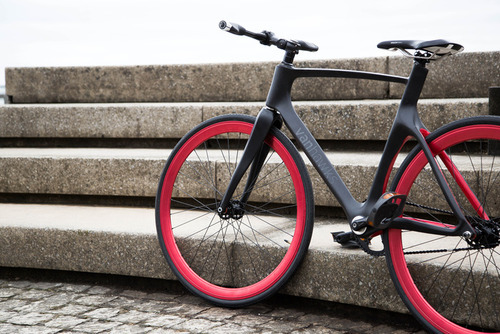
    The Vanhawks Valour smartbike has been making the rounds on the internet over the past few weeks. They’re a Toronto based startup and they’ve just raised $820,000 on Kickstarter to build and sell the first connected smartbike. The bike will eventually retail for around $1,000. 

    Here’s a video that explains it all. If you can’t see it below, click here.

    https://www.kickstarter.com/projects/1931822269/vanhawks-valour-first-ever-connected-carbon-fibre/widget/video.html

    I’m pumped to see a Toronto startup doing so well and attracting so much attention globally. I hope they continue crushing it. Good luck guys.

  • We want what we want

    This past Sunday night I was out for a bike ride with a few friends all around downtown Toronto. According to Strava, we did almost 22 km. Click here to see our route. During the ride, one of my friends said something to me that stood out. He said that when he’s on a bike he wants all cars off the road; but when he’s in a car, he wants all bikes off the road.

    Now, this may seem like a fairly banal statement, but I think it demonstrates a number of things about people and the way we interact with cities. First, we’re all probably pretty selfish. We want what we want at a specific moment in time and we easily forget what it’s like to be on the other side of a situation.

    Second, I think it reinforces what I wrote a month ago in a post called: Every street can’t be everything to everyone. If we want to improve the user experience for a variety of different use cases (driving, biking, walking and so on), we should decide when and where we’re going to optimize for each. 

    The reason my friend said what he said was because we were riding on a road with no bike lanes. We were swerving in and around cars. And when the street is shared like this it naturally becomes a competition of who can be the most aggressive and dominate the road–bikes or cars. But as exciting as that might be, it’s probably not an ideal way to build our cities.

  • Those evil bikes

    image

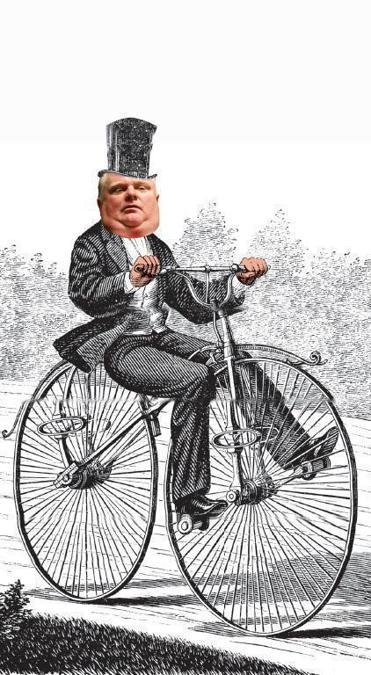
    I just stumbled upon an interesting piece in the Boston Globe (from last December) talking about how the bicycle is “emerging as a new conservative front in the culture wars.

    It starts by talking about Toronto mayor Rob Ford and asks: Who elected this guy? Their response comes down to mode of transport.

    The answer, in large part, comes down to transit. Ford is famously pro-car, and his strongest support came from suburbs outside downtown Toronto, where voters drive into the city during the day and return by car in the evening. One political scientist found that the strongest predictor of whether someone voted for Ford in the 2010 mayoral election was the person’s method of commuting: Car commuters were Ford voters; everyone else wasn’t. Ford repaid their loyalty by declaring on his first day as mayor that the “war on cars” was over; he abolished the vehicle registration tax and announced a plan to kill light rail in the city simply because, he said, streetcars “are just a pain in the rear end.”

    The article then goes on to argue that Ford is at the forefront of a growing conservative movement using bikes as a new political lightning rod. Conservative politicians view cyclists as urbanites (statistically this is true) and therefore not part of their core voter base (statistically this is also true). And so hating on bikes has become a convenient way for them to galvanize their support base.

    But beyond bikes, we’re really talking about a bigger city building issue: How do you unify a city with such divergent priorities? How do we stop this downtown versus the suburbs mentality? These are important questions and I don’t think the answer is to de-amalgamate Toronto. That’s the easy way out.

    Whether we like it or not, the Toronto region functions as one contiguous economic unit and, if we want to be able to effectively compete on the global stage, we’re going to need cohesion. We need to get our house in order. It’s still early days for Toronto’s 2014 mayoral election, but I really hope the next 4 years turn out to be better than the last. I think they will.

  • Walking, biking and taking transit

    Almost 70% of commutes in New York City are done by walking, biking or taking transit. That’s the highest of any American city according to Atlantic Cities:

    Probably the biggest driver of this is urban density. That’s because walking, biking and taking transit becomes impractical when you live in a sprawling city. If you want to get people out of their cars, pay attention to the urban fabric of your city.

    As someone who used to drive to work (out of necessity), but now relies predominately on public transit, I see one of the big advantages as time. If you’re like me, you probably feel time poor. Taking transit gives me a block of time in which to respond to emails, catch up on reading and generally just think.

    In fact, this blog post was written on the subway.

  • [vimeo 76207227 w=500 h=281]

    Biking in Toronto means dodging cabs that don’t signal and closely watching parked cars for doors that might be about to open and could catapult you up and into the air. We have little in the way of dedicated cycling infrastructure. In fact, our incompetent mayor actually celebrates the removal of bike lanes

    Despite all this, Toronto has a fairly robust cycling culture. There’s no shortage of bearded hipsters riding around on fixies with a U-lock in their back pocket. However, it’s nothing in comparison to the city of Groningen in the Netherlands, where over 50% all of trips are made on a bicycle.

    If you’re into cycling or want to be converted, I recommend you take 15 minutes to watch the above video. The hoards of cyclists are interesting to see and they provide good background on how Groningen got to where it is today. Hint: It involves dramatic measures from a leftist city government.

  • In the market for a new bike. It’s unlikely it’ll be this one.