Daily insights for city builders, delivered every morning at 6 AM ET. I’m Brandon Donnelly — a Toronto-based real estate developer and founder of Globizen. I’ve been writing here since 2013.

Tag: beijing

  • Price of 432 square feet in Hong Kong and the future of the region

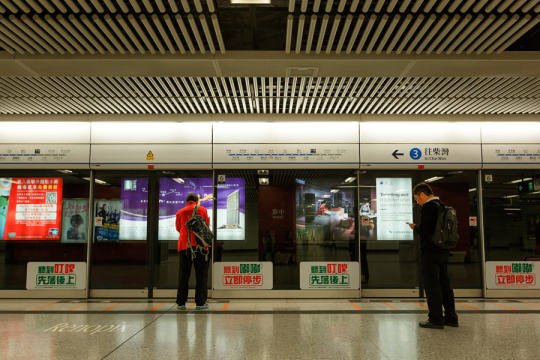
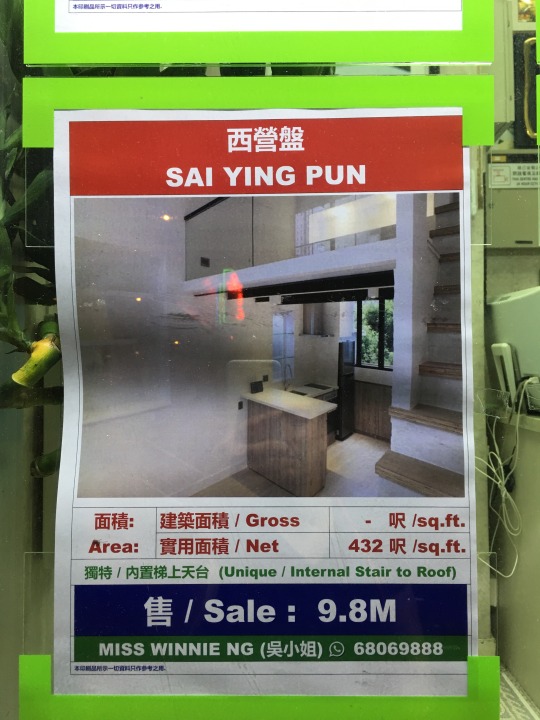
    I came across this Hong Kong apartment listing earlier in the week. Sai Ying Pun is the neighborhood.

    image

    HK$9.8 million = C$1,554,833 based on today’s exchange rate (1 CAD = 6.30293 HKD).

    At 432 square feet (net), that’s C$3,599 psf. But I have also been told that new buildings here could easily fetch C$5,000 psf and probably much more.

    There’s certainly a tremendous amount of wealth in Hong Kong. However, the topic of discussion right now is the new money being generated in mainland China.

    I am curious what all of this could mean for Hong Kong, it’s place within the PRC, and for real estate long-term.

    Hong Kong’s Basic Law stipulates that the region shall maintain a capitalist system and that its current way of life shall be preserved outside of the PRC. 

    But that constitutional document is set to expire in 2047 – fifty years after the handover from the British. And one would assume that China would favor more, rather than less, integration. 

    Already the Cantonese language – the official language of HK along with English – seems to be getting diluted in favor of the “speech of the officials.”

    So what will Hong Kong look like by the middle of the 21st century? Will it simply become a “second city” to Beijing and Shanghai?

    Place your bets in the comments below. Or call Miss Winnie.

  • Dashilar Platform

    I am reading about the Dashilar Platform this evening. I am sure that some of you are already familiar with what’s happening in this Beijing neighborhood since the platform was founded in 2011. But I am just turning my attention to it.

    The Dashilar Platform is an approach to urban regeneration that grew out of a perceived failure, namely the redevelopment of Beijing’s historic Qianmen neighborhood in the lead up to the 2008 Summer Olympics.

    In this latter case, a top-down tabula rasa approach was adopted and the entire precinct was demolished to make way for what – I am told – is now a kitschy tourist area that has lost most, if not all, of its urban authenticity.

    The Dashilar approach runs counter to this and is trying to work bottom-up. Below is a description of their strategy from the Dashilar Platform website. (It feels like it was written using Google Translate.)

    Dashilar Platform is an open platform founded by Beijing Dashilar Investment Limited. As opposed to the conventional concept of blanket development, Dashilar Platform will utilize key nodes which act as catalysts for change in the area. Through research and design investigation, Dashilar Platform will promote certain archetypes, modules, and best-practice examples for both residents and outside investors. The aim is to encourage the community to move independently yet coherently towards the strong yet flexible goal of creating a sustainable community with increasing depth and diversity. All parties are welcome to join Dashilar Platform and participate in our [progressive] Dashilar Project.

    Some view this “urban acupuncture” strategy as simply a way to promote gentrification through small injections of culture and design. But gentrification, without displacement, strikes me as being the point given that the area was in decline. It was also probably one of the only sensible approaches given the fragmented ownership and illegal structures in the area.

    What stands out for me as I read up on the Dashilar Platform, is the acknowledgement that the market alone will not preserve all of which is thought to be currently desirable in the neighborhood.

    Here is an excerpt from a Medium article written by Masha Borak – a journalist and translator based in Beijing:

    Collaboration is not the only interesting thing about the [Dashilar] project. In the words of their representative, the platform wants to take on the role of a “urban curator" that would decide which kind of businesses could get cheaper rent so they wouldn’t be left to the market.

    Given the discussion that is going on in Toronto right now about 401 Richmond Street West – a non-profit and cultural hub in an area of the city seeing significant development pressures – this struck me as being particularly timely and relevant.

    Markets are not perfect.

    If any of you have any familiarity with the Dashilar Platform and what has been happening in this neighborhood, I would love to hear your thoughts in the comment section below.

  • The rise of paradiplomacy

    In the words of Mike Bloomberg, then mayor of New York: “We’re the level of government closest to the majority of the world’s people. We’re directly responsible for their well-being and their futures. So while nations talk, but too often drag their heels, cities act”. Whereas diplomacy is carried out for the state, paradiplomacy is executed for the population.

    Rodrigo Tavares has an interesting article up at the World Economic Forum talking about the rise of foreign policy and international relations at the local level. The argument is that as cities rise (and they are certainly rising) paradiplomacy is inevitable.

    He admits that the diplomatic networks tend to be stronger for regions who have “flirted with sovereignty.” Regions such as Quebec, Catalonia, and Scotland are given as examples. However, this shift is by no means exclusive to them. Lots of examples in his article.

    It is also manifesting itself very differently compared to at the national level. And that’s part of the advantage. One example is London & Partners, which is an arm of the City of London that sells consulting services to other cities and nations who want to replicate its successes. Do nations do this?

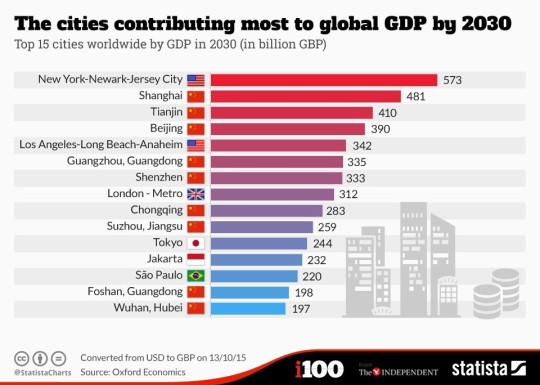
    I have argued before on this blog that our governance structures do not accurately reflect today’s urban reality. Rodrigo’s article is a reminder that we continue to underestimate the role of cities in the global economy.

    I’ll end with this chart from his article:

    image

  • The Beijing supercity

    image

    A few weeks ago I wrote a post talking about megalopolises and the importance of the Great Lakes region in North America. And I suggested that high speed rail could be one way to better stitch together the region.

    To some, I’m sure this sounded like a bit of a pipe dream. But thinking at the megalopolitan scale is something that I think we are going to need to do. Other parts of the world certainly are.

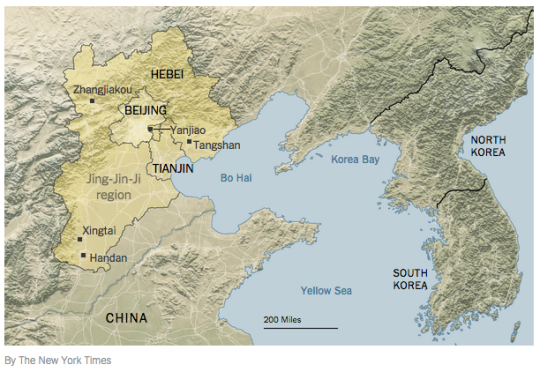
    The Chinese government is in the midst of developing a supercity around Beijing that is called Jing-Jin-Ji. It will span about 82,000 square miles and will house approximately 130 million people. 

    As part of the plan, a high-speed rail network is being built that will bring the region’s major cities within an hour’s commute. The objective is to compete with the Pearl River Delta and the Yangtze River Delta regions in the south.

    It’s a scale of planning and development that most people aren’t used to thinking about. But it’s happening right now.

    Image: New York Times

  • With Vancouver voting “no” to transit tax, could Hong Kong now serve as inspiration?

    https://500px.com/embed.js

    Earlier today it was announced that Metro Vancouver voted “no” to a 0.5% sales tax increase that would have been used to fund a $7.5 billion regional transportation plan. 

    Roughly 62% of respondents said “no”. And not surprisingly, the percentage of people who voted “no” increased as you moved outward towards the suburbs. But even the City of Vancouver itself sided slightly with “no” at 50.81%.

    Since I’m not that plugged into the Vancouver scene, I’m not going to comment on this issue. But hopefully you all will in the comments below. I know that a lot of you are incredibly passionate about this.

    Instead, I’d like to pose two questions. 

    Firstly, why is it that Asian transit operators seem to be so much better than North American transit operators at recovering their costs through fares? (Urban density and car ownership likely have something to do with it). And secondly, why hasn’t Hong Kong’s famous “rail plus property” transit model been exported to North America?

    For those of you unfamiliar with Hong Kong’s Mass Transit Railway Corporation, here’s how much money they make (via The Atlantic from 2013):

    The Mass Transit Railway (MTR) Corporation, which manages the subway and bus systems on Hong Kong Island and, since 2006, in the northern part of Kowloon, is considered the gold standard for transit management worldwide. In 2012, the MTR produced revenue of 36 billion Hong Kong Dollars (about U.S $5 billion)—turning a profit of $2 billion in the process. Most impressively, the farebox recovery ratio (the percentage of operational costs covered by fares) for the system was 185 percent, the world’s highest. Worldwide, these numbers are practically unheard of—the next highest urban ratio, Singapore, is a mere 125 percent.

    In addition to Hong Kong, the MTR Corporation runs individual subway lines in Beijing, Hangzhou, and Shenzhen in China, two lines in the London Underground, and the entire Melbourne and Stockholm systems. 

    And here’s how they do it (also via The Atlantic):

    Like no other system in the world, the MTR understands the monetary value of urban density—in other words, what economists call “agglomeration.” Hong Kong is one of the world’s densest cities, and businesses depend on the metro to ferry customers from one side of the territory to another. As a result, the MTR strikes a bargain with shop owners: In exchange for transporting customers, the transit agency receives a cut of the mall’s profit, signs a co-ownership agreement, or accepts a percentage of property development fees. In many cases, the MTR owns the entire mall itself. The Hong Kong metro essentially functions as part of a vertically integrated business that, through a "rail plus property” model,  controls both the means of transit and the places passengers visit upon departure.  Two of the tallest skyscrapers in Hong Kong are MTR properties, as are many of the offices, malls, and residences next to every transit station (some of which even have direct underground connections to the train). Not to mention, all of the retail within subway stations, which themselves double as large shopping complexes, is leased from MTR.

    I believe that we could do this too. So hopefully we can have a great discussion about it in the comment section below.

  • From bicycles to cars in Beijing

    image

    Earlier this week, a friend of mine shared this TED talk on my Facebook wall talking about the state of climate change in the world. The talk is by Nicholas Stern. And at one point he talks about the incredible urban transformation that has taken place in Beijing over the last couple of decades; specifically, the shift from a bicycle oriented city to a now automobile oriented city.

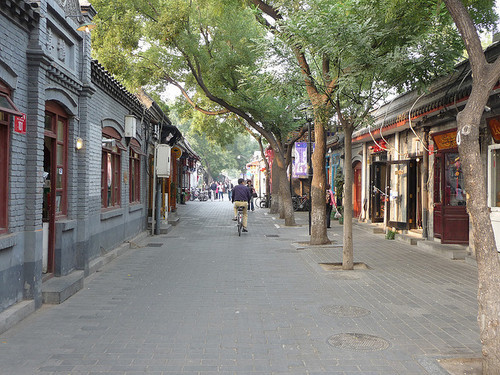
    I knew that this was the case, but it got me thinking. Because alongside this mobility change, there’s also been – not surprisingly – pronounced changes to the urban fabric of the city. The most significant is perhaps the demolition of the city’s hutongs and siheyuan. Hutongs are basically narrow alleys (see above photo) and siheyuan are the traditional Chinese courtyard houses.

    For centuries, these alleyways and courtyard houses have defined Beijing. And while I realize that not all of them were as glamorous as Melbourne’s laneways, only about 1,000 of Beijing’s original 6,000 hutongs remain (according to Time). Which makes me wonder: Is China making the same mistakes that we made in the 20th century?

    Because as the developed world moves toward transit oriented development, bike lanes, heritage preservation, and compact urban living, China has seemingly gone and done the exact opposite. They got everyone off bicycles and into cars, and they went and erased a scale of urbanism that has been in place for centuries.

    This is not to say that China doesn’t deserve to have the same standard of living as the developed world. It absolutely does. It just seems a bit ironic to me that the things we’ve become sharply critical of, are exactly what China seems to want to recreate.

    Image: Flickr

  • The top 10 mega-cities by 2030

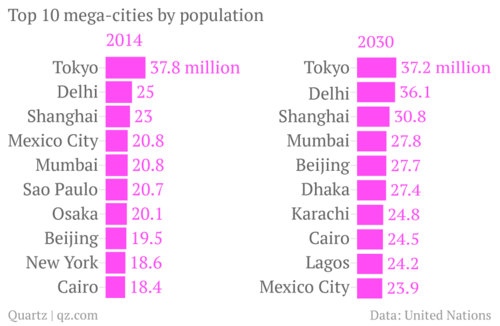
    One of the reasons I’m so fascinated by cities is that it’s becoming increasingly more important to get them right. From about 1831 to 1925, London was the largest city in the world. Its population went from somewhere around 1.5 to 2 million people to nearly 7.5 million. London surpassed Beijing as the largest city and was then surpassed by New York.

    Today our largest cities are significantly bigger. Tokyo has almost 40 million people and London doesn’t even make the top 10. But there’s also a broader shift taking place. According to a new report by the United Nations, most of the world’s largest cities will be in Africa and Asia by 2030. Here’s a chart from Quartz:

    image

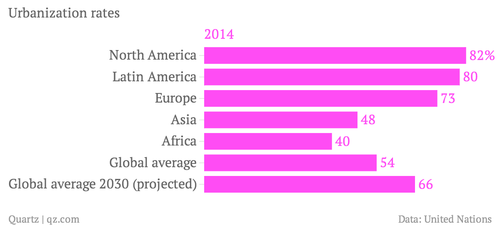
    And the reason for this shift is because Asia and Africa are newly urbanizing, whereas the rest of the world has already urbanized. In North America, over 80% of people already live in cities.

    image

    But even though Asia and Africa are following a trend that has already taken place in the rest of the world, it doesn’t mean we should assume we know what we’re doing. Having spent time in cities like Dhaka, I can attest to the many challenges that these mega-cities are facing and will continue to face as people flood in from the rural areas looking for economic opportunities.

    So while it’s important that we talk about strategies for reviving cities like Detroit – which has a population somewhere around 700,000 – 800,000 people – we should also keep in mind that we have some significant challenges ahead of us in terms of creating a sustainable urban planning agenda for the world.

  • Invest in whatever China blocks

    Last weekend I posted a poll asking readers what they think the “capital of the world” will be in 2050. It was really the 2nd half of a two part poll. The first one asked what people think the capital of the world is today. And the majority of people said New York.

    While New York still came out on top in the 2nd poll, the most notable difference is the rise of Chinese cities. Behind New York is Shanghai, Hong Kong and Beijing. And in a way, this order makes sense to me. China would like to see Shanghai on top of Hong Kong, because it’s perceived as being more Chinese (Hong Kong is still too British). But both are still more economically important than Beijing.

    Still, my own belief is that China is going to need to go through some structural changes before its cities really have a chance of dethroning New York (or London, depending on your vote in the first poll). And I think it has to do with openness, transparency and freedom. Fred Wilson probably put it best when he said to basically invest in whatever China blocks:

    As our [Bitcoin] panel was winding down, Superintendant Lawsky asked what countries were doing it right. I didn’t answer that question but instead decided to talk about one that isn’t doing it right and brought up China and noted that a fantastic investment strategy would be to have invested in every Internet service that China has blocked. My point being that the services China likes to block are the really important ones that have been built on the Internet.

    He then goes on to say that he believes there’s a strong correlation between innovation and freedom. And I would agree. So until China stops blocking the innovation that is likely going to drive the world forward, I think it’s going to struggle to assume a true leadership position.

    What are your thoughts?