Daily insights for city builders, delivered every morning at 6 AM ET. I’m Brandon Donnelly — a Toronto-based real estate developer and founder of Globizen. I’ve been writing here since 2013.

Tag: athiscity

  • Are there enough nerds in Miami?

    image

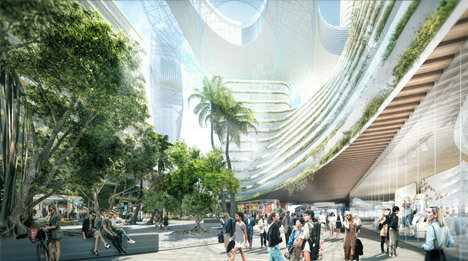
    I was browsing through my online reading list this morning (as I do every morning), and I stumbled upon this Dezeen article talking about a big new 6.5 million square foot development being proposed in Miami’s Park West neighborhood. 

    The goal of the project is to transform Miami into “Florida’s Silicon Valley.”

    This sort of thing is happening all around the world. From Buffalo to Lisbon, cities everywhere are betting on tech, startups, and entrepreneurship to grow their economy in the 21st century. And I personally think that’s really exciting.

    But as I was reading the article, I couldn’t help but think of an old essay that Paul Graham wrote back in 2006 called, How to be Silicon Valley. (Paul Graham is a famous Silicon Valley entrepreneur/investor).

    In his essay Graham argues that to be or to replicate the model of Silicon Valley in your city, you basically need two types of people: rich people and nerds. The idea, of course, being that the nerds work on the cool new ideas and the rich people then fund them.

    Using this logic, he specifically calls out Miami as a city where few startups happen and as a city not likely to become another Silicon Valley. Though there’s lots of money and rich people in Miami, there simply aren’t enough nerds. In Graham’s words: “It’s not the kind of place nerds like.”

    But that was back in 2006. 

    The iPhone didn’t even exist yet. Things have since changed. Now there are successful tech companies like Snapchat (valuation north of $15 billion) that are based out of cities like Los Angeles. And I think you could argue that Los Angeles and Miami do share some similarities.

    So while it may have seemed far fetched in 2006 for Miami to become a startup hub, is that really the case today?

    Image: Dezeen

  • Revisiting electronic road pricing as a way to fight traffic congestion

    https://500px.com/embed.js

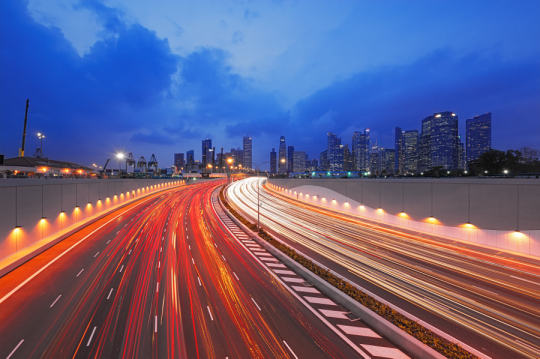
    As disappointing as this week’s vote on Toronto’s Gardiner Expressway East was, there is one good thing that has come to the forefront and that is the will to explore road pricing. At this point, I have almost no confidence that this City Council would ever vote it in, but at least we’re talking about it. That’s better than not talking about it.

    If you’ve been reading Architect This City since the beginning, you might know that I’ve been a vocal supporter of road pricing. I wrote two posts on the topic: The case for electronic road pricing (which was based on an HBS case I did as part of my MBA) and More on electronic road pricing (which was a Lunch & Learn I did while I was at TAS).

    I continue to believe that road pricing is a highly sensible solution to big city traffic congestion. But I do think that an electronic/variable pricing model is preferable to and more equitable than a flat toll model. A variable model means that the price of using the road adjusts based on congestion levels and/or the time of day. I also think that we should use as much of the revenues as possible to fund continuous transit improvements.

    If you’re interested in learning more about this topic, check out the two posts mentioned above. I’d also love to hear your thoughts on road pricing in the comment section below. Would you welcome it in your city?

  • Fun Friday: Everyone’s Upstairs Neighbors

    This week has not been a good week for Toronto city builders. So I think a Fun Friday post is in order to lighten things up around here. (I’m stealing the idea of a Fun Friday post from Fred Wilson’s technology blog – he has been doing them for years).

    Here’s a short comedy sketch called, Everyone’s Upstairs Neighbors. If you’ve ever lived with a noisy neighbor above you, this will all make perfect sense to you and I think you’ll find it hilarious. Click here if you can’t see the video below.

    [youtube https://www.youtube.com/watch?v=4IRB0sxw-YU?rel=0&w=560&h=315]

  • Gardiner East vote shows that Toronto is not yet ready to be an urban leader

    image

    Today is very sad day for Toronto. 

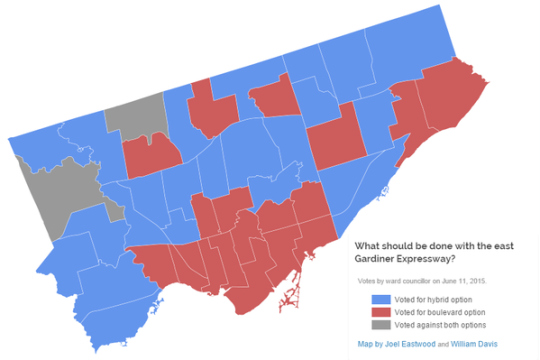
    After 2 days of debate, City Council voted this afternoon, 24-21, in favor of rebuilding the elevated Gardiner Expressway East (”hybrid” option) that runs along the city’s eastern waterfront.

    And once again, Toronto is largely divided. See above image prepared by Joel Eastwood and William Davis.

    It’s the old city of Toronto (who uniformly wanted the elevated highway replaced with a boulevard) versus the rest of the city (who for the most part voted for the hybrid).

    I can’t begin to tell you how deeply disappointed I am by not only the outcome, but also by how it happened and why it may have happened. For all of our talk about being a progressive global city, today we are clearly not that. 

    Because more than a vote on what to do with the Gardiner East, today was a vote on how we believe we should be building this city for the future. 

    When the Gardiner East was first built, the vision was one of fluid private mobility, where it would be possible to quickly circle around and across the city on an endless sea of highways. Detroit was doing it. Baltimore was doing it. Everybody was doing it.

    In other words, we were building our environment around the car. And our primary – some would say singular – focus was to ensure that the car could move unencumbered around the city. That’s why Toronto is now home to the busiest and one of the widest highways in the world.

    But despite all this, Toronto remains crippled by gridlock. And so does every other big city city in the world that has bet on cars as the solution. Why is that?

    Because that model doesn’t work.

    The I-10 Katy Freeway in Houston is 26 lanes at its widest point. It is the largest highway in the world by number of lanes. But from 2011 to 2014, commute times in some sections increased by as much as 51%. Is that because they haven’t built enough highway? How much is enough?

    By comparison let’s look at a city that has bet on transit as the solution: Tokyo. 

    The metropolitan area of Tokyo is approximately 37.8 million people. That’s more than the entire population of Canada and by most accounts is the largest urban region in the world. But despite its size, Tokyo is consistently ranked as one of the most livable cities in the world and also one of the most efficiently run.

    Interesting.

    So when I heard Councillors going on today about how a vote for the “hybrid” is a vote not to increase congestion and gridlock, it became abundantly clear that many – apparently most – people in this city still do not appreciate what it is going to take to get us efficiently moving as this region approaches 10 million people by 2041.

    This should not have been a debate about 3 minutes. That, as I’ve said before, is a red herring.

    Of course, there was lots of lip service to transit. Many seemed to agree that transit is the future. And some even went so far as to say that removing the Gardiner East and replacing it with a boulevard is the right thing to do, but that we simply can’t do it now because we haven’t made the requisite investments in transit. 

    If transit is truly what we want, then we why don’t we take the boulevard savings and put it directly into transit?

    To me it’s like saying: I really want to be homeowner, but I can’t afford it right now. So instead, I’m going spend more on rent so that I can burn through more money and make it even more difficult for myself to eventually become a homeowner.

    Because that is what happened today. 

    We voted to overspend on a stretch of elevated highway that is used by a small sliver of downtown commuters (~3%), instead of replacing it with a cost-effective surface boulevard (with similar road capacities) and then prioritizing the proven solution to urban congestion: transit.

    At the same time, we also made a number of other things clear in today’s vote. 

    We made it clear that cars matter more than our city’s public realm; that cars matter more than our waterfront revitalization plans; that cars matter more than our environment and our “efforts” to reduce GHG emissions; and, frankly, that cars matter more than our overall quality of urban life.

    I believe that cars will always be a part of our cities, but I don’t believe in putting them ahead of you and I. I guess old habits die hard. That my friends, really sucks.

  • On boulevards vs. freeways

    Toronto’s Director of Urban Design, Harold Madi, recently did a 20 tweet series on boulevards. And since today is Gardiner East day, it seems appropriate to share it with you all. Thanks to Shawn Micallef for using Storify to put it all together neatly. If you can’t see all the tweets below, click here.

  • The big challenge is suburban infill

    Photograph Thorncliffe Park Drive (TORONTO) by Jenver Rosales on 500px

    Thorncliffe Park Drive (TORONTO) by Jenver Rosales on 500px

    Between the 1950s and 1980s, Toronto built a lot of towers. A 2010 report by the Centre for Urban Growth and Renewal identified 1,925 rental apartment towers of 8 storeys or more across the Greater Toronto Area. 

    That’s the second largest inventory of apartment towers in North America – many or most of which are in car-oriented suburban neighborhoods.

    Of course, Toronto continues to build a lot of towers. But this second and current wave of towers is quite different than the last. Virtually all of them are now condo (as opposed to rental) and most are concentrated in central neighborhoods that are generally well-serviced by transit.

    This has created a lot of positives for the city. It brought more people into the core to live, which in turn brought more retailers and employers into the city. It has created what I believe is a more vibrant and exciting 24/7 city.

    But this return to city centers (as well as the economic spikiness it has created) is now well established both in Toronto, as well as in other cities all around the world. Every real estate conference or panel you go to now talks about Millennials and their desire to be in walkable communities. We got it.

    And relatively speaking, those kinds of communities aren’t that difficult to create when you’re infilling city centers. Certainly not at this point. The street grid and bones are usually all in place. And the urban form is often conducive to transit.

    The real challenge – and thus opportunity – for Toronto and lots of other cities is how to urbanize the (inner) suburbs and in particular these “towers in a park”. If you follow this space, you’ll know that there’s a lot more that we could be doing.

    How do we rethink their relationship to the rest of the city? How do we better connect them through transit? How do we plug them in economically? In my opinion, these are far more difficult tasks. But they’re important ones for the long-term success of our cities.

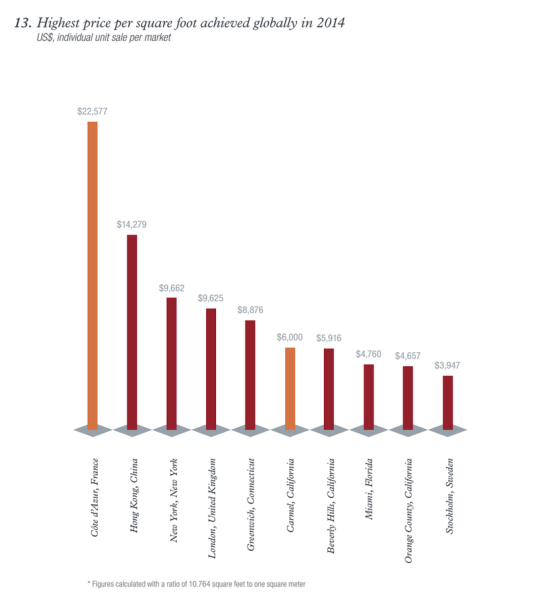
  • The world’s top 10 cities for prime property

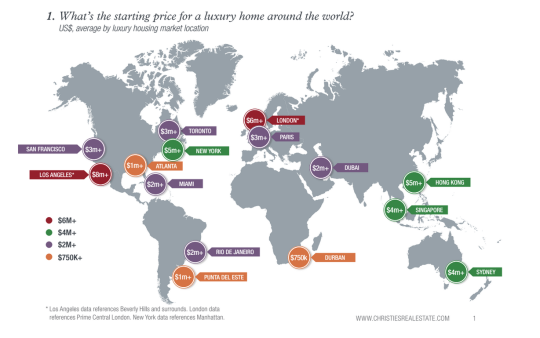
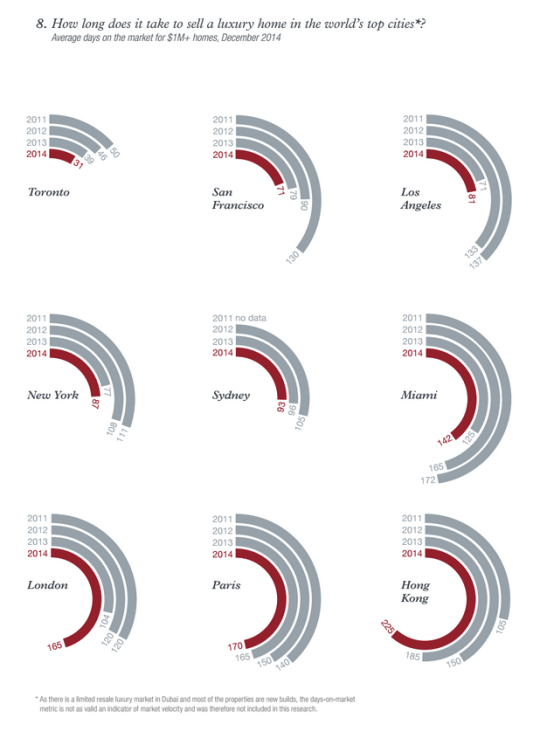
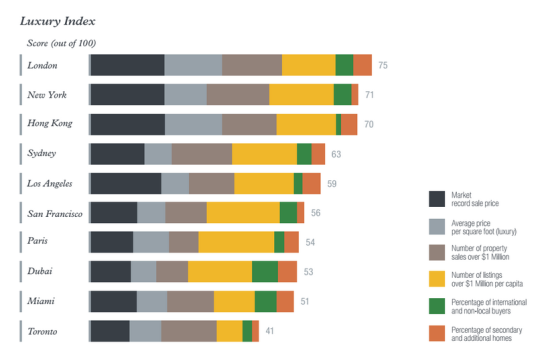
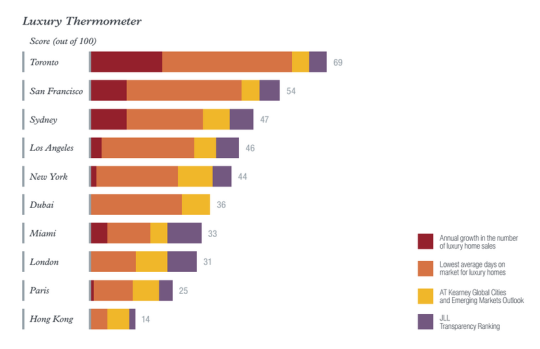
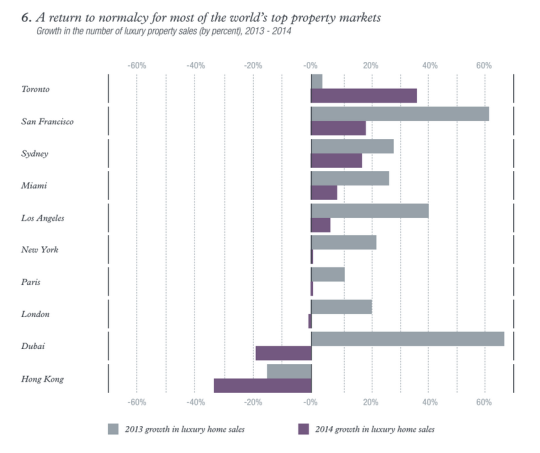
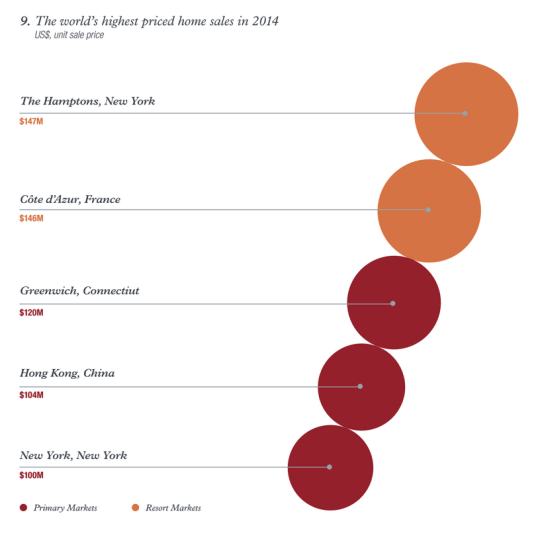
    This morning I read through a real estate report called Luxury Defined. It’s a look at the global luxury real estate market across “the world’s top 10 cities for prime property” and about 70 regional and resort destinations.

    It’s interesting to look at the trends and see how high-net-worth individuals (HNWIs) are choosing to allocate their funds in residential real estate. Here are some of the charts and diagrams that caught my eye as I was going through it (you may need to zoom your browser in):

    If you’d like to download the full report, click here. It’s free, but you’ll need to enter your name and email address.

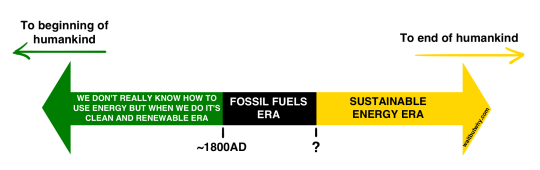
  • A history of energy and cars (and how Tesla is changing the world)

    image

    I spent this morning reading a long – but incredibly worthwhile – article by Tim Urban on Wait But Why called, How Tesla Will Change The World. (Are they all this long? It was my first time reading WBW.)

    The article, of course, talks a lot about Tesla, but it’s so much more than that. It talks about (1) the history of energy, (2) the history of cars, and then about (3) Elon Musk and Tesla. If you have the time, I highly recommend you give it a read.

    But since it is long and many of you probably won’t do that, here’s an extract from the third section on Tesla (EV = electric vehicle/car):

    EVs aren’t there yet. Right now, there are legit cons. But as the next few years pass, EVs will get cheaper, battery ranges will get longer and longer, Superchargers will pop up more and more until they’re everywhere, and charging times will just decrease as technology advances. Maybe I’m missing something, and I’m sure a bunch of seething commenters will try to make that very clear to me, but it seems like a given to me: the gas era is over and EVs are the obvious, obvious future.

    The car companies, as I mentioned, aren’t happy about all of this—they’re acting like a kid with a cupcake whose parents are forcing them to eat their vegetables.

    But how about the oil industry?

    Unlike car companies, the oil industry can’t suck it up, get on the EV train, and after an unpleasant hump, continue to thrive. If EVs catch on in a serious way and end up being the ubiquitous type of car, oil companies are ruined. 45% of all the world’s extracted oil is used for transportation, but in the developed world, it’s much higher—in the US, 71% of extracted oil is used for transportation, and most of that is for cars.

    As Tim states at the end of his article, this piece is all really about change and progress. Progress is not inevitable. It doesn’t just happen as time marches on. It happens because of strong willed people who believe in something that many others probably don’t. 

    Because with many changes – regardless of how critical or beneficial they may be to society as a whole – there will almost always be entrenched interests that would rather see things stay exactly the same. But in my view, that shouldn’t get in the way of doing the right thing.

    Image: Wait But Why

  • An interview with Archipreneur magazine

    I was recently interviewed by a Berlin-based online magazine called Archipreneur. You can read that interview by clicking here.

    If you haven’t yet heard of Archipreneur, you should definitely check it out. It’s a great read. The magazine is dedicated to the intersection of architecture and entrepreneurship. They cover a lot of the same topics that I cover here on Architect This City – such as design, real estate development, technology, and so on. But they are generally more focused on architects (or people trained as architects, in my case) who are doing interesting things other than traditional practice.

    In my case, it’s real estate development and this blog. Check out the interview here.

  • 14 CityBuilders come together in support of removing the Gardiner East

    This will probably be my last Gardiner East post before the decision goes to City Council next week on June 10th. But I have such good news that I need to share it with you all.

    This morning 14 “CityBuilders” came together for the first time in support of removing the elevated Gardiner East and replacing it with a surface boulevard. They are real estate developers, investors, and other prominent business leaders in the city. And they sent a letter this morning to every single Toronto City Councillor outlining their position. 

    I can’t tell you how thrilled I am to see this happen, so I’d like to call out each and every member of the CityBuilders. They are (in alphabetical order):

    1. Castlepoint Numa
    2. Cityzen Development Corporation
    3. Context Development
    4. Continental Ventures
    5. Daniels Corporation
    6. Distillery Historical District
    7. Dream Unlimited Corporation
    8. Greybrook Capital and Greybrook Realty Partners
    9. Kerbel Group Inc.
    10. Manulife Real Estate
    11. QQE 162
    12. Streetcar Developments
    13. TAS
    14. Tridel Group of Corporations

    These are some of Toronto’s most important city builders and I am sure this will get the attention of both Mayor John Tory and the rest of City Council.

    If you haven’t yet signed the Gardiner East petition that Stephen and I started, please do so by clicking here.

    Happy Friday 🙂