Daily insights for city builders, delivered every morning at 6 AM ET. I’m Brandon Donnelly — a Toronto-based real estate developer and founder of Globizen. I’ve been writing here since 2013.

Tag: athiscity

  • “Am I supposed to like this?”

    image

    Today I had lunch at Webers Hamburgers so that I could see what all the fuss is about. Here’s my check-in.

    For those of you who don’t know Webers, it’s a burger place on the side of the highway in Orillia, Ontario. It opened in 1963 with the goal of targeting cottage goers and has since become an “institution” in the region.

    I don’t think I’ve ever been, so I figured I had to give it a try.

    Before going, I decided to ask around to see what people thought of the burgers. And in almost all of the cases, I got the same response: “You can get better burgers in the city. But you have to go. It’s an institution. It’s tradition.”

    And that ended up being a very accurate description.

    Were the burger goods? Yes. Were they mind blowing? No. In fact, they’re pretty basic burgers. You have a choice of 3 different toppings and 2 different condiments. That’s it. Want mayo? Sorry, they don’t do that.

    But in the end, it’s not really about the burgers.

    While there, I was reminded of a blog post by Seth Godin called, “Am I supposed to like this?” His opening line is the following: “If we think we are, we probably will.” And it’s all about how we make judgments well before we think we do (and how marketers invest in that).

    What matters a great deal is how we’re “supposed to” feel about something. If a wine is expensive, we’re “supposed to” to think it tastes better and our mind usually makes that a self-fulfilling prophecy.

    And in this case, Webers has become symbolic of summer and good times at the cottage. You’re “supposed to” stop there whenever you go to the cottage. It’s tradition.

  • The Laneway Project is looking for a Fundraising Coordinator

    https://500px.com/embed.js

    As many of you know, I advise a non-profit called The Laneway Project. The goal of the organization is to change Toronto’s relationship with its laneways and help create laneway friendly policies and procedures.

    It’s something that I’m incredibly passionate about. I believe that our laneways represent a missed opportunity, both from a public space standpoint and a real estate standpoint. And I’m confident that Toronto will eventually figure that out.

    If you’re also interested in this space, now is your chance to get involved. The Laneway Project is currently looking for a Fundraising Coordinator to help develop its operational funding strategy and to help with actual fundraising.

    Since it’s still early days, this is a volunteer position (with an honorarium). But it’s a great opportunity to get involved early with a passionate group of city builders. So I hope you’ll consider applying. Click here for the full job description.

  • SQFT launches as America’s first DIY real estate portal

    image

    I am currently in Hunstville, Ontario (Muskoka region) and I have about 15 minutes before I need to head out for dinner. So this is not going to be a long post.

    I did, however, want to share with you a new real estate app that I learned about today called SQFT. (Thanks Evgeny.) They were just featured in TechCrunch and their mission is to make it easier and cheaper for people to buy and sell homes using just their smartphone. They’re calling themselves the first DIY real estate portal in America.

    As a homeowner, you create the listing yourself and then it gets syndicated out to hundreds of other websites (including the big players like MLS, Zillow, and Trulia).

    You’re still technically working with “independently operated licensed real estate agents”, but the app itself handles setting up the showings and even the offer negotiations. Their hope is that they can reduce real estate commissions to < 2%.

    This is a space that I’ve been following closely for a number of years now and seems to be really heating up. Opendoor.com is another online real estate platform that I’ve written about a few times. And in my view, they are the furthest out front.

    My realtor friends don’t like it when I say this, but I think we’re going to see a lot of changes in this space in the near future.

  • Before & After: Queens Quay Boulevard

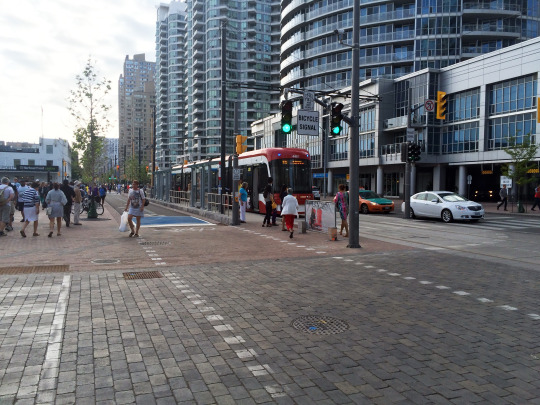
    Yesterday I spent the evening walking Toronto’s new Queens Quay Boulevard, which fully reopened this past Friday after a number of years of construction. 

    It is part of Waterfront Toronto’s revitalization efforts and represents a solid decade in the making. West 8 of Rotterdam and DTAH of Toronto won the international design competition for the central waterfront back in 2006. And this past weekend a big component of that vision was unveiled.

    But first, let’s take a look at what Queens Quay Boulevard used to be like. Here’s a Google Streetview image from 2009:

    image

    The streetcars ran in the middle of the street. Cars drove on the north and south side on both sides of the tracks. And the sidewalks were fairly small and usually at capacity during the busy summer months. It wasn’t a great street.

    Now here’s a photo that I took yesterday from that same vantage point (2015):

    image

    The street has been completely reorganized. On the north side of the streetcar tracks is where the cars now drive in both directions. On the south side of the tracks the lanes of traffic have been replaced with a 2-way bike trail (part of the Martin Goodman Trail). And on both sides the pedestrian areas have been greatly expanded. It’s now a magnificent street.

    If you haven’t yet been down to the new Queens Quay, I would encourage you to check it out on either foot or bicycle. (If you go on bicycle, let me know and I’ll join you.) 

    Toronto may have taken a giant step backwards with its recent decision on the Gardiner East, but we also took a giant step forward with the reopening of Queens Quay Boulevard.

  • Why I write something every single day, even if it’s garbage

    I was out for brunch last weekend with a few close friends from high school. It’s a “monthly reunion” that happens nowhere close to every month. But the hope is certainly there.

    During brunch the topic of my blog came up. And one of my friends asked me how I got started and how the hell I keep up with one blog post every single day. (I get that second question all the time.)

    I’ve written about this before, but I think it’s worth revisiting.

    Earlier this week venture capitalist Fred Wilson wrote a post on his blog called The Blank Screen. And I really liked how he described the experience of writing a daily blog post:

    Sometimes this process produces great insights for me and possibly others. Sometimes it produces garbage. But I’ve come to realize that the daily post, and its quality or lack thereof, is not really the thing. It is the ritual, the practice, the frequency, the habit, and the discipline that matters most to me. And, I would suspect, the same is true of the readers and commenters who frequent this blog.

    Fred’s blog was a major source of inspiration for me. I saw him doing it. I saw the value he was getting out of it. And I wanted to do it too. So I did, almost 2 years ago. 

    But he also inspired me in another way.

    Venture capital and real estate development share many similarities in my mind, even down to the way that deals are often structured with preferred returns and promotes.

    But the interesting thing about venture capital is that it went from a largely closed and “ivory tower” kind of industry to now one where almost every venture capitalist blogs, tweets, and strives for greater transparency (when possible).

    I thought this was a fascinating shift and it made me think that the exact same thing was bound to happen in real estate development. So I am trying to make that happen. Hopefully this blog is helping.

  • How immigration shaped Toronto and New York

    One of the things that Joe Berridge reminded me of in his talk yesterday, is that the story of Toronto is really the story of immigration. 

    In his words, Toronto has become the success story that it is precisely because we are good at taking in lots of immigrants and making them economically productive. 

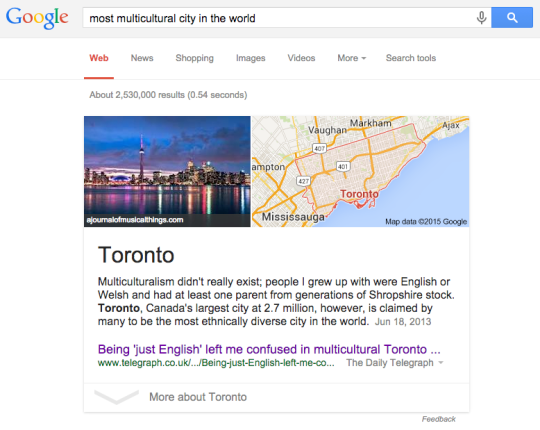
    Sure, there are many things that we could be doing better, but you don’t get to be the most multicultural city on the planet without doing a lot of things right. More than half of this city is now foreign born. The term “visible minority” is quickly expiring.

    image

    And more than anything else, this accomplishment is arguably what has allowed us to become the global city that we are. Click here for a fascinating chart from the Toronto Star that allows you to see the number and source of immigrants that have come to this city over the last half century.

    But of course, Toronto is not alone in this accomplishment.

    Urban economist Edward Glaeser wrote a great essay back in 2005 called Urban Colossus: Why is New York America’s Largest City? It’s an incredibly interesting read for those of you interested in cities and so I definitely recommend it.

    But the crux of his argument is that New York is the largest and most dominant city in America because of geography – specifically its deep harbor – and because of its success in manufacturing.

    What this meant is that New York became the center of shipping in the country and the point of entry for the majority of immigrants coming into the United States. But since transportation costs were still relatively high at the time, most immigrants arrived in New York and stayed in New York.

    Luckily, New York had a robust manufacturing economy – notably because of sugar refining, publishing and printing, and the garment industry. This allowed the waves of immigrants flooding into New York to become economically productive.

    From 1850 to 1920, the population of the New York grew about 800% from roughly 700,000 people to over 5.6 million people.

    So the moral of the story is simply that immigration has and will continue to play a pivotal role in the shaping of our cities. Canada has a sub-replacement fertility rate somewhere around 1.61 births per woman (2012). This is lower than that of United States, which is around 1.88 births per woman.

    That means that without immigration, we do not grow. We shrink. And that’s usually not a great thing for economies.

  • 7 ideas and lessons for global cities

    Today I had the pleasure of attending a really great talk by Joe Berridge (partner at the planning firm Urban Strategies) that was all about how Toronto can best maintain its position as a globally competitive city. 

    He went through 7 ideas/lessons. Though they were specifically aimed at Toronto, most of them could be applied to any city that’s concerned about its position on the global stage. They are:

    1. Invest in infrastructure, such as transit, airports, and so on. Sustainable funding and proper governance are critical. Transit planning in Toronto has become far too political and it’s crippling our city.
    2. Embrace Uber and get them using our Presto card so that it becomes a legitimate part of the city’s public transit network. Every city in the world is battling with Uber. Toronto has the opportunity to take a leadership position.
    3. Build a new convention centre and invest more in tourism and economic development. Berridge’s suggestion was something big at Ontario Place/Exhibition Place.
    4. Build new Universities to fuel the knowledge economy. See New York’s Cornell Tech campus as an example.
    5. Invest in infrastructure and institutions that turn research and development into businesses. Platforms like MaRS.
    6. Start thinking big. This was specifically geared towards Toronto, as his argument was that we do a lot of the small things right, but we’re missing out on the really big opportunities.
    7. Create Suburban Enterprise Zones to help drive employment outside of the core and along new transit corridors.

    Alongside these ideas and lessons, there was a fascinating sub-argument. And that is that Toronto is really an accidental global city. In other words, we didn’t set out to become a top 10 global city and one of the fastest growing cities in the developed world.

    But by getting a lot of things right – such as a high quality of life – and through a bit of luck – such as Montreal shooting itself in the foot – we somehow became one. But we absolutely shouldn’t take that for granted. There’s lots of work to be done.

  • The PRESTO Push

    image

    Back in 2004, I spent a summer living in Asia. And one of the things that I remember really standing out for me was Hong Kong’s Octopus card. It’s a refillable card that you just tap to get onto transit. Lots of cities have them.

    But the cool thing about the Octopus card was that you could use it so many other places besides just on transit. I don’t know know what it’s like today in Hong Kong, but I remember also using it in taxis and to buy breakfast in the morning at Pret a Manger. That was pretty incredible for 2003.

    This was also great for me because I’m one of those people that dislikes carrying around paper money/change. I almost never spend my change and so it just ends up just accumulating in a container beside my front door. Here in Toronto we also use microscopic transit tokens, so that adds another layer of inconvenience.

    But that’s all changing.

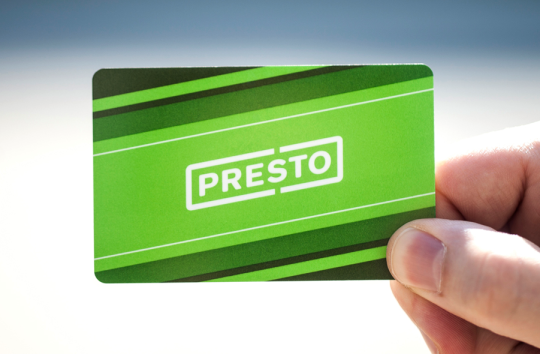
    Toronto now has its own version of the Octopus card and it’s called PRESTO. Technically it launched in 2009, but I only recently noticed the card readers appear at my home subway station (King Station). So tonight I decided to finally pull the trigger and order a card. I’ve been waiting 11 years for this moment 🙂

    And I was doing that, I noticed this message on the website:

    image

    Not surprisingly, we seem to be pushing to get PRESTO rolled out before the world comes to visit. And I think that’s a great thing.

    One of the big benefits of hosting an event like the Pan Am Games or the Olympics is that it creates a hard deadline to get things done, which is something governments often need. It’s a bit like tidying up before guests come over for dinner. You find a way to do it before people arrive.

    There’s a lot of debate about whether or not it makes sense for cities to spend the money on playing host city. But I don’t think we should ignore the fact that they can be a great catalyst for city building. Things get done. And oftentimes done is better than perfect.

    Good news: I’ve been told that the PRESTO system will be compatible with mobile phones and near field communication. Because let’s face it, cards won’t be around that much longer.

  • 11th Annual Land & Development Conference

    Today I spent the day at the 11th Annual Land & Development Conference here in Toronto. I found it particularly good this year, but it’s now late, I’m tired, and I want to go watch game 6 of the NBA finals. So I think this is going to be a fairly short post.

    Here’s a summary of some of my key takeaways from the day (a lot of it is Toronto-centric):

    • Increasingly, the commercial and residential sides of the real estate development business are converging. And it’s being largely driven by the focus on urban intensification and mixed-use.
    • This is leading to an “institutionalization” of the residential side, which has historically been the domain of smaller private/local companies and rich families.
    • Merger is creating complexity around asset valuations: Is it about the income (cap rates) and/or the future development potential?
    • Low rise house prices in Toronto continue to skyrocket. Supply is highly constrained. This has been the story for a number of years now.
    • High rise condo prices in Toronto continue to be more or less flat (modest increase). The industry is going to need to figure out how to work with and compliment the current surge in rental apartment development. There is an element of competition between the two asset classes.
    • According the RealNet’s new home price index, the spread between low-rise and high-rise housing in the Greater Toronto Area widened to $326,659 as of this past April (2015).
    • Rental Apartment Case Studies: Motion on Bay by Concert Properties (Bay and Dundas) was underwrote at $2.60-2.80 psf rents back in 2009. Rents are now in the $3 range. The Heathview by Morguard (Bathurst & St Clair) had $2.80-2.90 psf rents in its pro forma. It achieved and beat these numbers.
    • There’s a flood of Asian money coming into (1) Vancouver and then into (2) Toronto looking for development projects. There appears to be a lot of impatient and/or dumb capital out there. Challenge remains finding good development sites.

    I will end by saying that I found there to be greater transparency at today’s conference. There was a lot of talk about deal specifics and I don’t remember seeing this much detail at past conferences. 

    Maybe I just wasn’t paying attention closely enough before or maybe the industry is slowly becoming more transparent. I hope it’s the latter.

    If you were there today and I missed something groundbreaking, please share it in the comments below!

  • Visit Apartment N°50 in Marseille next month

    Completed in 1952, the Unité d’habitation in Marseille, France (more specifically known as the Cité radieuse) is one of the most famous buildings by Swiss-French architect, Le Corbusier. Every architecture student learns about it at one point or another.

    It’s famous because it was a model for a new way to live and build cities. Le Corbusier envisioned the apartment building as a kind of vertical city. The corridors weren’t thought of or referred to as corridors, they were instead called streets and lined with shops and businesses.

    Of course, Le Corbusier later became famous for inspiring an entire generation of buildings that many people now hate. Some believe he was completely misguided and others believe we simply bastardized his intents. But whatever the case may be, he certainly had a profound impact on cities.

    So if you happen to be in Marseille between July 4 to 19 (2015), you should check out an installation at the Unité d’habitation called Apartment N°50.

    It’s an installation put on by Jean-Marc Drut and Patrick Blauwart. They are the owners of Apartment N°50 and, since 2008, they have invited a designer or studio to come in and renovate it on an annual basis. They then open it up to the public during the summer. I think that’s a really neat idea and would love to visit sometime.

    Click here for the official Apartment N°50 website (it’s in French). The image at the top of this post is from Curbed.