Daily insights for city builders, delivered every morning at 6 AM ET. I’m Brandon Donnelly — a Toronto-based real estate developer and founder of Globizen. I’ve been writing here since 2013.

Tag: athiscity

  • The evolving gig economy

    This morning venture capitalist Fred Wilson wrote a post on his blog talking about the gig economy and Hillary Clinton’s economic speech last night. 

    Here’s a snippet from Clinton’s talk:

    Meanwhile, many Americans are making extra money renting out a small room, designing websites, selling products they design themselves at home, or even driving their own car. This on-demand, or so-called gig economy is creating exciting economies and unleashing innovation.

    But it is also raising hard questions about work-place protections and what a good job will look like in the future.

    So, all of these trends are real and none, none is going away. But they do not determine our destiny. The choices we make as a nation matter. And the choices we make in the years ahead will set the stage for what American life in the middle class and our economy will be like in this century.

    The headlines this morning are making it seem like Hillary Clinton is taking direct aim at companies like Uber. But the transcript suggests that she’s being far more balanced than that: these new companies are creating exciting opportunities, and they are not going away, but there are still things to figure out.

    That’s basically how I feel.

    Take, for example, Airbnb. I think Airbnb is a great idea and company. A lot of my friends use it both as consumers and as suppliers of space.

    But for many (most?) condos in Toronto, owners are strictly prohibited from renting out their units on leases that are less than six months. It’s a direct ban on short-term leasing and it’s written into the Condo Corporation’s Declaration.

    And there’s good reason for that. Who wants to buy a condo only to find out that next door is being operated as a nightly hotel? Most people would even prefer that their neighbor is an owner rather than a renter.

    That doesn’t mean I believe Airbnb should not exist. I think we’ll likely end up getting more transparent about how buildings (and portion of buildings) are operating, as opposed to it being a shadow economy. And that could help.

    If you have any ideas for how companies like Airbnb might be better integrated into urban life, I would love to hear from you in the comment section below.

  • The tragedy of the commons

    https://500px.com/embed.js

    In 1968, Garrett Hardin wrote an article where he coined the term: the tragedy of the commons. Hardin was an American ecologist who was obsessed and concerned with the prospect of human overpopulation.

    In his article, the term tragedy of the commons was used to describe a situation where individuals – all acting independently and in their own self-interest – actually end up behaving in a way that is detrimental to the larger group and that negatively impacts some sort of common resource.

    Just in case, here’s another definition via Investopedia:

    An economic problem in which every individual tries to reap the greatest benefit from a given resource. As the demand for the resource overwhelms the supply, every individual who consumes an additional unit directly harms others who can no longer enjoy the benefits. Generally, the resource of interest is easily available to all individuals.

    So what would be an example of a tragedy of the commons?

    You may not have thought of it in these terms, but I bet you that everybody reading this blog has experienced one.

    I will give you two examples.

    1. The first is that of electricity consumption. 

    In most condominiums, there are two types of ways that electricity gets billed and paid. Either the whole building gets one bill (master metering) or each individual resident gets a bill (submetering). 

    In the case of master mastering, each resident’s consumption isn’t tracked and so nobody knows who is consuming what. But in the case of submetering, each individual resident only pays for the electricity that they use.

    Not surprisingly, the data shows that submetering can cut electricity consumption by 10 to 30%. That’s because it creates a 1:1 relationship between usage and cost. There’s now a strong incentive to conserve.

    With master metering, there isn’t a 1:1 relationship between usage and cost. The additional burden/cost of consumption actually gets shared by everyone else in the building. And since each individual is looking to maximize their own benefit, they lose the incentive to conserve. As a whole, this makes the entire group worse off.

    2. The second example is that of congestion on public, un-tolled roads.

    In most cities, public roads are a resource that is “easily available to all individuals” (to use Investopedia’s terminology). They are basically free. The marginal cost of driving another kilometer to work on a road is basically nothing (other than a bit of gas and some time).

    What this does is create a situation where individuals – in their pursuit of maximum individual benefit – start to overload the road. Everybody just wants to get where they need to go and there’s no incentive to conserve the resource (i.e. the road). Once again, the result is that the entire group becomes worse off.

    That’s why building more road rarely/never works. You’re simply increasing a resource that is easily available to all individuals. What we should instead be doing is looking at submetering our roads (i.e. pricing our roads). It’s been proven time and time again to reduce road congestion basically overnight.

    I had never heard of the term tragedy of the commons before today, but I like it a lot. So the next time you’re stuck somewhere in traffic, you can now scream to yourself: What a tragedy of the commons!

  • Sicilian town is giving away free houses

    https://500px.com/embed.js

    Buy real estate. It always goes up. That’s the mantra, right?

    Few things in life are that black and white.

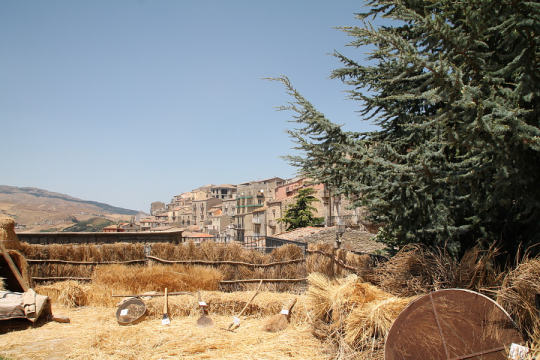
    A small town in Sicily called Gangi is in the midst of a novel urban renewal experiment. They are giving away houses for free to people who will agree to renovate them within a 4 year time period.

    Here’s the “free houses” notice from the Comune Di Gangi explaining how it works and who to contact. You have to be an Italian or EU citizen to participate.

    Free can be a powerful business model, as we see all the time with tech companies. And sometimes cities and towns aren’t all that different.

    So if you’re looking for a vacation home or want to move to Sicily, now might be a great time.

  • Saturday morning bike ride to the Bluffs

    This morning I got up at 7:30am and met a good friend of mine at the St. Lawrence Market for breakfast.

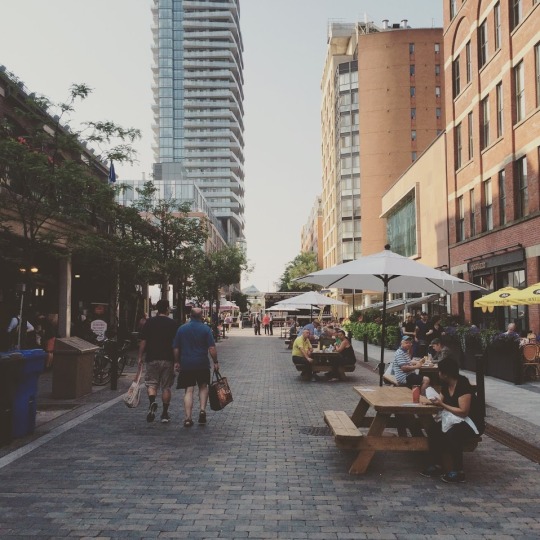
    Market Street is closed to cars today so it’s pedestrian-only. It should be this way all the time. They had a pig roasting on a spit when I walked by and a big stage set up. 

    Below is a photo of what it looks like. Keep in mind that this photo was taken just after 8:00am, which is why it’s not all that busy, yet.

    image

    When Market Street was redone a few years ago, the original vision for the street was for it to be pedestrian-only. But somebody told me that the city didn’t want that. Too bad. It strikes me as a perfect candidate for that.

    After breakfast, we then biked out to the Scarborough Bluffs in the east end of the city. If you click here, you can see the path we took via Strava. It’s only about 15km from downtown. The ride through the Beaches was by far the best stretch. The water was on my right hand side. The pavement was smooth and continuous. And I had George FitzGerald on my headphones for pacing.

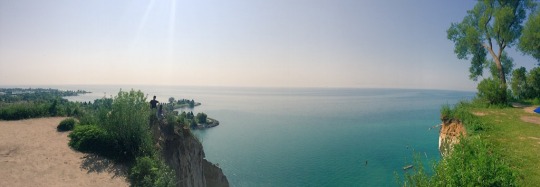
    When we got there, this was the view we were presented with:

    image

    It honestly doesn’t feel like Toronto. The water is turquoise and there’s a beautiful beach at the bottom of the cliffs. It felt like paradise.

    If you’ve never been to the Scarborough Bluffs, do yourself a favor and get out there on a beautiful summer day. It’s the dog days of summer and Toronto is a magical place right now.

  • Formula for life

    https://500px.com/embed.js

    Earlier this week I somehow stumbled on an old (2012) Medium story by Ev Williams, called, Formula for Entrepreneurial Success. (Ev is the cofounder of Medium, Twitter, and Blogger. He basically invented blogging.)

    His post includes 5 short recommendations, and is obviously aimed at entrepreneurs, but I think the lessons also apply more broadly to life in general. They resonated with me, so I thought they might also resonate with you.

    So whether you’re starting a company, developing a new building, or just living life, here are Ev’s 5 points:

    1. Work with amazing people. Don’t compromise on who you choose to found your company with and hire. Do not put up with ego-centric personalities or downer attitudes.

    2. Take on big challenges. It’s pretty simple: Hard things are valuable; easy things are not so valuable. Reaching the mountaintop is rewarding because it is hard. If it was easy, everybody would do it.

    3. Focus. Say no to most things: Features. People. Partnerships. “Coffees.” Projects. Only a few of them really matter. (Yes, it’s hard to know which.) Don’t get distracted.

    4. Take care of yourself. When you don’t sleep, eat crap, don’t exercise, and are living off adrenaline for too long, your performance suffers. Your decisions suffer. Your company suffers.

    5. Love those close to you. Failure of your company is not failure in life. Failure in your relationships is.

    If I had to pick one of the items from this list, I’d say I struggle the most with focus. It’s not that I can’t focus and complete tasks, it’s that I’m the kind of person who wants to fill every second of the day with something meaningful. And when people email me wanting to go for coffee or help with something, I want to do it.

    But unfortunately, time is a hugely valuable commodity and you have to be selective.

    So surround yourself with amazing people. Don’t be afraid of big challenges and risks. Focus. Eat well and lift weights (my preference). And love the important people in your life.

  • 10 reasons to visit Toronto right now

    https://500px.com/embed.js

    Next weekend a good friend of mine from architecture school will be visiting Toronto from Philadelphia. And I’m really excited to show him the city. (Next month it’s my turn to go to Philadelphia.)

    He’s a fellow city geek. He hasn’t been to Toronto in a number of years. And I haven’t seen him since our trip to Detroit 2 years ago.

    For those of us living and working in Toronto, there’s a lot to celebrate. Sure the Gardiner Expressway East decision didn’t go as I – as well as many other urbanists, including our Chief City Planner – had hoped. But there’s no shortage of other things to brag about.

    So here are 10 reasons to visit Toronto right now:

    1. We’ve created an entirely new business district south of Union Station called South Core. Now the region’s primary mobility hub is in the middle of the country’s most important business district, as opposed to on the edge of it. It’s a better use of infrastructure.

    2. We now have a dedicated train (the Union Pearson Express) that takes you from the country’s busiest airport directly to downtown in 25 minutes. You’ll find local retailers at the stations and a brand created by the brain behind Monocle Magazine. You can even use a smart card to ride it and our local transit system.

    3. We didn’t shut down Uber. Instead our mayor wants to create new policy that will allow these services to coexist with conventional taxi services. We don’t yet know how this will turn out, but I believe it’s a step in the right direction. It’s Toronto taking a leadership approach to innovation as opposed to trying to stomp it out.

    4. We are about to host the largest sporting event in Canadian history. The 17th Pan American Games will have double the number of athletes competing as the 2010 Winter Olympics in Vancouver.

    5. We created an entire neighborhood from scratch in order to house all of these athletes (Canary District). And I think it’s destined to become one of Toronto’s great neighborhoods. I’m saving my first visit for next weekend, so expect a follow-up post on this.

    6. We are dramatically rethinking this city’s public realm. From the plaza out front of Union Station to the new Queens Quay Boulevard along the waterfront, we are prioritizing people and creating more complete streets. It has given Toronto an entirely new urban feel.

    7. We are slowly starting to embrace our forgotten laneways and alleys through the help of organizations like The Laneway Project. And this is going to eventually lead to a further rethink of our pubic spaces and urban fabric.

    8. We continue to be one of the fastest growing cities in the world (certainly in the developed world). As a result, we are building some really exciting buildings by some of the top architects in the world. This includes everyone from Norman Foster to Frank Gehry.

    9. According to a recent report coming out of the Martin Prosperity Institute, Canada is one of the most creative and globally competitive countries in the world, as well as the most open to “ethnic and religious minorities and gay and lesbian people.”

    10. The ATC community is in the process of identifying a new, quintessentially Toronto food dish. But since we have every type of imaginable cuisine here, we’re struggling to pick just one. When you visit, you can help us identify the best and most Toronto dish.

    So there’s a lot to be excited about. I for one can’t wait for us to host the Pan Am Games, starting tomorrow. It’s a chance to show off this great city. 

    So if you’re also in town next weekend and want to geek out about cities, drop me a line.

  • This is a personal blog

    The internet has created an interesting dialogue between personal identities and corporate brands.

    In the pre-internet and pre-blogging days, it was harder for individuals to establish a strong brand and public identity for themselves, unless of course they were somebody famous. The cost of doing so was simply prohibitive. To promote meant print, TV, radio, billboards, and so on.

    But now promoting can mean anything from tweets to writing a blog like this one. And that has opened up the opportunity for anyone to put themselves out there.

    The dialogue, or tension in some cases, is that it becomes a balancing act: what should I be putting out there? Myself, some faceless brand, or a mixture of the two? Brandon Donnelly or Architect This City?

    If you a run a company, you’re probably debating this. Do I create a personal social media account, one for my company, or both? And how do I go about managing both?

    To be clear, this blog is a personal blog. It’s not a business. 

    Some people have suggested I start to allow multiple authors and turn it into more of a platform. But I thought about that and that’s not what I want to do. Which is why I continue to write at brandondonnelly.com (i.e. myname.com). I like that I can send this URL to anyone and they’re able to quickly understand who I am and what I’m about.

    Because what I write about are things that I’m passionate about: cities, design, real estate, technology, and so on. But I also mix in personal things so that I feel as if I’m writing a public journal. There are many benefits to keeping a journal (my 4th grade English teacher Mr. Hoad-Reddick told me so). And that’s really how this whole blog phenomenon started – they were personal places.

    Over time though, blogs evolved to become less personal and more corporate. And I am sure that some of you would rather I keep things strictly business around here.

    But to be honest, my favorite people and brands to follow online are the ones that do make their content personal. Yes, I want to learn new things about interesting topics, but I also enjoy the connection that comes with reading somebody’s personal journal and engaging in discussion with them.

    In fact, I hate it when my Twitter feed becomes nothing but companies tweeting out polished articles and reports. That’s boring. I like seeing real people in my feed. People sharing what they’re doing and how they’re feeling. People being authentic, genuine, and even vulnerable.

    And ultimately I find it makes their non-personal content that much more engaging. You have context. You understand their thought process. You can read between the lines. Those connections are what social media and blogging are really all about.

    So I’m thinking that I’m going to try making this blog a bit more personal and a bit more playful. I hope you enjoy it. And if you don’t, I’m sure you’ll tell me about it in the comments below.

    On that note, I’m off to the gym to lift some weights. Besides blogging, that’s another one of my habits that I need to do on a regular basis in order to feel normal.

  • Building on optimism

    To be a real estate developer, or at least to be a good real estate developer, I think you need to have a certain kind of personality. Specifically, I think you need to be an optimist.

    Because if you’re going to take big risks and deal with lots of uncertainty – which is how most development projects work – then you have to believe that you’re going to be able to figure it all out and make it happen.

    That is not to say that you’re not worried about risk and you’re not thinking critically about what you’re doing. Managing risk is a hugely important part of the business.

    Rather it’s accepting that unexpected things will come up, whether it’s a small construction hiccup or a huge black swan event. And knowing that if and when that happens, you’re going to do whatever it takes to get through it.

    As an example, I remember a developer telling me a story about one of his projects in South Florida. This was back when I was in grad school so some of the details are a bit fuzzy.

    But basically he had excavated a site for an underground parking garage and they had just finished pouring the foundations and first underground level. (Because of its high water table, underground parking garages are rare and expensive to build in South Florida.)

    It’s then 2 ’clock in the morning and he gets a call from his engineer telling him that a hurricane is coming through. And that once it comes through the water is going to lift up his foundation from below and basically destroy it.

    They immediately start brainstorming solutions and the engineer ultimately decides that if they fill up the hole with water before the hurricane comes through that it will weigh down the built structure and keep it intact.

    So in the middle of the night, before a storm was about to hit, they’re all on-site pumping water into a big hole.

    The storm eventually came and went and the engineer was right: the water-filled hole kept everything in place. So instead of spending what could have been millions, the developer probably spent tens of thousands on a water bill. That’s a much easier pill to swallow.

    This, of course, wasn’t in the development pro forma or in the construction schedule. But it happened, as stuff invariably does. And for future projects, I’m sure it’ll be something he thinks about it. 

    But it’s all part of the game. And to be good at the game, I believe you need to be an optimist.

  • How urban density affects how you get around

    Yesterday I wrote about urban-suburban divides within cities. And I argued that built form will largely dictate the kinds of transportation choices that people will ultimately make.

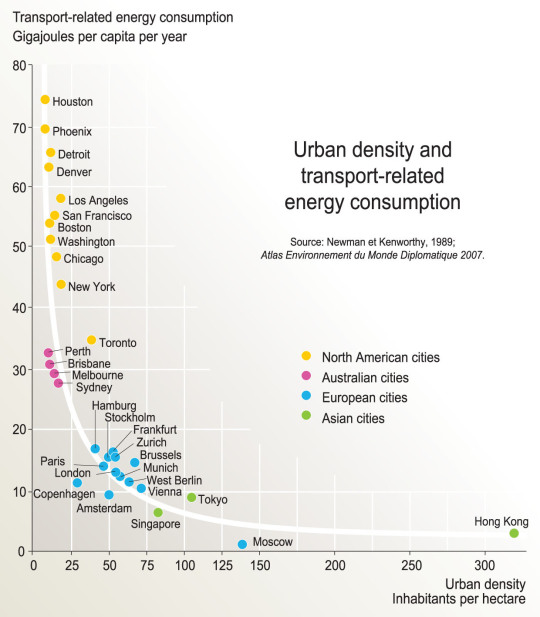
    As a follow-up to that, here is a chart based on the findings of a research report completed by Peter Newman and Jeffrey Kenworthy way back in 1989. On the x-axis is urban density (i.e. built form) and on the y-axis is per capita transport related energy consumption.

    image

    What this chart shows is that as cities become more dense, “automobile dependence” is reduced in favor of, other, more sustainable forms of transport. 

    Here we have Houston at the top left (meaning it has the highest transport-related energy consumption per capita) and Hong Kong all the way on the bottom right. Hong Kong has by far the highest density among the cities looked at in this study, but Moscow seems to have the lowest per capita energy consumption. Still, the trend appears clear.

    Some people think of “density” as a dirty word. But there are lots of benefits to dense urban centers. And density does not necessarily have to mean tall buildings.

    Chart: Globalization Studies in an Urban World (Penn)

  • Vancouver isn’t immune to the urban-suburban divide

    https://500px.com/embed.js

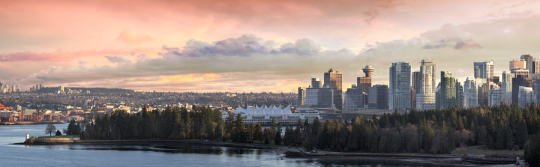
    In the comment section of my post about Vancouver’s transit referendum, a reader suggested I take a look at an article by Peter McMartin called, The real Vancouver emerges (from the ruins of the plebiscite)

    McMartin’s argument is basically that Vancouverism – the name given to the city’s progressive architecture and planning approach – isn’t as widespread as it might seem. The reality is that Vancouver, much like Toronto and other cities, is divided.

    “Vancouverism might be a reality for two or three neighbourhoods huddling in the downtown, and that greener, more progressive ethos might hold sway in one or two more.

    But Vancouver — and I speak of it in the metro sense — is the sum of its parts, and most of its parts are suburban in their sensibilities, and that includes not just all of the suburbs but most of the neighbourhoods in the City of Vancouver proper.

    They’re resistant to change. They abhor densification. They’re conventional in their sensibilities and they’re highly dependent on the automobile. More importantly, they’re not just dependent on the automobile, they prefer it.”

    Here in Toronto, we know our city is divided. And many people see it as evidence that amalgamating the city in 1998 was a big mistake. The inner suburbs are holding back old Toronto and elitist old Toronto just doesn’t understand the priorities of the inner suburbs.

    But I’m not convinced that amalgamation is to blame.

    Most cities have long histories of amalgamating adjacent towns, villages, and cities, and I suspect that there was opposition all along the way. At what point is amalgamation acceptable and and what point is it problematic?

    The anti-amalgamation camp here in Toronto seems to believe that it would have allowed old Toronto to continue doing what it wants to do and allowed the inner suburbs to do what they want to do.

    But this to me feels parochial.

    Our cities need to think bigger than that. We need to think as cohesive urban regions. And as Vancouver demonstrated this past week, that’s not always easy. But I don’t think the answer is to just think smaller and ignore the people whose views don’t match our own.

    Interestingly enough, what a lot of this comes down to, I think, is built form. 

    Because different kinds of built form will encourage and often mandate different kinds of transportation choices. And how you get around a city will inform a big part of what you value and what you vote for.

    Over time though, I believe that we will see built form start to level out across our city regions through continued intensification. Many people won’t be happy about this change. But it is likely that it will end up creating more cohesive cities. 

    Built form is no small thing.