Daily insights for city builders, delivered every morning at 6 AM ET. I’m Brandon Donnelly — a Toronto-based real estate developer and founder of Globizen. I’ve been writing here since 2013.

Tag: athiscity

  • Architectural spoonerism

    Pavelló Alemany by Sergi Pera on 500px.com

    https://500px.com/embed.js

    Back in architecture school we used to joke around that to be a great architect you had to have a badass sounding name. This was largely driven by the fact that so many famous architects were/are European and so they had/have more unique sounding names – at least to us.

    Think Rem Koolhaas, Bjarke Ingels, Ludwig Mies van der Rohe, Le Corbusier (actually Charles-Édouard Jeanneret-Gris), Alvar Aalto, and so on.

    There are of course lots of great non-European architects and lots of names that don’t sound as badass as the ones listed above. But that didn’t stop of us from perpetuating the belief that you needed a badass name.

    So what could you do if your name wasn’t badass enough to be a famous architect? Well we applied the principles of architectural spoonerism. That meant we switched around the first letter of your first name with the first letter of your last name to create a new architectural identity.

    Sometimes this worked beautifully, but sometimes it didn’t work at all. In my case, I became Drandon Bonnelly, which is arguably a bit more badass. But the best example is that of my friend Alex Feldman. He became Flex Aeldman. Now that’s badass. He sounds like an architect bodybuilder.

    What’s your badass architect name? Let us know in the comment section below. Perhaps we can dethrone Flex as the best one out there.

  • The second coming of the car

    Blue hour by Ryusuke Komori on 500px.com

    https://500px.com/embed.js

    As a kid growing up in the suburbs of Toronto, I remember when getting my driver’s licence and getting a car were some of my biggest priorities. 

    As soon as I turned 16, I went immediately to get my learner’s permit and then enrolled in a driving school so that I could shorten the time required until I could drive on my own. Every month counted at that age.

    It was such an important milestone that people born earlier in the year were seen as lucky. Because someone born in January, for example, could gain their driving independence before someone born at the end of the year even got their learner’s permit. As silly as it sounds to me right now, that spread was huge back then.

    But the world has changed and we are at the dawn of a new era: driverless cars. 

    Sooner than most people think, we are no longer going to drive ourselves around cities. I absolutely believe this. That means no more steering wheels. No more traffic calming measures on quiet residential streets. Safer streets. Perfect traffic information because all the cars will be networked. And a dramatic increase in urban efficiency. (Relevant post: The tragedy of the commons.)

    I can’t wait for this happen.

    Reid Hoffman, who is the co-founder of LinkedIn, recently wrote a fascinating article on autonomous vehicles called, Driving in the Networked Age. And in it he argues that cities should be starting to look at banning human-driven cars and generally putting in place policies to support networked autonomous cars. In fact, he sees it as an opportunity for Detroit to reestablish itself as the 21st century motor city.

    Again, I don’t doubt that this transition will happen. I think it’s a question of when, not if. But I also think that it’s going to be incredibly important to think about what driverless vehicles will mean for our cities and the built environment. 

    It’s once again an example of Marshall McLuhan’s famous phrase: The medium is the message

    Cars as a medium have had a profound impact on the way we live and the way we build our cities. We know this. But the medium is now changing. And while simply taking out the driver may seem like a small change, it is not. Have a read of Hoffman’s article.

    I’m excited about the possibilities. I don’t really like driving anymore. But let’s make this second coming of the car more positive for cities than the first. Deal?

  • When everyone thinks you’re wrong

    Sunset by Paolo Mastrogiacomo on 500px.com

    https://500px.com/embed.js

    I was recently talking to my good friend Jeremiah Shamess about the current state of development land sales in Toronto (he does this for a living) and he said something to me that I found really interesting.

    He said that because the market is so competitive, you can really only win development sites in one of two ways. Either you’re willing to spend the most money or you see something and have a vision that nobody else sees.

    And it was this second piece that really stood out to me because it reminds me of one of my favorite investing frameworks.

    Warren Buffet is famous for saying that you should be fearful when others are greedy and you should be greedy when others are fearful. And what I’m about to talk about is really that same core philosophy.

    Here’s how venture capitalist Fred Wilson put it (reiterating something that Bill Gurley said):

    I saw Bill Gurley say that you can only make money by being right about something that most people think is wrong. His logic was that you can’t make money by being wrong. And you can’t make money by being right about something everyone else knows. So you have to be right about something that most people think is wrong. I really like that framework.

    But this doesn’t just apply to technology companies or stocks. It applies to city building, most industries, and probably most things in life if you think about it.

    If all you’re doing are things that everyone else is doing, then how can you expect to outperform? You’re going to revert to the mean.

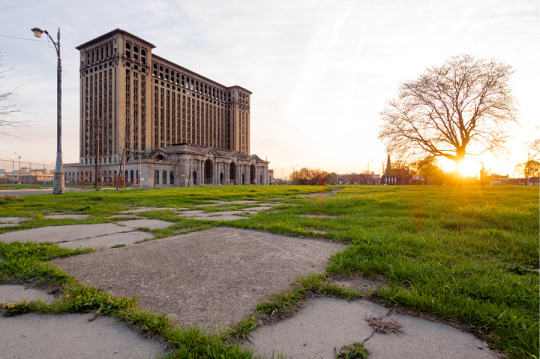
    Take, for example, billionaire Dan Gilbert and Detroit. Not everyone believes that Detroit will come back. In fact, I suspect there are probably more people who think it won’t come back, than people who think it will. Otherwise, it would already be back.

    But Gilbert is unquestionably long on Detroit (via Forbes):

    As you’ve likely heard, over the past four years Gilbert has become one of Detroit’s single-largest commercial landowners, renovating the city with the energy and impact of a modern-day Robert Moses, albeit bankrolled with his own money. He’s purchased and updated more than 60 properties downtown, at a total cost of $1.3 billion. He moved his own employees into many of them–12,000 in all, including 6,500 new hires–and cajoled other companies such as Chrysler, Microsoft and Twitter to follow.

    If/when Gilbert proves to be right about Detroit, then he will have been right about something that most people thought was wrong. And because of that, he will no doubt make a lot of money.

  • Made in Toronto: 500px

    https://500px.com/embed.js

    If you’re a regular reader of Architect This City, you’ll know that I generally like to include at least one photo with every post. Sometimes I run out of time and I don’t always do that, but that is at least the intent.

    You might have also noticed that my go-to for stock photography is 500px. That is the case for a few reasons. 

    I find the photos to be of higher quality than any other service. I can easily “embed” them into my posts while giving appropriate credit to the author and linking back to 500px. The company was founded by a good friend of mine and snowboarding compadre. And the company is made in Toronto.

    That’s why it’s exciting to report that yesterday the company announced an additional $13M in funding (Series B). To date the company has raised $23M of outside funding, from some big names like Andreessen Horowitz. This is great for the everyone in the company, and I believe it’s great for this city.

    Why is that?

    Well, here’s a video from the New York Times’ Cities For Tomorrow conference, where Andrew Ross Sorkin and Fred Wilson talk about creating startup hubs. It’s about 20 minutes long and well worth a watch.

  • Enabling innovation by lowering the barriers to entry

    Yesterday afternoon Sam Altman of Y Combinator published a blog post talking about a new YC Fellowship program for even earlier stage companies. 

    For those of you who aren’t familiar with Y Combinator, they are a super successful funding platform for early stage startups. They are located in Mountain View, California.

    What’s unique about their approach is that they invest a relatively small amount of money ($120,000 for 7% of your company) in a relatively large number of companies. Their most recent cohort was around 85 companies and they do that twice a year.

    The rationale behind this approach is that it can be incredibly hard to predict which people and ideas will produce the next great company. Oftentimes the best ideas appear really shitty at first. (Here’s a post by one of the cofounders of Airbnb talking about the company’s early rejections.)

    So instead of putting all of their eggs in one basket, YC invests smaller amounts in more companies.

    But beyond this being beneficial to them, it’s also a model that I think helps to reduce the barriers to people starting a company. It gives more people the chance to prove that their company has the potential to be something great. 

    And that’s precisely what makes this new YC Fellow program/experiment so interesting to me.

    Instead of $120,000, YC fellows will receive $12,000 and they won’t have to move to the Bay Area (although it’ll be encouraged). They’ll still get mentorship and advice like the regular YC program, but it’ll be a kind of light version. 

    Though this is almost certainly just the beginning. Here’s how Sam ended his announcement post:

    “Someday if it works, we’d love to fund 1,000 companies per year like this.”

    Now all of a sudden that’s some scale.

    What’s exciting about this is that I believe our cities have the potential to be far more innovative than they are today. Every city is trying to be the next Silicon Valley, but every city is not the next Silicon Valley.

    I saw a great tweet the other day that went something like this (I wish I could remember who the author was):

    “Entrepreneurs aren’t risk takers. They’re just rich kids with big safety nets.”

    It’s a bit of a tongue-in-cheek generalization. But to unlock the full potential of our cities, we should be figuring out how to get everyone participating and building their ideas, not just those with a head start. 

    I think there are a lot of people around the world who could be doing great things, but they just haven’t been able to take that first step for one reason or another.

    Hopefully organizations like Y Combinator will be able to help them take it.

  • Project Profile: Cabin at 45 Dovercourt

    image

    Last month,
    Curated Properties submitted a
    rezoning and site plan application for a 6-storey, 25-unit building at 45
    Dovercourt Road in Toronto. The project is known to the market as Cabin and you
    can register for it now.

    The project
    immediately caught my attention (because of its design, because of its
    branding, and because I like the work of Curated), so I decided to dig in
    further and get a copy of their architectural drawings. Development
    applications and their supporting documents are all public. Anyone can request
    a copy. But the city isn’t great at making this known.

    Since I’m excited
    to see more of these small scale urban infill projects in the city, today I
    thought I would highlight some of its key features and some of the things that
    are being proposed in order to make a project like this work.

    The Homes

    First of
    all, 100% of the suites are 2-storey. 76% of the suites are also 2 bedroom or
    larger.

    The result
    is that the project is essentially a series of townhomes stacked on top of each
    other. I suspect that this will appeal to more end-users as opposed to
    investors. Hopefully, it will also attract more families to the area.

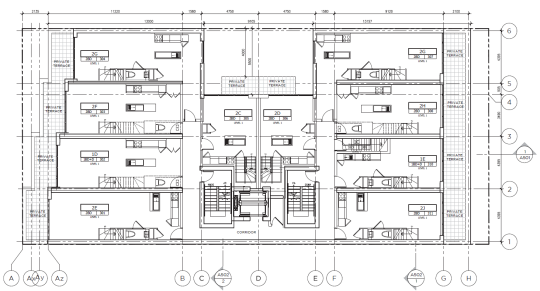
    Here’s the
    third floor plan:
    image

    You
    probably can’t see it, but all of the suites are marked as “Level 1”, obviously
    indicating that there’s more than one level.

    Also worth
    mentioning is the notch or cut out on the north side of the building. This is
    what makes the 2 suites in the middle of the floor plate possible. In order for
    them to have windows, they need to be setback from the (north) property line.
    It also means those suites get terraces.

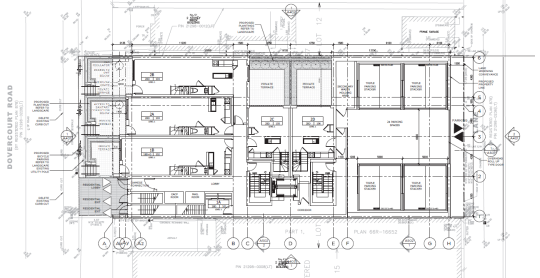
    The Parking

    Turning to
    the ground floor plan, it’s interesting to see that they are proposing 8 triple
    car stackers that will be accessible off the rear laneway (right side on the plan below). That equates to 24 parking spaces in the building (8 bays x 3
    cars per stacker).
    image

    On small
    urban sites like this one, it can be very difficult to accommodate parking. So
    it’s inevitable that we will see more parking stackers in the city and a continual
    reduction in parking minimums.

    The Construction

    Finally, I
    have been told that this project is expected to be framed in wood, as opposed
    to reinforced concrete, which is more typical of condominiums in Toronto.

    As of the
    beginning of this year (2015), the
    Ontario Building Code was modified to allow wood-frame buildings up to 6
    storeys
    . Before this change, the highest you could go was 4 storeys.

    This change
    was done with the intent of reducing construction costs so that it becomes more
    feasible to develop smaller infill sites such as this one. So expect to see
    more of this.

    I know that
    a lot of people would like to remain in the city even when they start having
    children. But it’s becoming increasingly difficult to find affordable low-rise
    homes. And not everyone wants to live in a high-rise tower. 

    That’s why I think
    we will see more, not less, low-rise and mid-rise infill projects like Cabin.
    If you’re interested in this topic, also check out a post I wrote called 3
    stages of intensification
    .

    The rendering at the top of this post is from Curated Properties and the
    drawings are by RAW Design.

  • The Beijing supercity

    image

    A few weeks ago I wrote a post talking about megalopolises and the importance of the Great Lakes region in North America. And I suggested that high speed rail could be one way to better stitch together the region.

    To some, I’m sure this sounded like a bit of a pipe dream. But thinking at the megalopolitan scale is something that I think we are going to need to do. Other parts of the world certainly are.

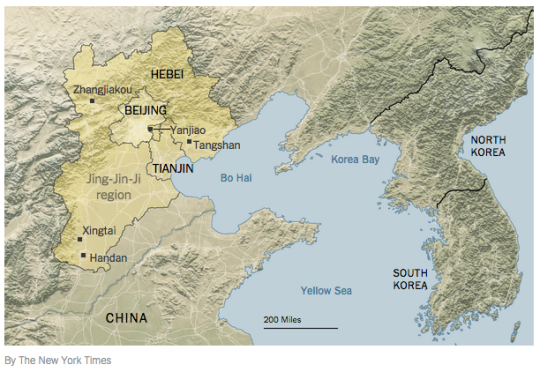
    The Chinese government is in the midst of developing a supercity around Beijing that is called Jing-Jin-Ji. It will span about 82,000 square miles and will house approximately 130 million people. 

    As part of the plan, a high-speed rail network is being built that will bring the region’s major cities within an hour’s commute. The objective is to compete with the Pearl River Delta and the Yangtze River Delta regions in the south.

    It’s a scale of planning and development that most people aren’t used to thinking about. But it’s happening right now.

    Image: New York Times

  • Multifamily vs. single family

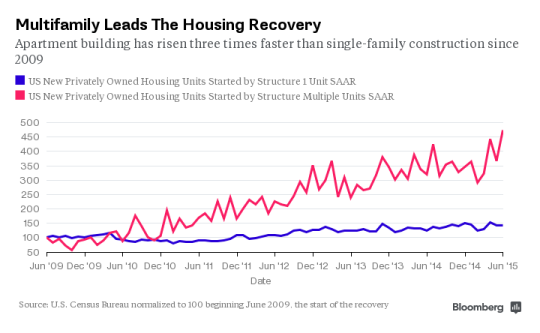
    Since 2009 when the U.S. economy started to recover, housing starts (i.e. new residential construction) have favored multifamily buildings over single family housing. Apartment/condominium construction has grown 3 times faster according to the U.S. Census Bureau (via Bloomberg).

    image

    A lot of this multifamily construction is assumed to be rental apartments, but this category also includes for sale condominiums. The classification has to do with building typology rather than housing tenure. (I would love to see how the above graph breaks down in terms of the latter.)

    The typical explanations for this trend often relate back to Millennials being poor and saddled with student debt. That’s why they’re delaying buying single family homes. But eventually the expectation is that they will resume doing

    (largely) what previous generations have done.

    Money and the economy, I’m sure, have something to do with the above trend. But I’m not convinced that it’s the whole story. 

    There are also shifts happening with respect to consumer preferences and with respect to how we plan and build our cities. That’s why I’m very interested in monitoring family formations and housing choices. 

    At the same time, I’m also a Millennial. And whenever I catch myself thinking a certain way, I assume that there are probably other Millennials out there who feel similarly.

  • The taxi cartel

    https://500px.com/embed.js

    Early this morning Peter Cheney of the Globe and Mail published an article called: How Uber is ending the dirty dealings behind Toronto’s cab business.

    And I highly recommend you read it. He’s been investigating this industry for decades.

    Though the article is specific to Toronto, I know that there are middle people and archaic policies governing the taxi industries in many other cities around the world.

    Here it revolves around taxi licenses issued by the city (known as “plates”), which are expensive and almost impossible to get. Last year the average price of a plate was $118,235 (2014).

    The way it works is that people – typically non-drivers – buy/inherit/get these plates and then charge rent on them to drivers who want to use them. The result is a taxi cartel:

    In fact, Toronto’s taxi plate system is anything but free enterprise. Instead, it is based on the artificial restriction of a natural market, and the granting of licences to a fixed number of participants. Even those who paid top dollar for a plate used to enjoy an annual return of more than 12 per cent. And for those who inherited plates, the return was manna from heaven.

    So it shouldn’t come as a surprise that the taxi industry is grouchy about companies like Uber. But the cost structure of the incumbents is going to need to change if they want to stay in business.

    Jeff Bezos of Amazon is famous for saying, “Your margin is my opportunity.” And that’s exactly what is happening here. A bloated legacy cost structure is being quickly supplanted by better/cheaper.

  • Rethinking the tall building

    Back in February of this year (2015), Philip Oldfield, who is an Assistant Professor of Architecture at the University of Nottingham, gave the following talk at the Illinois Institute of Technology. Click here if you can’t see it below.

    [youtube https://www.youtube.com/watch?v=lOfkx39soIs?rel=0]

    If you’re interested in cities and how tall buildings might make them more sustainable, you’ll enjoy it. It’s filled with a number of interesting stats and takeaways, and it’s about an hour long.