Daily insights for city builders, delivered every morning at 6 AM ET. I’m Brandon Donnelly — a Toronto-based real estate developer and founder of Globizen. I’ve been writing here since 2013.
Recently in the comment section of ATC, Lloyd Alter of Treehugger shared a great article talking about the 8 principles of Transit Oriented Development (TOD). “TOD” is one of those buzzwords (or buzz acronyms?) that gets thrown around a lot in city building and real estate circles. But I suspect that most people don’t exactly know what it takes to design and build successful TOD projects and neighborhoods.
CYCLE: Prioritize non-motorized transport networks
CONNECT: Create dense networks of streets and paths
TRANSIT: Locate development near high-quality public transport
MIX: Plan for mixed use
DENSIFY: Optimize density and transit capacity
COMPACT: Create regions with short commutes
SHIFT: Increase mobility by regulating parking and road use
What should be apparent from this list is that the standards are quite clearly stacked against cars. Number 2 is about prioritizing non-motorized transport networks. And number 8 is about regulating parking use and road use. It’s about making a decision who you are planning for and acknowledging that when you do all of the above, you largely eliminate the need for driving.
If you’re a “war on the car” kind of person, this might offend you. But if you look at the data I shared about a week ago (forgive me, I know the chart is a pain to read), you’ll see that it’s seemingly pretty difficult to design a city that’s equally great for both cars and for people. The cities where people love to walk, cycle, and take transit are precisely the ones where few people drive.
Whether you’re a city, company, or a person, doing the same thing over and over again is what reinforces your identity. That’s why Steve Jobs always wore a black mock turtleneck, why Mark Zuckerberg always wears a gray t-shirt and hoodie, and why Tom Ford always wears a white shirt and a black jacket. They are continually building their own distinctive brand.
I’ve always found this concept really appealing.
Maybe it’s because I had to wear a uniform every day of my life until I went to University, or maybe I just like the concept of personal branding. Either way, there are a bunch of things that I have stuck with for a long time. For example, I’ve worn the same cologne since I was 19. I bought it in Italy one summer and I really liked it. And it now always reminds me of Europe. So I keep wearing it.
You also need to remove from your life the day-to-day problems that absorb most people for meaningful parts of their day. “You’ll see I wear only gray or blue suits,” [Obama] said. “I’m trying to pare down decisions. I don’t want to make decisions about what I’m eating or wearing. Because I have too many other decisions to make.” He mentioned research that shows the simple act of making decisions degrades one’s ability to make further decisions.
The research he’s talking about comes from people like Kathleen Vohs, professor at the University of Minnesota, and Barry Schwartz, professor at Swarthmore College, who concluded that the more decisions we make – even pleasant and enjoyable ones – the quicker we get to what’s called “decision fatigue." We simply exhaust our ability to make effective decisions.
This, to me, is a really important lesson. Because the way I look at it, we live in a world of constant noise. Our phones are always chirping. There are 132 different types of toothpaste at the store. And everywhere we turn, somebody is trying to sell us something. So maintaining a certain level of simplicity and minimalism in your life can actually be an incredibly difficult task.
More and more I’m finding this to be the case. So maybe it’s time I start wearing the same thing every day. Do you have any tips for living life, simply?
Since last summer the Downtown Yonge Business Improvement Area in Toronto has been running a really creative community engagement program at yongelove.ca.
The site includes a short history of Toronto’s most famous street, an Instagram contest (use #YongeLove to participate), and a survey where both locals and visitors can provide their feedback on what they think the future of Yonge Street should be.
I’ve already talked about the Yonge-Redux proposal here on Architect This City and that seems to be where everyone’s head is at in terms of what they would like to see. I also think it’s the right thing to do for Yonge Street. If you’ve ever been on Lincoln Road in Miami or La Rambla in Barcelona, you’ll know how magical a great street can be.
So I’d encourage you to complete the Yonge Love Survey and advocate for something awesome. It ends next month, after which time all the feedback will be forwarded to the city.
I’d also love to hear what you think and how you responded in the comment section below. My response was more or less geared towards supporting the Yonge-Redux proposal.
The following chart is from City Observatory. It compares per capita income against the college attainment rate for the largest US metropolitan areas. If you hover over a circle it’ll tell you the metro area and what the precise numbers are. If you can’t see the chart below, click here.
What they found from this data set is that educational attainment – the percentage of the population with a 4-year college degree – is the single most important factor when it comes to urban economic success. In fact, according to City Observatory, it accounts for 60% of the variation in per capita income across the metro areas listed above. That’s huge.
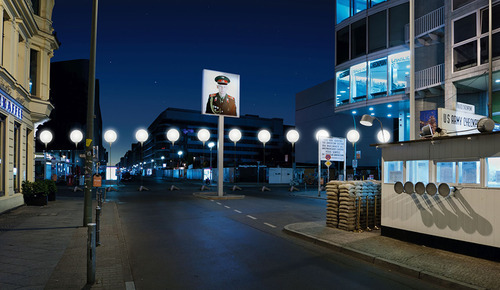
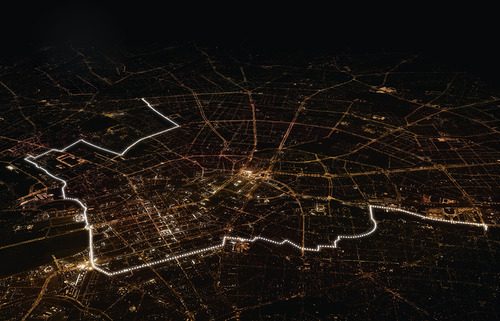
Starting today and running until the end of the weekend, 8,000 glowing balloons will recreate a 15 km long section of the former Berlin Wall. It’s to commemorate 25 years since the fall of the wall.
Here’s an aerial view of what it’ll look like:
I think this is a fascinating art installation. And I wish I could be there to see it first hand. My friend Nick Iozzo is there right now with his wife, so hopefully they’ll respond to this blog post with some highlights.
But none of these divides are anything like the divide faced in Berlin. The Berlin Wall was arguably the most visible physical manifestation of the entire Cold War. Once a major point of entry for Eastern Bloc emigrants, East Berlin was basically bleeding people before the wall went up in 1961. It was designed to keep East Berliners in place.
I can’t even imagine what it would be like to live in a place like that.
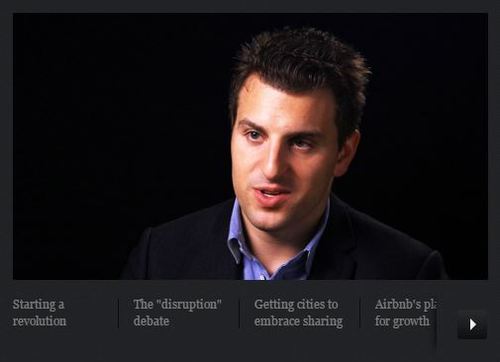
McKinsey recently put out a great interview with one of the founders of Airbnb, Brian Chesky, talking about the relationship between his company and cities. I thought it was fascinating. Click here to watch the video.
If you don’t feel like doing that, I’ve also pasted the interview transcript below and bolded some of the really interesting takeaways. Let us all know what you think in the comment section below.
It’s a currency of trust, and that used to live only with a business. Only businesses could be trusted, or people in your local community. Now, that trust has been democratized—any person can act like a brand.
Airbnb is a way that you can, when you’re traveling, book a home anywhere around the world. And by anywhere, I mean 34,000 cities in 190 countries. That’s every country but North Korea, Iran, Syria, and Cuba.
The reason we started was I was living with my roommate, Joe, in San Francisco, and I couldn’t afford to make rent. That weekend, the International Design Conference was coming to San Francisco. All the hotels were sold out. Joe had three air beds. We pulled the air beds out of the closet, we inflated them, and we called it the “Air Bed and Breakfast.”
The reason it’s grown so fast is, unlike traditional businesses, we don’t have to pour concrete. The infrastructure and the investment was already made by cities a generation ago. And so all of a sudden, all you needed was the Internet.
The ‘disruption’ debate
I never really loved the word “disruption,” because it suggests that maybe it’s the kid in a class who was disruptive, who probably didn’t add a lot to class. I think that we have a lot to add to society.
Over time, cities have gotten so big that the sense of community has gotten lost. And I think once you know everyone, that community can reemerge. And as far as our relationship with cities, we can’t succeed without a city. Or we can’t really thrive without a city. We don’t want to thrive in spite of a city. And I think if we work together, it’s going to be amazing. I think the people win. And I think if we don’t work together or if we fight, the loser isn’t really us or the city—it’s the people in that city.
Getting cities to embrace sharing
Fundamentally, the idea of the sharing economy is going to be great for cities. It means that people all over a city, in 60 seconds, can become microentrepreneurs. And they can be empowered. And they can make an income. Now, this is amazing, but it’s also complicated because there are laws that were written many decades ago—sometimes a century ago—that said, “There are laws for people and there are laws for business.” What happens when a person becomes a business? Suddenly these laws feel a little bit outdated. They’re really 20th-century laws, and we’re in a 21st-century economy.
It’s probably going to be a fair amount of work to revise some of the laws and rethink the way cities and platforms work together, but I think that work is worth it. Because what cities don’t have to do is invest billions of dollars in infrastructure to create jobs. Whereas historically, to create opportunities, cities would need massive projects and investments, these jobs only require the Internet. Now what they need to do is navigate the legal framework, which is typically outdated. We want to work with the cities. We’re not telling them that their laws are terrible. The world continues to change. Laws must continue to adapt for that world.
We want to help cities understand what our world looks like so they can modernize the laws to make sense. We’re not against regulation. We want to be regulated because to regulate us would be to recognize us.
Airbnb’s plans for growth
We want travelers to be able to book homes anywhere. Anywhere includes Asia. Asia’s a nascent market for us. Number two, we’re also looking at other use cases. Airbnb started as a way for travelers to find a budget way to vacation in a city. But now we’re starting to see people who aren’t on a budget. They want a much more high-end experience. And the third is that at the end of the day, if you’re traveling to Tokyo, you’re not traveling to Tokyo to stay in a home or a hotel. You’re traveling to Tokyo—if you’re on vacation—because you want to have an experience. And we’d love to do more to make that experience special and memorable.
The future of sharing: Your free time
I don’t think people would view the jobs created in the sharing economy as jobs. I don’t even know if they get counted as jobs when the White House has a new jobs report. They are jobs. As far as I can tell, people are working, they’re making income, and they depend on that income. Half of our hosts depend on it to pay the rent or mortgage. Maybe it’s a new kind of job. Maybe it’s like a 21st-century job. Tom Friedman talks about how in the future people may not have jobs. They’ll have income streams.
I believe that the sharing economy broadly can probably provide tens of millions of jobs or income streams for people all over the world. This is going to have a pretty big effect on the economy, mostly a good one.
The sharing economy started by democratizing and creating access to probably two of the biggest assets people have: their homes and then their cars. But I think the whole idea of ownership is changing. When my parents were young, owning things was a privilege, and there was a sense of romance to owning a house, owning a car.
Today’s generation sees that ownership also as a burden. People still want to show off, but in the future I think what they’re going to want to show off is their Instagram feed, their photos, the places they’ve gone, the experiences they’ve had. That has become the new bling. It’s not the car you have; it’s the places you go and the experiences you have. I think in the future, people will own whatever they want responsibility for. And I think what they’re going to want responsibility for the most is their reputation, their friendships, their relationships, and the experiences they’ve had.
So I think the biggest revolution will be in the biggest asset of all. The biggest asset is not a house. It’s not a car. It’s people’s time. People’s time may start with just gigs: waiting in line for you, delivering something for you. Over time, I think it’s going to move upmarket. And eventually, menial tasks become real trades, and real trades become art forms.
Somebody may say, “I cook a great brunch. I wonder if people would enjoy having brunch at my house?” And you could be able to book a brunch at someone’s house, instead of at a restaurant. That person isn’t trying to create a restaurant, they’re just allowing someone to have brunch. They build a reputation. One day, that person can be a Michelin-rated chef in their house.
If you have been following the headlines over the past year, you’re probably aware that Atlantic City — the “Gambling Capital of the East Coast” — is in trouble. This year alone, 4 casinos shut their doors – including Revel, which only opened in 2012.
To be perfectly honest with you, gambling isn’t my thing. I’ve only been to Atlantic City once, and it was really just so that I could say I had been (it was when I used to live in Philadelphia). But I know that many people derive a lot of entertainment value out of gambling.
However, I worry when cities starting believing that a casino can fix all of their city building and economic development challenges. They are not a silver bullet. And many would argue that they cause far more harm than potential benefit. The negative socioeconomic impacts have been well documented.
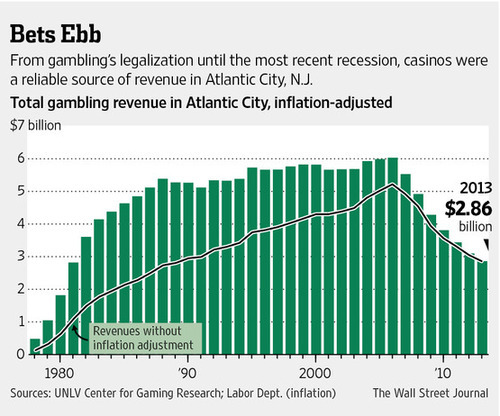
In the case of Atlantic City, I suppose you could say that casinos “worked” – for awhile. But that’s because Atlantic City had a monopoly on gambling. In 1978 the city opened the first legal casino in the eastern United States. And that led to a boom in casinos and a spike in municipal revenue. But those revenues peaked in 2006 and have been on the decline ever since.
My good friend Alex Feldman argued in a recent Next City article that Atlantic City is, quite frankly, the next Detroit. It repeated the same mistakes and now it’s going to need to go through the same painful rebuilding process:
It’s no exaggeration to say that Atlantic City is poised to become the next Detroit. In many ways, the trajectories of the two cities are similar. Both cities relied on one industry to prop up their economies — and both failed to innovate as competition increased. Similarly, both Atlantic City and Detroit failed to invest in a sense of place — casinos and factories were more successful when their customers and employees had little reason to go outside. The result: defensively built cities designed around the automobile that gave visitors little reason to stay.
The article talks about some of the transit-oriented development that we’ve seen at various nodes along Toronto’s Yonge subway corridor (St. Clair, Eglinton, Sheppard, and so on). But it goes on to argue that these are exceptions to the rule. For the most part, we’ve missed the boat:
The tragic history of our massive capital investments into transit infrastructure is massive under-development.
Indeed, the Bloor-Danforth subway corridor is a land use crime scene.
His main argument is that until we expand the supply of transit-oriented land (through increased intensification), we will continue to undersupply the kinds of walkable and transit-oriented neighborhoods that many, if not most, people actually prefer. And that, out of necessity, will force people into their cars. Because affordability trumps location preference.
As one example, he talks about the intersection of Bloor Street and Dundas Street in the west end of the city. Next to Union Station, this is probably the best connected mobility hub in the region. You have the Bloor-Danforth subway line, a streetcar line, and a GO regional rail line which all feed into it. Next year it’ll also become a stop for the new express train to Pearson airport.
And yet the city has a history of opposing intensification in this location, including the old Giraffe Condominiums proposed by TAS. Does that make sense to you?
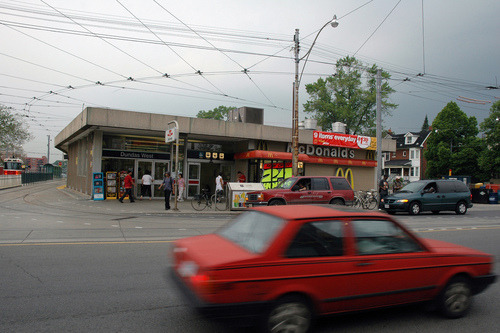
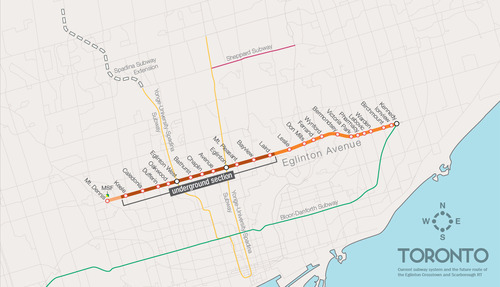
One of the biggest pieces of infrastructure currently under construction in Toronto is the Crosstown LRT line, which will run on and under Eglinton Avenue right through the heart of midtown. The total length of the line is 19 km, and 10 km of it will be underground along with 12 of its stations.
Here’s a map:
But as the Chief Planner of Toronto, Jennifer Keesmaat, rightly pointed out in this blog post earlier this year, it’s important to think of this line, not just as a piece of transit infrastructure, but as a broader city building initiative. With this line comes a tremendous opportunity to rethink and rebuild one of Toronto’s most important avenues.
I have no doubt that this will happen over the coming years and decades. I mean, just look at the development activity taking place on St. Clair Avenue West right now, which you could argue is the result of its right-of-way streetcar line. But in this instance, what I’m specifically curious about is what will happen at each of the stations along Eglinton Avenue.
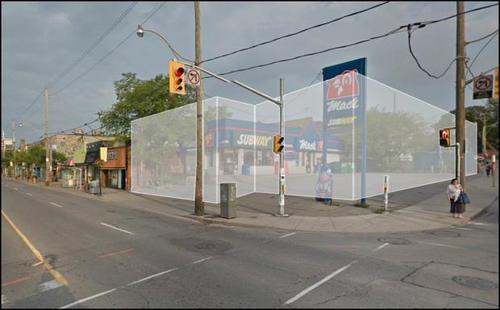
If you take a look at the Stations and Stops page on the Crosstown website, you can see where all of the primary and secondary entrances will be and how each station will generally function. But what is not clear is whether we will be using this opportunity to build additional density on top of them.
Here’s how they have “blocked out” the primary entrance for Avenue station:
I have no idea what it’ll become. But if it ends up as single-storey and single-purpose building, then I think we will have missed an opportunity. And the same goes for many, if not all, of the other stations along the Eglinton Crosstown line. Fixed rail is such a massive driver of real estate value, and so it seems silly not to take advantage of that in some way.
If anyone has any insights into how these stations will or will not be developed, I would love to hear from you in the comment section below.
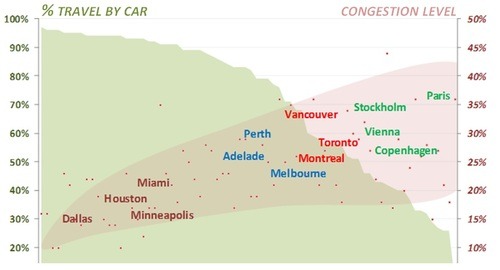
It came from a study that looked at 74 cities in terms of two measures: the percentage of people that travel by car and the traffic congestion levels within those cities.
The way to read the chart is to first look at the red dots. Each dot represents one of the cities studied. The position of the red dot corresponds to that city’s congestion levels. So for example, if we were to take Toronto, the congestion level is 27%.
If you then take that same dot and draw a vertical line to the top of the green shaded area, you get the percentage of people who travel by car. In the case of Toronto, it is 56%.
What’s interesting about this chart is that as congestion levels rise, it forces people out of their cars. In other words, the cities with the highest congestion levels also have the lowest auto share percentages.
But the other way I interpret this chart is that the decision is almost binary: you’re either planning for cars or you’re planning for people. Based on this data, it’s hard to have both.