Daily insights for city builders, delivered every morning at 6 AM ET. I’m Brandon Donnelly — a Toronto-based real estate developer and founder of Globizen. I’ve been writing here since 2013.

Tag: architecture

  • The Monocle Quality of Life Conference

    image

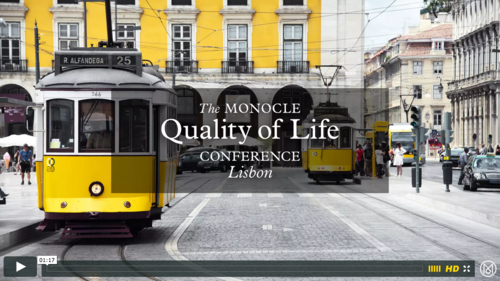
    Monocle magazine is launching their first ever conference this spring in Lisbon and it’s dedicated to quality life in the world’s greatest cities. It’s going to take place Friday, April 17th to Saturday, April 18th, 2015.

    You can click the image above for a video synopsis (there’s great urban eye candy), but if you don’t feel like doing that, here’s the text version:

    MONOCLE invites you to a weekend of peerless hospitality, great debates and in-depth conversations about the forces shaping the world’s great cities. Join our editors, correspondents and key thinkers in discussing topics ranging from architecture to independent retail, city planning to national branding.

    It sounds like a wonderful event and very much inline with some of the topics discussed here on Architect This City. If I had a conference budget that needed to get spent, I would be the first to sign up. If you’re interested, you can “register your interest” by clicking here. Tickets are €1,500.

  • Before and after at 109 Hazelton Avenue

    I recently connected with one of the principals of a Toronto-based construction management firm called Ripple Projects, which focuses primarily on contemporary custom homes (credit to 52 Pick-up for the introduction).

    They’ve only been in business for a few years, but the founders spent many years prior to this doing similar projects at similar companies, such as Wilson Project Management.

    Since they don’t yet have a lot up on their website, I asked if he could share one of his recent projects with me. He was happy to do that and so, with his permission, I’d now like to share it with all of you.

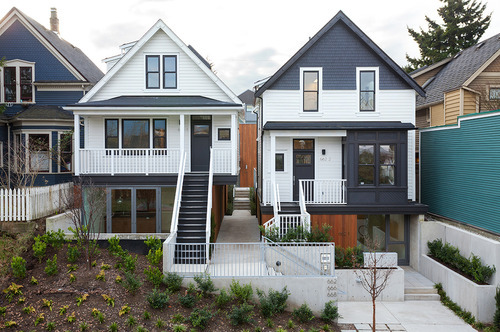
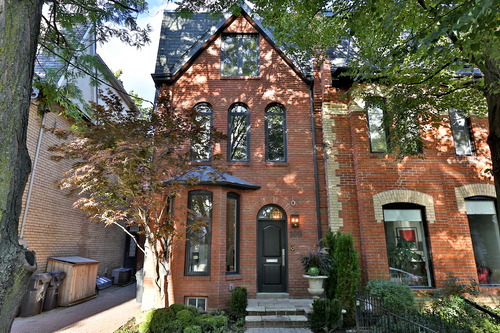
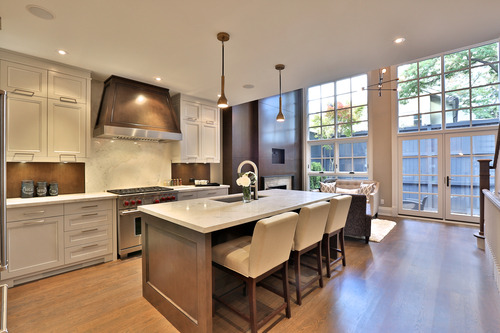
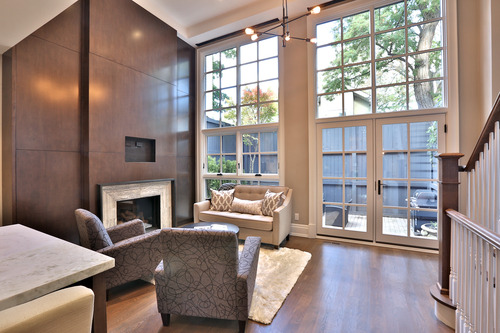
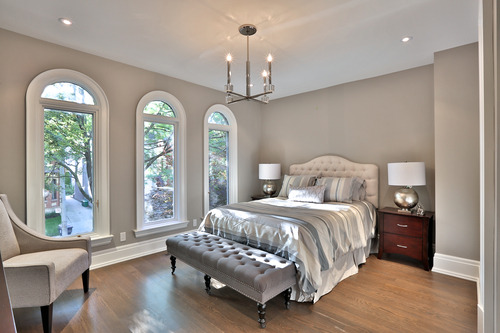
    It’s a renovation and expansion of a semi-detached house at 109 Hazelton Avenue in Toronto’s upscale Yorkville neighborhood. The end result is roughly 3,000 square feet with 3+1 bedrooms and 5 bathrooms. If I remember correctly, it sold for close to $3 million.

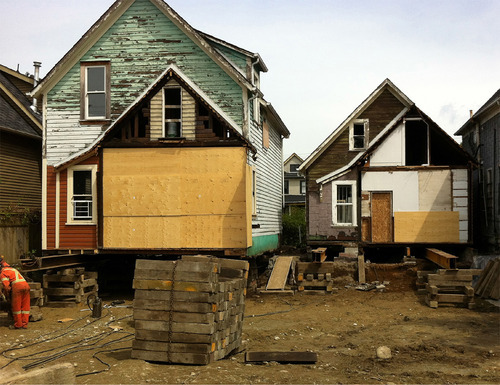
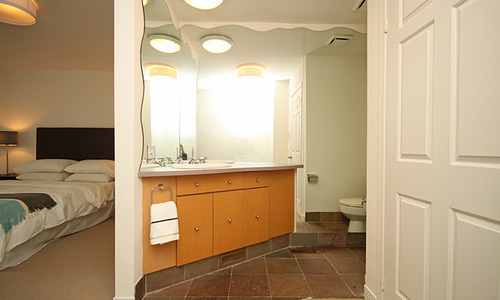
    Here are a few before pictures. It wasn’t in bad shape – just a bit dated.

    image

    image

    image

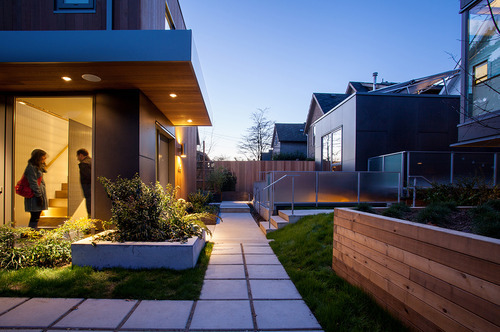
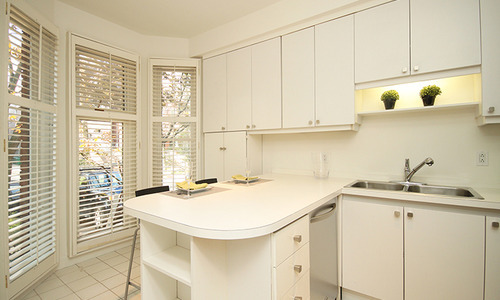
    And here are a few after photos.

    image

    image

    image

    image

    image

    I personally would have gone with something even more modern, but that’s just me and I wasn’t the client. It’s still a phenomenal project. So if you’re in the market for a new custom home, I would encourage you to give Ripple Projects a call. I was really impressed by our conversation.

    Note: I have zero affiliation to the company. I just believe that good people deserve exposure.

  • The pull from services to products

    This morning I woke up to a fascinating post by designer Tobias van Schneider called: The agency is dead. Long live the agency.

    What he’s talking about is the phenomenon of design agencies being gobbled up or “acqui-hired” by product firms such as Facebook and Google. The latest of which is (or was) Toronto-based design agency Teehan+Lax. The partners have closed up shop and are in the process of moving to San Francisco to join Facebook Design.

    But what he’s really talking about is the pull from services to products.

    When you’re a services firm, you do work for outside clients and they pay you for that work. But there are only so many hours in the day, which is why the marginal cost of taking on new clients is relatively high – to scale up you generally need lots more people.

    On the other hand, when you’re a software company creating products, the marginal cost of serving additional customers is almost nothing. Sure, there are some variable costs, but the impact to your cost structure is not nearly as significant as when you’re a services firm. That’s how a company like Instagram can be bought for $1 billion with 30 million users and only 13 employees.

    So products are a bit of a holy grail in some circles. You can achieve greater scale. You can focus on fewer projects as opposed to jumping around from client to client. And you can make a lot of money.

    But it’s often easier said than done. Back in 2012, Teehan+Lax wrote a great post where they talked about the allure of products and the challenges they faced in trying to build their own:

    37Signals* was the worst thing to happen to services businesses trying to make products. They fucked it up for all of us, because they made it. For those of us old enough to remember, 37Signals was a services company like Teehan+Lax. They had clients and did work for hire. Of course, 37signals isn’t a services company anymore. They make amazing digital products and their success is enviable. (*37Signals became Basecamp)

    So why is it so hard to transition from services to products?

    Clayton Christensen, the father of disruptive innovation, says, “you can’t start a disruptive business from inside an incumbent one.” The incumbent business will always take the resources from the disruptive one. He argues that if you want to create a disruptive business you need to isolate it from the incumbent business. The disruptive business needs its own values, processes and resources to be successful.

    Regardless of whether you’re trying to build something disruptive or not, amazing products are hard to build. They take focus.

    But what’s also interesting about services and products is that there’s a parallel in the world of architecture and real estate development. As an architect, you’re basically a service provider. You have clients and they pay you for the work that you do. However, as a real estate developer, you offer a product: physical space. The cost structures are not nearly as beneficial as with software, but it’s a product nonetheless.

    And similarly, we’re already starting to see some developers bring architecture in-house. Will we see more of this in the future? Will there be a similar pull from services, to products?

    Image: Flickr

  • A look at One Spadina Crescent

    image

    One of the projects that I’m most excited about here in Toronto is the renovation and addition to One Spadina Crescent. The building sits in the middle of a roundabout along Spadina Avenue and occupies what is easily one of the most ceremonial positions in the city.

    But for as long as I can remember, the building hasn’t been living up to its full potential. So much so that in the 1960s it was going to be demolished in order to make way for the proposed Spadina Expressway. That would have been an absolute tragedy. Thankfully, our friend Jane Jacobs stopped that one.

    Today, exciting things are happening at One Spadina Crescent. The Daniels Faculty of Architecture, Landscape, and Design at the University of Toronto is in the midst of renovating and expanding the building, and will eventually relocate there from its current location on College Street.

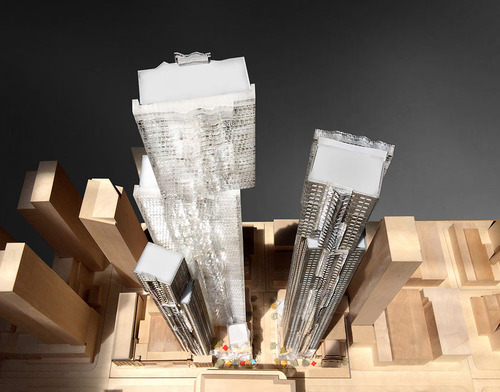
    When it’s all said and done, One Spadina Crescent will look something like this (via Daniels).

    From the south:

    image

    From the west:

    image

    From the north:

    image

    What’s most exciting to me about this project are the following 3 things:

    First, it’s an opportunity to connect One Spadina Crescent to the surrounding urban fabric. Today, it feels very much like an island in the middle of the street. 

    Second, it’s a wonderful example of the new layering on top of the old, which is something that I believe we should aspire to do in our cities. The University of Toronto has become quite good at doing that on campus.

    And finally, the intent is for this building and site to include a number of research centers and public facing functions devoted to architecture, design, and city building. And so One Spadina could become quite the hub in the city. That’s exciting.

    If you’d like to take a look inside the building (pre-renovation), check out these great photos by Peter MacCallum. The picture at the top of this post is his.

  • That’s a wrap

    Today is the last day of 2014.

    It felt like a frenetic year for me, and so I have to say that I’ve been really enjoying this holiday break. I needed the downtime. I needed the time to think and strategize. And I got all of that this holiday. (The only thing that would make this break even better would be some more snow on the mountains.)

    I’m super excited for the new year and what’s ahead, but before getting into that, I thought it would be worthwhile to look back at what happened in 2014.

    I was initially going to list out some of my thoughts, but then I figured that a better way would be to simply list out the most read Architect This City posts. That way it’s my (daily) thoughts, but curated according to what readers cared about most this past year.

    Click here for the top 15 most read Architect This City posts of 2014. I’ve listed them on a “topics” page that I plan to update every year.

    If you’re looking for some other 2014 themed reading material, I recommend also checking out the best #cityreads of 2014 by CityLab; the best articles of 2014 from ArchDaily; and what just happened? by venture capitalist Fred Wilson.

    Happy new year everyone! Thanks for reading. See you in 2015.

    Image: Family and friends lunch at Pizzeria Libretto, University

  • The unmet demand for real estate education in Canada

    image

    I continue to be amazed by the unmet demand for real estate (development) education here in Canada.

    Following yesterday’s post on the real estate development process, I received a few emails from readers asking about the best university programs (MBA, MRED, etc.) and the best approaches for becoming a developer.

    I also had a good conversation on Twitter, which covered off some details that I had left out from my post (for simplicity) and which resulted in me suggesting that a real estate development school needs to be started here in Toronto:

    //platform.twitter.com/widgets.js

    //platform.twitter.com/widgets.js

    Now, part of the reason things are the way that they are, I think, is because the real estate industry has been historically dominated by private rich families. People didn’t go to school to learn how to be developers. They learned by doing and that was then passed down to the next generation. All it took was chutzpah.

    But as the real estate industry continues to institutionalize and become run by pension funds and large publicly traded companies, I think the point of entry will also become increasingly institutionalized. And that’s where dedicated real estate programs will continue to come in. 

    I’ve spoken to a few people at the Rotman School – where I did my MBA – and there doesn’t seem to be a huge interest in a dedicated program such as a Master of Real Estate Development (they already offer real estate courses). It’s more of a “longer term” strategy. 

    But I think that’s a mistake.

    I’m confident there’s strong demand from the student side, so hopefully a wealthy donor will step forward to help make this happen. The University of Toronto has both a great business school and a great architecture school. That feels like a great recipe for a first-in-kind joint degree offering.

    Image: Urban Learning (via Flickr)

  • Merry Christmas everyone

    image

    Today is Christmas Day. I hope that you are all having a wonderful day and spending it with family and friends. That is exactly what I’m doing here in Toronto.

    It’s certainly nice to have a bit of downtime. I’ve been playing around with my new GoPro (see above photo), which had been sitting unopened on my shelf for the past few weeks.

    The photo above was taken at the Pier 27 condos. It’s still very much a construction zone. The area at grade in the photo will be a linear public park that connects the main street to the waterfront. I’m looking forward to seeing it come together.

    Have a great day everyone 🙂

  • My identity crisis

    If you’re a regular reader of Architect This City, there are many things that you might know about me

    You might know that I was initially trained as an architect, but that I immediately transitioned into real estate development after grad school (where I studied both architecture and real estate).

    After becoming a real estate developer, you might know that I completed an MBA with a focus on innovation and entrepreneurship (which happened by default as a result of the electives I ended up being interested in).

    And finally, you might know, given the content of this blog and my startup history, that I have a significant interest in technology. More specifically though, you might know that my interest is in figuring out how technology will continue to infiltrate and impact “non-tech” industries such as real estate.

    But what you might not know is how I even ended up in architecture and real estate in the first place. Unlike a lot of people who seem to have grown up wanting to be an architect – perhaps because they had a relative who was one – I didn’t decide to study architecture until a bit later on.

    Growing up my primary interests were: art and computers.

    During high school, my art teachers used to tell my parents that I was going to be an artist. And my computer teachers used to tell my parents that I was going to be a computer geek – or maybe they said computer scientist.

    Maybe it had to do with timing and the emergence of the commercial internet in the 1990s, but computers sort of won out during that point in my life. I spent a lot of time building them from scratch, playing with software, and asking my mom not to pick up the phone because I was literally dialed-in to the internet.

    So when it came time to enrol in university, I fairly effortlessly decided on computer science. It just seemed to make sense. But after about a year I realized that it wasn’t for me. I didn’t love programming like my classmates did and the thought of doing it for a living scared me.

    At the same time, I felt like I needed to feed the artist in me. I wanted something both artistic and technical. So I decided to drop out of computer science and give architecture a try. It just seemed like the perfect marriage of my interests.

    I immediately fell in love with architecture. And I spent the next 7 years studying it across 2 degrees.

    But during that time, two things hit me. First, I came to the realization that real estate developers are the ones who really have the most say in terms of how our cities are built. And second, that technology was having a massive impact on business and life.

    This told me that design alone wasn’t going to be enough. I also needed to engross myself in real estate, finance, business, and technology. So that’s what I set out to do. And I really enjoyed it. On the technology side, it felt like I was coming full circle in a way.

    But today, I feel a bit like a 3 legged stool. There’s the design leg. The real estate/business leg. And the technology leg. And oftentimes I feel like life would be a lot simpler if I could just balance on one of those legs – instead of trying to stand on all three. But that’s simply not me.

    These are my passions and I need all of them to stand-up.

  • The power of architecture

    Architect Bjarke Ingels recently gave a talk at the WIRED by Design conference. I’m a big fan of his work and so I think you’ll really enjoy the talk. What I like is how process driven his firm is. As he explains at the beginning of the video, they always start by researching and analyzing the situation before figuring out how they’re going to intervene. That’s what informs their designs.

    Click here to watch the video. It’s about 20 minutes long.

  • Muuto stacked shelf system

    I don’t have a lot to say today. I had a busy day and then this evening I set up some new shelving in my apartment. Here’s what it looks like:

    There’s a bulkhead directly above it (that you can’t see in this picture) and so I’ve been wanting to put shelving in this corner ever since I moved in almost 2 years ago. I haven’t really organized the contents yet, but I did get some wine into the bottom of it. First things first.

    Initially I thought about getting built-in shelves. But custom millwork is expensive and, to do something even remotely interesting, the pricing got stupid. So I searched and searched and eventually stumbled upon the Muuto stacked shelf system designed by JDS Architects.

    This is the picture that sold me:

    My setup doesn’t look nearly as impressive, but I’m still thrilled with it.

    The way it works is really simple. You stack up the boxes however you would like and then, once you’re satisfied, you just clip them together. That’s what those yellow things are in my picture. You can hide them at the back if you want, but I purposely ordered yellow ones in order to highlight how the system actually goes together.

    It wasn’t the cheapest option out there, but I’d rather have fewer things of higher quality. I already have too many things.