Daily insights for city builders, delivered every morning at 6 AM ET. I’m Brandon Donnelly — a Toronto-based real estate developer and founder of Globizen. I’ve been writing here since 2013.

Tag: architecture

  • Junction House Community Meeting

    image

    Okay, last Toronto-centric post for the week. We are back to regular scheduled programming tomorrow.

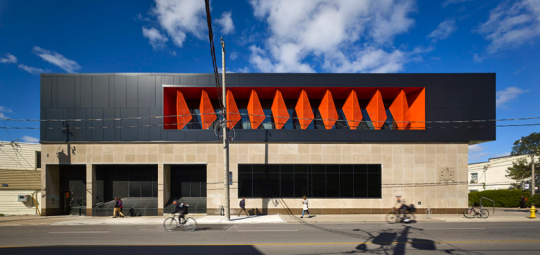
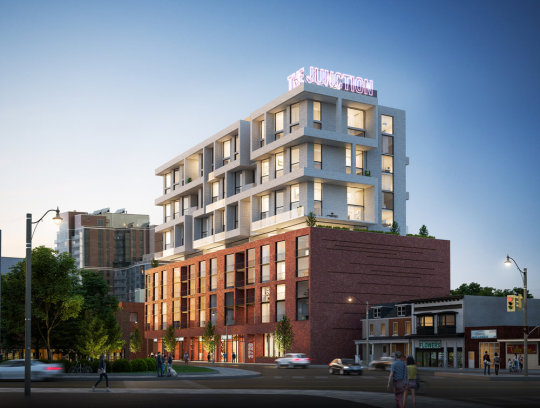
    Later this month, Councillor Gord Perks will be hosting a community meeting for Junction House (see conceptual rendering above).

    You can find all of the details, here, on the Globizen blog. But pop it into your calendars: Tuesday, November 21, 2017 from 7 to 9pm.

    Even if you can’t attend, definitely weigh in on the rooftop public art component over in the comments on the Globizen blog.

    I hope to see you all there. It’s always nice when happy people come out.

  • New Buca concept coming to midtown Toronto

    Earlier today Slate announced that King Street Food Company will be bringing a new Buca restaurant concept to the north west corner of Yonge + St. Clair in 2018. 

    (BlogTO calls Buca one of the best Italian restaurants in the city.)

    Below is a rendering of the new podium design at 2 St. Clair West, which is where they’ll be going. The design/rendering is by Gensler (the same talented group that did Ravine Bench).

    image

    The corner is going to be transformed into a double-height space and the architecture is meant to express that feeling of grandeur at the intersection. There will also be an outdoor patio at grade.

    We are all super excited about this.

    If you would like to read the full press release, you can do that here.

  • A cohousing case study

    There’s a lot of interest right now in micro apartments. Here is a recent example from New York City. Generally speaking the model is driven by a need to increase housing affordability: shrink the apartments; lower the prices. 

    To compensate for these smaller units, the buildings are often equipped with larger shared spaces and a desire to create a sense of community.

    The below TED talk by architect Grace Kim is an interesting case study of a project that started, first, with a desire for cohabitation. Her thesis is that cohousing can make us happier, less lonely, and more socially connected.

    The cohousing community that she profiles is one that she both designed and developed and one that she now lives in and practices architecture out of.

    If you can’t see the video below, click here. It’s only 10 minutes. After you’ve watched it, let us know in the comment section below if this is a community you could see yourself being a part of.

  • Photoblog: 15 Union Square West

    image

    I took the above photo this afternoon. The building on the left is 15 Union Square West in New York City. 

    It’s a re-cladding of a late 19th century building that was originally constructed for Tiffany & Company. The building’s original cast-iron arches were preserved and set behind new black framed, double insulated, laminated glass panels. 

    The arches aren’t that noticeable during the day, but at night they can really stand out. Click here for a few other photos and to see what that looks like.

    Front Inc. designed the framing systems. If you aren’t familiar with Front, you should check them out. They are a leading design and facade consultancy.

  • Empowering food truck entrepreneurs

    When I lived in Philadelphia I survived on food truck food. My go-tos were an egg and cheese breakfast sandwich for $2.50, a bowl of spaghetti for $4.50, and a pretty substantial chicken burrito for somewhere around $5 or $6. The food was good. It was filling. And it was all priced perfectly for a poor student, which I was at the time.

    I still remember when Renzo Piano came to the University to talk about potentially renovating the design school. Somebody stood up and asked if he had considered the placement of food trucks in his plans. Piano responded by saying: “I am Italian. Don’t worry. I will provide for the food.” This is how ingrained food trucks were and are in the culture of the city.

    The other great thing about these food trucks is that they are a low-cost way of starting your own culinary business. Many were run by immigrants. And some of these “trucks” were so small that I used to have to duck in order to make my way to the concession window. There was nothing fancy about them. But they worked.

    These days I don’t really eat at food trucks anymore. They are not as widespread here in Toronto as they are in Philly. I also find them expensive and the portions are usually so small that you have to order 2 or 3 things. They feel like the anti-food truck.

    I appreciate that there’s a growing market for trendy and “gourmet.” But there’s value in low-cost options and in lowering the barriers to entry for aspiring food entrepreneurs. There are numerous examples of humble food trucks growing into full fledged restaurants. Let’s encourage more of that.

  • Building relationships

    2003/2004 was roughly the time period when I started to become interested in development as a career. My good friend Rick Sole and I used to talk about it all the time in architecture school. How do we break into this space? There are no formal paths, like law for instance, and so we felt like we had to create our own opportunities.

    What I ended up doing was creating a list of every developer that I felt was doing cool and interesting work. I didn’t know enough about the industry at the time to assess other things and so that was really my only criteria. Do they care about design in their projects? I then started cold emailing and cold calling.

    Not everyone got back to me, but many did and some agreed to meet with me. This was at a time when I had zero experience and I was frankly not very valuable as a hire. So I am incredibly grateful to all of the people who said yes and took the time to speak and meet with me.

    As you go through your career, this curve eventually flips. You go from having no experience and begging people to meet with you to having experience (and other things you can offer people) and people now wanting to meet with you. Generally people want to meet when they think they can gain from you.

    But the best way to build a relationship is to start when you don’t need anything. I will never forget the people that met with me when I had nothing to offer them. And you can bet that I will always have all the time in the world for them.

    I’m not going to claim that I respond to every one of my cold emails. I definitely do not. But I respond to as many as I can and I try and pay it forward with some time. You could say it’s playing the long game, but it’s probably also the right thing to do.

    How do you approach relationship building?

  • Starchitecture is dead — how OMA thinks about preservation

    I somehow stumbled upon this transcript from Columbia University’s Graduate School of Architecture, Planning and Preservation (GSAPP), covering a talk that architect Rem Koolhaas did at the school back in, I think, 2014. 

    The title: “Preservation is overtaking us.” It’s all about how his firm OMA thinks about and approaches preservation. 

    The overarching theme is that preservation, for them, has become a kind of refuge from the market forces – which they call the “The ¥€$ Regime” – that currently drive architecture and demand constant novelty. It is refuge from “starchitecture.”

    Here is an excerpt:

    At some point, I don’t know who was responsible, the word, “starchitect” was invented. And we all know what it is: a term of derision. And at some point, it becomes very hard to avoid. I would say that preservation is, for us, a type of refuge from this term. What we are hoping to do is propose a number of strategies in which we are working to undo, or escape, from this label.

    And here is a summary of “OMA’s Preservation Manifesto” taken from the GSAPP transcript:

    1. Starchitecture is dead
    2. New forms are no longer relevant
    3. Preservation is architecture’s saving retreat
    4. Preservation creates relevance without new forms
    5. Preservation is architecture’s formless substitution

    It’s a substantial read, but a fascinating one. In case you don’t get to it (understandable), I would like to leave you with this final excerpt:

    What we started to do was look at preservation in general and look a little bit at the history of preservation. Now, the first law of preservation ever defined was in 1790, just a few years after the French Revolution. That is already an interesting idea, that at the moment in France when the past was basically being prepared for the rubbish dump, the issue of preserving monuments was raised for the first time. Another equally important moment was in 1877, when, in Victorian England, in the most intense moment of civilization, there was the second preservation proposition. If you look at inventions that were taking place between these two moments—cement, the spinning frame, the stethoscope, anesthesia, photography, blueprints, etc.—you suddenly realize that preservation is not the enemy of modernity but actually one of its inventions. That makes perfect sense because clearly the whole idea of modernization raises, whether latently or overtly, the issue of what to keep.

    I like the notion that preservation is one of the inventions of modernity, rather than an enemy of it.

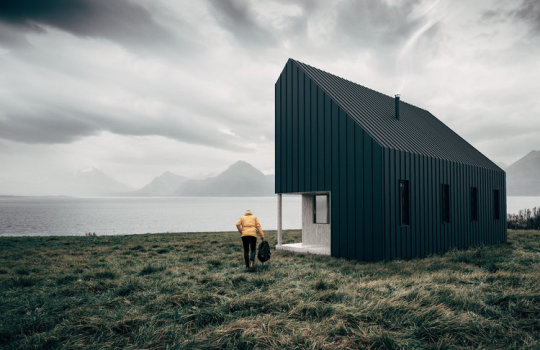
    Photo by Reginar on Unsplash

  • The Life-Sized City

    I just discovered a new video series by TVO called, The Life-Sized City. It’s all about the “anatomy of the modern metropolis.” The first episode – which was released on Sep 13 – is on Medellin and is just under an hour long. I have a feeling that many of you will like this video series.

    Whenever I watch videos like this, it makes me think that I should be starting a city building-focused vlog. I am a big fan of this format. I follow a handful of vloggers. And I think it could be a lot of fun. But sometimes you just have to say no.

    For those of you who aren’t longtime readers, I would also like to point out that my good friend Alex Feldman wrote a guest post on this blog over 3 years ago following a trip to Medellin. It’s about what cities could learn from Medellin’s extraordinary turnaround. If you missed it, click here.

  • A generation of architects

    The New York Times just published a piece called “a generation of architects making its mark at dizzying speed.” It’s a current list, albeit not an exhaustive one, of notable architects and their projects. 

    Included on this list is One Spadina, home of the Daniels Faculty of Architecture, Landscape, and Design at the University of Toronto, which was designed by Nader Tehrani and the Boston practice NADAAA.

    Some of the best architecture in the city is being built on this campus.

    One thing you’ll notice about this summary of architects is the emphasis on age. Architecture is a slow process. This is true for buildings in general. So historically it has been the case that architects usually don’t hit their stride until later in their career.

    The youngest architect on the list is Bjarke Ingels at 42. An outlier for sure. He saw tremendous success in his 30s, and even in his 20s with the firm PLOT. I think great storytelling had a lot to do with this.

    Tehrani is 53. And the author rightly points out that Frank Gehry didn’t become Frank Gehry until he renovated his own house at the age of 48.

  • REM

    image

    “A building has at least two lives – the one imagined by its maker and the life it lives afterward – and they are never the same.” -Rem Koolhaas

    Tonight I went with a developer friend to see the documentary REM at the Hot Docs Cinema on Bloor Street. It’s a documentary about the Dutch architect Rem Koolhaas, directed by his son Tomas Koolhaas. Trailer here.

    The film is essentially 75 minutes of introspection on the part of Rem. It’s him ruminating over a continuous piece by the American composer Murray Hidary. At times it was hard to hear what Rem was actually saying.

    If you’re looking to learn the specifics of his designs and process, then this movie is not for you. Though there’s lots of footage of his buildings. It also does not make clear just how much influence he has had professionally. I mean, everyone from Bjarke Ingels to Jeanne Gang once worked at his firm.

    The film is really about getting inside the mind of Rem as he travels the world. What struck me is Rem’s profound curiosity for seemingly everything. He really is obsessed with analyzing, documenting, and reporting. He refers to it as a compulsion.

    I also like the idea put forward that architecture represents a particular moment in time. If you’re precise about things, you may be right the moment the building is complete.

    But from that point onward, everything begins to change around it and you will be wrong. That’s what the quote at the top of this post is getting at.

    So I enjoyed it – but probably because I’m an architecture geek and Rem is arguably the most influential living architect today. But I’m not going to tell you that this film is a must-see.

    P.S. Who knew, Rem Koolhaas flies economy.

    Photo by Pavan Trikutam on Unsplash